



 Chat with AI
Exam 10: Pathology

Exam 1: Anatomy265 Questions
Exam 2: Behavioral Sciences178 Questions
Exam 3: Biochemistry102 Questions
Exam 4: Embryology59 Questions
Exam 5: Epidemiology, Biostatistics, and Medical Informatics94 Questions
Exam 6: Genetics88 Questions
Exam 7: Histology46 Questions
Exam 8: Immunology147 Questions
Exam 9: Microbiology and Virology330 Questions
Exam 10: Pathology817 Questions
Exam 11: Pharmacology and Toxicology509 Questions
Exam 12: Physiology339 Questions
Exam 13: Psychiatry and Psychotherapy23 Questions
Select questions type


A 55-year-old man is admitted to the hospital due to abdominal discomfort . Medical history includes asthma and hypertriglyceridemia, for which the patient takes the appropriate medications. He has smoked a pack of cigarettes daily for 30 years and used intravenous drugs in the past. The patient is treated empirically with a proton pump inhibitor; upper gastrointestinal endoscopy does not reveal a source for the pain. An abdominal CT angioghraphy shows numerous small aneurysms and stenosis of renal artery. Microscopic examination of the vessel walls shows diffuse inflammation of the adventitia and marked thickening of the inner layers due to proliferation of loose connective tissue; the arterial lumen is significantly narrowed. Which of the following is the most likely diagnosis?
(Multiple Choice)
4.9/5  (78)
(78) A 61-year-old man comes to the physician because of several episodes of dark urine over the past 2 weeks. He does not have dysuria or flank pain. He works in a factory that produces dyes. He takes no medications. He has smoked one pack of cigarettes daily for 29 years and drinks one alcoholic beverage daily. Vital signs are within normal limits. Physical examination shows no abnormalities. His urine is pink; urinalysis shows 80 RBC/hpf but no WBCs. Which of the following is most likely to be discovered on further workup of this patient's symptoms?
(Multiple Choice)
4.9/5 (76)
(76) A 52-year-old African American man comes to the physician for the evaluation of worsening fatigue that started 1 year ago. He does not have chest pain or shortness of breath. Medical history is significant for hypertension and obesity. BMI is 45 kg/m2. Examination shows mild mucosal pallor. Laboratory results are as follows: 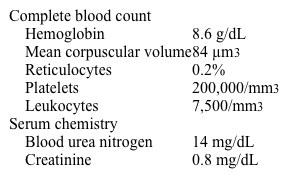 Which of the following is the most likely cause of this patient's anemia?
 (Multiple Choice)
5.0/5 (85)
(85) A 26-year-old African American woman comes to the physician because of a 4-day history of a nonproductive cough and chest pain. The pain is sharp and worse when she breathes deeply. During this time, she has also had two episodes of hematuria. Over the past 6 months, she has had intermittent pain, stiffness, and swelling in her fingers and left knee. She is sexually active with one male partner and uses an intrauterine device for contraception.Temperature is 38.3 C (100.9 F), blood pressure is 120/70 mm Hg, pulse is 89/min, and respirations are 18/min. Physical examination shows an erythematous rash on her face. There is mild tenderness over the metacarpophalangeal joints bilaterally with no warmth or erythema. Which of the following tests is most useful in confirming the diagnosis?
(Multiple Choice)
4.9/5 (82)
(82) A 44-year-old woman comes to the office for annual follow-up. She has no other medical conditions rather than hypothyroidism due to chronic autoimmune (Hashimoto) thyroiditis. She feels well and has no palpitations, heat/cold intolerance, diarrhea/constipation, or changes in weight. The patient takes levothyroxine daily on an empty stomach. Her vital signs are within normal range. BMI is 26 kg/m2. On physical examination, the thyroid is normal to palpation. There is no peripheral edema. Laboratory results show a serum TSH level of <0.01 µU/mL. She has a concern regarding maintaining the current dose of levothyroxine, this would put this patient at the greatest risk for which of the following complications?
(Multiple Choice)
4.8/5 (90)
(90) A 13-year-old girl is brought to the clinic by her mother for a yearly physical examination. The patient feels well but is worried that she has not yet started puberty. Temperature is 36.7 C (98 F), blood pressure is 152/91 mm Hg, pulse is 75/min, and respirations are 18/min. Physical examination is significant for a lack of secondary sexual characteristics; a blind vagina is noted on pelvic examination. Laboratory studies reveal hypokalemia and low testosterone and estradiol levels. Cytogenetic analysis shows a 46,XY karyotype. This patient most likely has deficiency of which of the following enzymes?
(Multiple Choice)
4.9/5 (67)
(67) A 65-year-old man comes to the office due to a persistent dry cough for 6 months. During this time period, he has also had fatigue and a 4.5-kg (10-lb) weight loss. The patient has no history of serious illness and does not take any medications. He has smoked one pack of cigarettes daily for 35 years. Physical examination reveals decreased breath sounds and dullness to percussion at the left lung base. Imaging studies show an irregular mass in the lower lobe of the left lung and a left pleural effusion. A diagnostic thoracocentesis is performed and the aspirated fluid is sent for cytological evaluation. If a malignancy is diagnosed, it is most likely to be which of the following types?
(Multiple Choice)
4.8/5 (76)
(76) A 34-year-old man comes to the physician because of foul-smelling diarrhea, fatigue, and bloating for 6 months. During this time, he has had a 5-kg (11-lb) weight loss without a change in diet. He has type 1 diabetes mellitus that is well-controlled with insulin. Examination shows conjunctival pallor and inflammation of the corners of the mouth. The abdomen is soft, and there is diffuse tenderness to palpation with no guarding or rebound. Initial laboratory evaluation reveals microcytic anemia, hypoalbuminemia, normal magnesium level, and normal serum TSH concentration. The patient is found to have positive anti-tissue transglutaminase IgA antibodies. Which of the following sets of additional laboratory findings are most likely present in this patient? 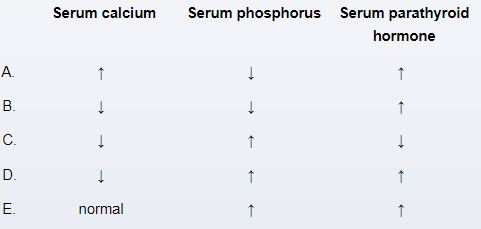
(Multiple Choice)
4.8/5 (79)
(79) A 36-year-old woman comes to the physician because of multiple episodes of headache over the past 3 months. The headaches last the entire day and are unilateral and throbbing. During the headaches, she has severe nausea and is unable to work and perform her daily activities. She has noticed that she becomes unusually hungry prior to the onset of headache. She locks herself in a dark room, takes ibuprofen, and avoids going out until the headache subsides. However, over the past month, the headaches have increased to 2-3 times a week and become more intense. Which of the following is the most likely diagnosis?
(Multiple Choice)
4.9/5 (97)
(97) After a car accident in which his chest hit the steering wheel, a 64-year-old man is taken to the emergency room. The patient does not currently take any medications and has no history of illness. Blood pressure is 132/78 mm Hg, temperature is 36.7 C (98 F), pulse is 76 bpm, and respirations are 14 /minute. A physical examination reveals some little chest pain in the lower right. No fractures or dislocations are shown on chest and neck imaging. Pleural opacities, like seen in the image below, are discovered by the chest CT scan. . 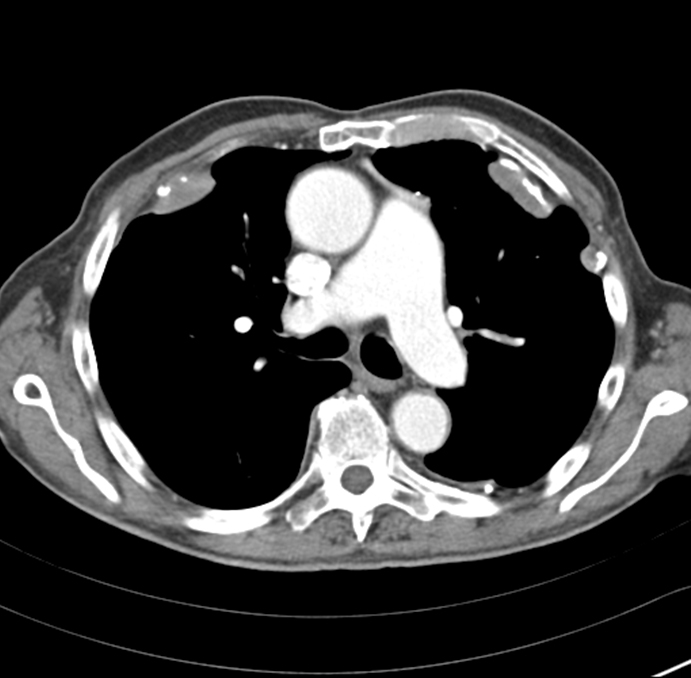 These abnormal findings are most likely to occur in a patient with which of the following occupational histories?
 (Multiple Choice)
4.8/5 (84)
(84) A 75-year-old woman comes to the physician because of fatigue and low back pain. She takes ibuprofen as needed for lower back pain. She has no prior medical history and takes no medications. Physical examination shows tenderness to palpation over the lumbar spine. There is pedal edema. Radiographs reveal lytic bone lesions in the L4 and L5 vertebrae. Laboratory results are as follows: 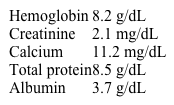 Serum protein electrophoresis reveals a monoclonal gamma globulin spike. Further studies are most likely to show which of the following?
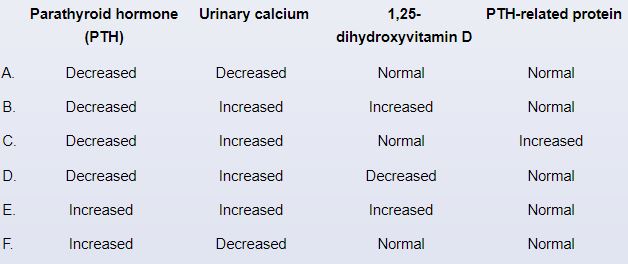
Serum protein electrophoresis reveals a monoclonal gamma globulin spike. Further studies are most likely to show which of the following?
(Multiple Choice)
4.9/5 (81)
(81) A 38-year-old man comes to the physician because of depressed mood for 2 months. He works as a store manager and cannot concentrate at work anymore. He experiences daytime sleepiness and fatigue because he repeatedly wakes up at night and has difficulties falling asleep again after 4 AM. He reports no longer taking pleasure in activities he used to enjoy, such as going fishing with his son. He has decreased appetite and has had a weight loss of 5 kg (11 lb) over the past 3 months. The patient had a previous depressive episode in his 20s that responded rapidly to sertraline. Physical examination is normal. Which of the following would be most important to assess prior to initiating pharmacologic treatment for this patient?
(Multiple Choice)
4.8/5 (100)
(100) A Female newborn is born at a gestation age of 32 weeks for a 25-year-old multigravida woman. The newborn is experiencing severe respiratory distress. The respiratory distress responds to treatment, the patient regained respiratory function at two weeks of age. Ophthalmoscopy later shows neovascularization in the retina, extending into the vitreous. Ophthalmoscopic findings are related to which of the following?
(Multiple Choice)
4.8/5 (88)
(88) A 25-year-old woman comes to the hospital because of abdominal pain, yellowish discoloration of the skin and eyes, and fatigue. She has a recurrent episodes of reddish discoloration of her urine over the past year. Physical examination shows pallor and scleral icterus. The spleen is not palpable. Her hemoglobin concentration is 7.8 g/dL, leukocyte count is 2,000/mm3, and platelet count is 80,000/mm3. Serum LDH and unconjugated bilirubin concentrations are elevated. Addition of a serum containing anti-human globulins to a blood sample shows no agglutination. A urine dipstick shows blood; urinalysis shows no RBCs. A CT scan of the abdomen shows a thrombus in a hepatic vein thrombosis. Which of the following is the most likely cause of this patient's anemia?
(Multiple Choice)
4.9/5 (73)
(73) Two weeks after undergoing allogeneic stem cell transplant for multiple myeloma, a 55-year-old man develops a severely pruritic rash, abdominal cramps, and profuse diarrhea. He appears lethargic. Physical examination shows yellow sclerae. There is a generalized maculopapular rash on his face, trunk, and lower extremities, and desquamation of both soles. If this patient received a conditioning chemotherapy and radiotherapy before the stem cell transplant this will decrease risk which of the following?
(Multiple Choice)
4.7/5 (61)
(61) A 13-year-old boy is brought to the physician because of progressive left leg pain for the past 2 months, which has started to interfere with his sleep. His mother has been giving him ibuprofen at night for "growing pains," but his symptoms have not improved. One week before the pain started, the patient was hit in the thigh by a baseball, which caused his leg to become red and swollen for several days. Vital signs are within normal limits. Examination shows marked tenderness along the left mid-femur. His gait is normal. Laboratory studies show a leukocyte count of 21,000/mm3 and an erythrocyte sedimentation rate of 68 mm/h. A representative sample is shown in the image. 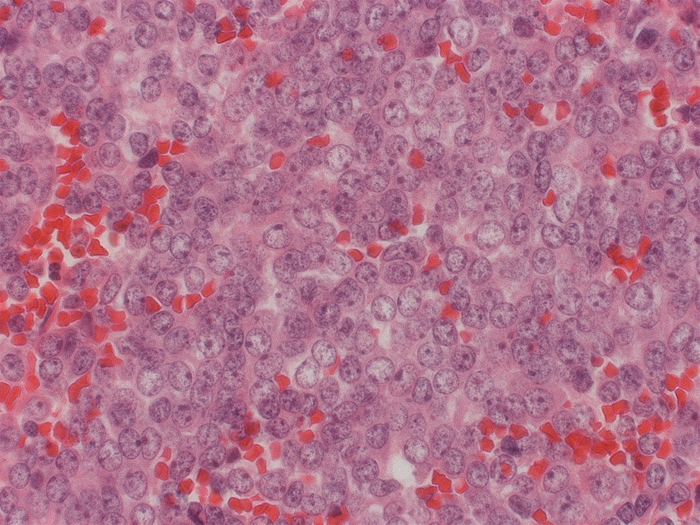 Which of the following is the most likely diagnosis?
 (Multiple Choice)
4.8/5 (62)
(62) A 57-year-old woman comes to the physician because of a 6-month history of weight loss, bloating, and diarrhea. She does not smoke or drink alcohol. The patient also experiences dull, epigastric abdominal pain that is exacerbated by eating and unrelieved by antacids. Her vital signs are within normal limits. She is 173 cm (5 ft 8 in) tall and weighs 54 kg (120 lb); BMI is 18 kg/m2. Sudan staining of a fecal specimen is positive, and fecal occult blood testing is negative. Blood testing reveals normal hemoglobin. Which of the following pathophysiologic changes are most likely present in this patient?
(Multiple Choice)
4.9/5 (82)
(82) A 61-year-old lady who has been experiencing eyesight issues for the past six months visits the clinic. The patient claims that, particularly in the late afternoon and evening, her eyes quickly feel fatigued. She has smoked a pack of cigarettes every day for the past 35 years, but she doesn't drink or use illegal substances. The extraocular muscles are weak when examined physically. Sensation, deep tendon reflexes, and pupillary reflex are all normal. The exhibit displays a contrast-enhanced CT image of the chest. 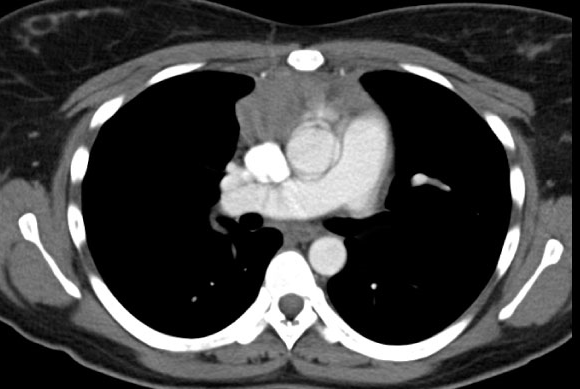 Which of the following is the most likely mechanism underlying this patient's symptoms?
 (Multiple Choice)
5.0/5 (77)
(77) A 35-year-old woman is treated for bacterial pharyngitis with ampicillin. 5 days later, the patient presented to the emergency department with a fever and skin rash. She noticed decreased urine output. Temperature is 38.5 C (101.3 F), blood pressure is 132/81 mm Hg, and pulse is 88/min. On examinations, she has a diffuse maculopapular rash. Serum creatinine level is 2.5 mg/dL, and urine sediment microscopy reveals 5-6 red blood cells/HPF, 10-15 white blood cells/hpf, and 3-5 eosinophils/hpf. The pathologic process affecting this patient's kidneys most likely involves one of the following structures?
(Multiple Choice)
4.8/5 (78)
(78) A 53-year-old man's dyspnea is now being assessed. While the graph on the left depicts the work of breathing vs respiratory rate in a healthy person, the graph on the right illustrates how the patient's work of breathing fluctuates with respiratory rate. In both plots, the minute ventilation is constant and equal. 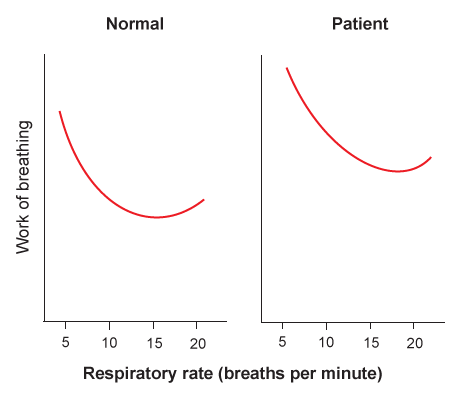 Which of the following is the most likely diagnosis in this patient?
 (Multiple Choice)
4.9/5 (71)
(71) 
Filters
- Essay(0)
- Multiple Choice(0)
- Short Answer(0)
- True False(0)
- Matching(0)