



 Chat with AI
Exam 10: Pathology

Exam 1: Anatomy265 Questions
Exam 2: Behavioral Sciences178 Questions
Exam 3: Biochemistry102 Questions
Exam 4: Embryology59 Questions
Exam 5: Epidemiology, Biostatistics, and Medical Informatics94 Questions
Exam 6: Genetics88 Questions
Exam 7: Histology46 Questions
Exam 8: Immunology147 Questions
Exam 9: Microbiology and Virology330 Questions
Exam 10: Pathology817 Questions
Exam 11: Pharmacology and Toxicology509 Questions
Exam 12: Physiology339 Questions
Exam 13: Psychiatry and Psychotherapy23 Questions
Select questions type


An 11-year-old boy with Burkitt lymphoma is brought to the emergency department because of nausea, vomiting, flank pain, and dark urine for 1 day. Two days ago, he began induction chemotherapy with cyclophosphamide, vincristine, prednisolone, and doxorubicin. His serum creatinine level is 2.7 mg/dL. Renal biopsy reveals multiple uric acid crystals obstructing renal tubular lumen. The principal site of uric acid precipitation would be which of the following?
(Multiple Choice)
4.8/5  (87)
(87) A 48-year-old previously healthy woman visits the office because she has been experiencing progressively worsening muscle weakness for the past two months. Climbing stairs, getting up from chairs, and putting dishes in overhead cabinets are all difficult for the patient. She also reports an unintentional weight loss of 4.5 kg (10 lb) and occasional abdominal discomfort during the same time period. Physical examination reveals shoulder and hip girdle muscle weakness. The image below depicts additional examination findings.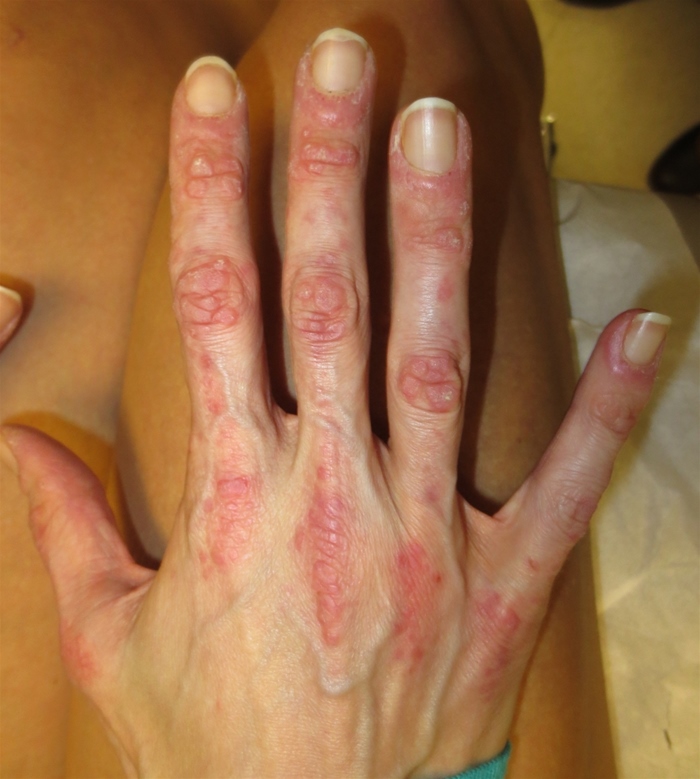 Further evaluation of this patient is most likely to reveal which of the following associated conditions?
 (Multiple Choice)
4.9/5 (82)
(82) A 48-year-old woman arrives at the office with a sore throat that has been bothering her for three months. She has an enlarged, ulcerated left tonsil and a firm, nontender, nonmobile left neck mass on examination. A tonsil biopsy is performed on the patient. The pathology points to squamous cell carcinoma. Further examination of the biopsy specimen reveals the presence of viral genome proteins.Which of the following most likely predisposed the patient to the development of this malignancy?
(Multiple Choice)
4.8/5 (81)
(81) An 18-year-old nulliparous woman, at 14 weeks' gestation comes to the physician because of a 6-hour history of light vaginal bleeding and lower abdominal discomfort. Her pulse is 92/min, respirations are 18/min, and blood pressure is 134/76 mm Hg. Abdominal examination shows no tenderness or masses; bowel sounds are normal. On pelvic examination, there is old blood in the vaginal vault and at the closed cervical os. Transvaginal ultrasound demonstrates an intrauterine gestational sac without fetal cardiac activity, and a dilation and curettage is performed. Pathology shows fetal tissue, focal trophoblastic hyperplasia, and some enlarged villi interspersed with normal villi. Which of the following is the most likely diagnosis?
(Multiple Choice)
4.8/5 (85)
(85) A 54-year-old woman is brought to the emergency department because of a 2-hour history of nausea and retrosternal chest pain. She has a 15-year history of type 2 diabetes mellitus. Her current medications include atorvastatin, metformin, and lisinopril. She is diaphoretic. Her serum troponin level is 3.0 ng/mL (N: < 0.04). She undergoes cardiac catheterization which shows right-dominant coronary circulation and a thrombotic occlusion of the proximal right coronary artery, which supplies blood to the patient's right ventricle and the inferior and posterior portions of the left ventricle. A drug-eluting stent is placed, and she is discharged 2 days later without complication. After 6 weeks, an echocardiography that shows left ventricular contractile dysfunction with normal right ventricular function. Which of the following characteristics of the right ventricle compared to the left ventricle best explains these echocardiography findings?
(Multiple Choice)
4.9/5 (71)
(71) A 7-year-old girl is brought to the emergency department due to 2 days of fever, productive cough, and shortness of breath. Medical history is significant for recurrent lung infections and cystic fibrosis. Weight is at the 5th percentile. Temperature is 38.1 C (100.6 F), pulse is 104/min, and respirations are 30/min. Pulse oximetry is 86% on room air. Examination shows a thin girl with digital clubbing and a hyperexpanded chest. Diffuse wheezes and crackles are present bilaterally. The rest of the examination is unremarkable. Chest x-ray reveals hyperinflation, chronic interstitial changes, and an infiltrate in the right lower lobe. Gram stain of sputum shows gram-negative rods. Which of the following is the most likely cause of this patient's recurrent infections?
(Multiple Choice)
4.9/5 (91)
(91) A 22-year-old woman is brought to the emergency department after being struck by a car while crossing the street. Vital signs are within normal limits. X-ray of the lower extremity shows a mid-shaft femur fracture. The patient is taken to the operating room for surgical repair of the fracture. As the surgeon begins the internal fixation, the patient shows muscle rigidity and profuse diaphoresis. Her core body temperature begins to increase and is now 38.9 C (102 F). Which of the following is the most likely underlying mechanism leading to elevated body temperature in this patient?
(Multiple Choice)
5.0/5 (77)
(77) A 25-year-old man is brought to the physician because of fatigue, lethargy, and lower leg swelling for 2 weeks. He also noticed that his urine appeared darker than usual and for the last 2 days he has passed only small amounts of urine. His temperature is 37.5°C (98.6°F), pulse is 88/min, respirations are 15/min, and blood pressure is 154/98 mm. Blood urea nitrogen is 38 mg/dL and serum creatinine is 4.5 mg/dL. The patient undergoes a kidney biopsy and the following microscopic changes are seen after silver staining to highlight the glomerular tuft: 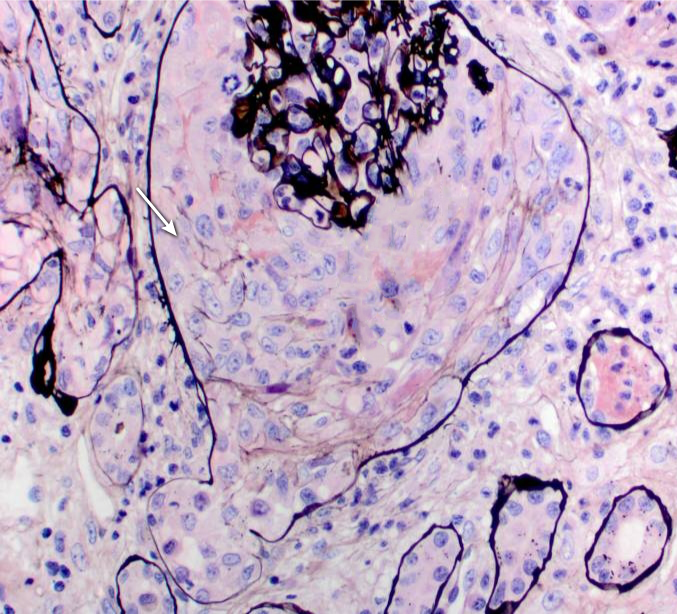 The area marked with an arrow is likely to have abnormal deposition of which of the following substances?
 (Multiple Choice)
4.8/5 (87)
(87) A 76-year-old man has been experiencing worsening shortness of breath, coughing, and weight loss for several months. He has never smoked in his life. Imaging of the chest reveals irregular pleural thickening. A surgical biopsy is planned, but the patient declines, preferring hospice care instead. He dies a few weeks later. An autopsy is performed, and a photograph of the cut lung section is displayed. 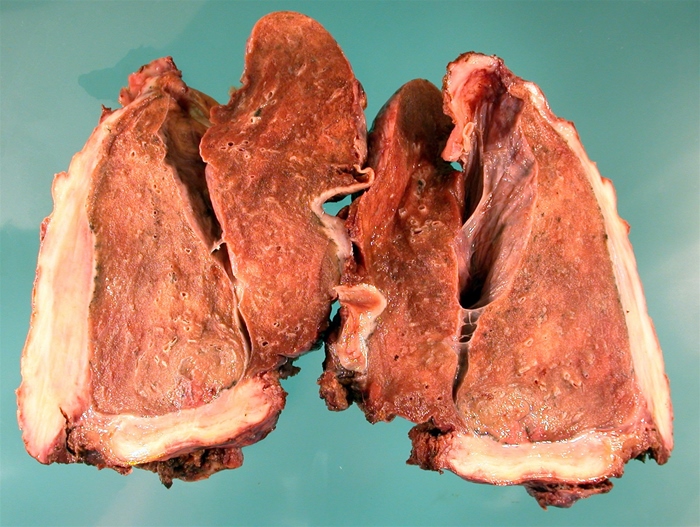 Histopathological examination of the abnormal tissue is most likely to reveal which of the following findings?
 (Multiple Choice)
4.7/5 (75)
(75) A 73-year-old woman comes to the physician because of a 5-day history of intermittent palpitations. She has no history of syncope or chest pain. She had similar symptoms one year ago and following workup has been treated with daily flecainide since then. She drinks one to two glasses of wine on the weekends. She does not smoke. Her pulse is 71/min and her blood pressure is 134/72 mm Hg. A complete blood count shows no abnormalities. Serum creatinine, electrolytes, and TSH are within normal limits. An ECG is shown. 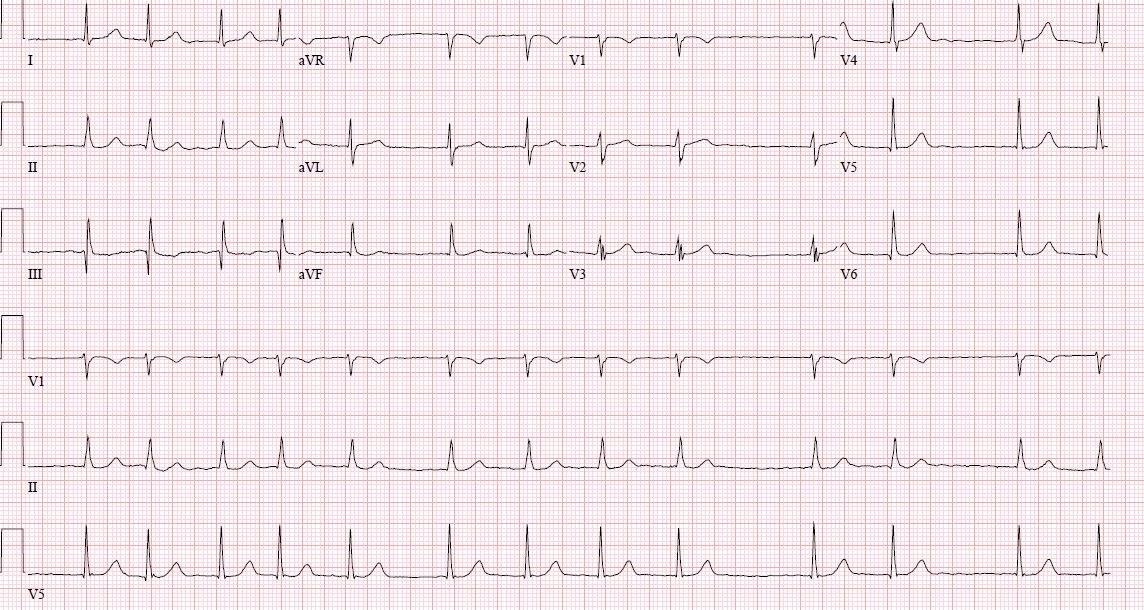 Which of the following is most likely the strongest risk factor for this patient's presentation?
 (Multiple Choice)
4.9/5 (90)
(90) A 55-year-old woman with rheumatoid arthritis comes to the physician because of a 3-month history of worsening fatigue and dyspnea. She has felt short-of-breath when walking up the stairs to her apartment. Menopause occurred 5 years ago. The patient appears chronically ill and has mucosal pallor. There are thick, white plaques over the buccal mucosa and soft palate. Anterior and posterior cervical lymphadenopathy is present. The lungs are clear to auscultation. The abdomen is soft and nontender. There is no organomegaly. Laboratory results are as follows: 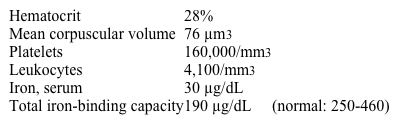 Which of the following is the most likely underlying cause of this patient's anemia?
 (Multiple Choice)
4.9/5 (80)
(80) A previously healthy 56-year-old woman comes to the family physician for a 1-month history of sleep disturbance and sadness. The symptoms have been occurring since her husband died in a car accident. Before eventually falling asleep, she stays awake for multiple hours and has crying spells. Several times she has been woken up by the sound of her husband calling her name. She has lost 3 kg (6.6 lb) over the past month. She has 3 children with whom she still keeps regular contact and regularly attends church services with her friends. She expresses a great feeling of loss over the death of her husband. She has no suicidal ideation. She is alert and oriented. Neurological examination shows no abnormalities. Which of the following is the most likely diagnosis?
(Multiple Choice)
4.9/5 (75)
(75) A 66-year-old man comes to the physician due to recent lethargy and weakness. He also states that has a headache and dyspnea. The patient's face has appeared swollen over the past 2 weeks. He does not have any neck or shoulder pain. He has no other medical problems. Physical examination shows symmetrical facial swelling and conjunctival edema. The pupils are equal, round, and reactive to light. An engorged veins on the anterior chest wall are noted over his neck and upper trunk. Heart and lung sounds are normal. Peripheral strength and sensation are intact. Which of the following is the most likely cause of this patient's condition?
(Multiple Choice)
4.9/5 (87)
(87) A 65-year-old guy arrives at the clinic after experiencing 2 months of fatigue and a chronic, unproductive cough. He has a history of coronary artery disease and a heart attack. He underwent broad local excision of a melanoma on his posterior neck three years ago. The patient has a smoking history of 50 packs per year. The vital indicators are within normal ranges. A chest radiograph shows several lung abnormalities as well as hilar lymphadenopathy. After staining with hematoxylin and eosin, histopathology from one of the biopsied lung lesions is shown below. 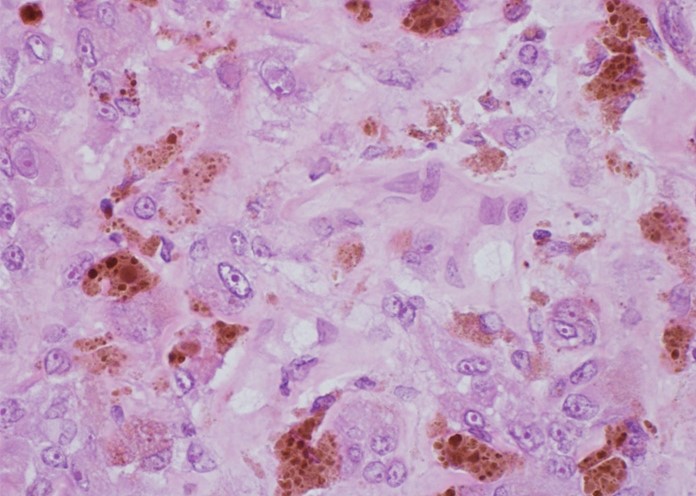 These histopathologic findings are most consistent with which of the following diagnoses?
 (Multiple Choice)
4.8/5 (91)
(91) A nephrology researcher conducts a clinical study to determine the risk factors for the development of renal calculi. He recruits a number of patients with a history of idiopathic calcium oxalate kidney stones, along with age- and sex-matched healthy subjects. Detailed medical, surgical, and nutritional histories are obtained, and several serum and urine laboratory tests are performed. Which of the following is most likely to be seen in affected patients compared with healthy individuals?
(Multiple Choice)
4.8/5 (70)
(70) A 14-year-old boy is brought to the clinic by his mother due to changes in vision. For the last few weeks, the patient has been squinting when trying to read the interactive whiteboard in class and has had to sit closer to the front of the room. He has also developed headaches. The patient has no chronic medical conditions and takes no medications. Temperature is 37.2 C (99 F), blood pressure is 116/76 mm Hg, and pulse is 70/min. Examination of the eyes shows equal and reactive pupils. Extraocular muscles are intact, and visual field testing reveals no defects. Visual acuity shows 20/70 in both eyes. His ability to read close text is normal. Which of the following is the most likely cause of this patient's symptoms?
(Multiple Choice)
4.8/5 (81)
(81) A 46-year-old male is brought to the hospital because of sudden-onset headache associated with nausea and vomiting for 30 minutes ago. He has a history of polycystic kidney disease. He is alert and oriented to person, place, and time. Her temperature is 38.2°C (100.8°F), pulse is 89/min, respirations are 19/min, and blood pressure is 150/90 mm Hg. Cardiopulmonary examination shows no abnormalities. Cranial nerves II-XII are intact. She has no focal motor or sensory deficits. She flexes her hips and knees when her neck is flexed while lying in a supine position. Which of the following is the most likely diagnosis?
(Multiple Choice)
4.9/5 (86)
(86) A 61-year-old immigrant to the United States has a long history of "joint problems." She began experiencing hand pain at the age of 30, and her symptoms have been intermittent but progressive since then. When the pain was severe, nonsteroidal anti-inflammatory drugs were used to treat the symptoms. In addition, the patient has a history of hypertension and chronic anemia. She does not consume alcoholic beverages or illegal drugs. Family history is unimportant. On examination, both hands show severe deformity of multiple joints. The image below depicts the X-ray findings. 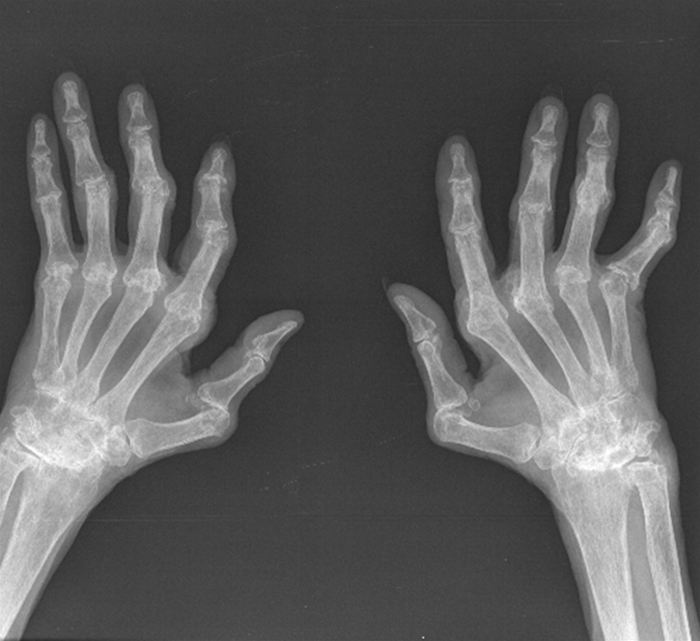 The disease process responsible for the radiographic findings would most likely affect which of the following?
 (Multiple Choice)
4.9/5 (71)
(71) A 32-year-old woman comes to the physician because of pain and stiffness in both of her hands for the past 3 weeks. The pain is most severe early in the day and does not respond to ibuprofen. She has no history of serious illness and takes no medications. Vital signs are within normal limits. Examination shows swelling and tenderness of the wrists and metacarpophalangeal joints bilaterally. Range of motion is decreased due to pain. Laboratory studies reveal a hemoglobin of 9.8 g/dL and MCV of 86. The patient is prescribed methotrexate therapy. Laboratory results 6 months later reveal that hemoglobin has increased to 12 g/dL. If measured, which of the following changes were most likely present in this patient before the start of methotrexate therapy? 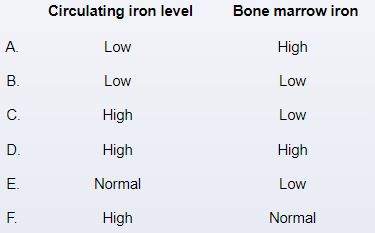
(Multiple Choice)
4.9/5 (72)
(72) A 62-year-old man arrives at the clinic to be evaluated for progressive exertional dyspnea. His medical history includes pneumonia and hypertension. He has smoked 45 packs in 45 years. Physical examination reveals bilaterally decreased breath sounds and wheezes. The image below depicts a CT scan of the chest. 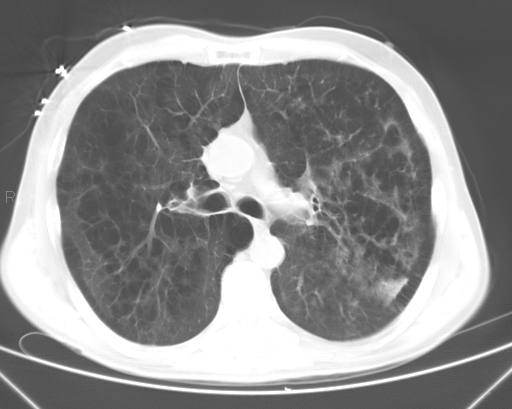 Which of the following cells are most responsible for the development of this patient's lung condition?
 (Multiple Choice)
4.7/5 (79)
(79) 
Filters
- Essay(0)
- Multiple Choice(0)
- Short Answer(0)
- True False(0)
- Matching(0)