



 Chat with AI
Exam 10: Pathology

Exam 1: Anatomy265 Questions
Exam 2: Behavioral Sciences178 Questions
Exam 3: Biochemistry102 Questions
Exam 4: Embryology59 Questions
Exam 5: Epidemiology, Biostatistics, and Medical Informatics94 Questions
Exam 6: Genetics88 Questions
Exam 7: Histology46 Questions
Exam 8: Immunology147 Questions
Exam 9: Microbiology and Virology330 Questions
Exam 10: Pathology817 Questions
Exam 11: Pharmacology and Toxicology509 Questions
Exam 12: Physiology339 Questions
Exam 13: Psychiatry and Psychotherapy23 Questions
Select questions type


Question: A 26-year-old woman is evaluated due to lower abdominal pain and bloody diarrhea. The patient experiences low-grade fever and fatigue. On examination, the patient is found to have left lower quadrant tenderness. Radiological imaging shows thickening of the distal colon and the rectum. One of the laboratory tests is done by placing the patient's anticoagulated blood in an upright thin tube without any intervention. The red blood cells of the patient clumped at a fast rate of 48 mm/hr. Serum levels of which of the following explain the patient laboratory test findings?
(Multiple Choice)
4.9/5  (79)
(79) After being involved in a street altercation, a 30-year-old guy arrives at the emergency department with left eye discomfort. He was hit in the left eye with a fist and has since had discomfort and diplopia. Previous medical history is significant for two prior gunshot wounds. The patient does not smoke cigarettes but has a history of excessive alcohol use and marijuana usage. There is substantial soft tissue edema around the left eye on inspection. Although visual acuity is adequate, extraocular movement in the left eye is restricted. Normal pupillary reflexes exist. The picture below depicts a Coronal CT scan of the orbits. 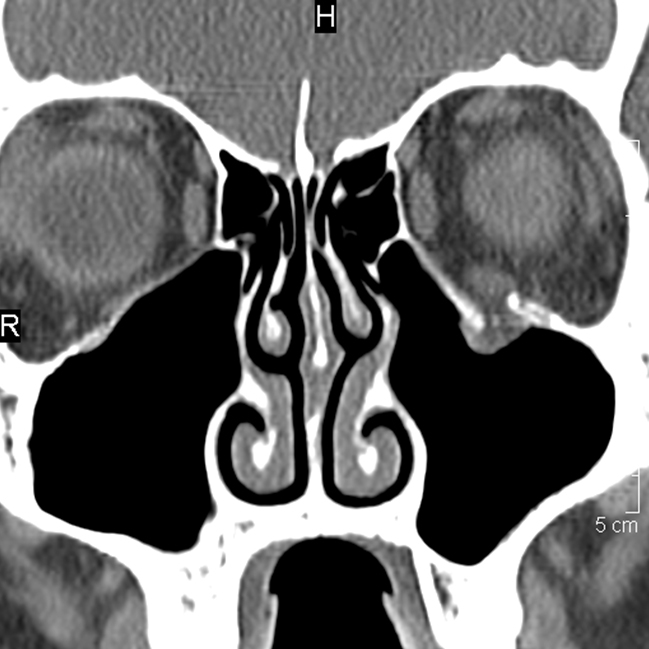 The orbital contents of this patient are most likely to herniate into which of the following sites?
 (Multiple Choice)
4.9/5 (82)
(82) A 72-year-old woman comes to the emergency department with fatigue and bilateral leg swelling. Her pulse is 92/min, and respirations are 24/min. Six weeks ago, the patient underwent pacemaker implantation due to sick sinus syndrome. Physical examination shows jugular venous distention and pitting edema of the lower extremities. Her abdomen is distended with shifting dullness and tender hepatomegaly is present. Cardiovascular examination shows a holosystolic murmur heard best at the left lower sternal border that increases in intensity with inspiration. The pacemaker implantation site has healed normally. Complete blood count is normal. What is the most likely diagnosis?
(Multiple Choice)
4.8/5 (82)
(82) A 36-year-old woman arrives at the office after becoming aware of small lumps beneath her arm as she dressed. She says that she feels well and is symptom-free. The significance of her medical history for hypothyroidism. Negative family history. Her body mass index, as determined by a physical examination, is 24 kg/m2. An examination of the breast reveals non-tender left axillary lymphadenopathy. An ultrasound-guided biopsy is performed on the patient. Microscopy of the tissue specimen shows clumps of cells that have positive immunohistochemical staining for cytokeratin. These cells most likely belong to which of the following lineages?
(Multiple Choice)
4.8/5 (88)
(88) A 22-year-old woman is evaluated in the office due to progressive acne on her face, chest and back. Her acne has worsened over last month. The patient was recently diagnosed with iron deficiency anemia due to abnormal uterine bleeding and began taking a combined oral contraceptive and an iron supplement. She has been training for a half-marathon for the past 4 months and has lost 6.8 kg (15 lb) during this period. She does not use tobacco, alcohol, or illicit drugs. Vital signs are within normal limits. Physical examination shows acneiform eruptions on the shoulders and mid-back. Which of the following is most likely contributing to worsening of this patient's acne?
(Multiple Choice)
4.8/5 (89)
(89) A 46-year-old woman comes to the emergency department due to progressive dyspnea over the last 2 days. The patient's exercise tolerance has decreased dramatically and she had to sleep in a sitting position last night. She has no history of cardiovascular disease. The patient does not use tobacco or alcohol. Family history is unremarkable. Blood pressure is 110/65 mm Hg and pulse is 105/min and regular. The apical impulse is hyperdynamic. Auscultation reveals crackles at the lung bases, an S3 gallop, and a II/VI holosystolic murmur over the apex. The patient is admitted to the hospital, and after treatment with diuretics and vasodilators his condition improves significantly. Three days later there are no appreciable gallops or murmurs on cardiac examination. Which of the following best explains the murmur heard at the time of the initial examination?
(Multiple Choice)
4.8/5 (80)
(80) A woman, 46-year-old, visits the office for follow-up. For aggressive follicular thyroid carcinoma with distant metastases, the patient underwent a complete thyroidectomy followed by radioactive iodine ablation six months ago. Levothyroxine was provided to her after surgery to stop the progression of thyroid cancer. Despite having a regular appetite, the patient has unintentionally lost 4.5 kg (10 lb) of weight during the last four months. She's also extraordinarily warm and perspiration-prone. Blood pressure is 150/70 mm Hg, heart rate is 110 bpm, and respirations are 17 /minute. The temperature is 37 C (98.6 F). A little hand tremor and sweaty hands are visible upon examination. Which of the following would a serum thyroid function test likely show? 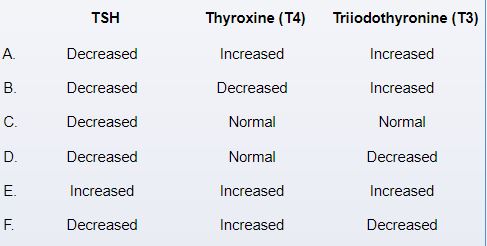
(Multiple Choice)
4.9/5 (69)
(69) A 42-year-old lady visits her doctor for an usual check-up. She does not have any current problems and no major medical history. During a medical examination, the doctor notices lesions on her eyelids, which are depicted below. 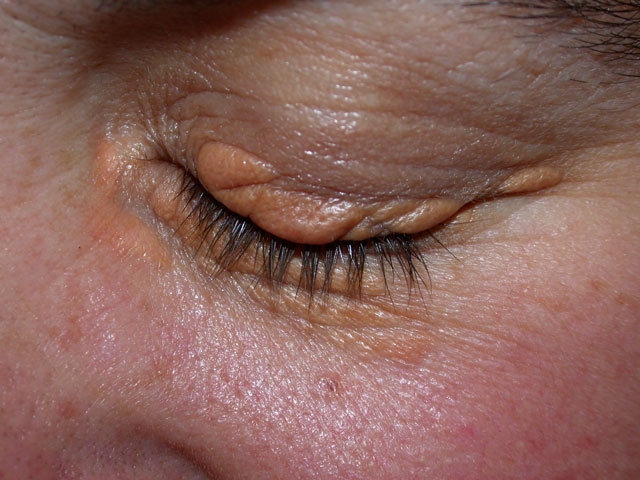 Which of the following is the best next step in the management of this patient?
 (Multiple Choice)
4.7/5 (79)
(79) An 8-hour-old girl is being evaluated in the newborn nursery because her lips turned blue while breastfeeding 20 minutes ago. She has not stopped crying since then. She was born at 38 weeks' gestation. Apgar scores were 7 and 8 at 1 and 5 minutes, respectively. She is at the 50th percentile for length and below the 30th percentile for weight. She is alert and agitated. Physical examination shows perioral cyanosis and retractions of the lower ribs with respiration. Cardiac examination shows a harsh grade 2/6 systolic crescendo-decrescendo murmur at the left upper sternal border. Which of the following oxygen saturation percentages are most likely present during the cyanotic episode? 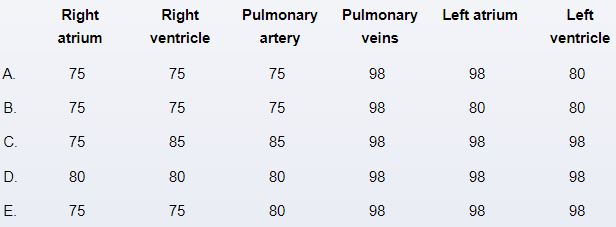
(Multiple Choice)
4.9/5 (73)
(73) A 55-year-old man is evaluated because his fatigue and exertional shortness of breath are worsening. He does not have any chronic medical conditions and does not take any medications. The physical examination reveals facial puffiness as well as bilateral lower extremity edema. A urine analysis reveals 3+ proteinuria. The image below depicts kidney biopsy findings with special staining under polarized light: 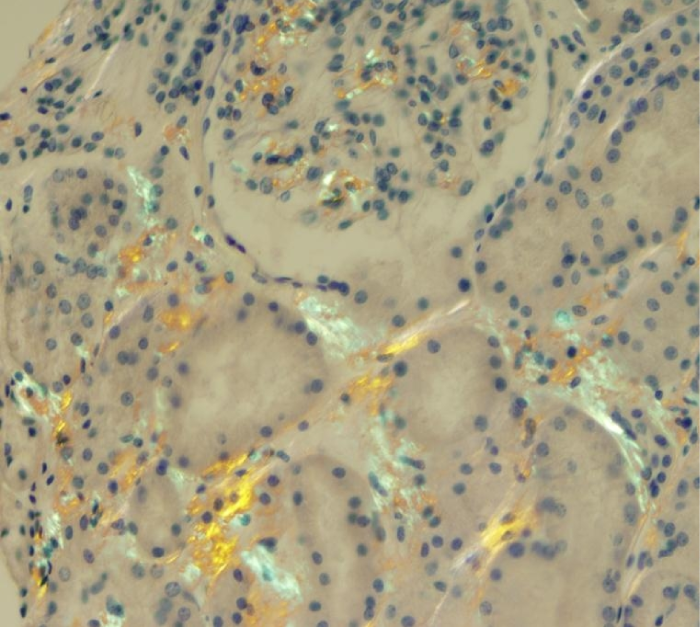 Which of the following tests would be most helpful for establishing a specific diagnosis in this patient?
 (Multiple Choice)
4.8/5 (76)
(76) A 11-year-old boy is brought to the emergency department because of a 3-day history of fever, cough, and a runny nose. During this period, he has also had pink, itchy eyes. The patient emigrated from Syria 2 weeks ago. His parents died 6 months ago. He has not yet received any routine childhood vaccinations. He lives at a foster home with ten other refugees; two have similar symptoms. He appears anxious and is sweating. During examination, He develops a myoclonus in the lowe legs. After the appropriate workup, a brain biopsy is obtained and an RNA virus containing hemagglutinin is cultured from the tissue sample. Which of the following is the most likely diagnosis?
(Multiple Choice)
4.8/5 (61)
(61) A 43-year-old woman is being evaluated in the surgery department because of severe central chest pain, mild shortness of breath, and one episode of coughing up blood. Two days ago, she underwent a total hip arthroplasty with no operative complications. A contrast-enhanced CT scan of the chest is immediately obtained; a sagittal view is shown below. 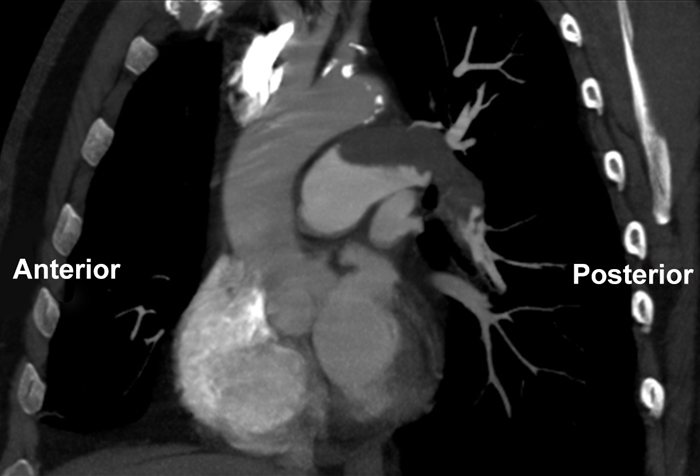 In-hospital administration of which of the following is most appropriate for reducing the risk of patients developing this complication?
 (Multiple Choice)
4.9/5 (79)
(79) A 28-year-old woman is brought to the emergency department by her husband for increasing confusion over the past 12 hours. Her husband reports that she has a history of type 1 diabetes mellitus. She has had polyuria and excessive thirst for one day. She has not been able to refill her home insulin supply over the last 3 days because of insurance issues. Her temperature is 38.9°C (102.0°F), pulse is 94/min, respirations are 24/min, and blood pressure is 115/60 mm Hg . Physical examination shows tachycardia and dry mucous membranes. Laboratory results are as follows: 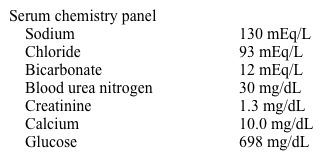 Which of the following electrolyte findings would most likely be seen in this patient?
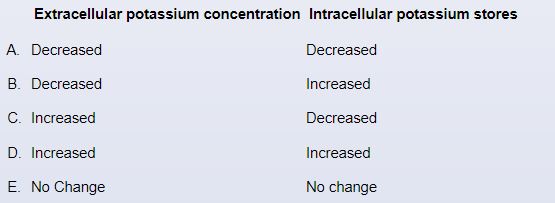
Which of the following electrolyte findings would most likely be seen in this patient? (Multiple Choice)
5.0/5 (89)
(89) A 2-week-old newborn is brought to the physician for a follow-up examination. He was born at term and the pregnancy was uncomplicated. His mother says he has been feeding well and passing adequate amounts of urine. He appears healthy. He is at the 60th percentile for length and 40th percentile for weight. His temperature is 37.3°C (99.1°F), pulse is 130/min, respirations are 49/min and blood pressure is 62/40 mm Hg. A grade 5/6 holosystolic murmur is heard over the left lower sternal border and a thrill is present at the same location. Echocardiography shows a 3-mm membranous ventricular septal defect. Compared to an unaffected child, which of the following changes in oxygen saturation would be expected in this patient? 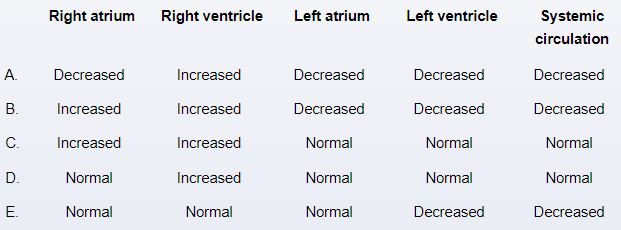
(Multiple Choice)
4.8/5 (78)
(78) A 32-year-old woman arrives at the emergency department complaining of lightheadedness and shortness of breath that began while shopping at a supermarket. She had increasing shortness of breath over the last six months and had to modify her daily activities. The patient has no other medical issues and does not smoke, drink alcohol, or use illegal drugs. There is no history of heart disease, stroke, or blood clots in the family. Her body mass index (BMI) is 25 kg/m2. Following an initial evaluation, the patient reports that she feels "fine," refuses further evaluation, and insists on being discharged. She passes away a month later. Her heart was autopsied with the following appearance (RV, right ventricle; LV, left ventricle): 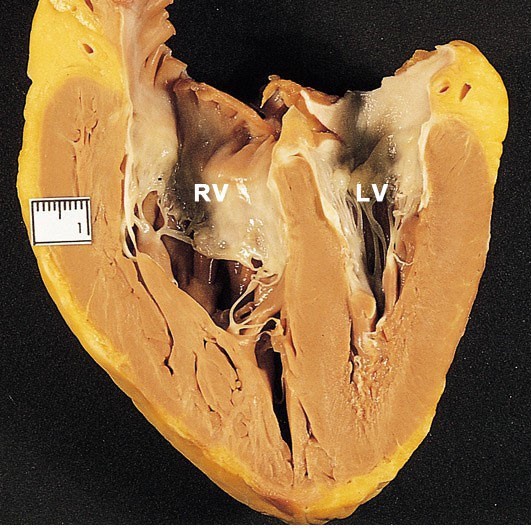 Which of the following is the most likely diagnosis?
 (Multiple Choice)
4.8/5 (68)
(68) A 4-month-old African-American infant is brought to the pediatrician for a well-baby check-up. He was born at term through a normal vaginal delivery and has been well since. His 4-year old brother has sickle-cell disease. He is exclusively breastfed and receives vitamin D supplements. His immunizations are up-to-date. He appears healthy. His length is at the 70th percentile and weight is at the 75th percentile. Cardiopulmonary examination is normal. The patient's mother smokes a pack of cigarettes daily. Which of the following conditions is the infant at highest risk for developing from exposure to cigarette smoke?
(Multiple Choice)
4.7/5 (82)
(82) A 21-year-old woman is admitted to the hospital for elective subtotal colectomy with ileo-rectal anastomosis due to abnormal colonoscopic findings. Because of a family history of colon cancer, she had a screening colonoscopy. Her maternal grandfather died of metastatic colon cancer, and her mother was recently diagnosed with the disease as well. The patient has no other medical issues, is not on any medications, and does not use tobacco, alcohol, or illegal drugs. There are no operative complications. Numerous lesions are present throughout the resected colon, some of which are depicted in the histopathology exhibit below. 11ec160b 39f4 363d 9249 9b203da374d9 MD0001 00 Genetic testing is most likely to reveal a germline mutation resulting in which of the following effects?
(Multiple Choice)
4.8/5 (76)
(76) A 60-year-old man is brought to the emergency department with fever, purulent nasal discharge, and epistaxis. The patient has had fever and persistent nasal discharge for the past 5 days. He developed intermittent epistaxis 2 days ago that has been difficult to control. The patient has also had easy bruising for the past 2 months. Medical history is significant for chronic pancreatic insufficiency , and he has not been taking his prescribed medications. Results of coagulation studies are as follows: 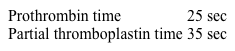 Which of the following coagulation factors is most likely to be abnormal in this patient?
 (Multiple Choice)
4.7/5 (88)
(88) A 2-year-old kid is brought to the office by his mother because of a rash that began three days earlier. A similar red, itchy rash on the face, torso, and arms has appeared on and off since childhood. The mother suspected that the rashes were caused by particular meals, but eliminating cow's milk and fruits had no effect on the rash. There have been a couple upper respiratory infections but no significant illnesses for the patient. He has had all of his vaccinations and does not use any drugs. He goes to a day care center. The vital indicators are within normal ranges. The exhibit depicts the rash on the patient's back.  Similar findings are observed on the cheeks and proximal upper extremities. The diaper area is clear, and no mucosal lesions are present. This patient's condition is often associated with the development of which of the following disorders?
 (Multiple Choice)
4.7/5 (92)
(92) A 58-year-old man comes to the physician because of a 5-day history of progressively worsening shortness of breath and fatigue. He has smoked one pack of cigarettes daily for 30 years. His pulse is 96/min, respirations are 26/min, and blood pressure is 100/60 mm Hg. BMI is 30 kg/m2. Oxygen saturation is 92% on room air. The apical impulse is palpated in the 6th intercostal space along the anterior axillary line. There is 3+ bilateral pitting edema in the legs. Which of the following is most likely increased in this patient?
(Multiple Choice)
4.9/5 (87)
(87) 
Filters
- Essay(0)
- Multiple Choice(0)
- Short Answer(0)
- True False(0)
- Matching(0)