



 Chat with AI
Exam 10: Pathology

Exam 1: Anatomy265 Questions
Exam 2: Behavioral Sciences178 Questions
Exam 3: Biochemistry102 Questions
Exam 4: Embryology59 Questions
Exam 5: Epidemiology, Biostatistics, and Medical Informatics94 Questions
Exam 6: Genetics88 Questions
Exam 7: Histology46 Questions
Exam 8: Immunology147 Questions
Exam 9: Microbiology and Virology330 Questions
Exam 10: Pathology817 Questions
Exam 11: Pharmacology and Toxicology509 Questions
Exam 12: Physiology339 Questions
Exam 13: Psychiatry and Psychotherapy23 Questions
Select questions type


A 22-year-old woman presents to the officebecause of feeling extremely self-conscious about her body. She describes having various periods of strict dieting interspersed with days when she binges on candy bars and dessert foods. She notes that although she feels some relief immediately after a binge, she feels extremely distressed afterwards and has started making herself throw up. She is engaging in binge-purge episodes about 5 to 6 times per week. Her BMI is 21 kg/m2. Routine laboratory evaluation shows a potassium level of 3.1 mEq/L. Physical examination is most likely to show which of the following abnormalities?
(Multiple Choice)
4.8/5  (61)
(61) A 56-year-old male is evaluated in the hospital due to yellow discoloration of his eyes. Two days ago, he underwent laparoscopic herniorrhaphy for an indirect inguinal hernia. His vital signs are within normal limits. Physical examination shows scleral icterus. Abdominal examination shows no abnormalities. Serum laboratory results are as follows: 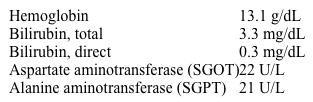 Two weeks after her examination, the patient's symptoms resolve. Repeat testing shows a total bilirubin concentration of 1.5 mg/dL. Which of the following changes most likely contributed to this patient's hyperbilirubinemia?
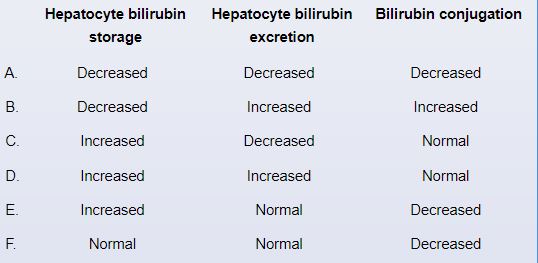
Two weeks after her examination, the patient's symptoms resolve. Repeat testing shows a total bilirubin concentration of 1.5 mg/dL. Which of the following changes most likely contributed to this patient's hyperbilirubinemia? (Multiple Choice)
4.9/5 (81)
(81) A68-year-old man is brought to the emergency department by because of worsening confusion for the past week. His wife says that he had a nagging cough that seemed to worsen over the past several months and that he began experiencing occasional dizziness earlier this week. He has a history of an ischemic stroke 4 months ago. Current medications are aspirin. He is lethargic and disoriented. His pulse is 78/min, and blood pressure is 135/88 mm Hg. Physical examination shows moist oral mucosa, normal skin turgor, and no peripheral edema. Laboratory results are as follows: 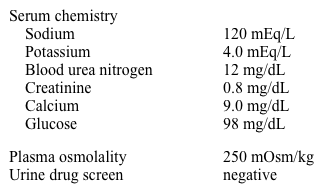 Chest x-ray reveals a mass in the right lung. Which of the following additional findings is most likely to be present in this patient?
 (Multiple Choice)
4.8/5 (87)
(87) A 28-year-old primigravid woman at 35 weeks' gestation comes to the physician with a 5-day history of epigastric pain and nausea that is worse at night. Two years ago, she was diagnosed with a peptic ulcer and was treated with a proton pump inhibitor and antibiotics. Medications include folic acid and a multivitamin. Her pulse is 90/min and blood pressure is 130/85 mm Hg. Pelvic examination shows a uterus consistent in size with a 35-week gestation. The abdomen is tender over the right upper quadrant, but no rebound or guarding is present. Hemoglobin is 8 g/dL. Urinalysis shows 3+ protein. Which of the following associated laboratory changes are most likely to be seen in this patient? 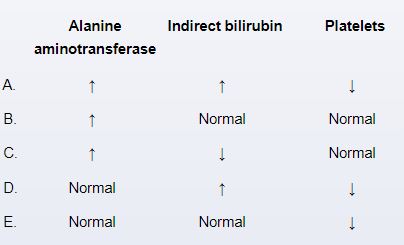
(Multiple Choice)
4.9/5 (80)
(80) A 64-year-old man comes to the office due to several episodes of intermittent hematuria over the past 2 months. He has had no abdominal pain, burning on urination, or fever but has lost 4.5 kg (10 lb) since the onset of symptoms. The patient has smoked a pack of cigarettes daily for 30 years. Vital signs are within normal limits. The abdomen is soft, nontender, and nondistended. Ultrasound reveals a mass in the right kidney. A subsequent abdominal CT scan confirms the presence of a large right renal mass with evidence of necrosis. The patient undergoes a right total nephrectomy. The specimen is shown below. 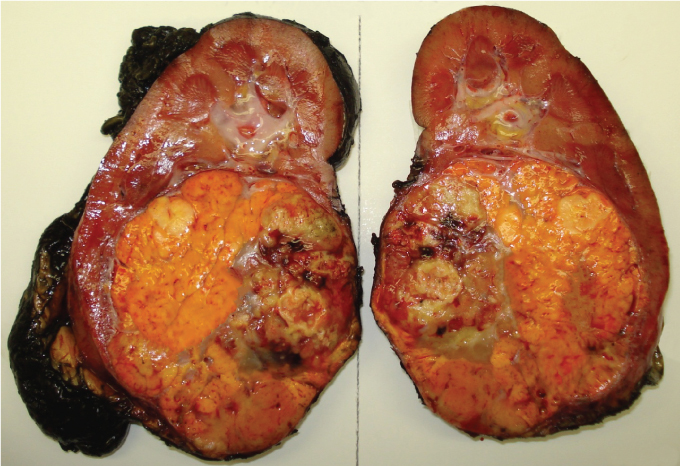 This patient's lesion most likely originated from which of the following portions of the kidney?
 (Multiple Choice)
4.8/5 (67)
(67) A 52-year-old woman comes to the physician because of a 3-month history of pain and a burning sensation in both feet. She has hypertension, type 2 diabetes mellitus, and chronic knee pain. Current medications are enalapril, hydrochlorothiazide, metformin, sitagliptin, and tramadol. She does not smoke, drink alcohol, or use illicit drugs. Neurologic examination shows decreased sensation to pinprick, light touch, and vibration in both feet. Ankle reflexes are absent bilaterally. Romberg test is negative. This patient's neurological symptoms are most likely associated with which of the following features?
(Multiple Choice)
4.8/5 (87)
(87) A 17-year-old boy is brought to the clinic due to poor vision at night. The patient developed mild difficulty seeing at night about 4 months ago, and it has slowly worsened. Visual field examination shows visual loss in the midperiphery. External eye examination reveals normal tear formation. Funduscopic examination shows bilateral optic disc pallor, attenuation of retinal vessels, and areas of dark discoloration in the retina. Which of the following is the most likely mechanism of this patient's visual impairment?
(Multiple Choice)
4.8/5 (83)
(83) A 49-year-old man comes to the hospital for a 10-day history of cough and worsening shortness of breath. He has sharp right-sided chest pain that worsens on inspiration and coughing. Two weeks ago, the patient was admitted to the hospital after passing out on the street from alcohol intoxication but he left against medical advice. He has coronary artery disease and hypertension. He takes no medications. He drinks 4 cans of beer daily and has smoked 2 packs of cigarettes daily for 20 years. His temperature is 38.5°C (101.3° F), pulse is 110/min, respirations are 29/min, and blood pressure is 110/65 mmHg. Examination shows poor dentition. Chest x-ray is shown below. 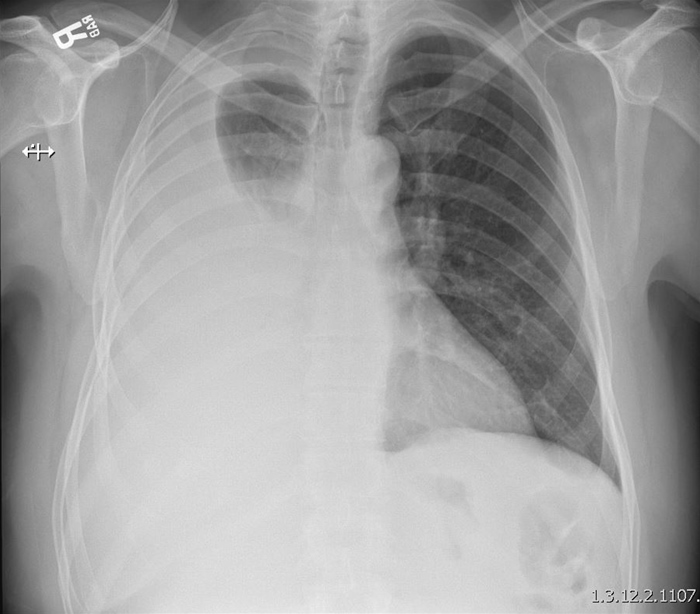 Which of the following would be the expected physical examination finding over the right lower chest?
 (Multiple Choice)
4.8/5 (82)
(82) A 62-year-old man comes to the emergency department because of right-sided back pain, nausea, and dark urine. He reports alternating episodes of decreased urine output followed by a temporary increase in urine output for the past 2 days. In the past year, he has had two urinary tract infections. He has Crohn disease and underwent a small bowel resection 5 years ago. He currently takes mesalamine and a multivitamin. His father had recurrent kidney stones. His vital signs are within normal limits. X-ray of the abdomen reveals a nonspecific bowel gas pattern with no evidence of renal calculi. Ultrasound of the abdomen shows a 4-mm stone in the distal right ureter. The patient is treated with analgesics and the stone passes spontaneously. Microscopic analysis of the stone reveals a pure uric acid stone. Which of the following is the most likely underlying mechanism leading to stone formation in this patient?
(Multiple Choice)
4.9/5 (81)
(81) A 27-year-old woman comes to the physician because of a 2-month history of increasing shortness of breath and a nonproductive cough. She has been unable to perform her daily activities. She has also had malaise and bilateral ankle pain during this period. Her temperature is 37.8°C (100.0°F), pulse is 100/min, respirations are 24/min, and blood pressure is 112/72 mm Hg. Pulse oximetry on room air shows an oxygen saturation of 94%. Chest x-ray is shown below. 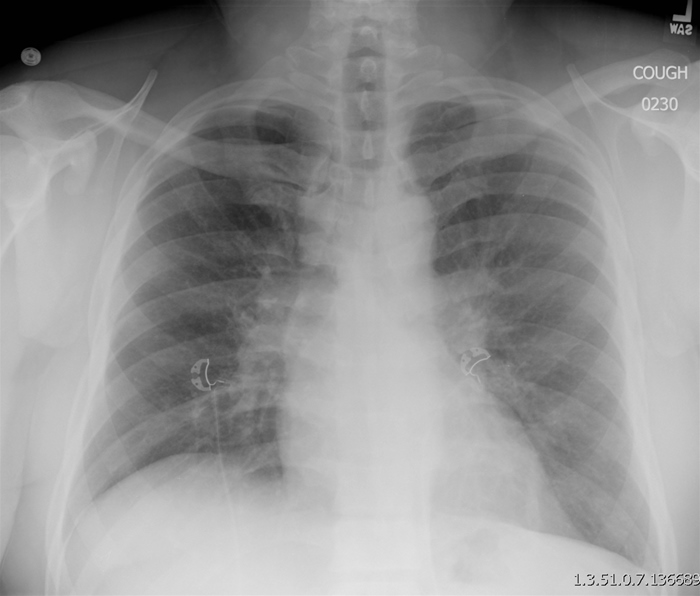 A palpable lymph node in the supraclavicular bed is biopsied and pathology reveals well-formed, noncaseating granulomas. Which of the following is the most likely diagnosis?
 (Multiple Choice)
4.7/5 (95)
(95) A 76-year-old man is taken to the emergency room after being involved in a car accident. He is found to have a splenic laceration and is taken to the hospital for an emergent laparotomy. Despite aggressive resuscitation efforts, the patient goes into cardiac arrest and dies during surgery. An autopsy is performed, and the areas of thickening inside the chest wall are shown below. 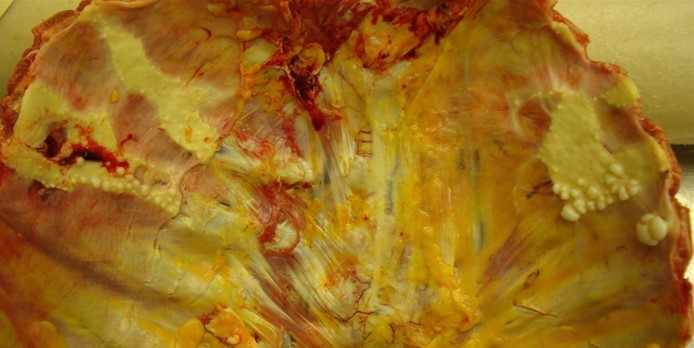 Lung examination shows fibrosis of the lower lobes. Pathologic examination of these fibrotic areas is most likely to reveal which of the following findings?
 (Multiple Choice)
4.9/5 (83)
(83) A 63-year-old man comes to the office due to exertional dyspnea that has been progressively worsening over the last 3 weeks. He sleeps in a recliner with his head elevated because he gets short of breath when lying flat in bed. Medical history includes gout, dyslipidemia, and hypertension. Blood pressure is 154/89 mm Hg and pulse is 85/min. Physical examination shows distended jugular veins in the semi-recumbent position. An apical heave is present on cardiac examination. There is pitting edema in the bilateral lower extremities. aboratory testing reveals elevated brain natriuretic peptide levels. Which of the following is the primary trigger for the release of this substance in this patient?
(Multiple Choice)
4.8/5 (78)
(78) A 50-year-old man with polycystic kidney disease arrives at the clinic complaining of constant, severe pain in his shoulders, arms, and legs. Long-standing hypertension treated with ramipril is part of the patient's medical history. The blood pressure is 150/85 mm Hg, and the pulse rate is 78 beats per minute. The cardiopulmonary exam is normal. Large, palpable renal masses are discovered during an abdominal examination. There is some bilateral lower-extremity edema. Two years ago, laboratory results revealed a blood urea nitrogen level of 25 mg/dL and a creatinine level of 2.3 mg/dL. The following are the most recent laboratory results: 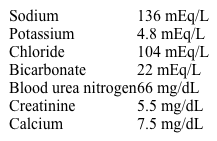 Which of the following metabolic states is most likely present in this patient?
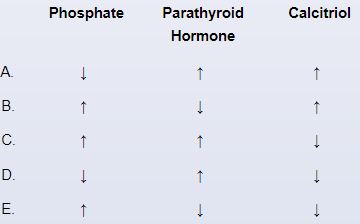
Which of the following metabolic states is most likely present in this patient? (Multiple Choice)
4.9/5 (81)
(81) A 34-year-old, previously healthy woman comes to the office due to irregular menstruation and a 4.5 kg (10-lb) weight gain over the past 6 months. The patient also reports muscle weakness causing difficulty climbing stairs or lifting her child. Blood pressure is 152/86 mm Hg and pulse is 72/min. BMI is 31 kg/m2. Laboratory studies reveal an elevated serum cortisol level that is not suppressed following administration of low-dose dexamethasone. Her 24-hour urine free-cortisol concentration and plasma ACTH are elevated. Which of the following histopathologic findings are most likely to be present in this patient's adrenal glands?
(Multiple Choice)
4.7/5 (69)
(69) A 3200-g (7.1-lb) female newborn is examined in the hospital nursery. She was born at 38 weeks' gestation to a 25-year-old woman following an uncomplicated pregnancy and delivery. The mother had regular prenatal visits throughout the pregnancy. The newborn's blood pressure is 53/35 mm Hg. Examination in the delivery room shows clitoromegaly and posterior labial fusion. . Cytogenetic analysis reveals a 46,XX karyotype. Abdominal imaging shows bilateral adrenal hyperplasia. This patient is most likely deficient for an enzyme normally responsible for which of the following reactions?
(Multiple Choice)
4.9/5 (94)
(94) A 35-year-old man comes to the physician because of a painless lump on his neck. Physical examination shows a firm, irregular swelling on the right side of the neck. Ultrasonography of the thyroid gland shows a 2-cm nodule with irregular margins and microcalcifications in the right thyroid lobe. There are multiple 4- to 8-mm soft papules on the lips and tongue. The arm span exceeds his height and the patient has long fingers. Serum calcitonin levels are elevated. Which of the following is most likely to develop in this patient?
(Multiple Choice)
4.9/5 (88)
(88) A 68-year-old Caucasian woman arrives at the emergency department after experiencing severe upper back pain for several hours. The patient developed the pain after being jolted while driving over a pothole. She has no history of back pain or major trauma, and she hasn't seen a doctor in many years. The patient is retired and leads a sedentary existence. She enjoys a glass of wine every day and follows a healthy, balanced diet. 18.4 kg/m2 is the BMI. There is point tenderness over the T10 vertebra on examination. The neurologic exam is unremarkable. A T10 compression fracture is revealed by a spine X-ray. Area C on the graph represents the normal serum calcium and parathyroid hormone concentrations. 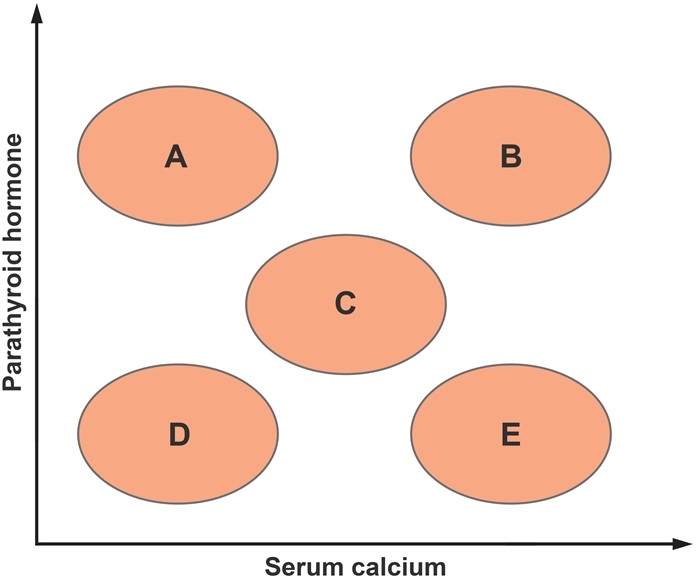 Which of the following areas most likely corresponds to this patient's current metabolic state?
 (Multiple Choice)
4.9/5 (78)
(78) A 3500-g (7.7-lbs) female newborn is delivered at 39 weeks' gestation to a 27-year-old woman, gravida 2, para 1. Apgar scores are 8 and 9 at 1 and 5 minutes, respectively. The mother had regular prenatal visits throughout the pregnancy. She did not smoke or drink alcohol. She took multivitamins as prescribed by her physician. The newborn appears active. Her temperature is 37.0°C (98.6°F), pulse is 120/min, and blood pressure is 55/35 mm Hg. Examination in the delivery room shows clitoromegaly. Laboratory results are as follows: 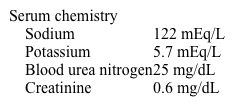 Which of the following additional laboratory findings are most likely to be seen in this patient?
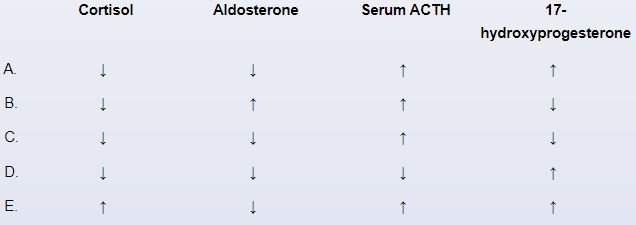
Which of the following additional laboratory findings are most likely to be seen in this patient?
(Multiple Choice)
4.8/5 (79)
(79) A 48-year-old woman presented to the emergency department complaining of a 2-day history of recurrent vomiting and abdominal pain. The patient has no hematemesis, hematochezia. During the last months, the patient presented to the emergency department several times due to right upper quadrant abdominal pain related to fatty foods consumption. Ultrasound found a 3-cm sized gallstone. On examination, the patient has a distended tympanic abdomen with increased bowel sounds. An abdominal x-ray shows air in the gallbladder tree. This patient's gallstone has been impacted at which of the following sites?
(Multiple Choice)
4.7/5 (72)
(72) A 75-year-old man comes to the physician for the evaluation of progressive shortness of breath and fatigue over the past month. He reports that he cannot climb more than one flight of stairs without experiencing shortness of breath and dizziness. He is diagnosed with severe calcific aortic stenosis and undergoes transcatheter aortic valve implantation through femoral access. The following hemodynamic changes are observed:  Which of the following complications should be suspected in this patient?
 (Multiple Choice)
4.9/5 (75)
(75) 
Filters
- Essay(0)
- Multiple Choice(0)
- Short Answer(0)
- True False(0)
- Matching(0)