



 Chat with AI
Exam 10: Pathology

Exam 1: Anatomy265 Questions
Exam 2: Behavioral Sciences178 Questions
Exam 3: Biochemistry102 Questions
Exam 4: Embryology59 Questions
Exam 5: Epidemiology, Biostatistics, and Medical Informatics94 Questions
Exam 6: Genetics88 Questions
Exam 7: Histology46 Questions
Exam 8: Immunology147 Questions
Exam 9: Microbiology and Virology330 Questions
Exam 10: Pathology817 Questions
Exam 11: Pharmacology and Toxicology509 Questions
Exam 12: Physiology339 Questions
Exam 13: Psychiatry and Psychotherapy23 Questions
Select questions type


Atherosclerotic lesions of the coronary arteries can limit blood flow to the myocardial regions supplied by the affected vessels. In some patients, certain medications can cause a redistribution of blood flow away from the ischemic areas, exacerbating existing myocardial ischemia. Which of the following drug effects is most likely to produce this phenomenon?
(Multiple Choice)
4.9/5  (89)
(89) A 65-year-old man is brought to the emergency department because of a 7-hour history of shortness of breath and chest pain. The pain started suddenly after he got out of bed in the morning and is worse on inspiration. Medical history is remarkable for type 2 diabetes mellitus complicated by diabetic nephropathy. The patient undergoes a 2-part nuclear medicine test. During the first part, he breathes in a radioactive tracer and a lung scan is performed. In the second part of the test, he is given an intravenous injection of a different radioactive material while breathing normal air, and the scan is repeated. When the images are compared, a large area of the lower right lung is not visualized in the second scan. Based on the observed findings, which of the following underlying disease processes is most likely present in this patient?
(Multiple Choice)
4.9/5 (87)
(87) It is demonstrated that the cells identified by the specific immunohistochemical stain overexpress an 185 kD glycoprotein that bridges the cell membrane and possesses intracellular tyrosine kinase activity. Which of the following is the most likely function of this protein?
(Multiple Choice)
4.8/5 (79)
(79) The abnormal rhythm in this patinet most likely originated in?
(Multiple Choice)
4.9/5 (85)
(85) A 67-year-old man with dyslipidemia is evaluated due to occasional dizziness. His symptoms are exacerbated while carrying weights in the gym. The patient is a known case of coronary artery disease. The patient is a heavy smoker and alcoholic. He does not have orthostatic hypotension. ECG reveals normal sinus rhythm. Doppler ultrasound evaluation of the right vertebral artery reveals retrograde (caudal) flow. Which of the following arteries is most likely to be occluded based on these findings?
(Multiple Choice)
4.8/5 (84)
(84) A 17-year-old girl is brought to the physician because of generalized fatigue and an inability to concentrate in school for the past 4 months. During this period, she has had excessive daytime sleepiness. While going to sleep, she sees cartoon characters playing in her room. She wakes up once or twice every night. While awakening, she feels stiff and cannot move for a couple of minutes. She goes to sleep by 9 pm every night and wakes up at 7 am. She takes two to three 15-minute naps during the day and wakes up feeling refreshed. Examination shows no abnormalities. Which of the following is the most likely diagnosis in this patient?
(Multiple Choice)
4.8/5 (89)
(89) A 52-year-old man comes to the physician because of a 2-month history of palpitations. He says that he can feel his heartbeat in his chest all the time. For the past 3 weeks, he has had shortness of breath on exertion. He has not had chest pain, orthopnea, or nocturnal dyspnea. He has a history of intravenous drug use and diagnosed with infective endocarditis which was successfully treated with a long course of antibiotics. He emigrated from Nepal at the age of 25 years. His temperature is 36.5°C (97.7°F), pulse is 103/min, and blood pressure is 145/56 mm Hg. Chest auscultation reveals a decrescendo diastolic murmur over the third intercostal space along the left sternal border. Echocardiogram shows severe aortic regurgitation, likely as a sequela to the prior infection. Which of the following changes is most responsible for maintaining cardiac output in the setting of this valvular abnormality?
(Multiple Choice)
4.9/5 (86)
(86) A 34-year-old woman visits her doctor complaining of frequent urination. She attempted to limit her fluid intake but found it difficult because she became extremely thirsty. The doctor evaluates her kidneys' water-saving function by administering a water restriction test, which reveals excessively dilute urine. Low vasopressin levels have been found in laboratory studies conducted during a period of water deprivation. The doctor diagnoses the patient with central diabetes insipidus and explains that her kidneys are unable to absorb enough water due to faulty hormone production. Which of the following nephron areas is normally water-impermeable regardless of serum vasopressin levels? 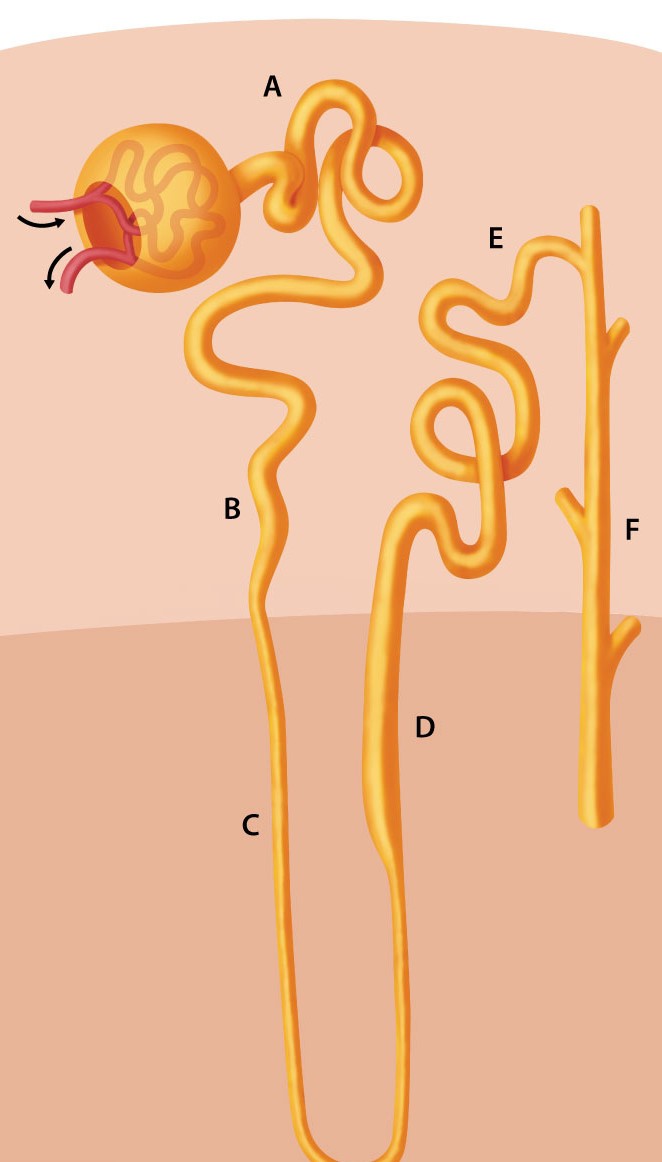
(Multiple Choice)
4.9/5 (83)
(83) A 27-year-old woman comes to the emergency department because of progressive numbness and weakness in her left arm and left leg for 2 days. During this period, she has also had urinary urgency and incontinence. Three months ago, she had blurry vision, difficulty distinguishing colors, and headache for one week, all of which have since resolved. Her temperature is 37°C (98.6°F), pulse is 78/min, respirations are 14/min, and blood pressure is 110/68 mm Hg. Muscle strength in the extremities is 3/5 on the left and 5/5 on the right. Upon flexion of the neck, the patient experiences a shooting electric sensation that travels down the spine. Which of the following pathologic brain lesions is most specific for this patient's disease process?
(Multiple Choice)
4.8/5 (73)
(73) A 60-year-old man is hospitalized for a complicated hip fracture requiring surgical repair following a fall. His medical problems include prostate cancer, gout, and osteoarthritis. An indwelling urinary catheter is placed due to initial urinary retention and immobilization following the surgery. On the eighth day of hospitalization, the patient develops fever and altered mental status. After evaluation and laboratory testing, a urinary tract infection is diagnosed. Which of the following is the most effective strategy for preventing this complication?
(Multiple Choice)
4.9/5 (64)
(64) An obese 63-year-old man comes to the physician because of 3 episodes of red urine over the past week. He has also had recurrent headaches and intermittent blurry vision during the past month. He has benign prostatic hyperplasia. He works as an attendant at a gas station. The patient has smoked one pack of cigarettes daily for the last 40 years. He does not drink alcohol. Current medications include tamsulosin. His temperature is 37.4°C (99.4°F), pulse is 90/min, and blood pressure is 152/95 mm Hg. Examination shows a flushed face. Serum calcium is 12.3 mg/dL. Urinalysis shows 30-40 red blood cells/hpf, negative protein, and no casts. A CT scan of the abdomen is shown below. 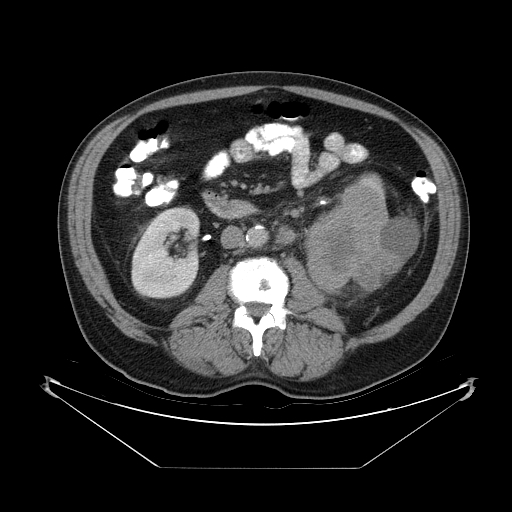 Which of the following is the most likely diagnosis?
 (Multiple Choice)
4.7/5 (75)
(75) A 10-year-old boy is brought to the emergency department because of a history of increasing tiredness and exertional dyspnea over the past two days. Three days ago, he was diagnosed with a urinary tract infection and was treated with nitrofurantoin. There is no personal history of serious illness. His parents emigrated from Kenya before he was born. Examination shows non-tender abdomen, and scleral icterus. Hemoglobin is 7.4 g/dL and mean corpuscular volume is 90 µm3. Which of the following additional findings are most likely present in this patient? 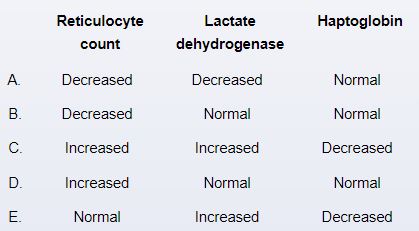
(Multiple Choice)
4.8/5 (93)
(93) An 8-year-old boy is brought to the office because of bilateral ankle swelling that occurred overnight. He has stopped wearing socks because they feel too tight. He has type 1 diabetes mellitus treated with insulin. He has received all scheduled immunizations. His temperature is 37.0°C (98.6°F), pulse is 90/min, respirations are 16/min, and blood pressure is 112/75 mm Hg. Cardiopulmonary and abdominal examinations show no abnormalities. There is moderate scrotal edema, and 2+ pitting edema of the lower extremities. Urinalysis shows 4+ proteinuria but is otherwise unremarkable. Which of the following secondary changes is most likely in this patient?
(Multiple Choice)
4.8/5 (84)
(84) A 38-year-old man comes to the physician because of depressed mood for 2 months. He works as a store manager and cannot concentrate at work anymore. He experiences daytime sleepiness and fatigue because he repeatedly wakes up at night and has difficulties falling asleep again after 4 AM. He reports no longer taking pleasure in activities he used to enjoy, such as going fishing with his son. He has decreased appetite and has had a weight loss of 5 kg (11 lb) over the past 3 months. The patient had a previous depressive episode in his 20s that responded rapidly to sertraline. Physical examination is normal. Which of the following would be most important to assess prior to initiating pharmacologic treatment for this patient?
(Multiple Choice)
4.8/5 (74)
(74) A 20-day-old newborn is brought to the physician because of poor feeding and lethargy for one week. The child was delivered at term at home and has not yet been evaluated by a physician. He is at the 90th percentile for head circumference, 50th percentile for length, and 60th percentile for weight. Vital signs are within normal limits. Serum TSH above the normal range and serum thyroxine (T4) below the normal range for his age. Examination shows scleral icterus and an enlarged tongue. Which of the following is the most likely cause of these findings?
(Multiple Choice)
4.7/5 (70)
(70) In the neonatal intensive care unit, a 4-hour-old girl is evaluated. After 3 hours of labor, the patient was born at 30 weeks gestation via spontaneous vaginal delivery. When labor began, the membranes ruptured and the amniotic fluid appeared clear. Due to signs of breathing difficulty, the child was immediately placed on continuous positive airway pressure via nasal prongs. The temperature is 36.7 degrees Celsius (98 degrees Fahrenheit), the pulse rate is 158 bpm, and the respirations rate is 54 /min. On 60% oxygen, pulse oximetry is 92% accurate. The examination reveals audible grunting as well as subcostal chest wall retractions. A cardiac exam reveals no murmurs. An x-ray of the chest is taken:: 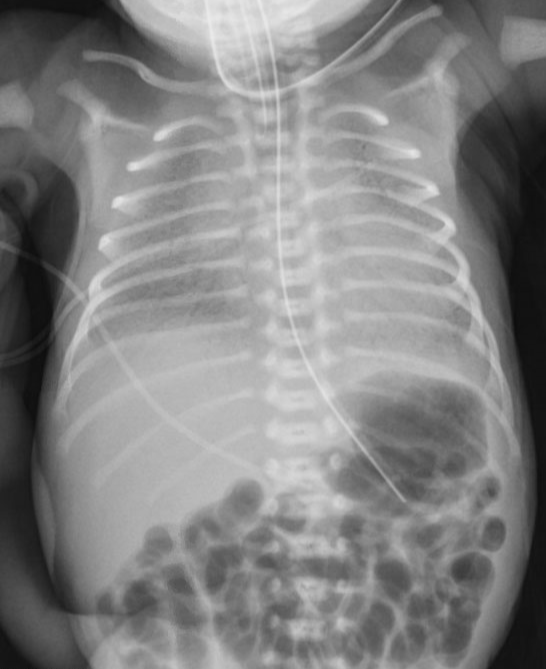 The radiographic findings in this patient most likely represent which of the following?
 (Multiple Choice)
4.8/5 (69)
(69) A 21-year-old man comes to the office due to nasal congestion and rhinorrhea. It occurs intermittently and is often accompanied by sneezing and itchy, watery eyes. It began 2 years ago and has worsened in severity. On examination, the nasal turbinates are edematous with clear rhinorrhea. There is bilateral conjunctival injection. Which of the following questions would be most helpful during further workup of this patient's condition?
(Multiple Choice)
4.8/5 (89)
(89) A 68-year-old woman comes to the emergency department due to an acute vision disturbance. She had an episode of dimming of vision in the left eye that occurred abruptly and resolved spontaneously in 20 minutes. For the past several weeks, the patient has had a dull ache in the left side of her jaw while chewing that resolves when she stops eating. She has also had malaise and hip muscle aches over the last several months. The patient has a history of hypertension and hypothyroidism. She is treated with prednisone, leading to marked and rapid improvement in her symptoms. Which of the following pathologic processes is most likely responsible for this patient's condition?
(Multiple Choice)
4.9/5 (64)
(64) A 17-year-old girl is brought to the physician for a well-child examination. She is worried about gaining weight. She frequents buffet restaurants but feels guilty soon after. Her last menstrual period was 3 weeks ago. She attends high school and plays field hockey on the school team. She is at the 25th percentile for height, 12th percentile for weight, and 17th percentile for BMI. Examination shows bilateral parotid gland enlargement. Which of the following is the most likely diagnosis?
(Multiple Choice)
4.8/5 (92)
(92) A 45-year-old guy is taken to the emergency room after suffering a severe head injury in a car accident. During transit, the patient experienced numerous generalized tonic-clonic seizures and was discovered to be unresponsive. In addition to alcohol and cocaine abuse, hypertension is listed among medical histories. Blood pressure is 170/96 mm Hg, the temperature is 36.7 C (98.1 F), the pulse is 50/min, and the respirations are 10/min. 98 percent of the patient is using mechanical breathing with 50% oxygen, according to pulse oximetry. The patient is found to be comatose, with rigidly extended upper and lower limbs and midpositioned, fixed pupils. In the picture below, a non-contrast CT scan of the head is seen. 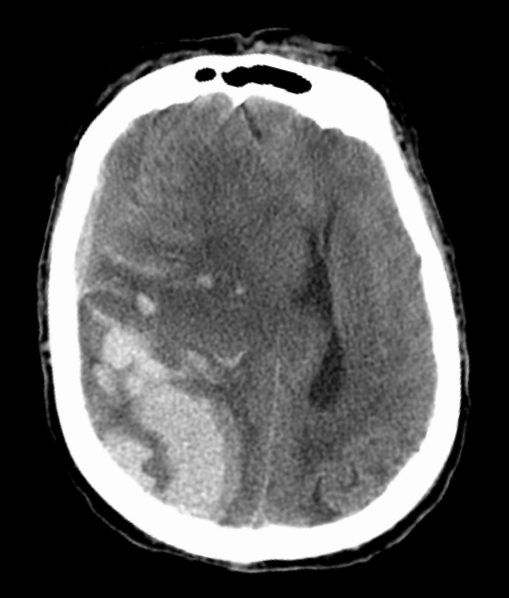 Damage to which of the following structures is the most likely explanation for this patient's abnormal posturing?
 (Multiple Choice)
4.8/5 (76)
(76) 
Filters
- Essay(0)
- Multiple Choice(0)
- Short Answer(0)
- True False(0)
- Matching(0)