



 Chat with AI
Exam 10: Pathology

Exam 1: Anatomy265 Questions
Exam 2: Behavioral Sciences178 Questions
Exam 3: Biochemistry102 Questions
Exam 4: Embryology59 Questions
Exam 5: Epidemiology, Biostatistics, and Medical Informatics94 Questions
Exam 6: Genetics88 Questions
Exam 7: Histology46 Questions
Exam 8: Immunology147 Questions
Exam 9: Microbiology and Virology330 Questions
Exam 10: Pathology817 Questions
Exam 11: Pharmacology and Toxicology509 Questions
Exam 12: Physiology339 Questions
Exam 13: Psychiatry and Psychotherapy23 Questions
Select questions type


A 50-year-old man comes to the physician because of a 3-week history of increased fatigue. He has a history of crohn disease. One year ago, he has admitted for lower abdominal pain and underwent for terminal ilium resection. Examination shows pallor of the mucosal membranes, mild scleral icterus, a swollen, red tongue, and several mouth ulcers. There is darkening of the skin over the dorsal surfaces of the fingers, toes, and creases of the palms and soles. The abdomen is soft and nontender; there is no palpable hepatosplenomegaly. Laboratory studies show a hemoglobin concentration of 9.1 gm/dL, Peripheral blood smear is shown below: 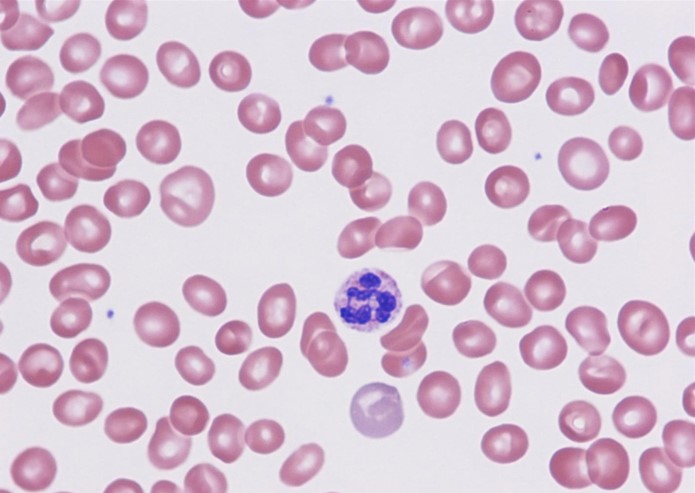 Which of the following is most likely responsible for this patient's current condition?
 (Multiple Choice)
5.0/5  (84)
(84) A 40-year-old man comes to the physician for the evaluation of episodic headaches for 5 months. The headaches involve both temples and are 4/10 in intensity. The patient has been taking acetaminophen, but the headaches did not subside. He has also had visual disturbances, including double vision. He has no nausea, temperature intolerance, or weight changes. The patient does not smoke. He drinks 2-3 beers on weekends. He appears pale. His temperature is 37°C (98.6°F), pulse is 75/min, and blood pressure 125/80 mm Hg. Ophthalmologic examination shows impaired peripheral vision bilaterally. An MRI scan of the head with contrast shows a 16 × 11 × 9 mm intrasellar mass. Which of the following pituitary hormones is most likely elevated in this patient?
(Multiple Choice)
4.8/5 (77)
(77) A 43-year-old man comes to the office with muscle weakness. His symptoms began 6 weeks ago and are worst in the hips and shoulders. The weakness has had a progressive course so that he is now having difficulty rising from chairs and combing his hair. The patient has had to reduce his regular exercise regimen due to weakness and has requested a modified work schedule for his job as a building maintenance manager. He has no history of spinal injury and no neck pain. Past medical history is insignificant, and the patient takes no medications. Muscle biopsy reveals an endomysial mononuclear infiltrate and patchy muscle fiber necrosis. An autoantibody directed against which of the following antigens is most likely to be seen in this patient?
(Multiple Choice)
4.8/5 (84)
(84) A 22-year-old woman with polycystic ovarian syndrome comes to the emergency department because of 2 hours history of right lower abdominal pain that began suddenly while she was running. Her last menstrual period was 2 weeks ago. Abdominal examination shows tenderness in the right lower quadrant with guarding. Urine pregnancy test is negative. Pelvic ultrasound shows a large simple cyst on the right ovary. Right ovarian artery flow is detectable on Doppler, but there is no flow detected in the right ovarian vein. Which of the following is the most likely diagnosis?
(Multiple Choice)
4.8/5 (87)
(87) A 3-year-old girl is brought to the physician by her parents because of unsteady and difficulty walking. She began to walk at 12 months and continues to have difficulty standing still without support. She also appears to have difficulty grabbing objects in front of her. Medical history is significant for recurrent ear and pulmonary infections. Vital signs are normal. Physical examination reveals numerous superficial nests of distended capillaries on the face and ears that blanch with pressure. This patient's condition is most likely due to a genetic defect affecting which of the following processes?
(Multiple Choice)
4.8/5 (83)
(83) A 73-year-old man is brought to the physician by his daughter for evaluation of increasing forgetfulness during the past 6 months. The daughter reports that he recently got lost while walking home from the grocery store. The patient has also been more irritable but has had no movement or gait abnormalities, feelings of depression, hallucinations, or delusions. On mental status examination, he has a normal affect. He is oriented to person and place but cannot recall which month it is. There are no focal neurologic deficits. Which of the following is most likely involved in the pathogenesis of this patient's condition?
(Multiple Choice)
4.9/5 (85)
(85) A 40-year-old man comes to the physician because of a 2-year history of gradually worsening shortness of breath. He smoked half a pack of cigarettes daily for 10 years but stopped 8 years ago. His pulse is 72/min, blood pressure is 135/75 mm Hg, and respirations are 20/min. Examination shows an increased anteroposterior diameter of the chest. Diminished breath sounds are heard on auscultation of the chest. Chest x-ray shows widened intercostal spaces, a flattened diaphragm, and bilateral basilar hyperlucency. Echocardiography reveals moderate dilation of the right ventricle and increased central venous pressure. The absence of peripheral edema in this patient is best explained by which of the following compensatory mechanisms?
(Multiple Choice)
4.8/5 (84)
(84) A 64-year-old man arrives at the emergency room with painless loss of vision in his right eye. The patient's symptoms began abruptly and have persisted for several hours. He has no history of trauma or similar events. He has had coronary artery disease, atrial fibrillation, and type 2 diabetes mellitus in the past. The blood pressure is 144/86 mm Hg, and the pulse rate is 92 beats per minute. Cardiovascular examination reveals an irregularly irregular rhythm with no murmurs, no peripheral edema, and symmetrically slightly diminished pedal pulses in both feet. Visual acuity in the right eye is limited to hand motion and normal in the left. The image below depicts a funduscopic examination of the right eye.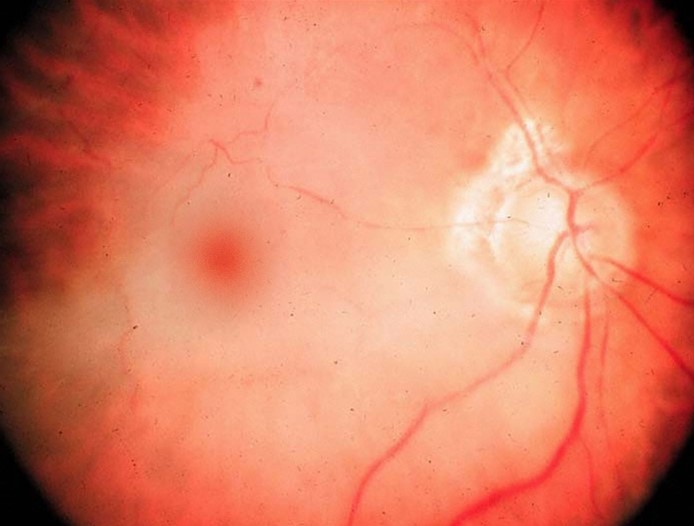 Which of the following is the most likely cause of this patient's loss of vision?
 (Multiple Choice)
4.7/5 (68)
(68) An 8-year-old boy is brought to the physician by his foster mother because of poor performance at school for the past 8 months. His teachers reported that he does not listen to their instructions, often talks during class, and rarely completes his school assignments. He does not sit in his seat in the classroom and often cuts in line at the cafeteria. His foster mother reports that he runs around a lot inside the house and refuses to help his sister with chores and errands. He frequently interrupts his foster mother's conversations with others and talks excessively. She has found him trying to climb on the roof on multiple occasions. He was placed in foster care because of neglect by his biological parents 3 years ago. Physical examination shows no abnormalities. Neurologic examination shows no focal findings. Which of the following is the most likely explanation for this patient's behavior?
(Multiple Choice)
4.8/5 (88)
(88) A 63-year-old man comes to the physician because of a 3-month history of fatigue and constipation. He reports having several weeks of leg swelling. The patient has a 40-pack-year smoking history but does not use alcohol or illicit drugs. He is afebrile and vital signs are within normal limits. On physical examination, there is symmetric pitting edema of the lower extremities bilaterally. The abdomen is soft and nondistended. A mobile left flank mass can be palpated. There are several vertically oriented tortuous veins on the lower abdominal wall. Which of the following structures is most likely obstructed in this patient?
(Multiple Choice)
4.9/5 (90)
(90) A 13-year-old girl is brought to the emergency department by her father because of a severe nosebleed after she fell down on her face. She takes no medications and has no history of serious medical illness but has had frequent nosebleeds in the past. Physical examination shows brisk bleeding from the right nare and pooled blood in the posterior pharynx. Laboratory evaluation shows decreased von Willebrand Factor antigen levels and activity, measured via the ristocetin cofactor assay. Which of the following sets of laboratory values is most likely present in this patient? 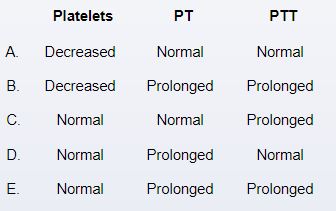
(Multiple Choice)
4.8/5 (81)
(81) A 45-year-old woman comes to the physician because of shortness of breath while lying on her back over the past month. During this period, she has also had several episodes of bloody coughing. The patient reports that she had a heart problem when she was a child that was treated with antibiotics. She emigrated to the US from Russia 5 years ago. There is no family history of serious illness. Pulmonary examination shows crackles at both lung bases. After cardiopulmonary examination, the physician suspects mitral stenosis. Which of the following is the most useful measure for assessing the degree of mitral stenosis?
(Multiple Choice)
4.8/5 (69)
(69) A 64-year-old man is brought to the emergency department because of dull lower abdominal pain for 3 hours. He has not urinated for 24 hours and has not passed stool for over 3 days. Medical history is significant for diet-controlled type 2 diabetes and degenerative arthritis of the knee. Physical examination shows a tender, palpable suprapubic mass. Bowel sounds are hypoactive. Abdominal ultrasound shows a large anechoic mass in the pelvis. Mild bilateral costophrenic angle tenderness is present. Laboratory results show a blood urea nitrogen level of 32 mg/dL and creatinine level of 2.6 mg/dL. Four weeks ago, laboratory studies were normal. Which of the following is the most likely cause of this patient's renal dysfunction?
(Multiple Choice)
4.9/5 (81)
(81) An hour ago, during a lecture, a 60-year-old professor started experiencing right-sided weakness and numbness. She was sent to the emergency room. He also feels queasy and disoriented. For 20 years, the patient smoked a pack a day, but he stopped 10 years ago. He doesn't consume alcohol. At the age of 70, his father suffered a myocardial infarction. Both the blood pressure and the pulse are 190/100 mm Hg. There are no indications of brain trauma during physical examination. Right-side strength is reduced (1/5) and the plantar reflex is active. A brain CT without contrast is quickly acquired. The photo is displayed below. 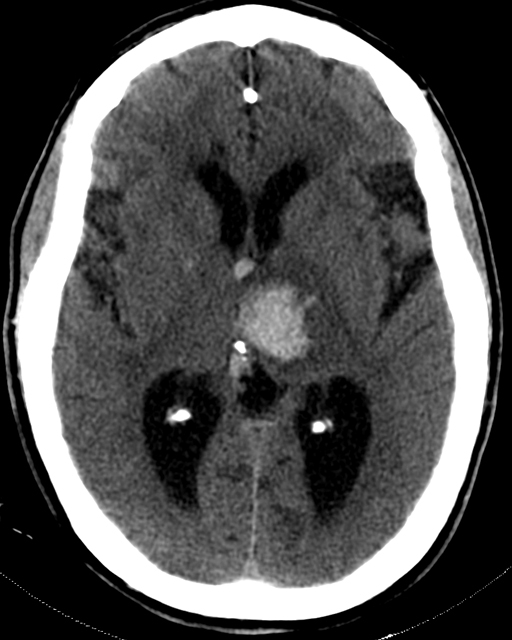 Which of the following is the most likely cause of this patient's condition?
 (Multiple Choice)
4.9/5 (84)
(84) A 40-year-old woman comes to the physician because of a small lump on the right side of her neck that she noticed while putting lotion on 1 week ago. She has not had any weight change, palpitations, or altered bowel habits. The patient's father died of thyroid cancer in his 30s. Menses occur at regular 30-day intervals and last for 4 days. She appears well. Her temperature is 37.0°C (98.6° F), pulse is 88/min, and blood pressure is 116/74 mm Hg. Examination shows a small nodule on the right side of the neck that moves with swallowing. There is no lymphadenopathy. The lungs are clear to auscultation. The remainder of the examination shows no abnormalities. Ultrasound of the neck shows a hypoechoic 0.9-cm (0.35-in) right lobe thyroid mass. Fine-needle biopsy of the nodule is consistent with a subtype of thyroid cancer. The patient undergoes total thyroidectomy with central neck dissection. Which of the following is the most likely histological finding?
(Multiple Choice)
4.8/5 (90)
(90) A 5-year-old boy is brought to the clinic after his mother noticed he was developing pubic hair. The boy had a recent growth spurt and is now taller than his 5-year-old brother. The patient's preschool teacher recently mentioned he has body odor after he runs or plays. Height is at the 95th percentile for age, and weight is at the 80th percentile. Examination reveals sparse growth of long, pigmented hair at the base of the penis and in both axillae. Testes are present bilaterally and appear normal. Laboratory assessment reveals high serum concentrations of 17-hydroxyprogesterone and testosterone.Which of the following is most likely present in this patient?
(Multiple Choice)
4.8/5 (64)
(64) An 80-year-old woman is assessed for blisters on both feet that have formed in the last week. The patient is in a nursing home because of dementia, but he has no other chronic medical illnesses and is not on any medications. The vital indicators are within normal ranges. There are no lesions in the mouth. The display depicts the results of the examination. 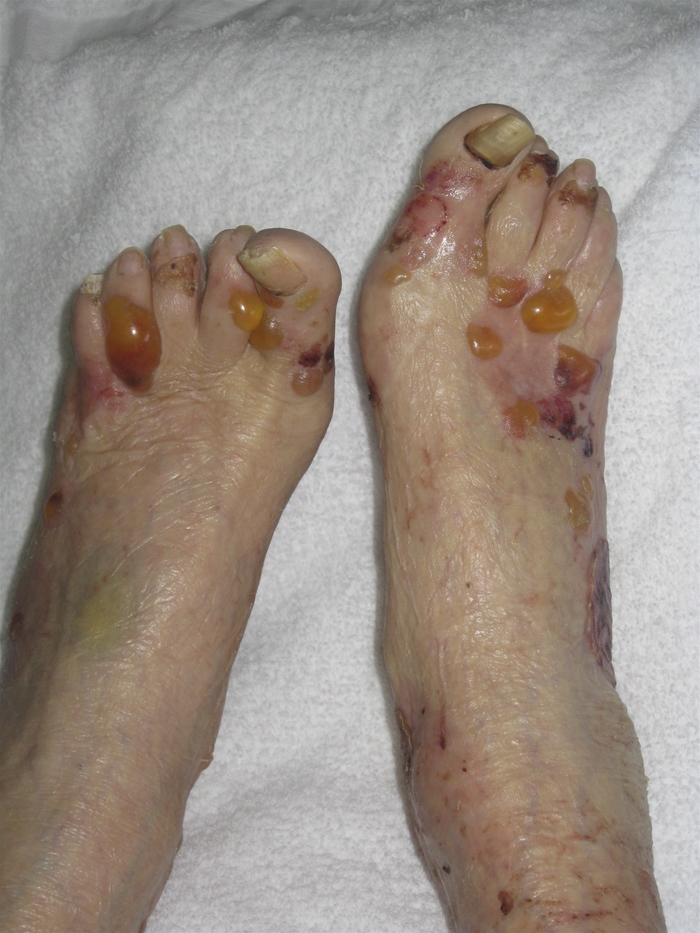 Which of the following is most likely involved in the pathogenesis of this patient's condition?
 (Multiple Choice)
4.7/5 (83)
(83) 
Filters
- Essay(0)
- Multiple Choice(0)
- Short Answer(0)
- True False(0)
- Matching(0)