



 Chat with AI
Exam 10: Pathology

Exam 1: Anatomy265 Questions
Exam 2: Behavioral Sciences178 Questions
Exam 3: Biochemistry102 Questions
Exam 4: Embryology59 Questions
Exam 5: Epidemiology, Biostatistics, and Medical Informatics94 Questions
Exam 6: Genetics88 Questions
Exam 7: Histology46 Questions
Exam 8: Immunology147 Questions
Exam 9: Microbiology and Virology330 Questions
Exam 10: Pathology817 Questions
Exam 11: Pharmacology and Toxicology509 Questions
Exam 12: Physiology339 Questions
Exam 13: Psychiatry and Psychotherapy23 Questions
Select questions type


A 23-year-old man with chronic hepatitis had physical testing, and the results can be seen in the photo below. These alterations to the cornea may be seen with the unaided eye. 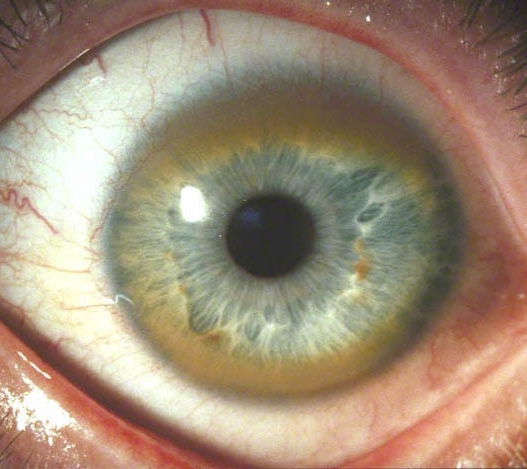 This patient is most likely to have which of the following conditions?
 (Multiple Choice)
4.8/5  (91)
(91) A 29-year-old primigravid woman comes to the emergency department with vaginal bleeding and pelvic pressure for several hours. Over the past 2 weeks, she had intermittent nausea and vomiting. A home urine pregnancy test was positive 10 weeks ago. She has had no prenatal care. Her pulse is 80/min and blood pressure is 150/98 mm Hg. Physical examination shows warm and moist skin. Lungs are clear to auscultation bilaterally. Her abdomen is soft and non-distended. Transvaginal ultrasound shows a central intrauterine mass with hypoechoic spaces; there is no detectable fetal heart rate. Hydropic villi are evacuated from the uterus during dilation and curettage. Which of the following should be closely monitored in this patient after the procedure?
(Multiple Choice)
4.9/5 (76)
(76) A 16-year-old kid who was previously healthy is examined for chronic headaches and impaired vision that began some months ago. Upon awakening in the morning, the headaches are more intense and frequently come with nausea and vomiting. He doesn't use cigarettes, alcohol, prescription pills, or illegal substances. Bilateral papilledema is noticeable on physical examination. The exhibit displays an MRI scan of the brain. 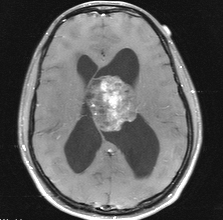 This patient's brain lesion most likely originated from which of the following cells?
 (Multiple Choice)
4.8/5 (74)
(74) A 65-year-old guy arrives to the workplace because of four months of deteriorating weariness. Even doing small home tasks makes the sufferer feel exhausted. He smokes 15 packs a year and drinks 2 or 3 beers every day. Blood pressure is 134/86 mm Hg, temperature is 37 C (98.6 F), and pulse is 76 beats per minute. Physical examination indicates a mild S2 and a late systolic ejection murmur. Auscultation reveals that the lungs are clean. Hepatosplenomegaly is absent, and the abdomen is smooth and nontender. No specific neurological impairments exist. According to laboratory tests, the mean corpuscular volume is 93 m3 and hemoglobin is 9 g/dL. Below is a peripheral blood smear: 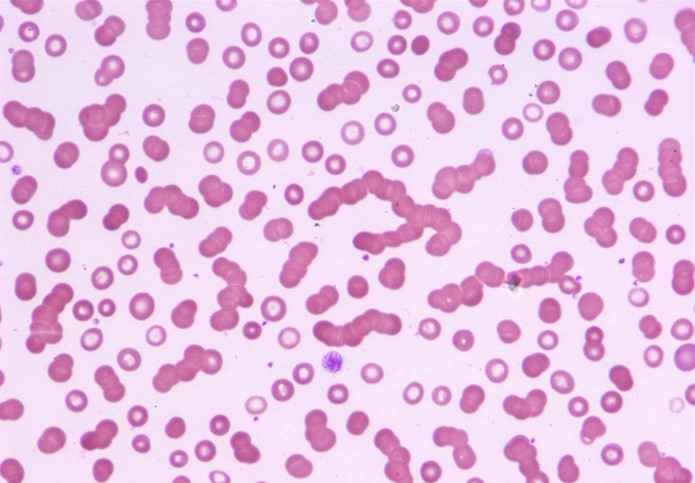 Which of the following best explains the observed erythrocyte findings in this patient?
 (Multiple Choice)
4.7/5 (74)
(74) A previously healthy 32-year-old man is brought to the emergency department by his girlfriend 1 hour after having a seizure. Earlier that day, he also experienced a nosebleed that took 30 minutes to stop when applying pressure. He has had no sick contacts or history of epilepsy or other seizure disorder. He does not take any medications. He is confused and disoriented. His temperature is 39.1°C (102.4°F), pulse is 106/min, respirations are 26/min, and blood pressure is 128/70 mm Hg. Examination shows pallor and scattered petechiae over the trunk and arms. Laboratory studies show hemoglobin of 8.9 g/dL with elevated reticulocyte count and a platelet count of 26,000/mm3. Bleeding time is prolonged; prothrombin time and activated partial thromboplastin time are normal. The peripheral blood smear shows schistocytes and reduced platelets with presence of giant forms. Blood urea nitrogen is 46 mg/dL and serum creatinine is 2.3 mg/dL. Urinalysis is positive for proteinuria and hematuria. Which of the following is most likely to be seen on renal biopsy?
(Multiple Choice)
4.9/5 (81)
(81) A 5-month-old male infant is brought to the physician by his parents for the evaluation of progressive enlargement of his head circumference. The patient was born at term by a lower segment transverse cesarean section because of a transverse lie. He has met all developmental milestones. His immunizations are up-to-date. The patient is at the 50th percentile for length, 50th percentile for weight, and 95th percentile for head circumference. He appears well-nourished. CT scan of the head reveals significant dilation of the lateral ventricles. If this condition is left uncorrected, which of the following is the most likely complication that will be seen in this patient?
(Multiple Choice)
4.9/5 (86)
(86) A 27-year-old woman comes to the emergency department because of progressive numbness and weakness in her left arm and left leg for 2 days. During this period, she has also had urinary urgency and incontinence. Three months ago, she had blurry vision, difficulty distinguishing colors, and headache for one week, all of which have since resolved. Her temperature is 37°C (98.6°F), pulse is 78/min, respirations are 14/min, and blood pressure is 110/68 mm Hg. Muscle strength in the extremities is 3/5 on the left and 5/5 on the right. Cerebrospinal fluid analysis shows mononuclear cell pleocytosis and oligoclonal banding. Which of the following pathologic findings is most likely to be present in this patient's brain?
(Multiple Choice)
4.9/5 (80)
(80) A gross brain section of a 54-year-old male who suffered from severe tuberculous meningitis is shown below. 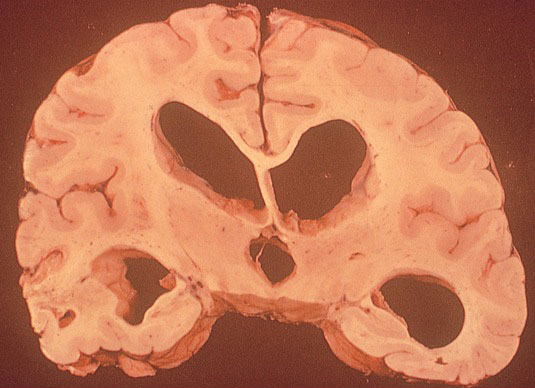 This patient's condition is most likely related to impaired function of which of the following?
 (Multiple Choice)
5.0/5 (72)
(72) A 52-year-old man comes to the physician because of a 4-day history of nonbloody, watery diarrhea that is associated with nausea and cramping lower abdominal pain. He says that the diarrhea is particularly foul smelling. There has been no change in his diet. Last week, he was treated with oral ciprofloxacin for a urinary tract infection. Laboratory studies show leukocytosis, and results from a stool specimen return positive for Clostridium difficile toxin genes by polymerase chain reaction. Three days later, one of the nurses who cared for the patient at the nursing home is admitted with diarrhea and is found to have C difficile infection. However, the other nurses who also took care of the patient are asymptomatic and do not develop the infection. If all the nurses were similarly exposed to C difficile, which of the following is the most likely reason that the asymptomatic nurses did not develop the infection?
(Multiple Choice)
4.7/5 (70)
(70) A 75-year-old man is brought to the emergency department 20 minutes after he lost consciousness. He was playing with his 3-year-old granddaughter when he suddenly collapsed and was unresponsive. He has had episodes of mild chest pain and dyspnea for the past 2 months, especially while working on his car. He has hypertension treated with hydrochlorothiazide. Examination shows a grade 3/6 late systolic murmur at the right sternal border that radiates to the carotids. His blood pressure is 90/60 mm Hg and his heart rate is 130/min with an irregularly irregular rhythm. Electrocardiogram shows new-onset atrial fibrillation without significant ST-segment or T-wave changes. Chest x-ray shows bilateral pulmonary edema. Which of the following hemodynamic changes is most likely associated with this patient's current presentation?
(Multiple Choice)
4.9/5 (83)
(83) A 20-year-old woman comes to the office due to gross hematuria. She otherwise feels well and has had no recent illnesses. She had a prior episode of hematuria 2 years ago that resolved spontaneously. The patient was diagnosed with type 1 diabetes mellitus approximately a year ago and is taking daily insulin injections. She works in a day care center and does not use tobacco, alcohol, or illicit drugs. Temperature is 37 C (98.6 F), blood pressure is 120/80 mm Hg, and pulse is 80/min. Physical examination shows no abnormalities. Laboratory results are as follows:  Which of the following is the most likely diagnosis?
 (Multiple Choice)
4.8/5 (70)
(70) A previously healthy 21-year-old guy arrives to the office with fever, lethargy, myalgia, and a nonproductive cough. His problems developed two weeks after he returned from touring Missouri caverns. The patient does not smoke, drink alcohol, or use illegal drugs. The temperature is 38.3 C (100.9 F), the blood pressure is 120/70 mm Hg, the pulse rate is 96 bpm, and the respirations rate is 16 /minute. Lung crackles are discovered during a physical examination. An x-ray of the chest reveals patchy parenchymal infiltrates with enlarged mediastinal and hilar lymph nodes. Which of the following is most likely to be present in the pulmonary lesions of this patient?
(Multiple Choice)
4.7/5 (63)
(63) A 7-year-old boy is brought to the office due to swelling of the hands and feet. Two weeks ago, the patient was treated for anaphylaxis following a bee sting. During the past 10 days, he has had progressive hand and foot swelling, and his pants feel tighter than usual. Urinalysis shows massive proteinuria with no hematuria. Further analysis reveals that urine protein consists principally of albumin with only trace amounts of IgG and alpha-2-macroglobulin. Which of the following pathologic changes is the most likely cause of this patient's urinary protein loss?
(Multiple Choice)
4.7/5 (86)
(86) A 65-year-old man comes to the office for evaluation of blood in the urine. The patient has no abdominal pain, urinary frequency, or urgency. He has hypertension, type 2 diabetes mellitus, and stage II chronic kidney disease. He quit smoking 10 years ago and had smoked a pack of cigarettes daily for 30 years. On examination, vital signs are within normal limits. The patient's BMI is 33 kg/m2. After appropriate work-up, the patient undergoes a renal biopsy; histopathologic findings are shown below. 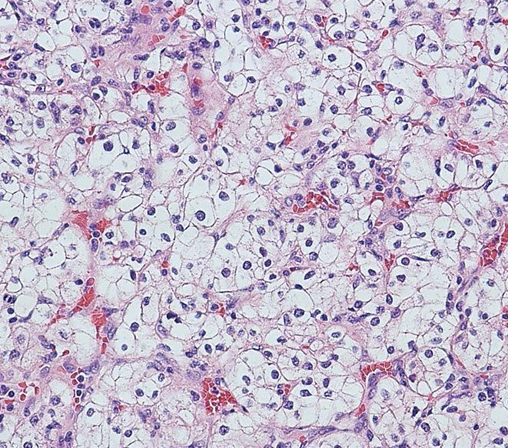 Which of the following processes most likely accounts for the abnormal appearance of these cells?
 (Multiple Choice)
4.9/5 (66)
(66) A 40-year-old woman presented to the office complaining of excessive thirst and urination in the last month. 4 months ago, the patient had surgery for a brain tumor. Her urine osmolality after 4 hours of water restriction is 230 mOsml/L, increased to 700 mOsm/L after desmopressin administration. The patient is started on desmopressin, her symptoms have resolved. Over the next year, the patient could not wean the medication, and her condition has been permanent. This presentation is best explained by injury to which of the following structures?
(Multiple Choice)
4.7/5 (77)
(77) A 56-year-old woman is brought to the emergency department due to several days of progressive dyspnea, productive cough, and fever. Today, her son found her very short of breath and obtunded. The patient has a history of hypertension, type 2 diabetes mellitus, and long-standing rheumatoid arthritis. Examination reveals bilateral pneumonia and severe respiratory distress. The patient is lethargic without focal neurologic deficits. Urgent endotracheal intubation is performed for mechanical ventilation, and the patient is started on broad-spectrum antibiotics. Repeat examination 2 hours later shows that she has developed areflexic, flaccid paralysis of all extremities. Which of the following is the most likely cause of the neurologic deficits in this patient?
(Multiple Choice)
4.9/5 (74)
(74) A 52-year-old woman comes to the physician because of a 3-week history of pain in her right knee. The pain is worse at the end of the day and when she walks. She says that it has become difficult for her to walk up the flight of stairs to reach her apartment. She has hypertension and psoriasis. Her sister has rheumatoid arthritis. She drinks two to three beers daily. Current medications include hydrochlorothiazide, topical betamethasone, and a multivitamin. She appears anxious. She is 160 cm (5 ft 3 in) tall and weighs 92 kg (202 lb); BMI is 36 kg/m2. Her temperature is 37.0°C (98.6°F), pulse is 87/min, and blood pressure is 135/83 mm Hg. Cardiopulmonary examination shows no abnormalities. There are several scaly plaques over the patient's upper and lower extremities. The right knee is not tender or erythematous; range of motion is limited. Crepitus is heard on flexion and extension of the knee. Her hemoglobin concentration is 12.6 g/dL, leukocyte count is 9,000/mm3, and erythrocyte sedimentation rate is 16 mm/h. Which of the following pathologic processes is most likely occurring in this patient's knee joint?
(Multiple Choice)
4.9/5 (81)
(81) A 52-year-old man comes to the physician because of night blurry vision over the past several months. He also has generalized pruritus. He underwent for cystoscopy for evaluation painless hematuria and the biopsy reveals a focal layer of stratified squamous epithelium with hyperkeratosis. On physical examination, her skin is diffusely coarse and dry. Which of the following processes is most likely responsible for these findings?
(Multiple Choice)
4.8/5 (86)
(86) A 15-year-old boy is brought to the emergency department because of severe pain in the right groin, nausea, and vomiting for 3 hours. The pain started shortly after participating in a soccer game; he does not recall any specific trauma. He has never experienced similar symptoms before. Temperature is 36.9 C (98.5 F), blood pressure is 110/86 mm Hg, and pulse is 92/min. On examination, there is no inguinal adenopathy. Abdominal examination shows no abnormalities. The right scrotum appears mildly swollen. There is severe tenderness on palpation of the scrotum that persists with elevation of the testes. Which of the following additional physical examination findings is most likely present in this patient?
(Multiple Choice)
4.7/5 (72)
(72) A 52-year-old woman comes to the physician complaining of episodes of blurry vision and headaches. She has severe itching after showering. her medical history is unremarkable. She has one daughter who was diagnosed with multiple sclerosis at age 23. Her temperature is 36.7°C (98.1°F), pulse is 80/min, and blood pressure is 144/84 mm Hg. Examination shows facial erythema. There are mild scratch marks on her arms and torso. Left hand strength is slightly decreased and there is mild dysmetria of the left hand on finger-to-nose testing. The remainder of the neurological examination shows no abnormalities. Her laboratory studies show 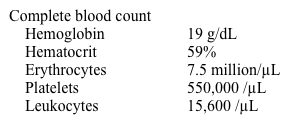 Which of the following is the most likely cause of this patient's findings?
 (Multiple Choice)
4.8/5 (69)
(69) 
Filters
- Essay(0)
- Multiple Choice(0)
- Short Answer(0)
- True False(0)
- Matching(0)