



 Chat with AI
Exam 10: Pathology

Exam 1: Anatomy265 Questions
Exam 2: Behavioral Sciences178 Questions
Exam 3: Biochemistry102 Questions
Exam 4: Embryology59 Questions
Exam 5: Epidemiology, Biostatistics, and Medical Informatics94 Questions
Exam 6: Genetics88 Questions
Exam 7: Histology46 Questions
Exam 8: Immunology147 Questions
Exam 9: Microbiology and Virology330 Questions
Exam 10: Pathology817 Questions
Exam 11: Pharmacology and Toxicology509 Questions
Exam 12: Physiology339 Questions
Exam 13: Psychiatry and Psychotherapy23 Questions
Select questions type


A 34-year-old man comes to the physician for a follow-up examination. One month ago, he underwent splenectomy after being involved in a motor vehicle collision. He recovered uneventfully and was discharged. Examination shows no abnormalities. Laboratory studies reveal: 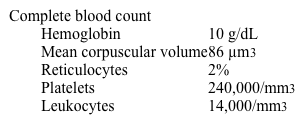 Blood cultures are obtained, and appropriate pharmacotherapy is initiated. His peripheral blood smear is shown in the exhibit.
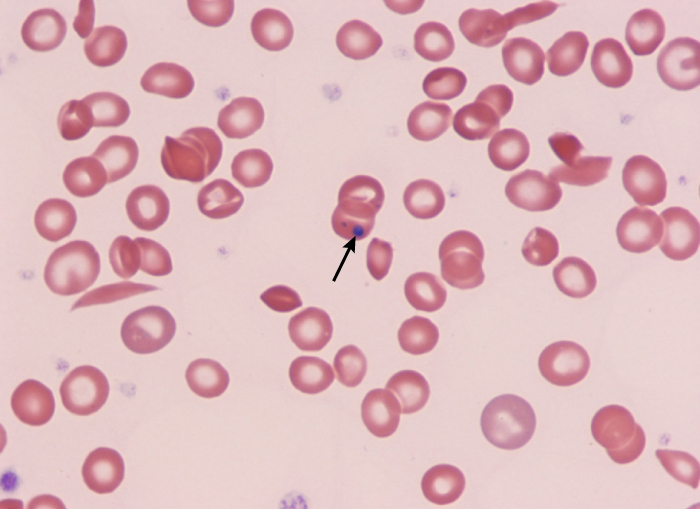 The smear findings indicated by the arrow most likely reflect which of the following processes?
Blood cultures are obtained, and appropriate pharmacotherapy is initiated. His peripheral blood smear is shown in the exhibit. The smear findings indicated by the arrow most likely reflect which of the following processes? (Multiple Choice)
4.9/5  (83)
(83) A 7-year-old girl is brought to the physician for a well-child examination. She is at 95th percentile for height and 70th percentile for weight. Examination shows elevated breast buds that extend beyond the areola. Coarse pubic and axillary hair is present. The external genitalia appear normal. An x-ray of the left wrist shows a bone age of 10 years. Serum luteinizing hormone levels do not increase following GnRH agonist stimulation. Which of the following is most likely secreted by this patient's tumor?
(Multiple Choice)
4.9/5 (73)
(73) A 28-year-old man is evaluated after a high-speed motorcycle collision.He is in an unresponsive state after being involved in a motor vehicle accident. A CT scan of the head showed no abnormalities. He dies despite proper treatment. His medical history is unavailable. Brain autopsy examination shows widespread axonal swelling, predominantly at the gray-white junction. Immunohistochemical staining of these axons reveals accumulation of alpha-synuclein and amyloid precursor proteins. Which of the following is the most likely cause of these observed findings?
(Multiple Choice)
4.9/5 (88)
(88) A 70-year-old man comes to the physician because of several months history of difficulty swallowing pieces of meat and choking frequently during meal times. He also sometimes regurgitates foul-smelling, undigested food particles. The patient has foul-smelling breath, but his oropharyngeal and neck examinations are normal. Cardiopulmonary examination is also normal. A barium swallow shows an accumulation of contrast in an outpouching of the posterior pharyngeal wall at the C5 level. Which of the following mechanisms is the most likely cause of his symptoms?
(Multiple Choice)
4.8/5 (71)
(71) A 35-year-old Asian female presented to your clinic complaining of recurrent joint pain. The patient has no previous medical or surgical history. On physical examination, the blood pressure is 160/100 and the pulse is difficult to be detected. Cardiac auscultation revealed a diastolic decrescendo murmur at the right lower sternal border. Laboratory studies revealed increased ESR, what is the most likely diagnosis?
(Multiple Choice)
4.8/5 (82)
(82) A 62-year-old man presented to the clinic complaining of regurgitation, dysphagia, and heartburn. The heartburn is nonresponsive to over-the-counter antiacid medications. He has no previous medical or surgical history. The patient has been smoking 1 pack of cigarettes for the last 20 years. BMI is 36 kg/m2. The patient has an unremarkable physical examination. A barium swallow shows that the proximal part of the stomach is herniated through the esophageal hiatus. Which of the following is the etiology of this patient's presentation?
(Multiple Choice)
4.9/5 (79)
(79) A 34-year-old man arrives at the emergency room with new-onset confusion and lethargy. Laboratory studies are obtained, including an arterial blood gas. The graph below depicts the changes in his blood gas parameters. Point A represents the patient's physiologic baseline, and point B represents his state upon arrival at the emergency department. 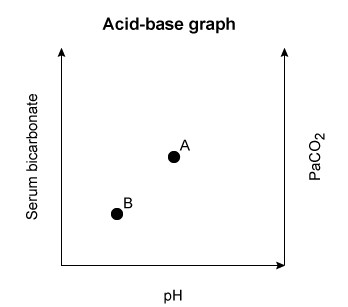 Which of the following is the most likely diagnosis?
 (Multiple Choice)
4.8/5 (81)
(81) A 29-year-old woman is evaluated for severe left hip pain after twisting her leg. She has bony deformities of the lower extremities, and her mobility is limited. The patient has a history of hyperthyroidism, which was managed with radioiodine therapy. Menarche was at age 7, and she has regular 30-day cycles. Physical examination shows large, hyperpigmented macules with irregular borders located on the left shoulder, left side of the neck, and left buttock. X-ray findings are shown in the image below. 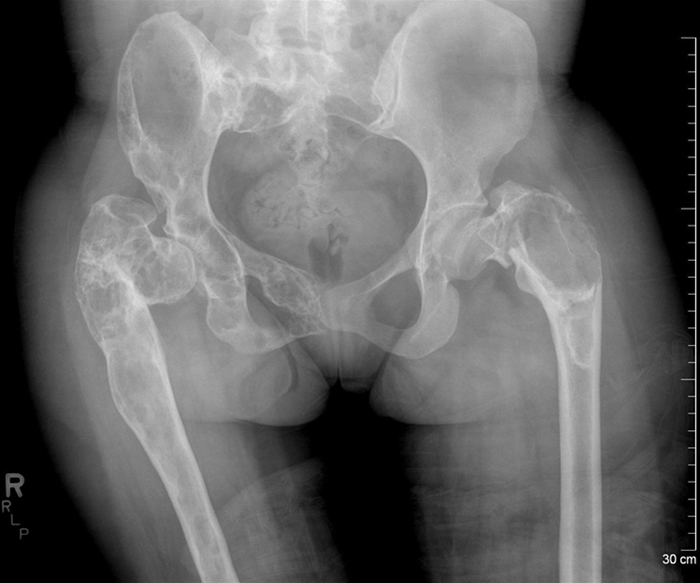 Which of the following is the most likely diagnosis?
 (Multiple Choice)
4.8/5 (73)
(73) A 51-year-old man arrives at the emergency department complaining of sudden, sharp pain in his left flank, nausea, and vomiting. He has not experienced dysuria or hematuria. The patient has no previous medical conditions and does not take any medications on a daily basis. He does not smoke, drink, or use illegal drugs. The temperature is typical. The patient appears to be in severe pain and is unable to find a comfortable position on the bed. There is no abdominal rigidity or rebound, and no palpable masses. The cardiopulmonary exam is normal. There is no edema in the extremities. The exhibit shows a 1-cm calculus in the left proximal ureter at the level of the L3 vertebra; the renal pelvis and proximal ureter are dilated. 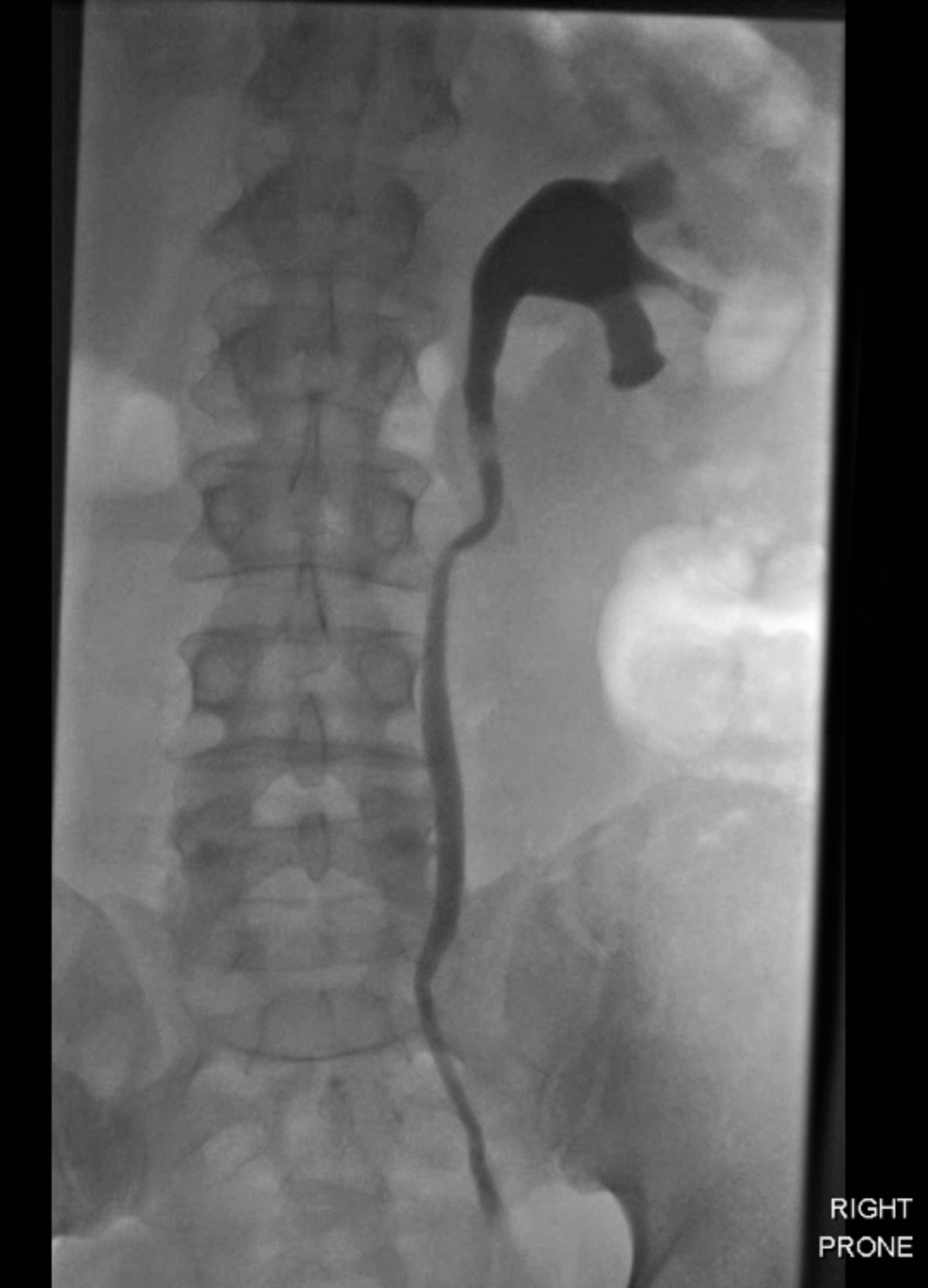 Which of the following is most likely increased in this patient's left kidney?
 (Multiple Choice)
4.9/5 (76)
(76) A 68-year-old man visits the office because he is having difficulty performing normal daily activities with his hands. He has been taking over-the-counter analgesics for pain in his finger joints, wrists, and knees for many years. The patient has previously been evaluated by doctors for "joint problems," but has declined treatment recommendations. He has smoked a pack of cigarettes every day for the past 30 years. Vital signs are typical. The image below depicts the results of the patient's hand examination. 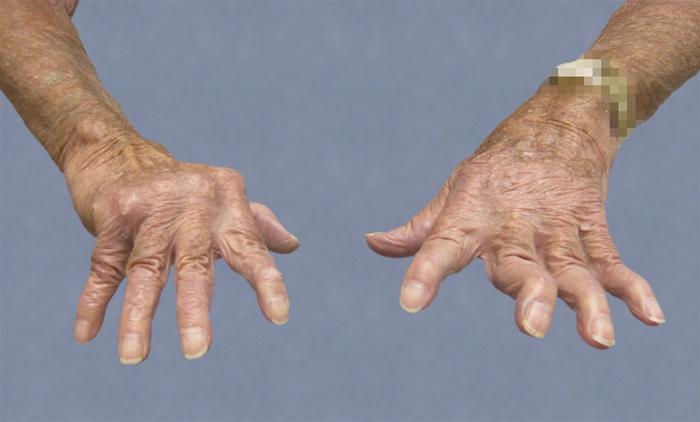 Which of the following pathogenic mechanisms is most likely responsible for this patient's condition?
 (Multiple Choice)
4.9/5 (75)
(75) A 58-year-old man comes to the physician because of headaches and back pain for 5 months. He also noted that his favorite hat no longer fits him. He has hypertension, hypothyroidism, and benign prostate hyperplasia. His father had prostate cancer and osteoporosis. Current medications include calcium supplementation, metoprolol, and L-thyroxine. He does not smoke or drink alcohol. Vital signs are within normal limits. On examination, there is enlargement of the anterior head. An x-ray of the skull shows a thickened calvaria and osteoblastic and osteolytic lesions. Which of the following patterns of serum laboratory values is most likely in this patient? 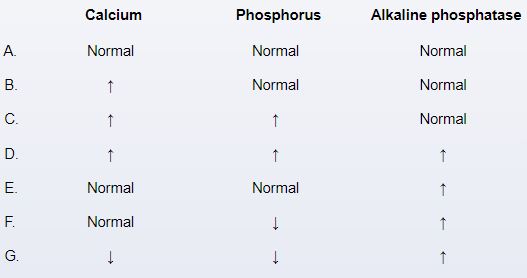
(Multiple Choice)
4.8/5 (95)
(95) A 3-year-old child is brought to the office after suffering from a fever and rash for two days. According to her mother, the patient has also refused to eat or drink. She has no previous medical issues and has received all necessary vaccines. Although none of the family members have lately had febrile sickness, the patient has recently begun attending day care. The temperature is 38.3 degrees Celsius (101 F). On the buccal mucosa and tongue, there are many tiny vesicles and ulcers with an erythematous base. The distal extremities also have vesicular lesions. Which of the following is the most likely underlying cause of this patient's rash?
(Multiple Choice)
4.9/5 (74)
(74) A 28-year-old woman arrives at the clinic complaining of generalized weakness and frequent, large-volume urination. She has not experienced dysuria, hematuria, or abdominal pain. The patient's symptoms have been present for several months, but she cannot recall when they first appeared. She has no other medical issues. The patient is a single mother with a 2-year-old child who has little social support and uses alcohol and marijuana on occasion "to cope with stress." The vital signs and physical exam are normal. The blood glucose level is 95 mg/dL, and the serum sodium level is 132 mEq/L. A urine analysis reveals no white or red blood cells. Urine osmolality is serially measured during further evaluation while fluid intake is restricted; vasopressin is then administered 7 hours into the test. The outcomes are shown below. 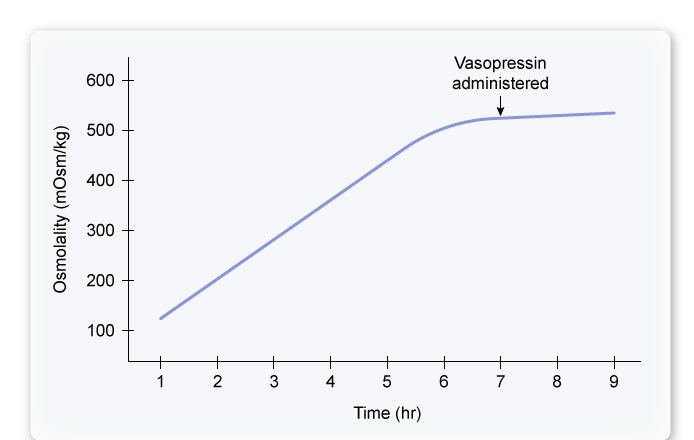 Which of the following is the most appropriate long-term treatment for this patient?
 (Multiple Choice)
4.8/5 (79)
(79) A 5-week-old infant born at 36 weeks' gestation is brought to the physician for a well-child examination. Her mother reports that she previously breastfed her for 15 minutes every 2 hours but now feeds her for 40 minutes every 4 hours. The infant has six wet diapers and two stools daily. At birth, she weighed 2675 g (5.9 Ibs) and was 47 cm (18.5 in) in length. She currently weighs 3085 g (6.8 lbs) and is 50 cm (19.7 in) in length. Vital signs are with normal limits. Cardiopulmonary examination shows a grade 4/6 continuous murmur heard best at the left infraclavicular area. Which of the following is the most likely diagnosis?
(Multiple Choice)
4.9/5 (89)
(89) A 6-year-old boy is brought to the pediatrician because of behavioral changes. His mother says he has been increasingly irritable recently. He also has abdominal pain and constipation for 3 weeks. . Physical examination shows pale conjunctivae and abdominal tenderness. He refers to himself by name but is unable to name body parts. Laboratory test results are as follows: 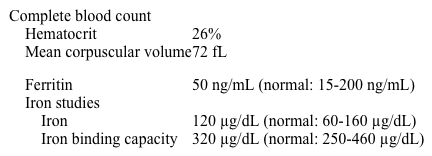 Which of the following findings would most likely be seen on this patient's peripheral blood smear?
 (Multiple Choice)
4.8/5 (75)
(75) A 19-year-old man comes to the physician with right-sided, dull, throbbing scrotal pain for 12 hours. He has not had urethral discharge. He is sexually active with one female partner. Vital signs are within normal limits. Physical examination shows a tender right testicle; lifting it provides relief. The penis appears normal, with no discharge at the meatus. Urinalysis shows numerous leukocytes but no bacteria. Which of the following factors most likely contributed to this patient's current condition?
(Multiple Choice)
4.8/5 (86)
(86) A 65-year-old man arrives to the office complaining of weariness, loss of appetite, and weight loss. He has dropped 5.4 kg (12 lb) in the previous three months and consumes only tiny quantities of food since he feels full quickly after starting to eat. The patient smokes a pack of cigarettes every day and consumes alcohol on a social basis. The blood pressure is 152/90 mm Hg, and the pulse rate is 90 beats per minute. A firm, 3-cm lymph node over the left collarbone is discovered on physical examination. As illustrated below, the patient has several skin lesions on his trunk that have formed since the commencement of his other symptoms. 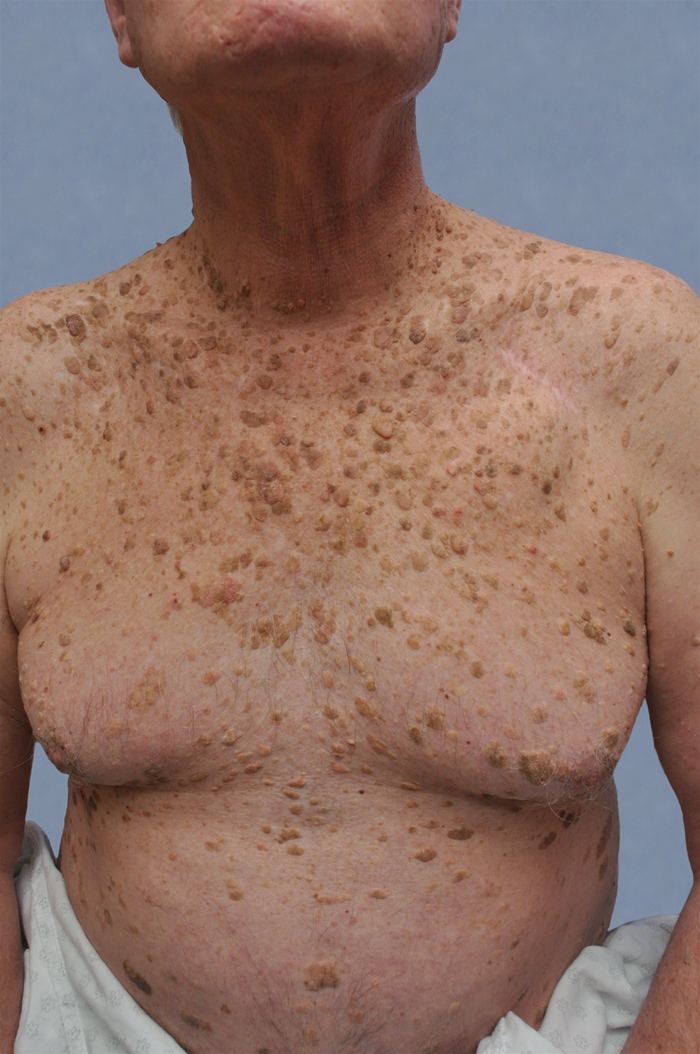 This patient's skin lesions most likely represent which of the following conditions?
 (Multiple Choice)
4.9/5 (78)
(78) A 71-year-old woman visits the office for a check-up. She has a history of systolic heart failure and was admitted to the hospital two weeks ago for an exacerbation that was treated with intravenous diuretics. The patient has been taking oral diuretics since her discharge and reports that her shortness of breath has improved, but she is now experiencing muscle weakness and cramping. The blood pressure is 128/72 mm Hg, and the pulse rate is 80 beats per minute. A physical examination reveals that the lower extremities have mildly decreased muscle strength. A serum potassium level of 2.2 mEq/L is determined by laboratory testing. The patient is given potassium supplements, which help with his weakness. Another diuretic is added to her treatment plan to help prevent this side effect in the future. This additional medication predominantly acts on which of the following nephron segments? 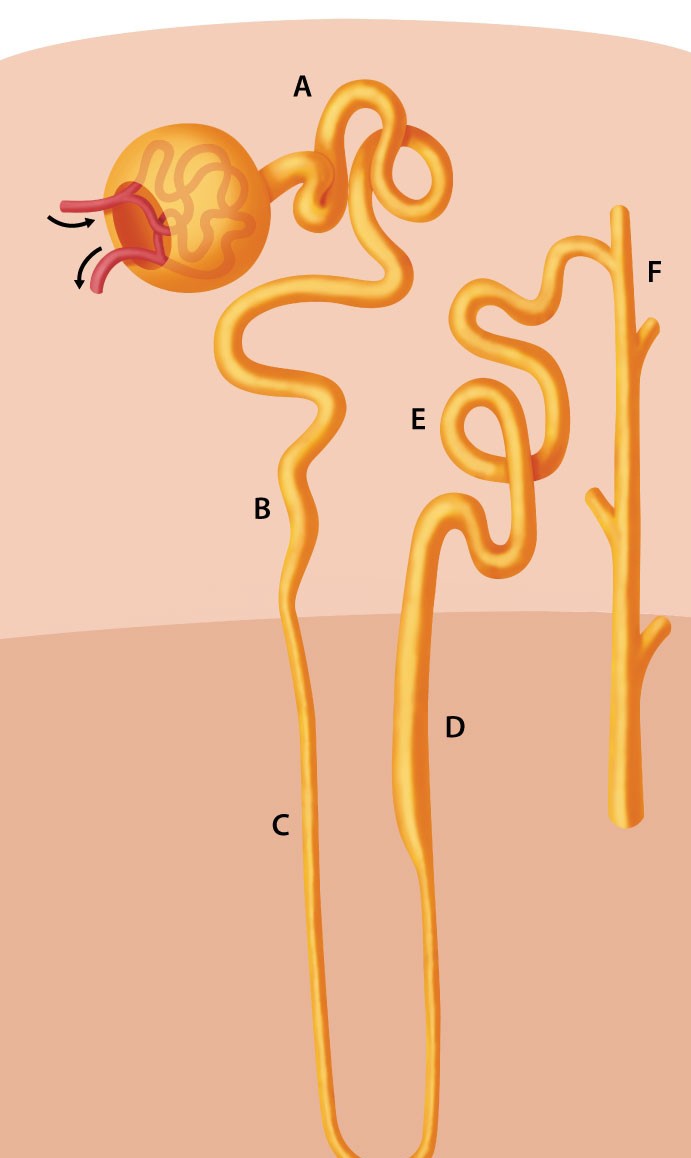
(Multiple Choice)
4.8/5 (75)
(75) A 73-year-old man arrives at the emergency room with right-sided weakness and difficulty speaking. The patient had the symptoms an hour before arriving but felt fine when he went to bed the night before. He has a history of paroxysmal atrial fibrillation but does not follow medical treatment. The temperature is 98.6 degrees Fahrenheit (37 degrees Celsius), the blood pressure is 130/70 mm Hg, and the pulse rate is 110 beats per minute and irregular. A right-sided hemiplegia, hemisensory loss, and aphasia are discovered during a physical examination. Despite adequate treatment, the patient's symptoms do not improve. Over the next week, which of the following processes is most likely to occur in the affected brain region?
(Multiple Choice)
4.7/5 (84)
(84) A 9-year-old boy is brought to the physician by his mother because of teacher complaints regarding his poor performance at school for the past 8 months. He has difficulty sustaining attention when assigned school-related tasks, does not follow the teachers' instructions, and makes careless mistakes in his homework. He often blurts out answers in class and has difficulty adhering to the rules during soccer practice. His mother reports that he is easily distracted when she speaks with him and that he often forgets his books at school. Physical examination shows no abnormalities. Treatment with methylphenidate is recommended. The parents should be educated about which of the following regarding this medication?
(Multiple Choice)
5.0/5 (79)
(79) 
Filters
- Essay(0)
- Multiple Choice(0)
- Short Answer(0)
- True False(0)
- Matching(0)