



 Chat with AI
Exam 10: Pathology

Exam 1: Anatomy265 Questions
Exam 2: Behavioral Sciences178 Questions
Exam 3: Biochemistry102 Questions
Exam 4: Embryology59 Questions
Exam 5: Epidemiology, Biostatistics, and Medical Informatics94 Questions
Exam 6: Genetics88 Questions
Exam 7: Histology46 Questions
Exam 8: Immunology147 Questions
Exam 9: Microbiology and Virology330 Questions
Exam 10: Pathology817 Questions
Exam 11: Pharmacology and Toxicology509 Questions
Exam 12: Physiology339 Questions
Exam 13: Psychiatry and Psychotherapy23 Questions
Select questions type


A 34-year-old man comes to the physician because of a left testicular swelling. He has no pain. He appears healthy. His vital signs are within normal limits. Examination shows an enlarged, nontender left testicle. A scrotal ultrasound reveals a suspicious, partially necrotic mass. Serum lactate dehydrogenase and alpha-fetoprotein levels are markedly elevated. The patient undergoes a left radical inguinal orchiectomy. Which of the following is the most likely histologic diagnosis?
(Multiple Choice)
4.7/5  (79)
(79) A 22-year-old man comes to the emergency department because of the onset of facial swelling, difficulty breathing 20 minutes after eating some trail mix. He has never had a similar episode before. Blood pressure is 80/40 mm Hg, pulse is 130/min, and respirations are 32/min. Examination shows generalized hives, swelling of his tongue and lips, and labored breathing with intercostal retractions. Which of the following hemodynamic changes are most likely present in this patient? 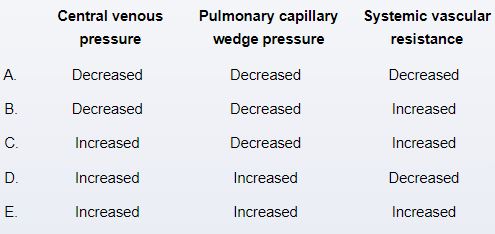
(Multiple Choice)
4.7/5 (66)
(66) A 15-year-old girl comes to the office for follow-up. The patient was diagnosed with Wilson disease a year ago, at which time she began penicillamine therapy. Her dysarthria and academic performance have since improved. Vital signs are normal. Laboratory results are as follows:  Which of the following is the most likely explanation for this patient's laboratory findings?
 (Multiple Choice)
4.8/5 (87)
(87) A 26-year-old woman presented to the office complaining of a lump in her left breast. Her maternal aunt died from ovarian cancer at age 36 and her mother died from breast cancer at age 32. The patient is diagnosed with breast cancer following appropriate therapy. The gene affected is most likely responsible for which of the following?
(Multiple Choice)
4.7/5 (90)
(90) A 34-year-old lady who has a mass in her right breast visits the clinic. While taking a shower last week, the patient became aware of the lump. She does not use any daily drugs and has no ongoing medical issues. Right breast examination reveals a 2-cm nodule, and the patient is referred for a biopsy. The figure below displays the histologic analysis of the tissue sample: 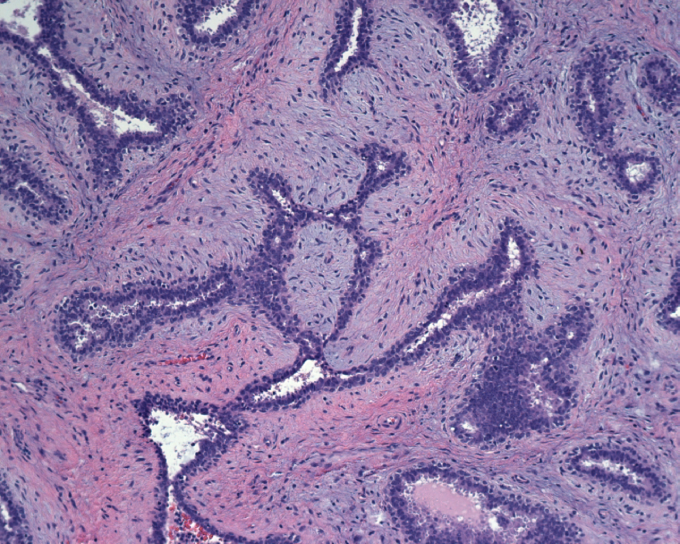 Which of the following is the most likely diagnosis?
 (Multiple Choice)
4.9/5 (83)
(83) A 65-year-old lady visits the clinic because her legs have been becoming weaker over the past five months. Upon examination, the lower extremities exhibit increased muscular tone, quick deep tendon reflexes, and reduced muscle strength. Both legs have a positive Babinski sign. Upper body parts are typical. According to the exhibit, an MRI of the spine shows a 2-cm-diameter spherical lesion that is extramedullary and compresses the spinal cord at the T12 level. The lesion is encircled by cerebrospinal fluid. 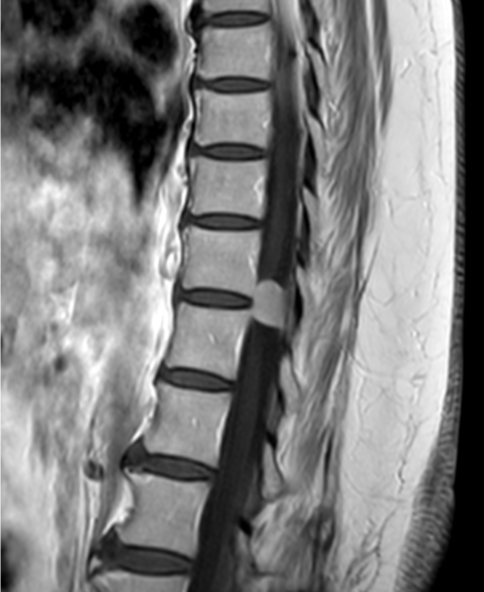 Which of the following is the most likely cell of origin of the lesion?
 (Multiple Choice)
4.7/5 (82)
(82) A 20-year-old man comes to the physician for episodic shortness of breath and a nonproductive cough for 3 months. These episodes frequently occur before sleeping, and he occasionally wakes up because of difficulty breathing. He also reports that he became short of breath during outdoor exercise. Physical examination shows no abnormalities. An x-ray of the chest shows no abnormalities. Spirometry shows a FEV1 of 72% of predicted. Sputum analysis shows predominant eosinophils. Exposure to which of the following is most closely associated with this patient's symptoms?
(Multiple Choice)
4.7/5 (79)
(79) A 66-year-old man comes to the office because of a 2-day history of intermittent red urine. He has not had flank pain, fever, dysuria, or increased urinary frequency. He has no history of recent trauma. Medical history is remarkable for hypertension and atrial fibrillation. His medications include lisinopril and warfarin. He has smoked one pack of cigarettes daily for 44 years and drinks 2 shots of vodka every day. He works as an operations manager for a large beverage company and frequently travels to Mexico. Abdominal examination shows no abnormalities. Digital rectal examination shows a smooth, normal-sized prostate without any irregularities. Urinalysis is positive for >50 red blood cells/hpf; there are no casts or dysmorphic blood cells. Urine cytology is positive for malignant cells. Renal ultrasonogram reveals normal kidneys. Which of the following is a major risk factor for this patient's current condition?
(Multiple Choice)
4.9/5 (81)
(81) A 52-year-old man is brought to the emergency department because of worsening shortness of breath for 6 hours. For the past 5 days, he has had intermittent stabbing pain in the middle of his chest that worsens with lying down or taking deep breaths. He has also had a runny nose and a dry cough for the past 2 weeks. Other medical history is unremarkable. The patient is a lifetime nonsmoker and has no family history of early-onset heart attack, sudden death, or cardiomyopathy. Blood pressure is 120/70 mm Hg and pulse is 110/min and regular. Which of the following physical examination findings is most expected in this patient?
(Multiple Choice)
4.7/5 (88)
(88) A 31-year-old man comes to the physician because of worsening abdominal pain, an inability to concentrate at work, and a general lack of motivation over the past several months. He has a history of spontaneous passage of two kidney stones. He was treated for a prolactinoma 5 years ago . This patient should be screened for which of the following tumors?
(Multiple Choice)
4.9/5 (79)
(79) After a tumble, a 27-year-old lady arrives at the emergency department with a scalp laceration. She claims that even little injuries result in large scars. As depicted in the image below, a physical examination reveals an old, healed wound. 1 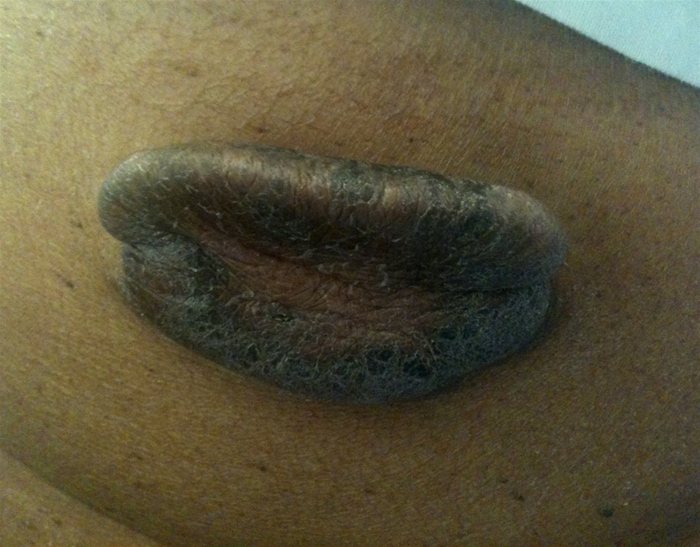 Her tissue histochemical study revealed fibroblasts that overexpress a cytokine required for proper wound healing. Which of the following is the most likely culprit?
 (Multiple Choice)
4.8/5 (88)
(88) A 24-year-old man is brought to the emergency department 15 minutes after he sustained a stab wound to the left chest. On arrival, he has rapid, shallow breathing and appears anxious. His pulse is 135/min, respirations are 30/min and shallow, and palpable systolic blood pressure is 80 mm Hg. Examination shows no active external bleeding. There is a 2.5-cm single stab wound to the left chest at the 4th intercostal space at the midclavicular line. Cardiovascular examination shows muffled heart sounds and jugular venous distention. Breath sounds are normal. Which of the following hemodynamic changes are most likely present in this patient due to his current cardiac condition? 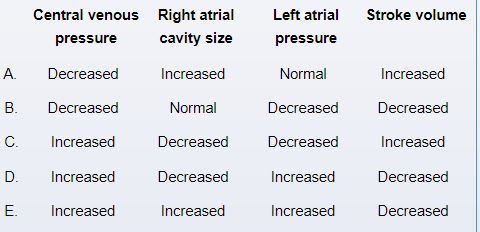
(Multiple Choice)
4.8/5 (88)
(88) A 34-year-old woman comes to the physician because of a 3-month history of fatigue and a 4.5-kg (10-lb) weight loss despite eating more than usual. Her pulse is 115/min and blood pressure is 140/60 mm Hg. She delivered a healthy baby boy 8 months ago and has not felt the same since. She has no prior medical problems and no drug allergies. She reports that her menstrual cycles have not returned yet. The thyroid is nontender. Laboratory results show decreased serum TSH and free thyroxine (T4) levels. Which of the following is the most likely diagnosis in this patient?
(Multiple Choice)
4.8/5 (87)
(87) A 66-year-old man visits the clinic after experiencing two bouts of hematuria over the previous month. The prostate is found to be indurated and devoid of palpable nodules during digital rectal examination. The exhibit displays a picture from a transrectal prostate biopsy. 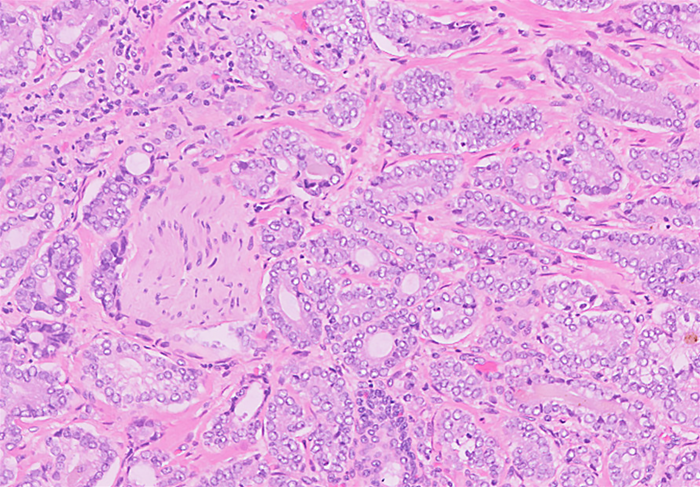 The most likely underlying reason for this patient's symptoms is which of the following?
 (Multiple Choice)
4.8/5 (77)
(77) A 50-year-old man arrives at the clinic for an evaluation before undergoing left total knee arthroplasty. A person's medical history is important when it comes to osteoarthritis. The patient does not use tobacco. A 1.5-cm round lesion in the periphery of the right upper lobe of the lung is visible on a preoperative chest x-ray. Further imaging studies indicate a pulmonary hamartoma. If a transthoracic biopsy were performed, which of the following microscopic features would be most consistent with this diagnosis?
(Multiple Choice)
4.8/5 (63)
(63) A 25 year-old woman comes to the office due to progressive fatigue and occasional dyspnea while performing her daily activities. Laboratory studies reveal a red blood cell count of 3.5 million/mm3 and a hemoglobin concentration of 8.5 g/dL. Peripheral smear is shown in the image below: 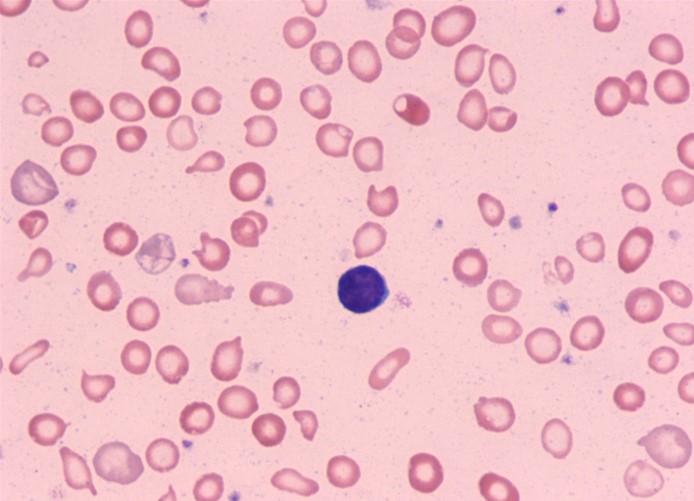 Physical examination shows conjunctival pallor, erythema around the corners of the mouth, and dry, scaly lips. Her fingernails appear spoon-shaped and brittle. Which of the following findings are most likely present in this patient?
 (Multiple Choice)
4.8/5 (71)
(71) A 52-year-old woman presented to the office complaining of urinary incontinence when sneezing or coughing. Recently, urinary leakage has been more severe with minimal activity. The patient does not complain of weakness, sensory deficits, or fecal incontinence. She has a free past medical and surgical history. She is married and has 5 children. Physical examination shows leakage of urine with coughing. She does not have any findings from the neurological examination. Which of the following is the most likely cause of her condition?
(Multiple Choice)
4.9/5 (74)
(74) A 56-year-old lady visits the office because she has a pigmented lesion on her back. She initially saw the lesion a year ago, and it has since grown in size. The patient's medical history is ordinary. The patient has spent the previous 30 years working as a forest service ranger and spending a lot of time outside. As illustrated in the exhibit, there is a huge irregular pigmented lesion on the upper back. 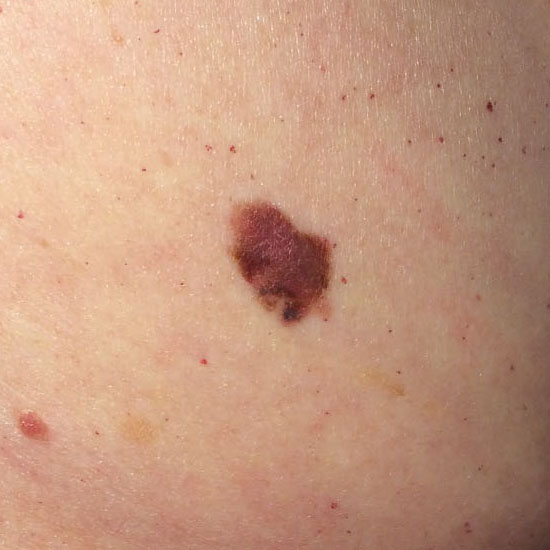 as well as scattered patches of erythema and telangiectasias. Excisional biopsy of the lesion shows malignant melanoma. Which of the following is associated with the highest risk of metastasis for this patient's lesion?
 (Multiple Choice)
4.7/5 (79)
(79) A 34-year-old woman arrives at the office with a one-year history of wrist and hand pain and swelling. There are no other medical conditions or medications that the patient is taking. Vital signs are typical. There are no wrinkles on the face or neck. The exhibit includes a photograph of her left hand. 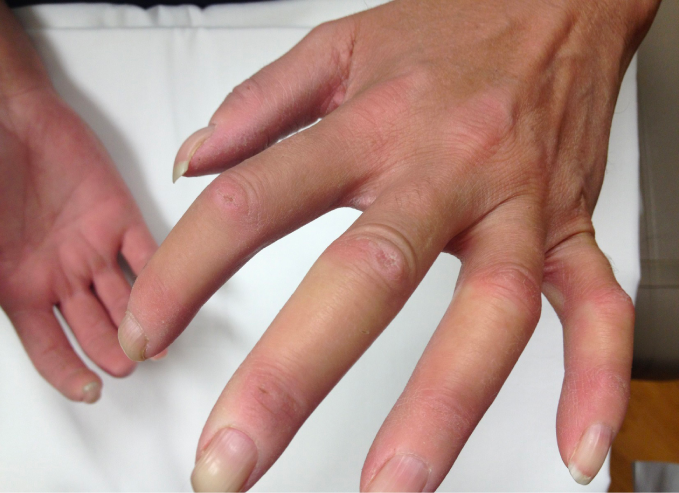 Interplay among which of the following cells is most likely responsible for this patient's condition?
 (Multiple Choice)
4.9/5 (70)
(70) A 48-year-old woman visits the office because she has been experiencing prolonged heavy monthly bleeding. The patient has monthly menstruation, which lasts 5-6 days and is accompanied by severe bleeding, the passage of big blood clots, and intensified stomach cramps. She has had two vaginal births and has no serious medical history. Her mother's endometrial cancer is an important family history. 24 kg/m2 is the BMI. The vital indicators are typical. Ultrasound of the pelvis reveals a uterine lump. A complete abdominal hysterectomy is performed on the patient; the gross examination of the uterus is displayed below: 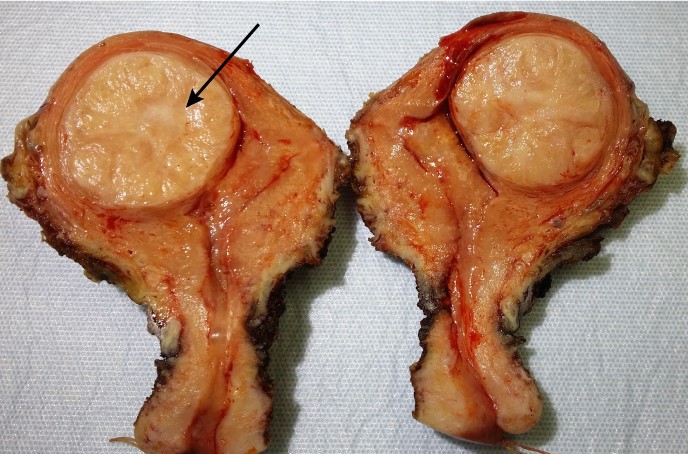 The abnormal region indicated by the arrow is most likely to display which of the following microscopic findings?
 (Multiple Choice)
4.8/5 (78)
(78) 
Filters
- Essay(0)
- Multiple Choice(0)
- Short Answer(0)
- True False(0)
- Matching(0)