



 Chat with AI
Exam 3: Office/Health Center

Exam 1: Emergency Department218 Questions
Exam 2: In-patient Facilities128 Questions
Exam 3: Office/Health Center900 Questions
Select questions type


A 20-year-old student comes to the physician with a rash. She initially noticed it on her chest but then it seemed to spread to her back. The rash itches slightly, but the patient has no other symptoms and feels well. She is not sexually active and has had no genital lesions. General physical examination is within normal limits. The rash is shown in the photograph.
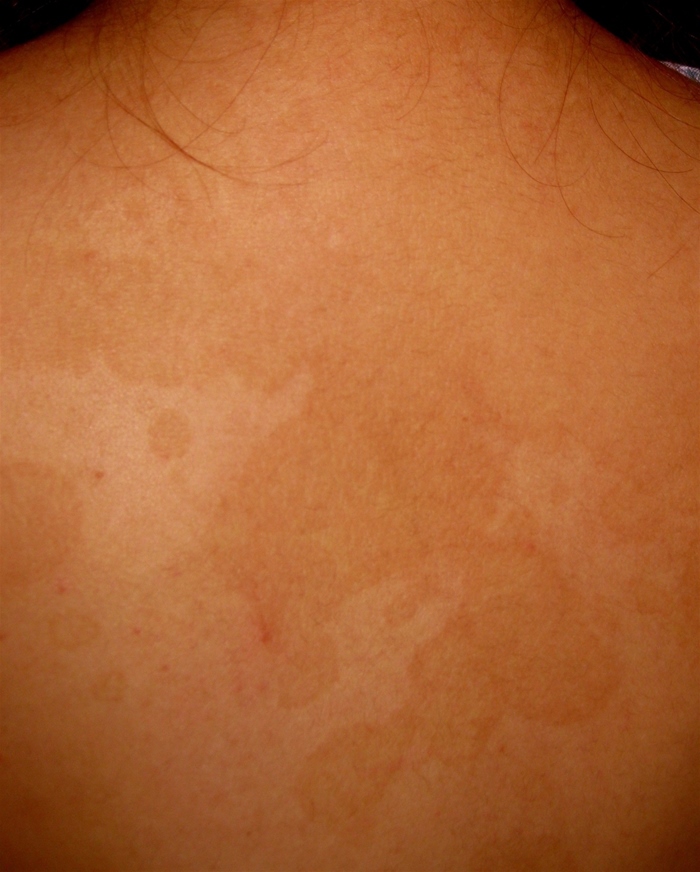 What would be the most appropriate therapy once a definitive diagnosis is established?
 (Multiple Choice)
4.9/5  (84)
(84) A 40-year-old woman is referred for evaluation of chronic kidney disease (CKD). She has a two-year history of intermittent back, bilateral flank, and central abdominal pain. She has lost approximately 15 lbs (6.8 kg) and is easily fatigued. She had an episode of deep venous thrombosis one year ago that has not recurred. She has noticed mild bilateral pedal edema. She works in an office and denies using tobacco or illicit drugs. Up until two years ago, she felt well and is unaware of any chronic medical problems. Her current medications include over-the-counter acetaminophen and ibuprofen for pain control.
Her examination is unremarkable except for diffuse mild abdominal tenderness and bilateral, 2+, brawny lower extremity edema.
Laboratory results are as follows:
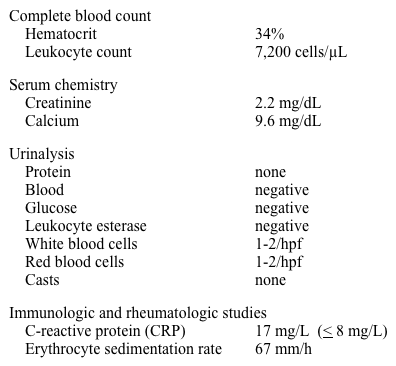 On renal ultrasound, both kidneys measure 12.5 cm (normal 9-12 cm). There is bilateral clubbing and mild-to-moderate dilation of the calices without dilation of the mid or distal ureters.
Which of the following is the most likely diagnosis?
On renal ultrasound, both kidneys measure 12.5 cm (normal 9-12 cm). There is bilateral clubbing and mild-to-moderate dilation of the calices without dilation of the mid or distal ureters.
Which of the following is the most likely diagnosis? (Multiple Choice)
4.9/5 (81)
(81) A 23-year-old woman comes to the office due to palpitations, increased frequency of bowel movements, and a 4.5-kg (10-lb) weight loss despite adequate food intake. The patient's symptoms also include redness of the eyes associated with tearing, grittiness, and photophobia, as well as intermittent diplopia when reading or watching television. Medical history is unremarkable; she has never been pregnant. The patient is not sexually active. She has smoked half a pack of cigarettes a day for the last 2 years.
Blood pressure is 138/66 mm Hg and pulse is 110/min and regular. The patient appears anxious. The thyroid gland shows diffuse symmetrical enlargement without tenderness. A thyroid bruit is audible. Ocular examination shows bilateral proptosis with conjunctival injection and periorbital edema.
Laboratory evaluation shows a serum TSH level of 0.005 μU/mL and a free thyroxine level of 4.1 ng/dL (normal: 0.9-2.4). Thyroid scintigraphy shows 24-hour radioactive iodine uptake of 56% (normal: 10%-30%) with a diffuse pattern.
The patient is started on a beta blocker and oral prednisone. Which of the following additional interventions should be initiated at this time?
(Multiple Choice)
4.8/5 (78)
(78) A 30-year-old man comes to the physician for evaluation of a rash on his right thumb. He initially noticed a small lesion near the nail margin that has progressively worsened over the past 2-3 weeks. He has no other medical conditions and no history of tobacco or alcohol use. He works in the kitchen of a local restaurant. The patient has been sexually active with a single partner in the past year.
His temperature is 36.1 C (97 F), blood pressure is 128/76 mm Hg, and pulse is 78/min. Skin examination findings are shown below. The remainder of the physical examination is within normal limits.
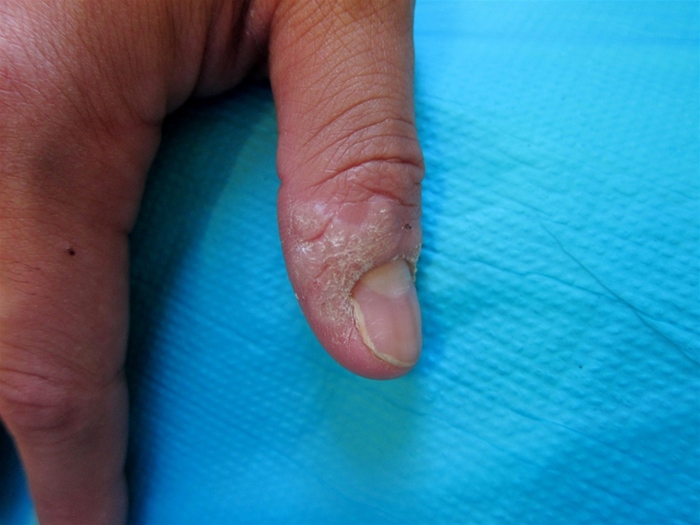 Which of the following is the next best step in management of this patient?
 (Multiple Choice)
4.9/5 (81)
(81) A 45-year-old woman is evaluated in the jail clinic for pain and swelling of her right knee. The pain started 2 weeks ago without any associated trauma. She has no fever, dysuria, vaginal discharge, or history of arthritis. She has had fatigue, poor appetite, and an unintentional weight loss of 9 kg (20 lb) over the past 6 months. Several scaly and erythematous skin lesions have also appeared during this time. She takes ibuprofen as needed. She has a 30-pack-year history of smoking, used to drink occasionally, and does not use illicit drugs. She has been in jail for 3 years.
Her vitals signs are normal. She has several white-to-yellowish flaky scales on the scalp and in the nasolabial folds. No scleral injection or oral ulcers are noted. The right knee joint has moderate-size effusion. The second toe of the left foot appears swollen with slight bluish discoloration and is slightly tender. There is a lesion on the left knee (shown below) and similar lesions on the extensor aspect of the elbows, chest, and upper back. The remainder of the physical examination is within normal limits.
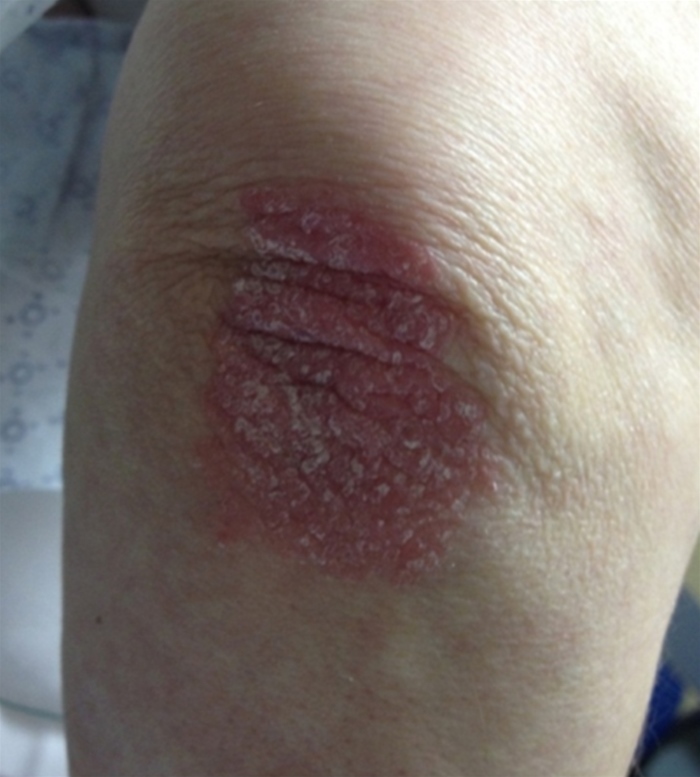 The right knee is aspirated, and synovial fluid analysis is as follows:
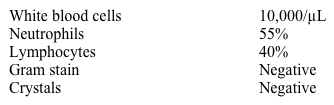 Which of the following is most likely worsening this patient's illness?
The right knee is aspirated, and synovial fluid analysis is as follows:
Which of the following is most likely worsening this patient's illness? (Multiple Choice)
4.8/5 (64)
(64) A 27-year-old woman, gravida 1 para 0, at 8 weeks gestation comes to the office due to nausea, dizziness, and heartburn. The nausea started at the beginning of the pregnancy and has increased over the last 3 weeks. The patient has had no vomiting, abdominal pain, or diarrhea. She has gained 1.5 kg (3.3 lb) during the pregnancy. Medical conditions include type 1 diabetes mellitus and hypothyroidism. Medications include an insulin pump, levothyroxine, and a daily prenatal vitamin. The dose of levothyroxine has not been changed in over 2 years. The patient's diabetes mellitus is well controlled; the most recent hemoglobin A1c was 6.4%. Her sister has type 1 diabetes mellitus and Graves disease, and her mother has hypothyroidism.
Blood pressure is 110/80 mm Hg, pulse is 94/min, and respirations are 18/min. Examination shows no abnormalities.
Laboratory results are as follows:
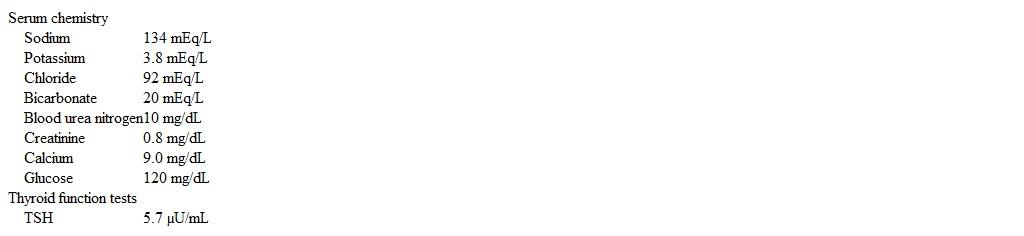 Which of the following is the best next step in management of this patient?
 (Multiple Choice)
4.8/5 (85)
(85) A 60-year-old man comes to the physician with a 2-year history of slowly progressive dyspnea on exertion. Over the last 6 months, he has had a frequent nonproductive cough, malaise, and a 4.5-kg (10-lb) weight loss. He ran and biked every day prior to developing these symptoms. His past medical history includes hypertension treated with hydrochlorothiazide. Prior to retiring 3 years ago, he worked in a rock quarry for 25 years. He has a 30-pack-year smoking history and quit 10 years ago,
His temperature is 36.7° C (98° F), blood pressure is 138/88 mm Hg, pulse is 88/min, and respirations are 16/min. Pulse oximetry is 92% at rest on room air. Physical examination shows a thin man in no acute distress. Jugular venous pressure is estimated at 5 cm. Lung examination is notable for fine crackles in the upper- and mid-lung fields. The remainder of the examination is normal.
Results of pulmonary function tests are as follows:
 Chest x-ray reveals bilateral interstitial infiltrates in the upper lung fields. High-resolution computed tomography of the chest demonstrates diffuse micronodules and fibrotic lung changes in the upper lobes bilaterally.
Which of the following is the most likely cause of the patient's symptoms?
Chest x-ray reveals bilateral interstitial infiltrates in the upper lung fields. High-resolution computed tomography of the chest demonstrates diffuse micronodules and fibrotic lung changes in the upper lobes bilaterally.
Which of the following is the most likely cause of the patient's symptoms? (Multiple Choice)
4.9/5 (87)
(87) A 72-year-old man comes to the physician because of shoulder pain, which has been present for 3 weeks and began after a mild fall that was braced by his outstretched arm. The pain is felt over his lateral shoulder and often keeps him awake at night. It also makes it difficult for him to lift anything overhead.
Passive range of motion is normal; however, range of motion with any resistance is limited and the patient is unable to maintain 90 degrees of abduction. There is weakness with abduction and external rotation.
Which of the following is the most likely diagnosis?
(Multiple Choice)
4.8/5 (85)
(85) A 62-year-old man comes to the office to follow up hypertension. He has a long history of hypertension treated with amlodipine and obstructive sleep apnea requiring continuous positive airway pressure at night. The patient does not use tobacco, alcohol, or illicit drugs and has no medication allergies.
Blood pressure is 134/90 mm Hg and pulse is 78/min. BMI is 33 kg/m2. Physical examination is unremarkable.
Laboratory results are as follows:
 Liver function tests are normal.
The patient is counseled on indications for lipid-lowering therapy with statin drugs. He is at greatest risk for which of the following adverse effects if he starts high-intensity atorvastatin therapy?
Liver function tests are normal.
The patient is counseled on indications for lipid-lowering therapy with statin drugs. He is at greatest risk for which of the following adverse effects if he starts high-intensity atorvastatin therapy? (Multiple Choice)
4.8/5 (92)
(92) A 37-year-old woman comes to the office due to difficulty sleeping for the past month. She was involved in a motor vehicle crash 8 months ago and required extensive rehabilitation of her shoulder and left arm. The patient reports difficulty sleeping and frequent nightmares about the event. During the day, she is anxious and feels panicky whenever she recalls the crash. She refuses to drive and instead has a friend transport her when necessary. She declines offers from friends to talk about her feelings despite being visibly upset at times.
The patient has a history of gastroesophageal reflux disease treated with omeprazole. Her father died at age 65 from a myocardial infarction and her mother has diabetes. She works as an accountant but has been having difficulty concentrating and performing her job. The patient has smoked a pack of cigarettes a day for the last 10 years but is trying to cut down. She drinks 1 or 2 glasses of wine on weekends.
Physical examination is within normal limits.
Which of the following medications is likely to offer the most benefit for this patient?
(Multiple Choice)
4.9/5 (78)
(78) A 58-year-old woman comes to the physician because of a two-week history of malaise, low-grade fevers, and poor appetite. She was hospitalized one month ago for a complicated urinary tract infection and underwent ureteroscopy due to a distal ureteral stone. Her other medical problems include hypertension, hepatitis C, and chronic lower back pain. Her current medications include hydrochlorothiazide and amlodipine.
Her temperature is 38.0 C (100.4 F), blood pressure is 120/70 mm Hg, pulse is 88/min, and respirations are 14/min. Physical examination reveals a soft, 2/6 decrescendo-type murmur at the left sternal border. A small petechial lesion is noted on her right big toe.
An EKG shows normal sinus rhythm. Transesophageal echocardiography (TEE) shows a 0.7 cm mobile mass attached to the non-coronary cusp of the aortic valve as well as mild-to-moderate aortic regurgitation. Blood cultures grow Enterococcus faecalis susceptible to ampicillin and gentamicin. Intravenous antibiotics are initiated.
On the fifth day of hospitalization, the patient still complains of malaise. Her temperature is 38.2 C (100.7 F). Physical examination shows a soft, 2/6 decrescendo-type murmur at the left sternal border, which is unchanged from admission. Repeat EKG is shown in this exhibit. 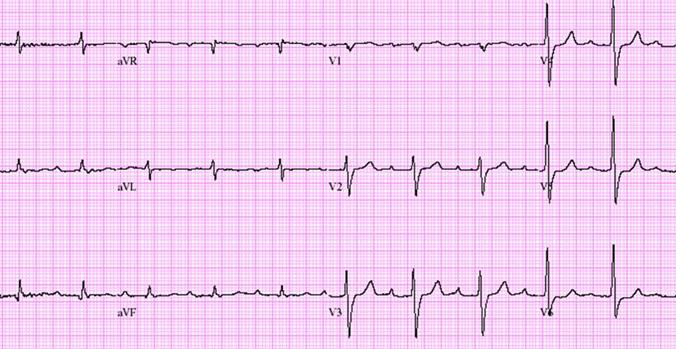 Which of the following is the most likely diagnosis?
 (Multiple Choice)
4.8/5 (80)
(80) A 22-year-old woman comes to the office due to redness and discharge from her right eye for the past 3 days. She also has had a gritty sensation and crusting in the eye, which is "stuck shut" in the morning. Today, the patient noticed that her left eye has also become red. She has had no visual disturbances, photophobia, or eye pain or itching and reports no recent upper respiratory infection or exposure to a person with similar symptoms. The patient does not use contact lenses. Her other medical problem includes allergic rhinitis, for which she takes fexofenadine as needed.
Physical examination reveals bilateral diffuse conjunctival erythema with scant discharge that does not reappear when the initial discharge is wiped away. No corneal opacity is noted. Visual acuity is normal. The remainder of the physical examination is normal.
Which of the following is the most appropriate next step in management of this patient's eye symptoms?
(Multiple Choice)
4.8/5 (72)
(72) A 47-year-old woman is evaluated for a 6-month history of increasing fatigue, malaise, pruritus, and arthralgias. She has had no shortness of breath, chest pain, or fever. The patient was found to have abnormal liver chemistry tests on 2 occasions over the past 3 months. She takes no medications, drinks a glass of wine with dinner every day, and does not use tobacco or illicit drugs. The patient received a blood transfusion in childhood after surgery for a leg fracture.
Temperature is 36.5 C (97.7 F), blood pressure is 110/60 mm Hg, pulse is 86/min, and respirations are 12/min. BMI is 25 kg/m2. There is no scleral icterus, lymphadenopathy, or skin rash. Cardiac examination reveals a 2/6 holosystolic murmur at the apex radiating to the axilla. The liver is palpable 4 cm below the right costal margin with no splenomegaly. There is no peripheral edema. Several of the small joints of the hands are mildly tender without erythema or swelling.
Laboratory results are as follows:
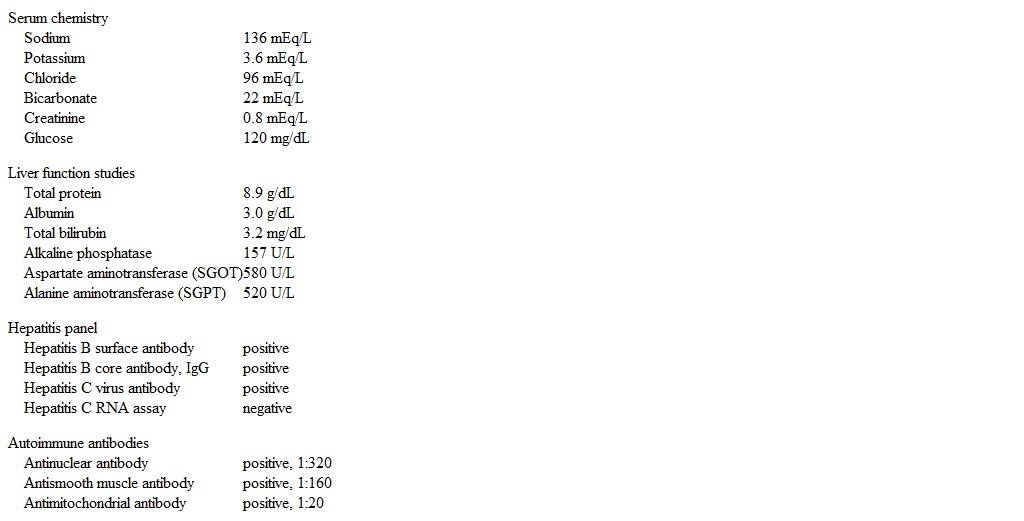 Which of the following is the most appropriate pharmacotherapy for this patient?
 (Multiple Choice)
4.9/5 (74)
(74) A 36-year-old woman comes to the physician because of abdominal pain for the last two days, which she attributes to a urinary infection. She had one episode of vomiting in the morning and she also complains of sweating and restlessness. She states that she sometimes experiences these attacks after 'her urine turns dark.' Previous trips to the emergency department for abdominal pain were treated with pain killers. A previous CT scan was normal during a past episode of abdominal pain. Two years ago, she was treated for Trichomonas vaginalis infection. She has chronic constipation and takes over-the-counter laxatives.
Her past medical history is otherwise unremarkable. She is sexually active with one partner, and she has been taking oral contraceptive agents on and off over the last several years. She is trying to lose weight by following a low-calorie, low-carbohydrate diet.
Her temperature is 36.7 C (98 F), blood pressure is 165/97 mm Hg, and pulse is 112/min and regular. Her BMI is 29 kg/m2. Her abdomen is soft with mild diffuse tenderness and no rebound tenderness or rigidity. There is no costovertebral angle tenderness. Bimanual pelvic examination is unremarkable. Laboratory results are as follows:
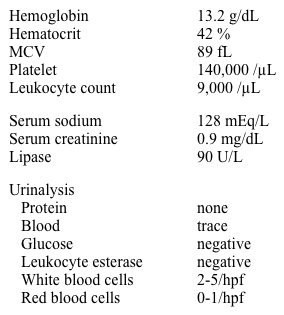 Urine pregnancy test is negative. Abdominal flat plain film is unremarkable.
Which of the following is the most likely diagnosis?
Urine pregnancy test is negative. Abdominal flat plain film is unremarkable.
Which of the following is the most likely diagnosis? (Multiple Choice)
4.9/5 (80)
(80) A 32-year-old primigravida at 28 weeks gestation is referred from the obstetrics clinic due to shortness of breath. She is an immigrant from Mexico. Her pregnancy has thus far been uncomplicated except for nausea in the first trimester. Over the last four weeks, she has been feeling tired and becomes short of breath with activities that she was previously able to perform with ease, such as walking several blocks or climbing stairs on the subway. She denies chest pain, wheezing, cough, or nocturnal symptoms. Her other medical problems include obesity and mild intermittent asthma. Cardiac auscultation findings can be heard in the exhibit.
Which of the following is the most likely diagnosis?
(Multiple Choice)
4.8/5 (80)
(80) A 62-year-old business executive comes to the office due to episodes of lightheadedness over the last 6 months. These happen primarily in the morning when he is getting dressed. During these episodes, the patient feels that the room "is getting dark" and that he is going to pass out. One time, he briefly lost consciousness. He has no nausea, chest pain, palpitations, headaches, vision problems, shortness of breath, tongue bites, or urinary incontinence. His medications include valsartan for high blood pressure. The patient is a former smoker with a 25-pack-year history.
His blood pressure is 134/85 mm Hg while supine and 140/82 mm Hg after standing for 2 minutes, and pulse is 72/min. There are no heart murmurs or carotid bruits. Lungs are clear on auscultation. Peripheral pulses are full and symmetric in all 4 extremities. ECG shows normal sinus rhythm.
Which of the following is the best next step in the evaluation of this patient?
(Multiple Choice)
4.8/5 (78)
(78) A 53-year-old woman is evaluated for fatigue, malaise, and exertional shortness of breath. She describes a dry cough that has been present over the last year and frequent joint pain and swelling in her hands and wrists. She has no other medical problems and is a lifetime non-smoker. The patient emigrated from Ecuador 3 months ago. Tuberculosis and HIV testing done for immigration screening 6 months ago were normal.
Vital signs are within normal limits. Her body mass index is 20 kg/m2. There is a 2/6 mid-systolic murmur at the right upper sternal border. Breath sounds are decreased at the right lung base. There are no skin rashes or peripheral edema. The patient has mild synovitis involving bilateral metacarpophalangeal joints.
Her hemoglobin is 10.2 g/dL and mean corpuscular volume is 85 fL. Chest x-ray shows a moderate right-sided pleural effusion. Thoracentesis shows yellow-greenish fluid with the following results:
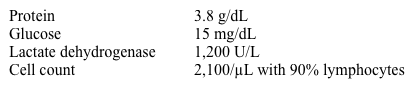 Which of the following is the most likely cause of this patient's pleural effusion?
 (Multiple Choice)
4.7/5 (75)
(75) A 47-year-old man comes to the physician concerned about growths in his axilla. He has noticed these for a few years but thinks that they are growing larger and becoming uncomfortable. Recently, the growths have bled when disturbed. He has no other medical problems or concerns. Skin examination findings are shown in the image below.
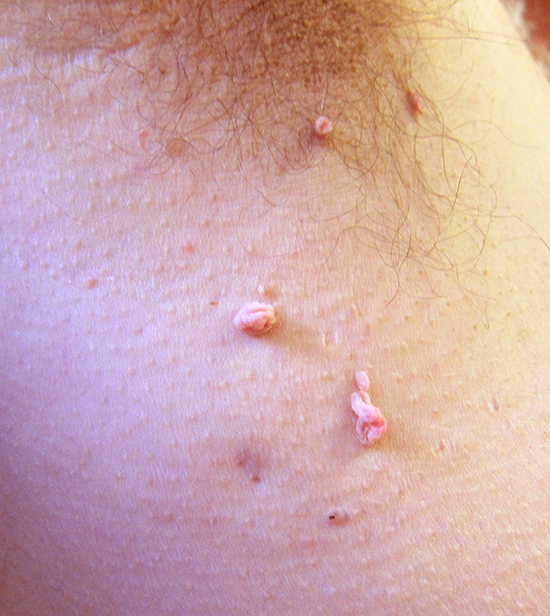 There is no axillary adenopathy. The remainder of the examination is normal.
This patient's condition is most likely associated with which of the following?
There is no axillary adenopathy. The remainder of the examination is normal.
This patient's condition is most likely associated with which of the following? (Multiple Choice)
4.8/5 (78)
(78) A 75-year-old woman is seen in consultation prior to hip surgery. She fell on icy ground 36 hours ago and sustained an intertrochanteric right hip fracture. The patient lives independently. Her other medical problems include hypertension, osteoporosis, type 2 diabetes mellitus, and mild cognitive impairment.
Her right lower extremity is shortened and externally rotated, but physical examination is otherwise unremarkable.
Records indicate that her primary care provider obtained thyroid function tests a month ago as part of an evaluation for hypertension that showed the following:
 Her current laboratory results are as follows:
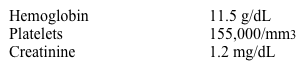 Which of the following is the most appropriate next step in management of this patient?
Her current laboratory results are as follows:
Which of the following is the most appropriate next step in management of this patient? (Multiple Choice)
4.7/5 (69)
(69) A 56-year-old man comes to the office due to a 3-month history of upper abdominal discomfort. CT scan of the abdomen reveals a cystic pancreatic lesion; an endoscopic ultrasound-guided biopsy is planned. Medical history is significant for hypertension, hyperlipidemia, and a bicuspid aortic valve that was diagnosed at age 24. The patient underwent an aortic valve replacement with a bileaflet mechanical aortic valve at age 44 due to symptomatic aortic regurgitation. He takes warfarin daily and attends regular follow-up visits at an anticoagulation clinic. He had an episode of epistaxis a year ago that required nasal packing for 2 days.
ECG is unremarkable. An echocardiogram 2 months ago showed normal left ventricular size and function with an ejection fraction of 60%. The mechanical aortic valve prosthesis had normal leaflet motion, and there was mild mitral and tricuspid regurgitation. The aortic root size was normal.
Which of the following is the best next step in management of this patient?
(Multiple Choice)
4.9/5 (87)
(87) 
Filters
- Essay(0)
- Multiple Choice(0)
- Short Answer(0)
- True False(0)
- Matching(0)