



 Chat with AI
Exam 3: Office/Health Center

Exam 1: Emergency Department218 Questions
Exam 2: In-patient Facilities128 Questions
Exam 3: Office/Health Center900 Questions
Select questions type


A 34-year-old man presents to the office complaining of discomfort and itching in his perianal area that is more pronounced at night and has disturbed his sleep over the last two weeks. He denies any abdominal pain, diarrhea, pain on defection, or anal discharge. His other medical problems include severe gastroesophageal reflux disease and anxiety disorder. He was diagnosed with genital herpes two years ago and had taken daily valacyclovir for one year, but stopped 6 months ago. He has not had any recurrences over the last 18 months. He currently takes esomeprazole and alprazolam as needed. He lives with his wife and two children (ages 3 and 5) and claims to be monogamous.
His vital signs are within normal limits. Physical examination shows excoriations in the perianal region. The remainder of his examination is unremarkable.
Which of the following is the most likely cause of this patient's complaints?
(Multiple Choice)
4.8/5  (92)
(92) A 42-year-old woman comes to the office due to worsening toenail disfiguration over the past 3 months. The patient has had no lower extremity pain or redness and recalls no trauma. She has a history of hypertension and takes hydrochlorothiazide.
Examination findings are shown in the image.
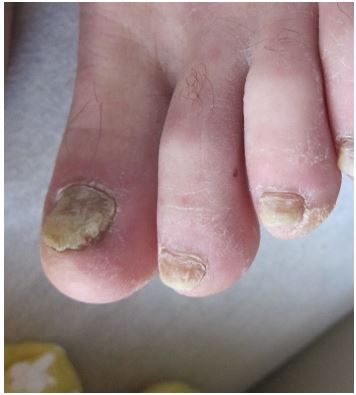 Which of the following is the best next step in management of this patient?
 (Multiple Choice)
4.8/5 (86)
(86) A 23-year-old man comes to the physician because of a 6 month history of weight loss and poor energy. He also complains of vague abdominal discomfort, soft stools, and chronic back pain. He has had frequent episodes of bronchitis, which he attributes to smoking since an early age. He has had several male sexual partners over the past 3 years and has used condoms inconsistently. He was diagnosed with HIV infection six months ago, and his CD4 count at that time was 650 cells/µL.
On physical examination, scattered rhonchi are heard over the right upper lung. The abdomen is mildly tender in the epigastrium. There is no hepatomegaly and the spleen is not palpable. There are no skin rashes.
Laboratory results are as follows:
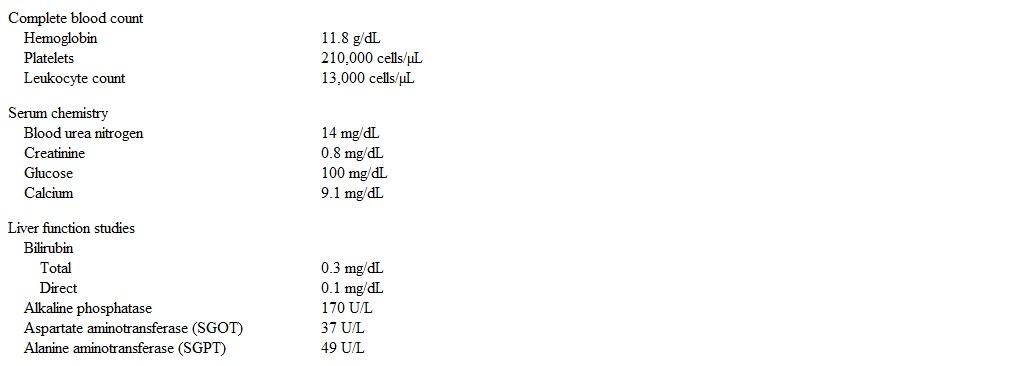 CT scan of the chest and abdomen demonstrates right upper lobe bronchiectasis with some surrounding fibrotic changes and pancreatic calcifications with atrophy.
Which of the following is most likely to establish the diagnosis in this patient?
CT scan of the chest and abdomen demonstrates right upper lobe bronchiectasis with some surrounding fibrotic changes and pancreatic calcifications with atrophy.
Which of the following is most likely to establish the diagnosis in this patient? (Multiple Choice)
4.9/5 (82)
(82) A 39-year-old man comes to the physician after he loses consciousness. His wife reports that they were at a school play when she heard her husband making some "gurgling noises." When she looked over at him, he looked "out of it" and started slumping towards her. She could not awaken him. After about ten seconds, he regained consciousness. He denies any prodrome of chest pain or pressure, shortness of breath, or palpitations. He currently has no complaints.
He denies any prior history of syncope or presyncope. He is physically active and plays in a doubles tennis league three times per week. He takes no medications on a regular basis. His family history is unknown as he was adopted.
His blood pressure is 115/70 mm Hg, pulse is 67/min, and BMI is 23 kg/m2. The patient is in no distress. There is a normal S1 and S2 and no murmurs are appreciated. His lungs are clear to auscultation. The abdomen is soft and non-distended. The peripheral pulses are 2+ and symmetric.
His EKG is shown is this exhibit. 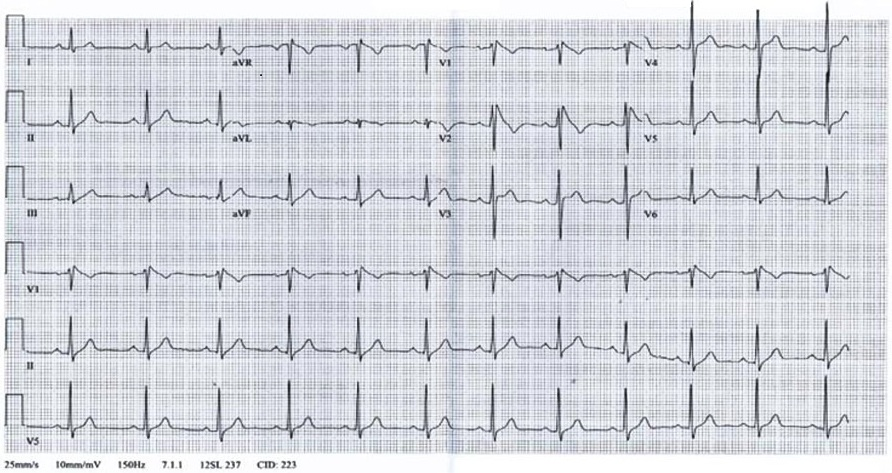 Which of the following is the most likely diagnosis?
 (Multiple Choice)
5.0/5 (85)
(85) A 25-year-old graduate student comes to the physician requesting treatment for attention-deficit hyperactivity disorder (ADHD). He has a childhood history of ADHD treated with stimulant medication and depression as a teenager. The patient says he is under a lot of stress and currently feels anxious, restless, and unable to concentrate. He has been up all night the past week because he is on the verge of a major scientific breakthrough in his research and is worried that someone might steal his data. His girlfriend reports that he has been uncharacteristically irritable and hyperactive, with angry outbursts for no apparent reason. The patient drinks several beers on weekends and uses marijuana twice a month. Physical examination is normal and urine drug screen is negative.
Which of the following is the most likely diagnosis?
(Multiple Choice)
4.9/5 (73)
(73) A 59-year-old woman returns to the office due to continued fever and abdominal discomfort. She was initially seen for fever, chills, right flank pain, and back pain 5 days ago. At that time, urinalysis revealed positive leukocyte esterase and 15-20 white blood cells/hpf. The patient was started on oral levofloxacin. Other medical problems include type 2 diabetes mellitus, hypertension, and gastroesophageal reflux disease. She currently takes hydrochlorothiazide, metformin, ramipril, and lansoprazole.
Temperature is 38.1 C (100.6 F), blood pressure is 130/84 mm Hg, and pulse is 84/min. Examination reveals right costovertebral angle tenderness and mild right upper quadrant tenderness. No murmurs are heard on cardiac examination. Breath sounds are mildly decreased at the right lung base. There are no skin rashes.
Laboratory results are as follows:
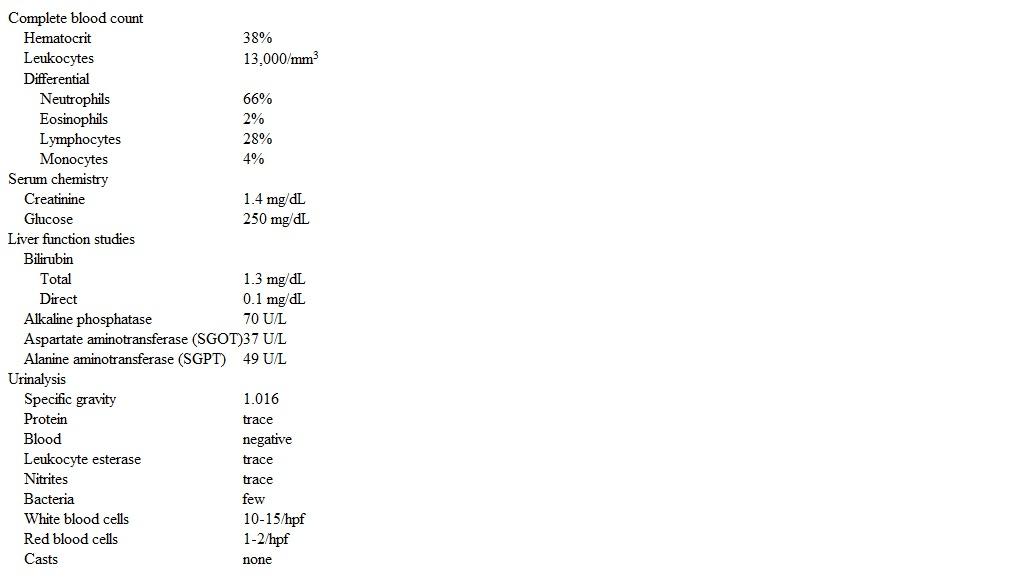 Which of the following is the most likely cause of this patient's current condition?
 (Multiple Choice)
4.7/5 (84)
(84) A 45-year-old woman from Texas comes to the physician with sudden onset of left-sided facial drooping. She first noticed the facial droop while eating Christmas dinner with her family last night. She has also experienced mild drooling from the left side of her mouth. She has no other complaints. The patient has no recent illnesses, travel, rashes, or tick bites. Her other medical problems include hypertension and mild obesity. Her medications include lisinopril and chlorthalidone.
Temperature is 36.5 C (97.7 F), blood pressure is 138/85 mm Hg, and pulse is 72/min. The patient has facial asymmetry, drooping of the left angle of her mouth, and loss of the left nasolabial fold. She is unable to close her left eyelid fully, wrinkle her forehead or nose, inflate her left cheek, or show her teeth. The remainder of the examination is within normal limits.
Which of the following is the best next step in management of this patient?
(Multiple Choice)
4.9/5 (96)
(96) A 57-year-old woman comes to the physician because of severe heartburn. She has a history of gastroesophageal reflux disease treated with lansoprazole; however, lately the medication seems to provide little relief. She was also seen in the clinic one year ago for joint pains which responded to non-steroidal anti-inflammatory agents. She suffers from chronic back pain. She denies any abdominal pain, weight loss, or black stools. She has no family history of gastrointestinal cancer.
Her blood pressure is 110/65 mm Hg, pulse is 74/min, and respirations are 14/min. Examination shows clear lung fields. Extremity examination reveals skin hardening of the fingertips as well as a few whitish lumps measuring 1 cm each over both forearm surfaces. Small red blanching lesions are seen over her face.
Laboratory work-up shows the following:
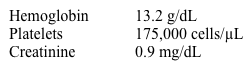 Which one of the following disorders is the patient at greatest risk for developing?
 (Multiple Choice)
4.8/5 (79)
(79) A 65-year-old woman comes to the physician because of generalized weakness, weight gain, and leg swelling for the last several weeks. Her appetite is decreased. She denies shortness of breath, chest pain, or cough. Her other medical problems include hypertension and type 2 diabetes mellitus. She had positive skin tuberculin skin test approximately 20 years ago when she moved to the United States from India, and she received 9 months of isoniazid therapy. Her medications include ramipril and atenolol.
Her temperature is 36.1 C (97 F), blood pressure is 150/100 mm Hg, and pulse is 60/min. Her BMI is 30 kg/m2. Examination shows normal jugular venous pressure and muffled first and second heart sounds. Her lungs are clear to auscultation. There is no hepatomegaly or splenomegaly. Examination shows 1+ pitting edema to the mid-shin bilaterally.
Laboratory results are as follows:
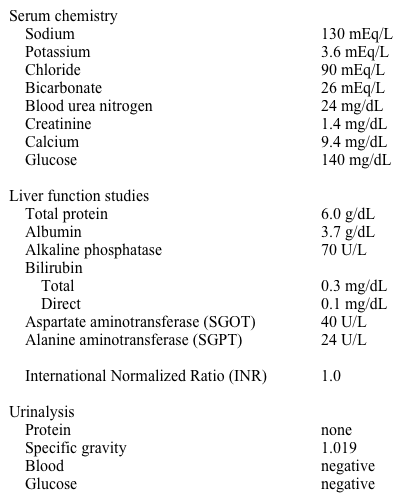 Electrocardiogram shows low voltage complexes and sinus bradycardia. Echocardiogram reveals normal left ventricular size, a left ventricular ejection fraction of 50%, and a mild-to-moderate pericardial effusion. There is no right atrial or right ventricular collapse.
Which of the following is the most appropriate next step in management?
Electrocardiogram shows low voltage complexes and sinus bradycardia. Echocardiogram reveals normal left ventricular size, a left ventricular ejection fraction of 50%, and a mild-to-moderate pericardial effusion. There is no right atrial or right ventricular collapse.
Which of the following is the most appropriate next step in management? (Multiple Choice)
4.8/5 (82)
(82) A 34-year-old woman comes to the office due to fatigue. She feels excessively sleepy during the day and has dull, achy headaches almost every morning. The patient had papillary thyroid cancer 3 years ago, treated with thyroidectomy followed by postoperative radioactive iodine ablation. She has post-ablative hypothyroidism, but serum thyroglobulin, total body nuclear iodine scan, and ultrasound of the neck 6 months ago showed no evidence of residual thyroid cancer. Medical history is notable for vitamin D deficiency. Current medications include levothyroxine, vitamin D, calcium carbonate, and a combination estrogen/progestin oral contraceptive. The patient has gained 1.8 kg (4 lb) since starting the oral contraceptive 2 years ago for heavy, irregular periods. She has a sedentary lifestyle, and her diet consists mainly of frozen microwavable foods. She lives alone and has no children. The patient does not use tobacco, alcohol, or illicit drugs.
Blood pressure is 144/80 mm Hg and pulse is 76/min and regular. BMI is 34 kg/m2. Neck examination shows no masses or lymphadenopathy. There is trace pitting ankle edema.
Laboratory results are as follows:
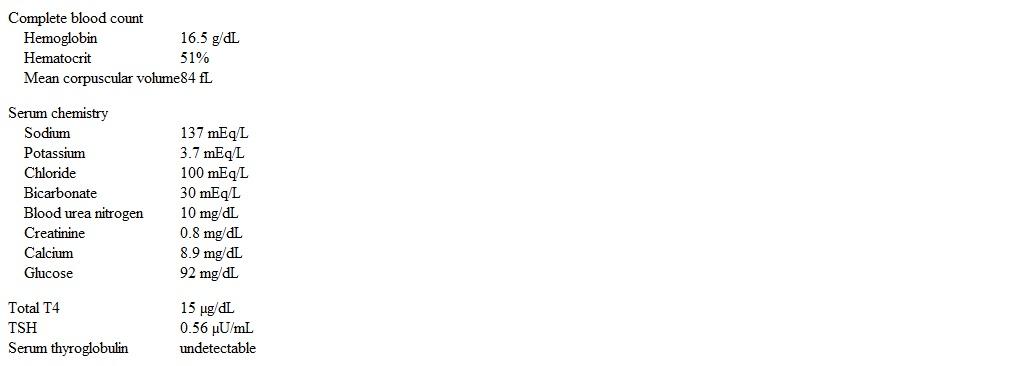 Which of the following is the best next step in management of this patient?
 (Multiple Choice)
4.8/5 (78)
(78) 43-year-old attorney comes to the office because of pain in his right lower extremity. He is an avid tennis player, and lately, he has started to notice pain in his right groin area whenever he runs or jogs. The pain is described as a soreness that travels down his anterior thigh toward his knee. It is present with moderate activity and improves with rest. Lying on his right side does not affect the pain. There is no associated numbness or muscle weakness.
His temperature is 37.2 C (98.9 F), blood pressure is 120/70 mm Hg, pulse is 72/min, and respirations are 12/min. His cardiac, pulmonary, and abdominal examinations are within normal limits. His hip examination reveals pain along the anterior hip worsened with internal and external rotation.
Which of the following is the most likely diagnosis?
(Multiple Choice)
4.8/5 (88)
(88) A 36-year-old woman comes to the office for follow-up of hypothyroidism. She has no current symptoms. The patient was diagnosed with hypothyroidism secondary to Hashimoto's thyroiditis 4 years ago. She takes 150 µg levothyroxine daily before breakfast and her dose has been stable for the last year. Physical examination, including thyroid examination, is normal.
Thyroid function tests are as follows:
 Which of the following is the best next step in management of this patient?
 (Multiple Choice)
4.8/5 (91)
(91) A 45-year-old man comes to the physician for evaluation of a rash on his right leg. He initially developed a minor traumatic laceration 3 weeks ago. He applied hydrogen peroxide and an over-the-counter topical antibiotic cream (neomycin-polymyxin-bacitracin). The laceration improved during the first 4 days, but then a rash with significant pruritus and clear drainage developed around the wound over the next 2 weeks. The patient has a history of diabetes, hypertension, and hypercholesterolemia. His current medications include metformin, lisinopril, and rosuvastatin. He has no history of tobacco or alcohol use.
His vital signs are within normal limits. Skin examination of the right leg is shown below. There is clear drainage from the lesions and warmth to palpation. There is no tenderness. Examination of the extremities shows no pedal or ankle edema. The remainder of his physical examination is normal.
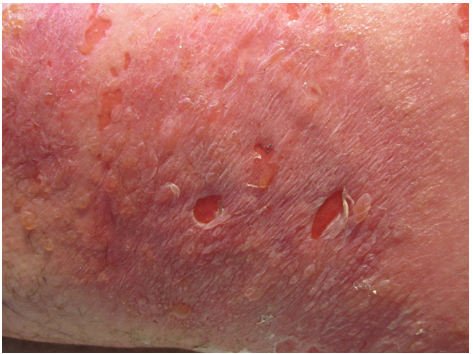 Which of the following is the most likely diagnosis?
 (Multiple Choice)
4.8/5 (77)
(77) A 52-year-old man with a history of rheumatoid arthritis comes to the clinic due to increasing pain and swelling involving several joints over the past 6 weeks. The patient also has fatigue and morning stiffness that can last for hours. He was diagnosed with rheumatoid arthritis 2 years ago after he presented with symmetrical polyarthritis, a high-titer rheumatoid factor, and positive cyclic citrullinated peptide antibodies. Treatment with methotrexate and nonsteroidal anti-inflammatory agents resulted in reduction of joint pain and swelling. At his last visit 3 months ago, the patient had only mild joint pains without any morning stiffness. His other medical problems include hypertension, diverticulosis, and hyperlipidemia.
His temperature is 37.4 C (99.4 F), blood pressure is 135/82 mm Hg, and pulse is 77/min. Gentle squeezing of his hands and feet evokes pain. Several small joints of the fingers and toes are swollen and tender. There is mild boggy swelling of the left knee. Subcutaneous nodules are seen over the elbows. The remainder of the physical examination is unremarkable.
Laboratory results are as follows:
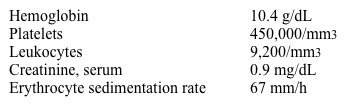 Which of the following is the best next step in management of this patient?
 (Multiple Choice)
4.7/5 (91)
(91) A 46-year-old man comes to the office due to fatigue, loss of libido, and erectile dysfunction for the past 4 months. His other medical problems include type 2 diabetes, hypertension, hyperlipidemia, seizure disorder, hepatitis C, hypothyroidism, and chronic kidney disease. The patient's current medications include long-acting insulin, lisinopril, amlodipine, furosemide, aspirin, levothyroxine, calcitriol, calcium carbonate, and phenytoin. He has a remote history of cocaine and heroin use 20 years ago and has smoked a pack of cigarettes daily for the past 25 years. He does not drink alcohol.
Blood pressure is 155/95 mm Hg and pulse is 80/min. BMI is 35 kg/m2. Examination shows hepatomegaly and 1+ pitting edema to the mid-shin bilaterally. Secondary sexual characteristics and testicular examination are unremarkable. Visual fields are normal on confrontation.
Laboratory results are as follows:
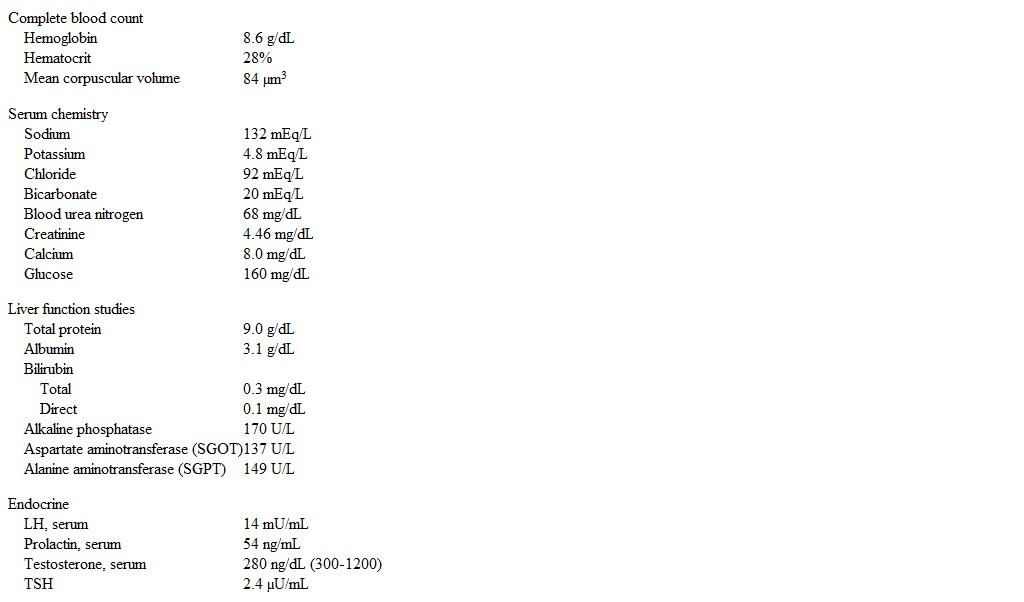 Which of the following is the most likely cause of this patient's hyperprolactinemia?
 (Multiple Choice)
4.8/5 (85)
(85) A 67-year-old man comes to the physician with hematuria. Three days ago, he experienced an episode of gross hematuria that resolved spontaneously. There was no associated dysuria, fever, chills, or flank pain. He did not pass any blood clots in his urine. He denies bleeding or bruising elsewhere except for very rare oozing from the gums after brushing his teeth. The patient has no history of kidney stones or recent trauma. He awakens twice at night to urinate and has noticed a decrease in the size and force of his urine stream over the past 2 years.
His past medical history is significant for hypertension, hyperlipidemia, and coronary artery disease. He underwent placement of 2 drug-eluting coronary artery stents after a non-ST elevation myocardial infarction 3 months ago. His current medications include low-dose aspirin, clopidogrel, lisinopril, metoprolol, and rosuvastatin.
Physical examination is unremarkable.
Laboratory results are as follows:
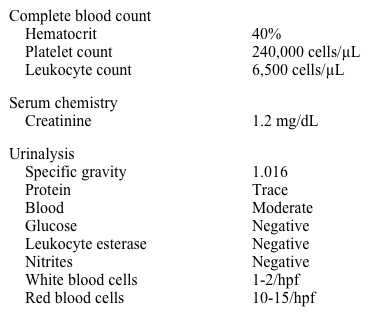 Urine culture is negative.
What is the best next step in the management of this patient?
Urine culture is negative.
What is the best next step in the management of this patient? (Multiple Choice)
4.8/5 (69)
(69) A 58-year-old man with a history of type 2 diabetes mellitus comes to the office for a follow-up visit. Medical history also includes hypertension, hyperlipidemia, coronary artery disease, and osteoarthritis. He has diabetic nephropathy with a baseline creatinine of 2.0-2.5 mg/dL. The patient's mobility is impaired due to right knee osteoarthritis and diabetic neuropathy. Medications include acetaminophen, insulin, metoprolol, valsartan, chlorthalidone, aspirin, and atorvastatin.
Blood pressure is 159/102 mm Hg and pulse is 68/min. BMI is 36 kg/m2. Physical examination shows 2+ bilateral lower extremity edema.
Laboratory results are as follows:
 Which of the following is the best next step in management of this patient?
 (Multiple Choice)
4.8/5 (74)
(74) A 37-year-old man comes to the office due to dysphagia and pain on swallowing over the past week. He has had frequent episodes of heartburn in the past that were relieved by antacids in the past, but they have not provided relief this time. The patient has a history of intravenous drug abuse and is currently enrolled in an outpatient methadone program. His other medical problems include hepatitis C and HIV infection (last CD4 count was 80 cells/mm3), for which he has had poor medical follow-up. The patient has a 15-pack-year smoking history and drinks 1 or 2 cans of beer daily.
Blood pressure is 112/67 mm Hg and pulse is 98/min. BMI is 19 kg/m2. Examination shows white plaques on the tongue and soft palate; bilateral, bright-red erythematous fissures are present at the angles of the mouth. The patient has 2 firm, mobile, nontender lymph nodes on the left side of his neck. The remainder of the physical examination is unremarkable.
Which of the following is the most appropriate next step in management of this patient?
(Multiple Choice)
4.9/5 (73)
(73) A 50-year-old man asks about starting a statin to treat his LDL of 130 mg/dL. He has no family history of coronary artery or cerebrovascular disease. He does not smoke, has a normal blood pressure, and is a competitive runner. The patient is especially concerned about the possibility of developing musculoskeletal symptoms that would impact his running. He has read extensively on the subject and specifically requests help in interpreting some studies. In one study, none of 5000 controls and 250 of 5000 statin-treated individuals developed musculoskeletal symptoms. He asks how many patients need to be treated for 1 patient to have musculoskeletal symptoms.
What is the number needed to harm in this study?
(Multiple Choice)
4.8/5 (80)
(80) A 25-year-old woman comes to the office to be evaluated for arthritis. The patient has had 3 months of pain and swelling of the metacarpophalangeal (MCP) and proximal interphalangeal (PIP) joints of the hands and the metatarsophalangeal (MTP) joints. She feels stiffness in her hand joints upon awakening in the morning that lasts approximately 2 hours. The patient has also had fatigue and decreased appetite. She has a history of severe acne but has had no cardiac or pulmonary problems. The patient's only medication is minocycline, which she began taking 6 months ago. She does not use tobacco, alcohol, or illicit drugs.
Temperature is 37.2 C (99 F), blood pressure is 122/70 mm Hg, and pulse is 89/min. Skin examination is notable for an erythematous rash on sun-exposed areas. Cardiopulmonary auscultation is normal. There is swelling and tenderness of the MCP, PIP, and MTP joints. Trace effusions are present in the elbows. The remainder of the examination, including testing for muscle strength, is within normal limits.
Laboratory results are as follows:
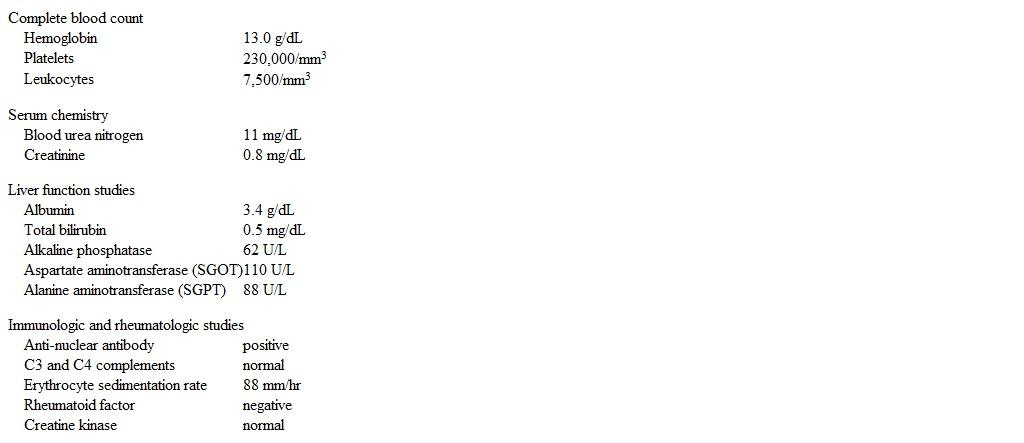 Chest x-ray is normal.
Which of the following is the most likely diagnosis in this patient?
Chest x-ray is normal.
Which of the following is the most likely diagnosis in this patient? (Multiple Choice)
4.8/5 (82)
(82) 
Filters
- Essay(0)
- Multiple Choice(0)
- Short Answer(0)
- True False(0)
- Matching(0)