



 Chat with AI
Exam 3: Office/Health Center

Exam 1: Emergency Department218 Questions
Exam 2: In-patient Facilities128 Questions
Exam 3: Office/Health Center900 Questions
Select questions type


A 63-year-old man comes to the physician with a 4-week history of rectal pain and occasional rectal bleeding. He initially thought he had hemorrhoids and applied over-the-counter creams without significant relief. He had prostate cancer treated with external beam radiation therapy 1 year earlier. The patient is an ex-smoker with a 30-pack-year history but does not use alcohol or illicit drugs. He lives with his girlfriend of 10 years.
His blood pressure is 128/68 mm Hg, pulse is 76/min, and respirations are 14/min. Cardiopulmonary examination is normal. The abdomen is soft and nontender to palpation. Rectal examination reveals guaiac- positive brown stool.
Laboratory results are as follows:
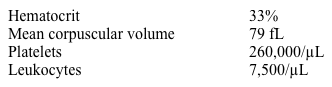 Sigmoidoscopy shows rectal mucosal pallor with friability and several telangiectasias.
Which of the following is the most likely cause of this patient's condition?
Sigmoidoscopy shows rectal mucosal pallor with friability and several telangiectasias.
Which of the following is the most likely cause of this patient's condition? (Multiple Choice)
4.7/5  (62)
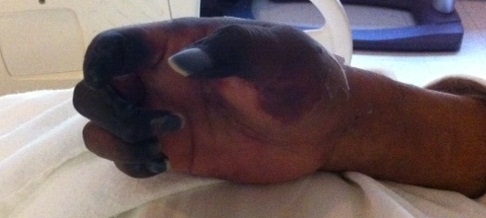
(62) A 52-year-old man comes to the physician with a week of pain and discoloration of his fingers. He has had profound fatigue and diffuse arthralgias for the past 6 months. He denies weight loss, fever, chills, hematuria, cough, hemoptysis, or shortness of breath. He has a history of asthma, intravenous drug abuse, depression, and peptic ulcer disease. He smoked 2 packs per day for 20 years but quit 10 years ago. He drinks occasionally but has not used intravenous recreational drugs for more than 10 years. He works as an auto mechanic.
On examination, the right hand appears as shown below. The remainder of the physical examination is unremarkable.
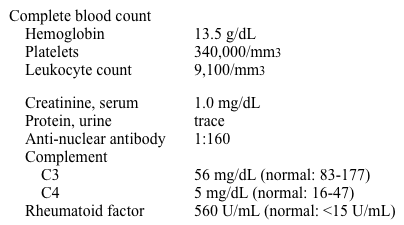
 Laboratory results are as follows:
 Chest x-ray shows no infiltrates or cardiomegaly.
Which of the following is the most likely diagnosis?
Laboratory results are as follows:
Chest x-ray shows no infiltrates or cardiomegaly.
Which of the following is the most likely diagnosis? (Multiple Choice)
4.9/5 (78)
(78) A 51-year-old woman comes to the physician because of a persistent dry cough after an upper respiratory infection 2 months ago. She denies hemoptysis, chest pain, or weight loss. She is an ex-smoker with a 25 pack-year smoking history.
Her blood pressure is 130/72 mm Hg and her pulse is 74/min. Her BMI is 24 kg/m2. Lungs are clear to auscultation. The abdomen is soft and non-tender. The remainder of the physical examination is within normal limits.
Laboratory results are as follows:
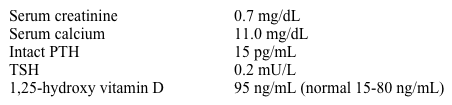 Chest x-ray reveals hilar adenopathy and a 2.0 cm left lower lung nodule.
Which of the following is the most likely cause of this patient's hypercalcemia?
Chest x-ray reveals hilar adenopathy and a 2.0 cm left lower lung nodule.
Which of the following is the most likely cause of this patient's hypercalcemia? (Multiple Choice)
5.0/5 (80)
(80) A 25-year-old woman comes to the office due to a recent diagnosis of HIV after unprotected intercourse with an HIV-positive partner. The patient is tolerating antiretroviral therapy with no side effects. She recently underwent cervical conization due to high-grade dysplasia diagnosed on routine Pap testing and confirmed on cervical biopsies. The patient received a dose of the human papillomavirus (HPV) vaccine at age 15 but did not complete the series. She recently had a progestin-containing intrauterine device placed for contraception.
Vital signs are normal. BMI is 22 kg/m2. The remainder of the physical examination is unremarkable. Urine pregnancy test is negative.
Which of the following is a contraindication to administration of HPV vaccination in this patient?
(Multiple Choice)
4.8/5 (79)
(79) A 62-year-old man comes to the physician with complaints of vague abdominal discomfort. He has a history of liver cirrhosis due to hepatitis C infection and prior heavy alcohol use. He failed hepatitis C treatment 6 years ago. The patient has no vomiting, weight loss, rectal bleeding, or dark stools. He is an ex-smoker with a 35-pack-year history.
His blood pressure is 102/65 mm Hg and pulse is 90/min. Lungs are clear on auscultation. The abdomen is nontender with presence of a small fluid wave. There is trace bilateral lower-extremity edema.
Laboratory results are as follows:
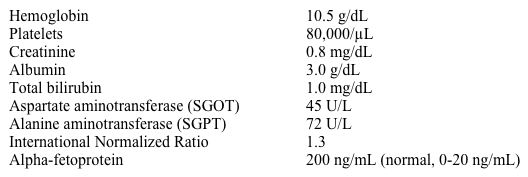 Abdominal ultrasound shows a nodular, cirrhotic liver and a 2-cm dominant nodule with poorly defined borders in the right lower lobe. There is mild splenomegaly.
What is the best next step in management of this patient?
Abdominal ultrasound shows a nodular, cirrhotic liver and a 2-cm dominant nodule with poorly defined borders in the right lower lobe. There is mild splenomegaly.
What is the best next step in management of this patient? (Multiple Choice)
4.7/5 (80)
(80) A 45-year-old woman comes to the physician with "reddish spots" on her legs. She first noticed them 3 months ago and says that they are slowly spreading. Her medical problems include type 2 diabetes mellitus, acid reflux disease, hypertension, chronic constipation, and hypothyroidism. Her medications include metformin, levothyroxine, lisinopril, omeprazole, and as-needed senna.
Her temperature is 37.2 C (99 F), blood pressure is 120/80 mm Hg, pulse is 78/min, and respirations are 12/min. Her body mass index is 27 kg/m2. Several spots are seen in the pretibial region of each leg, as shown in the image below. The examination also shows clear lung fields, normal first and second heart sounds, and a 1/6 systolic murmur at the apex.
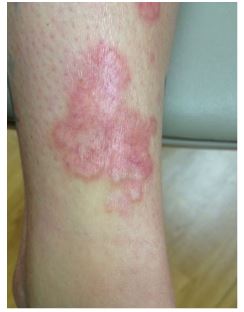 Which of the following is the most likely diagnosis?
 (Multiple Choice)
4.9/5 (81)
(81) A 43-year-old woman comes to the emergency department due to a 2-day history of nausea, vomiting, and epigastric pain. The pain is stabbing in character and radiates to her back. She also feels dizzy and weak but has not experienced shortness of breath, skin rash, constipation, abdominal trauma, headache, or fever. The patient's medical history is notable for hyperlipidemia and hypothyroidism, but she has not seen a physician in the past year. Current medications include levothyroxine, hydrochlorothiazide, and metoprolol. The patient has smoked a pack of cigarettes daily for 20 years and usually drinks 1 or 2 cans of beer a day, but she has been drinking more during the last few weeks due to a stressful relationship with her boyfriend.
Temperature is 37.2 C (99 F), blood pressure is 90/60 mm Hg, pulse is 112/min, and respirations are 20/min. Oxygen saturation is 97% on room air. BMI is 30 kg/m2. On examination, the patient appears to be in moderate distress due to pain. Mucous membranes are dry. Abdominal examination shows epigastric tenderness with mild guarding. The liver is palpable 2 cm below the costal margin. There is no splenomegaly. The remainder of the physical examination is unremarkable.
Laboratory results are as follows:
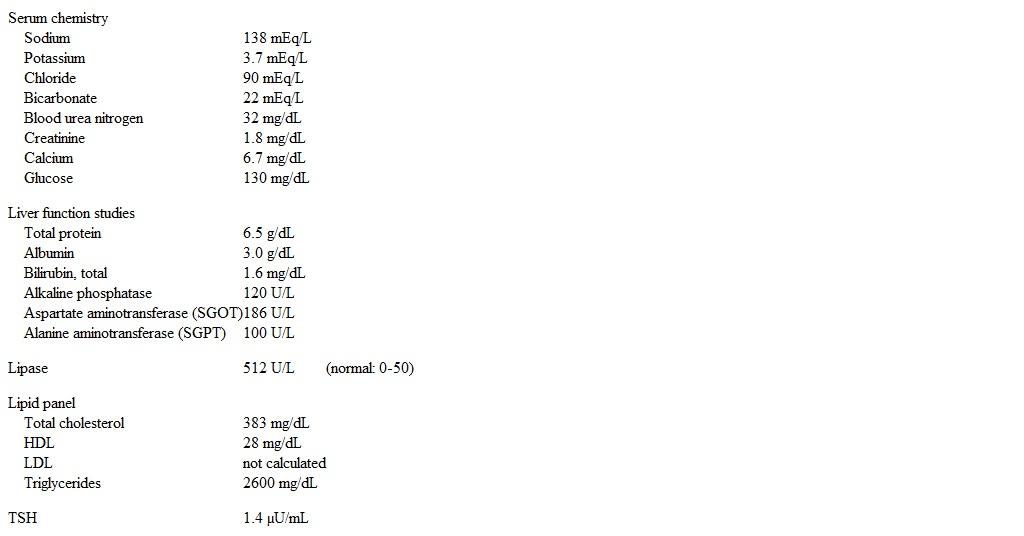 Abdominal radiograph is unremarkable. Abdominal ultrasound shows an enlarged, hypoechoic pancreas and a normal gallbladder. The common bile duct size is normal. The liver is enlarged and diffusely hyperechoic.
The patient's pain and blood pressure improve with intravenous fentanyl and a 1-L normal saline bolus.
Which of the following is the best additional therapy for this patient at this time?
Abdominal radiograph is unremarkable. Abdominal ultrasound shows an enlarged, hypoechoic pancreas and a normal gallbladder. The common bile duct size is normal. The liver is enlarged and diffusely hyperechoic.
The patient's pain and blood pressure improve with intravenous fentanyl and a 1-L normal saline bolus.
Which of the following is the best additional therapy for this patient at this time? (Multiple Choice)
4.9/5 (83)
(83) A 42-year-old woman from the Philippines comes to the office with abdominal pain for the last 4 months. The patient describes intermittent episodes of dull epigastric pain that usually start when she skips a meal. She often drinks a glass of lactose-free milk or takes acetaminophen to ease the symptoms. The patient also describes bloating after eating certain types of food. Her medical history includes diet-controlled type 2 diabetes mellitus.
Blood pressure is 142/89 mm Hg and pulse is 88/min. BMI is 31 kg/m2. Physical examination is unremarkable.
Laboratory results are as follows:
 Abdominal ultrasound shows several gallstones 3-4 mm in diameter.
Which of the following is the best next step in management of this patient?
Abdominal ultrasound shows several gallstones 3-4 mm in diameter.
Which of the following is the best next step in management of this patient? (Multiple Choice)
4.9/5 (80)
(80) A 72-year-old woman comes to the physician because of aching and stiffness of her neck and shoulders for the past several weeks. This stiffness lasts for 1-2 hours after rising in the morning. She has tried ibuprofen without relief and has also experienced increasing fatigue for 4-6 weeks. She has no visual changes, headaches, other joint complaints, fever, or chills. Her weight is stable. The patient has osteoporosis, hyperlipidemia, type 2 diabetes mellitus, and hypertension. Current medications include metformin, chlorthalidone, lisinopril, atorvastatin, and calcium and vitamin D supplements.
On physical examination, she appears to be in no acute distress. Her temperature is 37.1 C (98.8 F), pulse is 84/min, blood pressure is 130/84 mm Hg, and respiratory rate is 16/min. There is some limitation in range of motion of her shoulders and neck. There is no cervical muscle tenderness, no upper or lower extremity proximal muscle weakness, and no joint swelling or redness.
The patient's laboratory results are as follows:
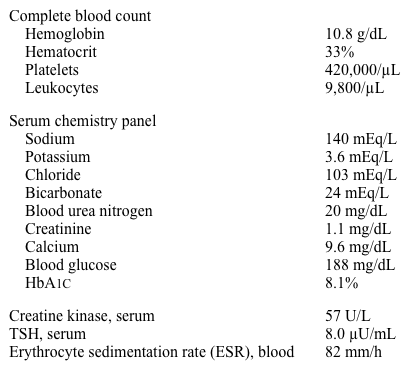 Which of the following is the most likely cause of this patient's condition?
 (Multiple Choice)
4.8/5 (73)
(73) A 64-year-old woman comes to the office due to worsening dyspnea on exertion and a "whistling noise" while breathing heavily during exercise. These symptoms have worsened over the past 3 months. The patient has had no cough, fever, hoarseness, or weight change. She has hypertension and hyperlipidemia and had a coronary artery bypass graft 4 years ago. Physical examination reveals no cardiopulmonary abnormality. A flow-volume loop demonstrates the following:
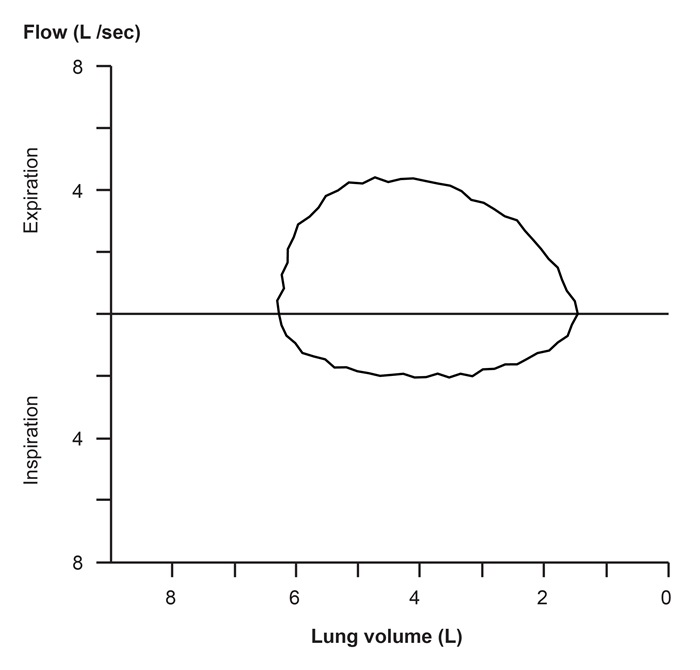 What is the most likely etiology of this patient's symptoms?
 (Multiple Choice)
4.9/5 (87)
(87) A 75-year-old woman comes to the office due to a compression fracture of her tenth thoracic vertebra after slipping in the bathtub. Her medical history is notable for hypertension, hyperlipidemia, type 2 diabetes mellitus, gastroesophageal reflux disease, and stage 4 chronic kidney disease. The patient is compliant with all of her medications, including calcium and vitamin D supplementation.
Laboratory results are as follows:
 DXA shows a T-score of −2.0 at the lumbar spine and −1.8 at the femoral neck.
In addition to continuing vitamin D and calcium supplementation, which of the following is the best therapeutic option to decrease this patient's risk of future fractures?
DXA shows a T-score of −2.0 at the lumbar spine and −1.8 at the femoral neck.
In addition to continuing vitamin D and calcium supplementation, which of the following is the best therapeutic option to decrease this patient's risk of future fractures? (Multiple Choice)
4.9/5 (82)
(82) A 45-year-old woman comes to the physician because of frequent urination for the last six months. She states that she has been waking up several times at night to urinate. These symptoms also disrupt her professional work schedule. She has been taking lithium to treat a mood disorder for the past 5 years. She has tried many other drugs for her mood disorder, but none have been as successful as lithium. She is adherent to her treatment and has her lithium level measured regularly. She had one episode of mild lithium toxicity two years ago.
Her physical examination is unremarkable.
Laboratory results are as follows:
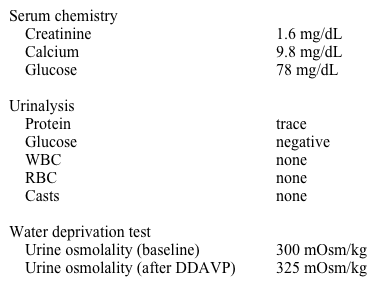 Which of the following would be the best initial treatment for this patient?
 (Multiple Choice)
4.8/5 (93)
(93) A 56-year-old man comes to the physician with fever, chills, and painful urination for 3 days. He has also experienced decreased force in his urinary stream, urinary frequency, and nocturia. The patient was diagnosed with benign prostatic hyperplasia 2 years ago. His other medical problems include hypertension, hyperlipidemia, and type 2 diabetes mellitus. His medications include saw palmetto, metformin, enalapril, and lovastatin. He is sexually active with his wife of 35 years.
His temperature is 38.3° C (101° F), blood pressure is 127/84 mm Hg, and pulse is 98/min. There is no costovertebral angle tenderness bilaterally. His genitalia and testes are normal. His prostate is enlarged and very tender to palpation on digital rectal examination.
Laboratory results are as follows:
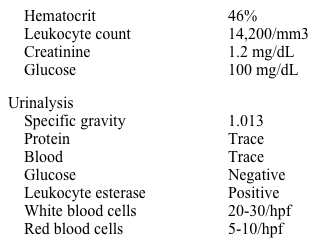 Urine and blood cultures are sent. Urine Gram stain shows no organisms.
Which of the following would be the best next step in management of this patient?
Urine and blood cultures are sent. Urine Gram stain shows no organisms.
Which of the following would be the best next step in management of this patient? (Multiple Choice)
4.9/5 (78)
(78) A 35-year-old immigrant from Turkey comes to the physician for painful mouth ulcers that occur frequently and are accompanied by malaise and poor appetite. He was diagnosed with "canker sores" many years ago and has tried different oral rinse solutions. He also reports muscle aches and poor sleep. One year ago, he had anterior uveitis; laboratory studies at that time revealed no abnormalities. His other medical problems include acid reflux disease, constipation, and acne. The patient takes over-the-counter antacids and fiber supplements. He has a 15-pack-year smoking history but does not use alcohol or illicit drugs.
The patient's vital signs are normal. Physical examination shows 2 large ulcers on the buccal mucosa. There are papular and pustular skin lesions on the face. He has no joint swelling or deformities. He refuses laboratory work-up because each time blood is drawn he develops "skin bumps and infection."
Which of the following conditions is the most likely diagnosis?
(Multiple Choice)
4.9/5 (77)
(77) A 65-year-old woman with moderate chronic obstructive pulmonary disease and hypertension comes to the office for dyspnea that occurs when she walks more than 2 or 3 blocks. The dyspnea is not new and she has a chronic cough. The patient has a 40-pack-year smoking history and wants to know if there is anything she can do to stop. "I want to be done with these damn cigarettes." She briefly tried nicotine replacement therapy and cognitive-behavioral therapy for smoking cessation but found them to be only partially helpful. The patient also has a history of bipolar disorder and a chronic eating disorder. Her last episode of depression was a year ago. Medications include albuterol, salmeterol, fluticasone, and hydrochlorothiazide. She takes no psychiatric medications.
The patient is afebrile. Blood pressure is 138/88 mm Hg and pulse is 94/min. Physical examination shows decreased breath sounds and expiratory wheezes, which are not new.
Which of the following is the most appropriate next step in management of this patient's smoking?
(Multiple Choice)
5.0/5 (86)
(86) A 58-year-old man comes to the office for follow-up of his type 2 diabetes mellitus. He feels well. The patient was diagnosed with diabetes 10 years ago, and his medical history is also notable for hypertension, hypercholesterolemia, obesity, and osteoarthritis. Three years ago, he underwent upper endoscopy for a bleeding peptic ulcer. Current medications include aspirin 81 mg daily, metformin 1000 mg twice per day, insulin glargine 15 units daily, atorvastatin 10 mg daily, hydrochlorothiazide 25 mg daily, ramipril 10 mg daily, and amlodipine 10 mg daily. The patient's father was diagnosed with diabetes at age 54 and died due to heart problems at age 70; his mother has hypertension and hypercholesterolemia. He is a former smoker of a half pack of cigarettes per day and quit 5 years ago. He drinks alcohol occasionally. The patient has a sedentary lifestyle, and his diet consists mainly of fast food.
Blood pressure is 130/77 mm Hg and pulse is 76/min. BMI is 40 kg/m2. Physical examination shows trace edema at the ankles but is otherwise unremarkable.
Laboratory results are as follows:
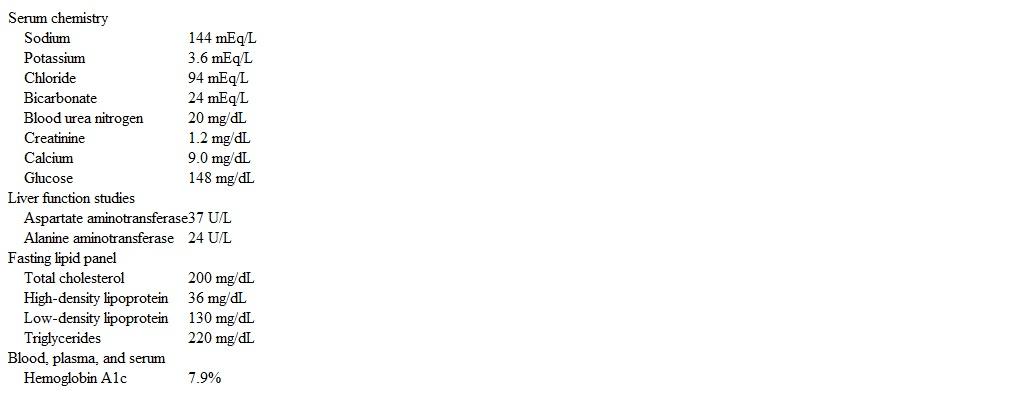 The patient's estimated 10-year risk of cardiovascular events (based on the Pooled Cohort Equations) is 20%.
Which of the following is the most appropriate intervention to reduce this patient's risk for coronary events?
The patient's estimated 10-year risk of cardiovascular events (based on the Pooled Cohort Equations) is 20%.
Which of the following is the most appropriate intervention to reduce this patient's risk for coronary events? (Multiple Choice)
4.8/5 (75)
(75) A 32-year-old woman at 16 weeks gestation with no previous medical or psychiatric history comes to the office for a follow-up due to worsening depression. She says, "I don't understand why I feel this way since I was so happy to become pregnant and my fiancé is very supportive. Sometimes I start crying over nothing at all." The patient began seeing a therapist 8 weeks ago after her sister noticed that she seemed down. She had suicidal thoughts at that time, but has been able to control these by speaking with the therapist weekly. The therapy has helped somewhat, but the patient still feels depressed most of the day, has trouble sleeping, and wakes up early in the morning. She is also having trouble concentrating at work and has lost 2.5 kg (5.5 lb) over the past 4 weeks. She has no current suicidal or homicidal thoughts or psychotic symptoms.
Physical examination is unremarkable and laboratory studies, including complete blood count and TSH, are within normal limits.
Which of the following is the most appropriate treatment for the patient at this time?
(Multiple Choice)
4.9/5 (77)
(77) A 57-year-old woman comes to the office due to low mood and poor sleep for the past 2 months. She describes difficulty focusing at work and has been avoiding friends and family on weekends "because I don't feel up to being around people." Her appetite has increased and she finds it increasingly difficult to motivate herself to exercise. The patient has no suicidal ideation or psychosis. There is no psychiatric history. Medical history is significant for hypertension and seasonal allergies treated with hydrochlorothiazide and loratadine. Physical examination is normal apart from a 2.3-kg (5-lb) weight gain, and laboratory results, including thyroid function tests, are normal. The patient is diagnosed with major depressive disorder and started on sertraline 50 mg.
At her 1-month follow-up, the patient reports improvement in her sleep and energy level and is tolerating the medication well. However, she continues to feel sad more days than not and is unable to enjoy activities as she once did.
Which of the following is the most appropriate next step in management of this patient?
(Multiple Choice)
4.8/5 (69)
(69) A 37-year-old woman is evaluated for generalized weakness. She has been hospitalized twice over the last year with similar complaints and her serum potassium concentration was found to be < 3.0 mEq/L. Her potassium concentration returned to normal with aggressive potassium replacement. She eats a normal diet and denies vomiting, purging, and cathartic or diuretic use. Her blood pressure is within normal limits. Her only medication is an oral contraceptive. Her review of systems is otherwise unremarkable. Her sister suffers from Crohn's disease and her mother has congestive heart failure, diabetes mellitus, and bipolar disorder.
Her blood pressure is 112/68 mm Hg and her pulse is 90/min. Her BMI is 22 kg/m2. Physical examination is normal.
Laboratory studies are shown below:
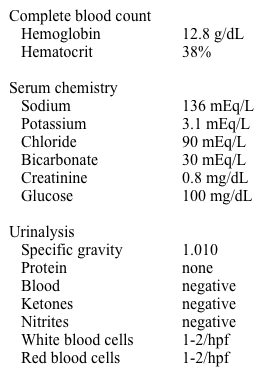 Spot urinary chloride concentrations on two separate occasions were 15 and 65 mEq/L.
Which of the following is most likely to establish diagnosis in this patient?
Spot urinary chloride concentrations on two separate occasions were 15 and 65 mEq/L.
Which of the following is most likely to establish diagnosis in this patient? (Multiple Choice)
4.8/5 (88)
(88) A 35-year-old man comes to the office due to sleep disturbance, low energy, and loss of appetite for the past 3 months. Further history indicates that he lost his job 6 months ago when his company was relocated overseas, and he has been feeling "too depressed and unmotivated" to look for new work. He has stopped exercising and prefers not to be around his friends, feeling embarrassed that he had to move back in with his parents. He has thoughts that "life is not worth living" but has no thoughts of suicide. Physical examination and laboratory evaluation are noncontributory. The patient is diagnosed with major depressive disorder and started on sertraline 25 mg.
At the patient's 2-week follow-up, he is tolerating the medication well, but his symptoms are unchanged. The dose is increased to 100 mg, which is within the therapeutic range. The patient phones 2 weeks later and requests to try another medication, saying, "Aside from sleeping and eating better, I still feel depressed."
Which of the following is the most appropriate course of action in management of this patient?
(Multiple Choice)
4.8/5 (81)
(81) 
Filters
- Essay(0)
- Multiple Choice(0)
- Short Answer(0)
- True False(0)
- Matching(0)