



 Chat with AI
Exam 50: Nutrition, Digestion, and Absorption

Exam 1: Studying Life246 Questions
Exam 2: Small Molecules and the Chemistry of Life246 Questions
Exam 3: Proteins, Carbohydrates, and Lipids246 Questions
Exam 4: Nucleic Acids and the Origin of Life246 Questions
Exam 5: Cells: the Working Units of Life248 Questions
Exam 6: Cell Membranes246 Questions
Exam 7: Cell Communication and Multicellularity246 Questions
Exam 8: Energy, Enzymes, and Metabolism246 Questions
Exam 9: Pathways That Harvest Chemical Energy246 Questions
Exam 10: Photosynthesis: Energy From Sunlight242 Questions
Exam 11: The Cell Cycle and Cell Division260 Questions
Exam 12: Inheritance, Genes, and Chromosomes250 Questions
Exam 13: Dna and Its Role in Heredity257 Questions
Exam 14: From Dna to Protein: Gene Expression252 Questions
Exam 15: Gene Mutation and Molecular Medicine251 Questions
Exam 16: Regulation of Gene Expression245 Questions
Exam 17: Genomes249 Questions
Exam 18: Recombinant Dna and Biotechnology243 Questions
Exam 20: Mechanisms of Evolution243 Questions
Exam 21: Reconstructing and Using Phylogenies246 Questions
Exam 22: Speciation247 Questions
Exam 23: Evolution of Genes and Genomes252 Questions
Exam 24: The History of Life on Earth246 Questions
Exam 25: Bacteria, Archaea, and Viruses262 Questions
Exam 26: The Origin and Diversification of Eukaryotes252 Questions
Exam 27: Plants Without Seeds: From Water to Land251 Questions
Exam 28: The Evolution of Seed Plants259 Questions
Exam 29: The Evolution and Diversity of Fungi261 Questions
Exam 30: Animal Origins and the Evolution of Body Plans248 Questions
Exam 31: Protostome Animals244 Questions
Exam 32: Deuterostome Animals246 Questions
Exam 33: The Plant Body243 Questions
Exam 34: Transport in Plants248 Questions
Exam 35: Plant Nutrition247 Questions
Exam 36: Regulation of Plant Growth246 Questions
Exam 37: Reproduction in Flowering Plants247 Questions
Exam 38: Plant Responses to Environmental Challenges246 Questions
Exam 39: Physiology, Homeostasis, and Temperature Regulation258 Questions
Exam 40: Animal Hormones249 Questions
Exam 41: Immunology: Animal Defense Systems265 Questions
Exam 42: Animal Reproduction261 Questions
Exam 43: Animal Development261 Questions
Exam 44: Neurons, Glia, and Nervous Systems250 Questions
Exam 45: Sensory Systems249 Questions
Exam 46: The Mammalian Nervous System: Structure and Higher Functions254 Questions
Exam 47: Musculoskeletal Systems259 Questions
Exam 48: Gas Exchange247 Questions
Exam 49: Circulatory Systems252 Questions
Exam 50: Nutrition, Digestion, and Absorption259 Questions
Exam 51: Salt and Water Balance and Nitrogen Excretion251 Questions
Exam 52: Animal Behavior249 Questions
Exam 53: The Physical Environment and Biogeography of Life248 Questions
Exam 54: Populations259 Questions
Exam 55: Species Interactions254 Questions
Exam 56: Communities247 Questions
Exam 57: Ecosystems238 Questions
Exam 58: A Changing Biosphere222 Questions
Select questions type


Refer to the figure showing the intestinal surface area of various organisms. 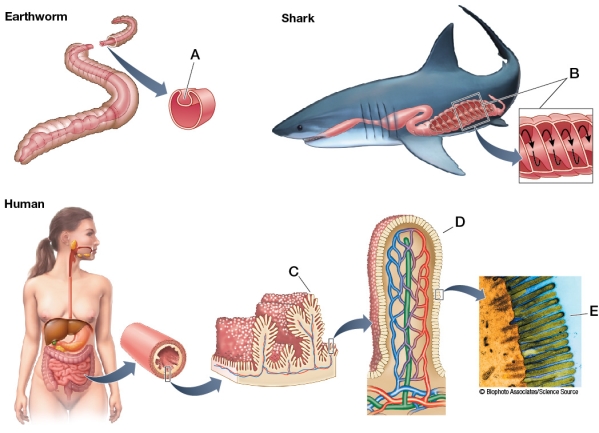 Identify structures A-E, all of which serve to increase intestinal surface area.
 (Short Answer)
4.8/5  (81)
(81) Most plants, some bacteria, and some protists are autotrophs.Animals, however, are _______ because they derive both their energy and their structural molecules from food.
(Short Answer)
4.8/5 (93)
(93) If you are lost without food, you will use up your carbohydrate reserves in about a day, but you can rely on your _______ reserves for a longer period of time before your body starts to metabolize its own proteins.
(Short Answer)
4.9/5 (64)
(64) Refer to the figure showing a portion of the human stomach. 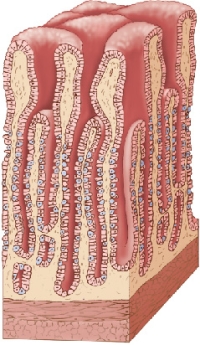 In humans, which event occurs prior to reaching the part of the stomach shown in the figure?
 (Multiple Choice)
4.8/5 (101)
(101) Refer to the figure.In an experiment to test the function of leptin in mice, parabiotic twins were created by surgically connecting the circulatory systems of a wild-type (WT) mouse with an obese mouse or a wild-type mouse.The obese mouse either lacked functional leptin (genotype ob/ob) or lacked the receptor for leptin (genotype db/db).After allowing the mice to feed at will, they observed the results shown in the figure. 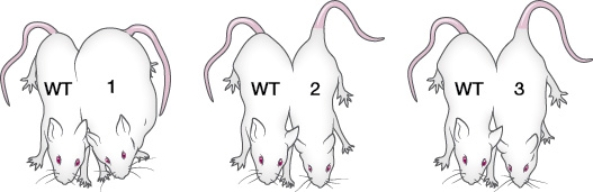 It is most likely that
 (Multiple Choice)
5.0/5 (84)
(84) Gluconeogenesis occurs in the _______ and involves the conversion of _______ into glucose.
(Multiple Choice)
4.8/5 (87)
(87) Refer to the figure of a human swallowing food (green). 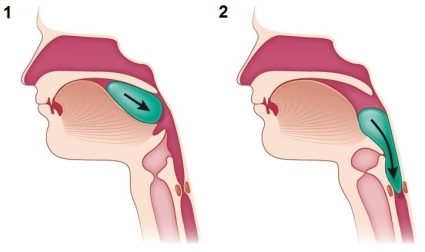 What has happened between panels 1 and 2?
 (Multiple Choice)
4.8/5 (68)
(68) Earthworms and crabs that feed actively on dead organic matter are called _______.
(Short Answer)
4.9/5 (61)
(61) Eating a small serving of a food that is very acidic might present something of a paradox to your stomach because
(Multiple Choice)
4.8/5 (91)
(91) With regard to dietary specialization, a jawbone containing many molars and premolars but no canines likely belongs to a(n) _______.
(Short Answer)
4.9/5 (76)
(76) When a bird is getting ready for migration, it eats large amounts and stores the energy primarily as _______ because it is compact and contains a high amount of energy per gram.
(Short Answer)
4.9/5 (85)
(85) In humans, which structure is closed off from food when food is swallowed?
(Multiple Choice)
4.8/5 (88)
(88) Refer to the figure showing the digestive systems of three organisms. 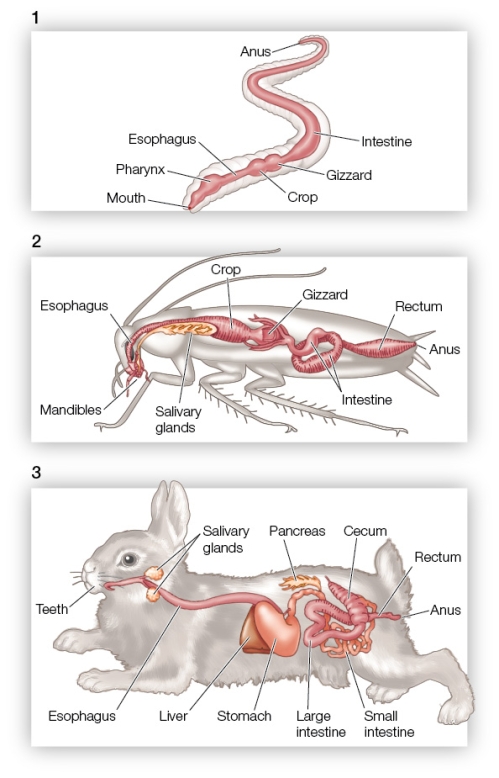 Based on the figure, which of these animals has a gut that is best adapted for grinding up the food they ingest prior to chemical digestion, and what is the structure that allows this?
 (Multiple Choice)
4.9/5 (86)
(86) A malnourished patient in late-stage anorexia is admitted to the hospital.This patient is exhibiting _______ in the abdomen, hands, and feet due to metabolizing her own blood plasma proteins.
(Short Answer)
4.9/5 (82)
(82) Refer to the figure showing hormonal control of digestion. 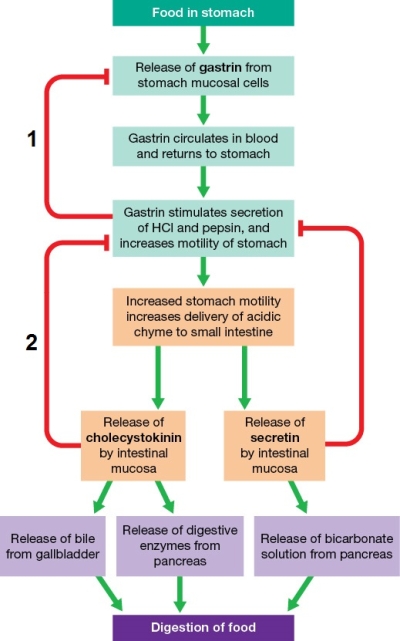 Based on the figure, the action(s) shown at _______ will result in _______.
 (Multiple Choice)
5.0/5 (78)
(78) The enzyme _______ is the active form of a precursor secreted by the _______, where it begins the digestion of _______.
(Multiple Choice)
4.9/5 (90)
(90) Refer to the table.In mice, a single-gene mutation can lead to obesity.The Ob gene codes for the protein leptin.The recessive ob allele is a loss-of-function allele, so ob/ob mice do not produce leptin, and they become obese.In an experiment, leptin was injected into ob/ob and Ob/Ob (wild-type) mice daily.The data in the table below were collected before the injections began (baseline) and 10 days later.(Assume that the Ob allele is dominant.) 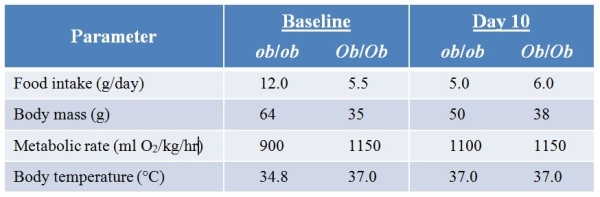 What conclusion can be drawn from the data in the table?
 (Multiple Choice)
4.8/5 (74)
(74) A friend who is healing from a bad cut wants to speed up the process by taking vitamin supplements.After studying the functions of vitamins, he makes a list of those that promote healing and is planning on taking megadoses of these.You warn him against taking megadoses of _______ because it can build up to toxic levels in his liver.You are less worried about his taking megadoses of _______, because any excess he takes will be eliminated in his urine.
(Multiple Choice)
4.9/5 (87)
(87) 
Filters
- Essay(0)
- Multiple Choice(0)
- Short Answer(0)
- True False(0)
- Matching(0)