



 Chat with AI
Exam 50: Nutrition, Digestion, and Absorption

Exam 1: Studying Life246 Questions
Exam 2: Small Molecules and the Chemistry of Life246 Questions
Exam 3: Proteins, Carbohydrates, and Lipids246 Questions
Exam 4: Nucleic Acids and the Origin of Life246 Questions
Exam 5: Cells: the Working Units of Life248 Questions
Exam 6: Cell Membranes246 Questions
Exam 7: Cell Communication and Multicellularity246 Questions
Exam 8: Energy, Enzymes, and Metabolism246 Questions
Exam 9: Pathways That Harvest Chemical Energy246 Questions
Exam 10: Photosynthesis: Energy From Sunlight242 Questions
Exam 11: The Cell Cycle and Cell Division260 Questions
Exam 12: Inheritance, Genes, and Chromosomes250 Questions
Exam 13: Dna and Its Role in Heredity257 Questions
Exam 14: From Dna to Protein: Gene Expression252 Questions
Exam 15: Gene Mutation and Molecular Medicine251 Questions
Exam 16: Regulation of Gene Expression245 Questions
Exam 17: Genomes249 Questions
Exam 18: Recombinant Dna and Biotechnology243 Questions
Exam 20: Mechanisms of Evolution243 Questions
Exam 21: Reconstructing and Using Phylogenies246 Questions
Exam 22: Speciation247 Questions
Exam 23: Evolution of Genes and Genomes252 Questions
Exam 24: The History of Life on Earth246 Questions
Exam 25: Bacteria, Archaea, and Viruses262 Questions
Exam 26: The Origin and Diversification of Eukaryotes252 Questions
Exam 27: Plants Without Seeds: From Water to Land251 Questions
Exam 28: The Evolution of Seed Plants259 Questions
Exam 29: The Evolution and Diversity of Fungi261 Questions
Exam 30: Animal Origins and the Evolution of Body Plans248 Questions
Exam 31: Protostome Animals244 Questions
Exam 32: Deuterostome Animals246 Questions
Exam 33: The Plant Body243 Questions
Exam 34: Transport in Plants248 Questions
Exam 35: Plant Nutrition247 Questions
Exam 36: Regulation of Plant Growth246 Questions
Exam 37: Reproduction in Flowering Plants247 Questions
Exam 38: Plant Responses to Environmental Challenges246 Questions
Exam 39: Physiology, Homeostasis, and Temperature Regulation258 Questions
Exam 40: Animal Hormones249 Questions
Exam 41: Immunology: Animal Defense Systems265 Questions
Exam 42: Animal Reproduction261 Questions
Exam 43: Animal Development261 Questions
Exam 44: Neurons, Glia, and Nervous Systems250 Questions
Exam 45: Sensory Systems249 Questions
Exam 46: The Mammalian Nervous System: Structure and Higher Functions254 Questions
Exam 47: Musculoskeletal Systems259 Questions
Exam 48: Gas Exchange247 Questions
Exam 49: Circulatory Systems252 Questions
Exam 50: Nutrition, Digestion, and Absorption259 Questions
Exam 51: Salt and Water Balance and Nitrogen Excretion251 Questions
Exam 52: Animal Behavior249 Questions
Exam 53: The Physical Environment and Biogeography of Life248 Questions
Exam 54: Populations259 Questions
Exam 55: Species Interactions254 Questions
Exam 56: Communities247 Questions
Exam 57: Ecosystems238 Questions
Exam 58: A Changing Biosphere222 Questions
Select questions type


If the acidity of the stomach is neutralized by antacids and acid-blockers,
(Multiple Choice)
4.9/5  (85)
(85) Which statement about movement of food in the gut is true?
(Multiple Choice)
4.8/5 (63)
(63) Which statement about cells and secretions of the human stomach is true?
(Multiple Choice)
4.8/5 (73)
(73) Starch is broken down by the enzyme _______, which is secreted by the _______.
(Multiple Choice)
4.9/5 (96)
(96) Refer to the table.In mice, a single-gene mutation can lead to obesity.The Ob gene codes for the protein leptin.The recessive ob allele is a loss-of-function allele, so ob/ob mice do not produce leptin and they become obese.In an experiment, leptin was injected into ob/ob and Ob/Ob (wild-type) mice daily.The data in the table below were collected before the injections began (baseline) and 10 days later.(Assume that the Ob allele is dominant.) 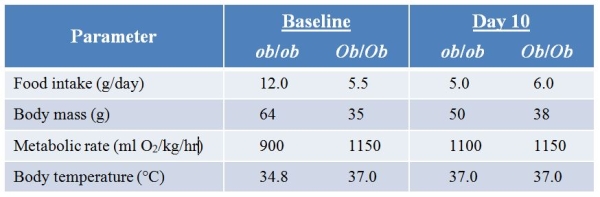 Researchers found that levels of the hormone leptin are high in the bloodstreams of most overweight humans.Based on the data in the table from the experiment on mice, what is a likely explanation for this observation in humans?
 (Multiple Choice)
4.9/5 (75)
(75) Choose the correct pairing between tooth type and function.
(Multiple Choice)
4.9/5 (74)
(74) Refer to the figure. 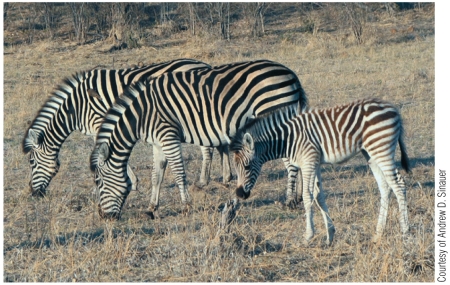 The animals shown in the figure are most likely
 (Multiple Choice)
4.8/5 (73)
(73) A wave of smooth muscle contraction called _______ pushes food along the digestive tract.
(Short Answer)
4.9/5 (79)
(79) Which disease differs from the others in terms of the kind of deficiency that causes it?
(Multiple Choice)
4.8/5 (81)
(81) The nutritional disease kwashiorkor, in which the body starts to metabolize some of the molecules of its own body, results from a(n)
(Multiple Choice)
4.7/5 (80)
(80) Which statement about nutrient absorption in the small intestine is true?
(Multiple Choice)
4.8/5 (75)
(75) Imagine you are working as a consultant for a pharmaceutical company with the goal of developing a new weight-loss drug.You decide to try to trigger a sense of fullness or satiety.To do this you might design a drug to mimic the activity of
(Multiple Choice)
4.9/5 (70)
(70) A fundamental difference between saprobes and detritivores is that
(Multiple Choice)
4.7/5 (92)
(92) When a food bolus contacts the _______, swallowing reflexes begin.
(Multiple Choice)
4.8/5 (87)
(87) Which statement about the hormonal control of fuel metabolism is true?
(Multiple Choice)
4.8/5 (67)
(67) 
Filters
- Essay(0)
- Multiple Choice(0)
- Short Answer(0)
- True False(0)
- Matching(0)