



 Chat with AI
Exam 32: Deuterostome Animals

Exam 1: Studying Life246 Questions
Exam 2: Small Molecules and the Chemistry of Life246 Questions
Exam 3: Proteins, Carbohydrates, and Lipids246 Questions
Exam 4: Nucleic Acids and the Origin of Life246 Questions
Exam 5: Cells: the Working Units of Life248 Questions
Exam 6: Cell Membranes246 Questions
Exam 7: Cell Communication and Multicellularity246 Questions
Exam 8: Energy, Enzymes, and Metabolism246 Questions
Exam 9: Pathways That Harvest Chemical Energy246 Questions
Exam 10: Photosynthesis: Energy From Sunlight242 Questions
Exam 11: The Cell Cycle and Cell Division260 Questions
Exam 12: Inheritance, Genes, and Chromosomes250 Questions
Exam 13: Dna and Its Role in Heredity257 Questions
Exam 14: From Dna to Protein: Gene Expression252 Questions
Exam 15: Gene Mutation and Molecular Medicine251 Questions
Exam 16: Regulation of Gene Expression245 Questions
Exam 17: Genomes249 Questions
Exam 18: Recombinant Dna and Biotechnology243 Questions
Exam 20: Mechanisms of Evolution243 Questions
Exam 21: Reconstructing and Using Phylogenies246 Questions
Exam 22: Speciation247 Questions
Exam 23: Evolution of Genes and Genomes252 Questions
Exam 24: The History of Life on Earth246 Questions
Exam 25: Bacteria, Archaea, and Viruses262 Questions
Exam 26: The Origin and Diversification of Eukaryotes252 Questions
Exam 27: Plants Without Seeds: From Water to Land251 Questions
Exam 28: The Evolution of Seed Plants259 Questions
Exam 29: The Evolution and Diversity of Fungi261 Questions
Exam 30: Animal Origins and the Evolution of Body Plans248 Questions
Exam 31: Protostome Animals244 Questions
Exam 32: Deuterostome Animals246 Questions
Exam 33: The Plant Body243 Questions
Exam 34: Transport in Plants248 Questions
Exam 35: Plant Nutrition247 Questions
Exam 36: Regulation of Plant Growth246 Questions
Exam 37: Reproduction in Flowering Plants247 Questions
Exam 38: Plant Responses to Environmental Challenges246 Questions
Exam 39: Physiology, Homeostasis, and Temperature Regulation258 Questions
Exam 40: Animal Hormones249 Questions
Exam 41: Immunology: Animal Defense Systems265 Questions
Exam 42: Animal Reproduction261 Questions
Exam 43: Animal Development261 Questions
Exam 44: Neurons, Glia, and Nervous Systems250 Questions
Exam 45: Sensory Systems249 Questions
Exam 46: The Mammalian Nervous System: Structure and Higher Functions254 Questions
Exam 47: Musculoskeletal Systems259 Questions
Exam 48: Gas Exchange247 Questions
Exam 49: Circulatory Systems252 Questions
Exam 50: Nutrition, Digestion, and Absorption259 Questions
Exam 51: Salt and Water Balance and Nitrogen Excretion251 Questions
Exam 52: Animal Behavior249 Questions
Exam 53: The Physical Environment and Biogeography of Life248 Questions
Exam 54: Populations259 Questions
Exam 55: Species Interactions254 Questions
Exam 56: Communities247 Questions
Exam 57: Ecosystems238 Questions
Exam 58: A Changing Biosphere222 Questions
Select questions type


The mudpuppy is a salamander that has retained a completely aquatic lifestyle due to _______ evolutionary processes.
(Multiple Choice)
4.8/5  (84)
(84) Refer to the figure. 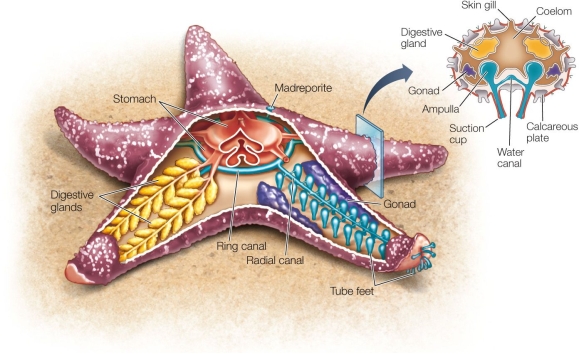 Which statement about the body plan of the larval and adult sea star is true?
 (Multiple Choice)
4.8/5 (84)
(84) A water vascular system may be advantageous in echinoderms because
(Multiple Choice)
4.7/5 (85)
(85) The coelacanth is a modern lobe-limbed vertebrate that is also grouped as a(n)
(Multiple Choice)
4.8/5 (79)
(79) Lungfishes are found in stagnant swamps and muddy waters of South America, Africa, and Australia.When such environments dry up, lungfishes are able to exchange gases through _______.
(Short Answer)
4.8/5 (88)
(88) Refer to the figure. 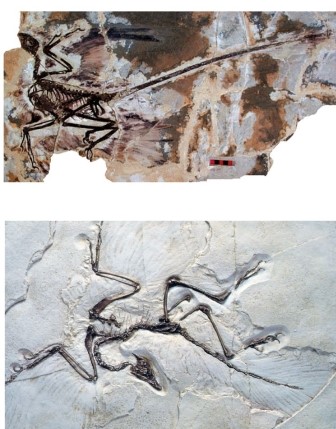 One of the key characteristics of these fossilized theropods that led to flight in birds is _______.
 (Short Answer)
4.8/5 (89)
(89) In 2004, 18,000-year-old fossil remains of a small hominid called _______ were found on the island of Flores in Indonesia.Many anthropologists think this species may be most closely related to _______.
(Multiple Choice)
4.9/5 (76)
(76) What are some of the functional similarities between mammalian hair and bird feathers?
(Essay)
4.8/5 (77)
(77) A fossil of insectivorous eutherians adapted to arboreal life that was dated to just prior to 90 mya would likely be that of a(n) _______.
(Short Answer)
4.7/5 (83)
(83) An example of neoteny (retention of juvenile characters into the adult form) is
(Multiple Choice)
5.0/5 (69)
(69) Refer to the figure. 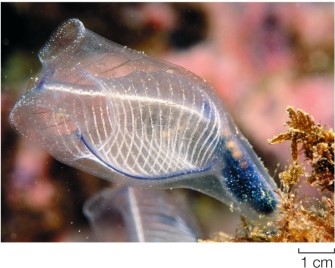 How do the adults of the species in the figure differ from their larvae?
 (Multiple Choice)
4.7/5 (83)
(83) Which of the following forms the sister group to the snakes and lizards?
(Multiple Choice)
4.8/5 (99)
(99) Acorn worms and pterobranchs have a body plan consisting of a
(Multiple Choice)
4.9/5 (80)
(80) Refer to the figure. 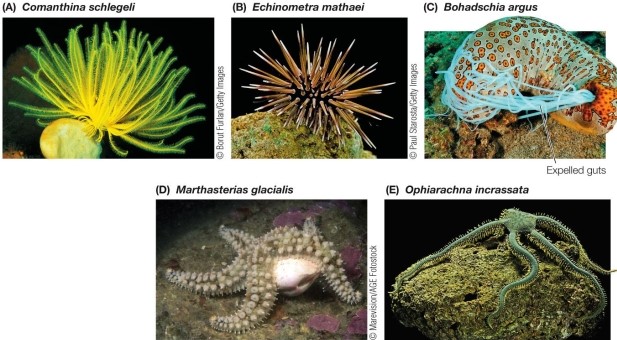 Which of the animals shown in the figure pulls its tentacles into its mouth to wipe food off them?
 (Multiple Choice)
4.7/5 (84)
(84) The hominins-the evolutionary lineage that led to humans-separated from the other haplorhines _______ mya in Africa and differ from other members of the clade by having _______.
(Multiple Choice)
4.8/5 (81)
(81) Which of the following best illustrates the evolutionary response of tetrapods to major changes in Earth's geology and climate?
(Multiple Choice)
4.9/5 (82)
(82) Refer to the figure showing a larval and an adult lancelet. 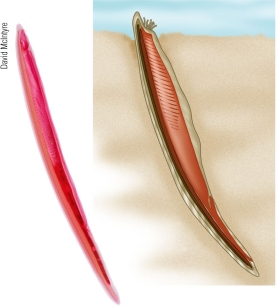 In the lancelet, which of the following are chordate synapomorphies?
 (Multiple Choice)
4.9/5 (91)
(91) Which of the following statements about the notochord is false?
(Multiple Choice)
4.8/5 (75)
(75) In the spring, many freshwater ponds are full of breeding _______, with males uttering species-specific calls to attract females.
(Short Answer)
5.0/5 (75)
(75) 
Filters
- Essay(0)
- Multiple Choice(0)
- Short Answer(0)
- True False(0)
- Matching(0)