



 Chat with AI
Exam 32: Deuterostome Animals

Exam 1: Studying Life246 Questions
Exam 2: Small Molecules and the Chemistry of Life246 Questions
Exam 3: Proteins, Carbohydrates, and Lipids246 Questions
Exam 4: Nucleic Acids and the Origin of Life246 Questions
Exam 5: Cells: the Working Units of Life248 Questions
Exam 6: Cell Membranes246 Questions
Exam 7: Cell Communication and Multicellularity246 Questions
Exam 8: Energy, Enzymes, and Metabolism246 Questions
Exam 9: Pathways That Harvest Chemical Energy246 Questions
Exam 10: Photosynthesis: Energy From Sunlight242 Questions
Exam 11: The Cell Cycle and Cell Division260 Questions
Exam 12: Inheritance, Genes, and Chromosomes250 Questions
Exam 13: Dna and Its Role in Heredity257 Questions
Exam 14: From Dna to Protein: Gene Expression252 Questions
Exam 15: Gene Mutation and Molecular Medicine251 Questions
Exam 16: Regulation of Gene Expression245 Questions
Exam 17: Genomes249 Questions
Exam 18: Recombinant Dna and Biotechnology243 Questions
Exam 20: Mechanisms of Evolution243 Questions
Exam 21: Reconstructing and Using Phylogenies246 Questions
Exam 22: Speciation247 Questions
Exam 23: Evolution of Genes and Genomes252 Questions
Exam 24: The History of Life on Earth246 Questions
Exam 25: Bacteria, Archaea, and Viruses262 Questions
Exam 26: The Origin and Diversification of Eukaryotes252 Questions
Exam 27: Plants Without Seeds: From Water to Land251 Questions
Exam 28: The Evolution of Seed Plants259 Questions
Exam 29: The Evolution and Diversity of Fungi261 Questions
Exam 30: Animal Origins and the Evolution of Body Plans248 Questions
Exam 31: Protostome Animals244 Questions
Exam 32: Deuterostome Animals246 Questions
Exam 33: The Plant Body243 Questions
Exam 34: Transport in Plants248 Questions
Exam 35: Plant Nutrition247 Questions
Exam 36: Regulation of Plant Growth246 Questions
Exam 37: Reproduction in Flowering Plants247 Questions
Exam 38: Plant Responses to Environmental Challenges246 Questions
Exam 39: Physiology, Homeostasis, and Temperature Regulation258 Questions
Exam 40: Animal Hormones249 Questions
Exam 41: Immunology: Animal Defense Systems265 Questions
Exam 42: Animal Reproduction261 Questions
Exam 43: Animal Development261 Questions
Exam 44: Neurons, Glia, and Nervous Systems250 Questions
Exam 45: Sensory Systems249 Questions
Exam 46: The Mammalian Nervous System: Structure and Higher Functions254 Questions
Exam 47: Musculoskeletal Systems259 Questions
Exam 48: Gas Exchange247 Questions
Exam 49: Circulatory Systems252 Questions
Exam 50: Nutrition, Digestion, and Absorption259 Questions
Exam 51: Salt and Water Balance and Nitrogen Excretion251 Questions
Exam 52: Animal Behavior249 Questions
Exam 53: The Physical Environment and Biogeography of Life248 Questions
Exam 54: Populations259 Questions
Exam 55: Species Interactions254 Questions
Exam 56: Communities247 Questions
Exam 57: Ecosystems238 Questions
Exam 58: A Changing Biosphere222 Questions
Select questions type


The ancestral deuterostome possessed external gills, similar to pharyngeal slits seen in extant deuterostomes.Many adult chordates, such as tunicates (sea squirts) do not possess pharyngeal slits.Why would tunicates (sea squirts) be considered similar to the ancestor of all chordates?
(Multiple Choice)
4.8/5  (79)
(79) The _______ include New World monkeys, Old World monkeys, apes, and humans.
(Short Answer)
5.0/5 (78)
(78) Which group of organisms corresponds with the evolutionary innovation of the amniote egg?
(Multiple Choice)
4.8/5 (84)
(84) What three traits evolved in primates that led to their evolutionary success? Which ones seem to have had the greatest impact on hominid lines?
(Essay)
4.7/5 (70)
(70) If an animal exhibits radial cleavage, it may not necessarily be classified as a ______ but would still be classified as a bilaterian.
(Short Answer)
4.8/5 (62)
(62) Tools used for obtaining food were found in association with fossils of Homo habilis.The ability to manipulate objects and carry them while walking could be attributed to _______ locomotion.
(Short Answer)
4.7/5 (91)
(91) Refer to the figure. 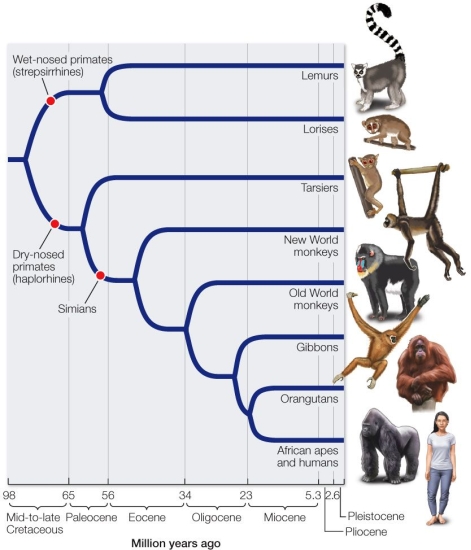 Spider monkeys of Central America and mandrils, found in Africa,
 (Multiple Choice)
4.8/5 (74)
(74) The ray-finned fishes regulate their buoyancy by means of an organ called the _______.
(Short Answer)
4.7/5 (69)
(69) Which of the following is not a characteristic of deuterostomes?
(Multiple Choice)
4.9/5 (74)
(74) Refer to the figure. 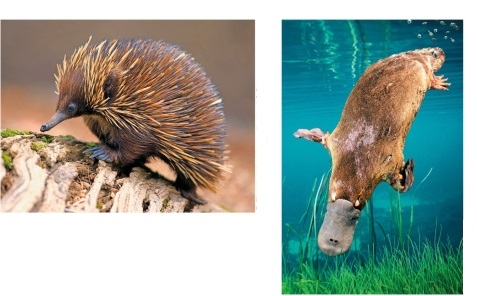 Which statement about these two animals is false?
 (Multiple Choice)
5.0/5 (90)
(90) Which structure in an amniote egg allows the embryo to attain a relatively advanced state of development before it is born?
(Multiple Choice)
4.8/5 (82)
(82) Which of the following echinoderms does not use tube feet for locomotion?
(Multiple Choice)
4.9/5 (86)
(86) The early fishes that evolved jaws belong to the group called _______, which means "jawed mouth."
(Short Answer)
4.8/5 (83)
(83) Refer to the figure. 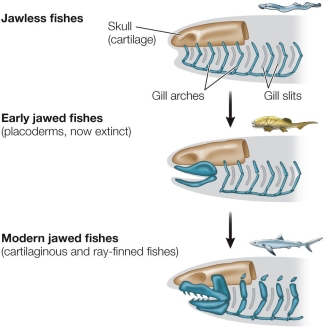 What modification in jaw structure occurred in early jawed fishes that was not found in jawless fishes at that time?
 (Multiple Choice)
4.8/5 (77)
(77) Refer to the figure showing several species of amphibians. 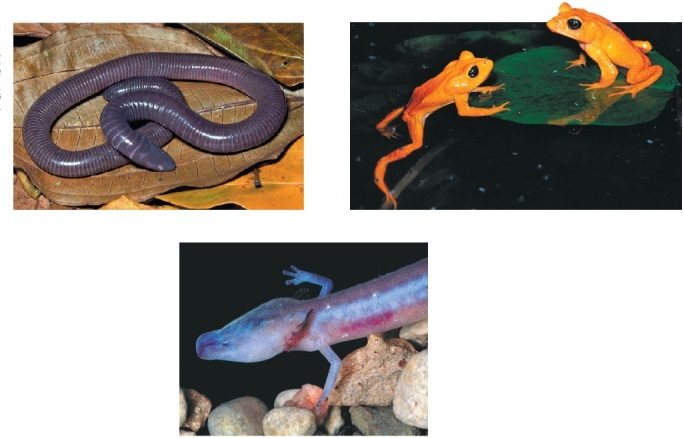 How are the amphibians shown in the figure similar? How do they differ? Address habitat and life cycle in your answer.
 (Essay)
4.8/5 (85)
(85) 
Filters
- Essay(0)
- Multiple Choice(0)
- Short Answer(0)
- True False(0)
- Matching(0)