



 Chat with AI
Exam 52: Animal Behavior

Exam 1: Studying Life246 Questions
Exam 2: Small Molecules and the Chemistry of Life246 Questions
Exam 3: Proteins, Carbohydrates, and Lipids246 Questions
Exam 4: Nucleic Acids and the Origin of Life246 Questions
Exam 5: Cells: the Working Units of Life248 Questions
Exam 6: Cell Membranes246 Questions
Exam 7: Cell Communication and Multicellularity246 Questions
Exam 8: Energy, Enzymes, and Metabolism246 Questions
Exam 9: Pathways That Harvest Chemical Energy246 Questions
Exam 10: Photosynthesis: Energy From Sunlight242 Questions
Exam 11: The Cell Cycle and Cell Division260 Questions
Exam 12: Inheritance, Genes, and Chromosomes250 Questions
Exam 13: Dna and Its Role in Heredity257 Questions
Exam 14: From Dna to Protein: Gene Expression252 Questions
Exam 15: Gene Mutation and Molecular Medicine251 Questions
Exam 16: Regulation of Gene Expression245 Questions
Exam 17: Genomes249 Questions
Exam 18: Recombinant Dna and Biotechnology243 Questions
Exam 20: Mechanisms of Evolution243 Questions
Exam 21: Reconstructing and Using Phylogenies246 Questions
Exam 22: Speciation247 Questions
Exam 23: Evolution of Genes and Genomes252 Questions
Exam 24: The History of Life on Earth246 Questions
Exam 25: Bacteria, Archaea, and Viruses262 Questions
Exam 26: The Origin and Diversification of Eukaryotes252 Questions
Exam 27: Plants Without Seeds: From Water to Land251 Questions
Exam 28: The Evolution of Seed Plants259 Questions
Exam 29: The Evolution and Diversity of Fungi261 Questions
Exam 30: Animal Origins and the Evolution of Body Plans248 Questions
Exam 31: Protostome Animals244 Questions
Exam 32: Deuterostome Animals246 Questions
Exam 33: The Plant Body243 Questions
Exam 34: Transport in Plants248 Questions
Exam 35: Plant Nutrition247 Questions
Exam 36: Regulation of Plant Growth246 Questions
Exam 37: Reproduction in Flowering Plants247 Questions
Exam 38: Plant Responses to Environmental Challenges246 Questions
Exam 39: Physiology, Homeostasis, and Temperature Regulation258 Questions
Exam 40: Animal Hormones249 Questions
Exam 41: Immunology: Animal Defense Systems265 Questions
Exam 42: Animal Reproduction261 Questions
Exam 43: Animal Development261 Questions
Exam 44: Neurons, Glia, and Nervous Systems250 Questions
Exam 45: Sensory Systems249 Questions
Exam 46: The Mammalian Nervous System: Structure and Higher Functions254 Questions
Exam 47: Musculoskeletal Systems259 Questions
Exam 48: Gas Exchange247 Questions
Exam 49: Circulatory Systems252 Questions
Exam 50: Nutrition, Digestion, and Absorption259 Questions
Exam 51: Salt and Water Balance and Nitrogen Excretion251 Questions
Exam 52: Animal Behavior249 Questions
Exam 53: The Physical Environment and Biogeography of Life248 Questions
Exam 54: Populations259 Questions
Exam 55: Species Interactions254 Questions
Exam 56: Communities247 Questions
Exam 57: Ecosystems238 Questions
Exam 58: A Changing Biosphere222 Questions
Select questions type


Refer to the figure showing territorial behavior of birds on a lek. 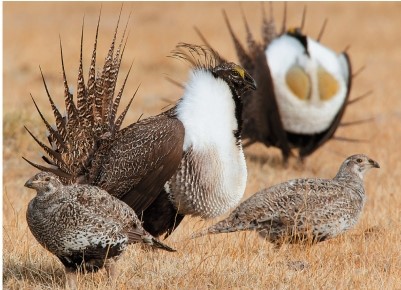 Which statement about this form of territorial behavior is false?
 (Multiple Choice)
4.8/5  (69)
(69) Choose the incorrect match between the scientists who have studied animal behavior and their scientific contribution to this field.
(Multiple Choice)
4.7/5 (80)
(80) In Tinbergen's research on begging by gull chicks, the red dot on the parent's bill is the releaser for the chick's pecking response, which is stereotypic and considered a _______.
(Short Answer)
4.8/5 (83)
(83) The use of a time-compensated solar compass can be demonstrated by conducting _______ experiments.
(Multiple Choice)
4.9/5 (73)
(73) Chimps appear to eat the toxic pith of Vernonia amygdalina plants
(Multiple Choice)
4.9/5 (83)
(83) In diploid organisms, on average what percentage of alleles does a parent share with its offspring?
(Multiple Choice)
4.7/5 (78)
(78) Which of the following would provide the strongest evidence that pigeons use magnetic cues when returning to their home loft?
(Multiple Choice)
4.9/5 (76)
(76) On a territory within a lek, which of the following is/are defended?
(Multiple Choice)
4.9/5 (70)
(70) Male three-spined sticklebacks occupy inland coastal waters where they aggressively defend their territories against intruding males.When tested with models of various shapes, sizes, and colors in the laboratory, males attacked crude models with red bellies more frequently than they attacked realistic models that lacked the characteristic red belly.These data suggest that
(Multiple Choice)
4.8/5 (86)
(86) Whereas alarm calls tend to have a single frequency, _______ calls tend to cover a broad range of frequencies.
(Short Answer)
4.9/5 (80)
(80) Whereas development of male sexual behavior in rats requires the brain of a newborn be exposed to _______, development of sexual behavior in female rats does not require exposure to estrogen.
(Short Answer)
4.8/5 (70)
(70) A male bird sings his species-specific song to claim his territory and attract mates.While singing, he cannot eat.This is an example of a(n) _______ cost.
(Short Answer)
4.9/5 (82)
(82) In situations of imprinting, parent‒offspring recognition often develops during a brief window of time known as the _______.
(Short Answer)
4.9/5 (77)
(77) Which of the following does not characterize most group-living situations?
(Multiple Choice)
4.9/5 (68)
(68) Which statement about foraging behavior and optimal foraging theory is false?
(Multiple Choice)
5.0/5 (78)
(78) Which of the following does not characterize the waggle dance of honey bees?
(Multiple Choice)
4.9/5 (82)
(82) 
Filters
- Essay(0)
- Multiple Choice(0)
- Short Answer(0)
- True False(0)
- Matching(0)