



 Chat with AI
Exam 8: Energy, Enzymes, and Metabolism

Exam 1: Studying Life246 Questions
Exam 2: Small Molecules and the Chemistry of Life246 Questions
Exam 3: Proteins, Carbohydrates, and Lipids246 Questions
Exam 4: Nucleic Acids and the Origin of Life246 Questions
Exam 5: Cells: the Working Units of Life248 Questions
Exam 6: Cell Membranes246 Questions
Exam 7: Cell Communication and Multicellularity246 Questions
Exam 8: Energy, Enzymes, and Metabolism246 Questions
Exam 9: Pathways That Harvest Chemical Energy246 Questions
Exam 10: Photosynthesis: Energy From Sunlight242 Questions
Exam 11: The Cell Cycle and Cell Division260 Questions
Exam 12: Inheritance, Genes, and Chromosomes250 Questions
Exam 13: Dna and Its Role in Heredity257 Questions
Exam 14: From Dna to Protein: Gene Expression252 Questions
Exam 15: Gene Mutation and Molecular Medicine251 Questions
Exam 16: Regulation of Gene Expression245 Questions
Exam 17: Genomes249 Questions
Exam 18: Recombinant Dna and Biotechnology243 Questions
Exam 20: Mechanisms of Evolution243 Questions
Exam 21: Reconstructing and Using Phylogenies246 Questions
Exam 22: Speciation247 Questions
Exam 23: Evolution of Genes and Genomes252 Questions
Exam 24: The History of Life on Earth246 Questions
Exam 25: Bacteria, Archaea, and Viruses262 Questions
Exam 26: The Origin and Diversification of Eukaryotes252 Questions
Exam 27: Plants Without Seeds: From Water to Land251 Questions
Exam 28: The Evolution of Seed Plants259 Questions
Exam 29: The Evolution and Diversity of Fungi261 Questions
Exam 30: Animal Origins and the Evolution of Body Plans248 Questions
Exam 31: Protostome Animals244 Questions
Exam 32: Deuterostome Animals246 Questions
Exam 33: The Plant Body243 Questions
Exam 34: Transport in Plants248 Questions
Exam 35: Plant Nutrition247 Questions
Exam 36: Regulation of Plant Growth246 Questions
Exam 37: Reproduction in Flowering Plants247 Questions
Exam 38: Plant Responses to Environmental Challenges246 Questions
Exam 39: Physiology, Homeostasis, and Temperature Regulation258 Questions
Exam 40: Animal Hormones249 Questions
Exam 41: Immunology: Animal Defense Systems265 Questions
Exam 42: Animal Reproduction261 Questions
Exam 43: Animal Development261 Questions
Exam 44: Neurons, Glia, and Nervous Systems250 Questions
Exam 45: Sensory Systems249 Questions
Exam 46: The Mammalian Nervous System: Structure and Higher Functions254 Questions
Exam 47: Musculoskeletal Systems259 Questions
Exam 48: Gas Exchange247 Questions
Exam 49: Circulatory Systems252 Questions
Exam 50: Nutrition, Digestion, and Absorption259 Questions
Exam 51: Salt and Water Balance and Nitrogen Excretion251 Questions
Exam 52: Animal Behavior249 Questions
Exam 53: The Physical Environment and Biogeography of Life248 Questions
Exam 54: Populations259 Questions
Exam 55: Species Interactions254 Questions
Exam 56: Communities247 Questions
Exam 57: Ecosystems238 Questions
Exam 58: A Changing Biosphere222 Questions
Select questions type


The synthesis of complex molecules is _______, whereas their degradation is _______.Synthesis occurs with _______ in entropy.
(Multiple Choice)
4.8/5  (82)
(82) Phosphofructoisomerase is classified as an isomerase enzyme, and pyruvate dehydrogenase is classified as an oxidoreductase enzyme.Which feature do both enzymes share?
(Multiple Choice)
4.9/5 (84)
(84) Refer to the table below. 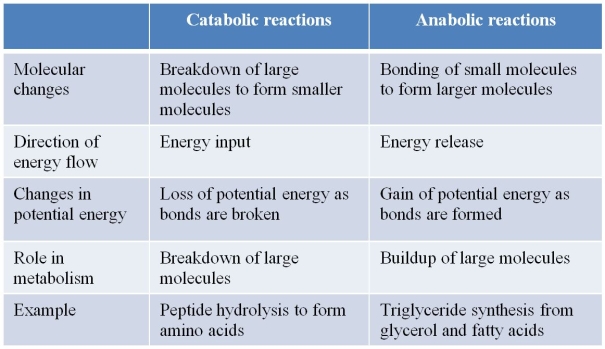 A student constructed the table to summarize characteristics that distinguish anabolic reactions from catabolic reactions.Which statement best evaluates the accuracy of the student's work?
 (Multiple Choice)
4.8/5 (92)
(92) A key difference between coenzymes and inorganic cofactors is that
(Multiple Choice)
5.0/5 (66)
(66) Which graph shows changes in the rate of an enzyme-catalyzed reaction as substrate concentration is varied?
(Multiple Choice)
4.9/5 (91)
(91) The statement "enzymes are highly specific" means that specific
(Multiple Choice)
4.8/5 (74)
(74) Which statement regarding enzyme-substrate (ES) complexes is true?
(Multiple Choice)
4.8/5 (77)
(77) The enzyme sucrase increases the rate at which sucrose is broken down into glucose and fructose.Sucrase works by
(Multiple Choice)
4.9/5 (69)
(69) Which statement disagrees with the second law of thermodynamics?
(Multiple Choice)
4.7/5 (77)
(77) At a chemical equilibrium of 14:1 reactants to products, what would be the final concentration of the reactants if the input concentration were 3.0 M?
(Multiple Choice)
4.9/5 (88)
(88) During muscle contractions, chemical energy is converted to kinetic energy of movement and also to thermal energy, which dissipates into the surroundings as heat.With respect to the second law of thermodynamics, which event occurs in this example?
(Multiple Choice)
4.9/5 (80)
(80) When potatoes are peeled, the enzyme polyphenol oxidase causes discoloration by catalyzing the oxidation of certain molecules, using O2 as a substrate.Explain the following observations:
a. If potatoes are peeled under water and kept there, browning is reduced.
b. Potatoes that have been boiled at 100C and then sliced do not turn brown.
c. If lemon juice (pH 3) is applied to newly peeled potatoes, they do not brown.
(Essay)
4.9/5 (76)
(76) If the enzyme phosphohexoisomerase is added to a 0.3 M solution of fructose 6-phosphate and the reaction is allowed to proceed to equilibrium, the final concentrations are 0.2 M glucose 6-phosphate and 0.1 M fructose 6-phosphate.What would be the final concentration of glucose 6-phosphate if the initial concentration of fructose 6-phosphate were changed to 3 M?
(Multiple Choice)
4.7/5 (79)
(79) Mechanisms used by enzymes to catalyze reactions are similar in that they all
(Multiple Choice)
4.9/5 (87)
(87) Refer to the reaction below. 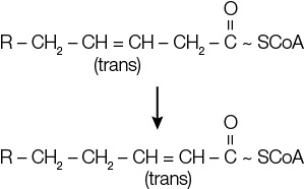 The enzyme catalyzing this reaction would be classified along with other enzymes of the same type as a(n) _______.
 (Short Answer)
4.7/5 (68)
(68) Which action could indicate whether a given reaction is endergonic? Assume that no other small molecules are present in the reaction solution.
(Multiple Choice)
5.0/5 (77)
(77) 
Filters
- Essay(0)
- Multiple Choice(0)
- Short Answer(0)
- True False(0)
- Matching(0)