



 Chat with AI
Exam 3: Proteins, Carbohydrates, and Lipids

Exam 1: Studying Life246 Questions
Exam 2: Small Molecules and the Chemistry of Life246 Questions
Exam 3: Proteins, Carbohydrates, and Lipids246 Questions
Exam 4: Nucleic Acids and the Origin of Life246 Questions
Exam 5: Cells: the Working Units of Life248 Questions
Exam 6: Cell Membranes246 Questions
Exam 7: Cell Communication and Multicellularity246 Questions
Exam 8: Energy, Enzymes, and Metabolism246 Questions
Exam 9: Pathways That Harvest Chemical Energy246 Questions
Exam 10: Photosynthesis: Energy From Sunlight242 Questions
Exam 11: The Cell Cycle and Cell Division260 Questions
Exam 12: Inheritance, Genes, and Chromosomes250 Questions
Exam 13: Dna and Its Role in Heredity257 Questions
Exam 14: From Dna to Protein: Gene Expression252 Questions
Exam 15: Gene Mutation and Molecular Medicine251 Questions
Exam 16: Regulation of Gene Expression245 Questions
Exam 17: Genomes249 Questions
Exam 18: Recombinant Dna and Biotechnology243 Questions
Exam 20: Mechanisms of Evolution243 Questions
Exam 21: Reconstructing and Using Phylogenies246 Questions
Exam 22: Speciation247 Questions
Exam 23: Evolution of Genes and Genomes252 Questions
Exam 24: The History of Life on Earth246 Questions
Exam 25: Bacteria, Archaea, and Viruses262 Questions
Exam 26: The Origin and Diversification of Eukaryotes252 Questions
Exam 27: Plants Without Seeds: From Water to Land251 Questions
Exam 28: The Evolution of Seed Plants259 Questions
Exam 29: The Evolution and Diversity of Fungi261 Questions
Exam 30: Animal Origins and the Evolution of Body Plans248 Questions
Exam 31: Protostome Animals244 Questions
Exam 32: Deuterostome Animals246 Questions
Exam 33: The Plant Body243 Questions
Exam 34: Transport in Plants248 Questions
Exam 35: Plant Nutrition247 Questions
Exam 36: Regulation of Plant Growth246 Questions
Exam 37: Reproduction in Flowering Plants247 Questions
Exam 38: Plant Responses to Environmental Challenges246 Questions
Exam 39: Physiology, Homeostasis, and Temperature Regulation258 Questions
Exam 40: Animal Hormones249 Questions
Exam 41: Immunology: Animal Defense Systems265 Questions
Exam 42: Animal Reproduction261 Questions
Exam 43: Animal Development261 Questions
Exam 44: Neurons, Glia, and Nervous Systems250 Questions
Exam 45: Sensory Systems249 Questions
Exam 46: The Mammalian Nervous System: Structure and Higher Functions254 Questions
Exam 47: Musculoskeletal Systems259 Questions
Exam 48: Gas Exchange247 Questions
Exam 49: Circulatory Systems252 Questions
Exam 50: Nutrition, Digestion, and Absorption259 Questions
Exam 51: Salt and Water Balance and Nitrogen Excretion251 Questions
Exam 52: Animal Behavior249 Questions
Exam 53: The Physical Environment and Biogeography of Life248 Questions
Exam 54: Populations259 Questions
Exam 55: Species Interactions254 Questions
Exam 56: Communities247 Questions
Exam 57: Ecosystems238 Questions
Exam 58: A Changing Biosphere222 Questions
Select questions type


Refer to the table and figures below. 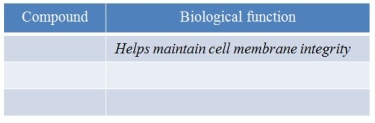
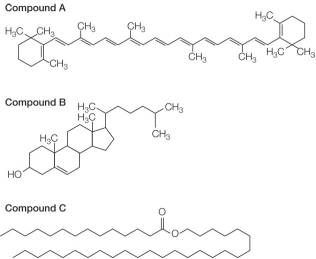 A student is creating a table showing lipids and their biological functions.He drew three molecular structures to represent lipids A, B, and C.In the last row of the table, the student should pair which compound with which function?
 (Multiple Choice)
4.9/5  (77)
(77) An amino acid is considered both an acid and a base because it has an amino and a carboxyl functional group, which are ionized by the addition or loss of
(Multiple Choice)
4.9/5 (81)
(81) The bonds that link sugar monomers in a starch molecule are _______ bonds.
(Short Answer)
5.0/5 (85)
(85) Refer to the figure below. 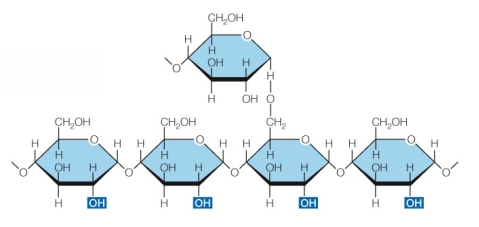 The structure shown contains repeating monomers of the monosaccharide glucose joined by -1,4 glycosidic linkages in the main chain and _______ linkages at the branch point.
 (Short Answer)
4.7/5 (58)
(58) Which amino acid would, when incorporated into a polypeptide chain (not at the N or C terminus), make the charge of the polypeptide more positive?
(Multiple Choice)
4.9/5 (81)
(81) How many unique polypeptide chains are there of 50 amino acids in length?
(Multiple Choice)
4.9/5 (67)
(67) Refer to the diagram of a phospholipid bilayer below. 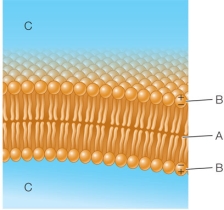 The membrane structure shown in the diagram forms in water because each phospholipid
 (Multiple Choice)
4.8/5 (90)
(90) Triglyceride A contains three saturated long-chain fatty acids.Triglyceride B contains three unsaturated long-chain fatty acids.Triglyceride _______ is more likely to be liquid at room temperature.
(Short Answer)
4.7/5 (85)
(85) A type of protein that functions by helping other proteins fold correctly is called a
(Multiple Choice)
4.7/5 (76)
(76) The fluidity and melting point of triglycerides are partially determined by the number of _______ bonds in their hydrocarbon tails.
(Short Answer)
4.8/5 (70)
(70) The amino acids of the protein keratin are arranged in a helix.This secondary structure is stabilized by
(Multiple Choice)
4.8/5 (93)
(93) Keratin and hemoglobin are both proteins with important functions in the human body.Keratin has a long, thin, rope-like structure with a structural role in hair, fingernails, and skin.Hemoglobin has a compact, round, globular structure with a transport role in carrying oxygen to body cells from the lungs.Which statement best explains how both keratin and hemoglobin can be classified as proteins yet have such different structures and functions?
(Multiple Choice)
4.8/5 (88)
(88) The theoretical number of different tripeptides that can be made from 10 amino acids is _______.
(Short Answer)
4.9/5 (64)
(64) Refer to the figure below of a hemoglobin protein. 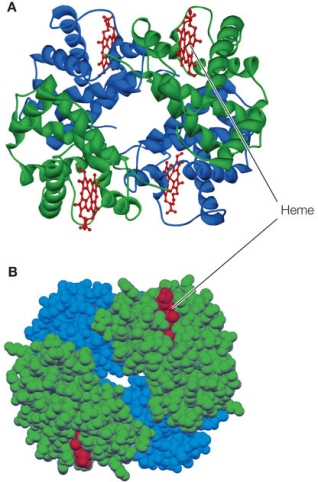 The hemoglobin protein has four subunits.If it were exposed to high temperatures, it would most likely
 (Multiple Choice)
4.8/5 (78)
(78) How does synthesis of a triglyceride compare with synthesis of a disaccharide?
(Multiple Choice)
4.8/5 (84)
(84) How many different types of tripeptides (molecules of three amino acids linked together) can be synthesized from the 20 common amino acids?
(Multiple Choice)
4.8/5 (69)
(69) Refer to the graph below, showing data collected from harbor porpoises in eastern Scotland. 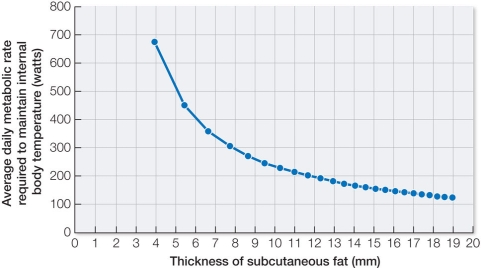 Based on these data, which biological function is associated with the lipids found in fats under the skin (subcutaneous fats) in harbor porpoises?
 (Multiple Choice)
4.8/5 (83)
(83) Refer to the figure and table below. 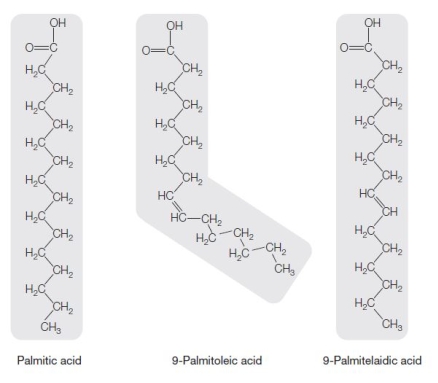
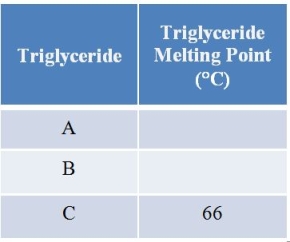 A table of triglyceride melting points is under construction.Each triglyceride contains 3 fatty acids having identical structures.The table will show their melting points in order, from lowest to highest.The triglyceride indicated by the letter B is _______ acid.
 (Short Answer)
4.9/5 (67)
(67) 
Filters
- Essay(0)
- Multiple Choice(0)
- Short Answer(0)
- True False(0)
- Matching(0)