



 Chat with AI
Exam 2: Small Molecules and the Chemistry of Life

Exam 1: Studying Life246 Questions
Exam 2: Small Molecules and the Chemistry of Life246 Questions
Exam 3: Proteins, Carbohydrates, and Lipids246 Questions
Exam 4: Nucleic Acids and the Origin of Life246 Questions
Exam 5: Cells: the Working Units of Life248 Questions
Exam 6: Cell Membranes246 Questions
Exam 7: Cell Communication and Multicellularity246 Questions
Exam 8: Energy, Enzymes, and Metabolism246 Questions
Exam 9: Pathways That Harvest Chemical Energy246 Questions
Exam 10: Photosynthesis: Energy From Sunlight242 Questions
Exam 11: The Cell Cycle and Cell Division260 Questions
Exam 12: Inheritance, Genes, and Chromosomes250 Questions
Exam 13: Dna and Its Role in Heredity257 Questions
Exam 14: From Dna to Protein: Gene Expression252 Questions
Exam 15: Gene Mutation and Molecular Medicine251 Questions
Exam 16: Regulation of Gene Expression245 Questions
Exam 17: Genomes249 Questions
Exam 18: Recombinant Dna and Biotechnology243 Questions
Exam 20: Mechanisms of Evolution243 Questions
Exam 21: Reconstructing and Using Phylogenies246 Questions
Exam 22: Speciation247 Questions
Exam 23: Evolution of Genes and Genomes252 Questions
Exam 24: The History of Life on Earth246 Questions
Exam 25: Bacteria, Archaea, and Viruses262 Questions
Exam 26: The Origin and Diversification of Eukaryotes252 Questions
Exam 27: Plants Without Seeds: From Water to Land251 Questions
Exam 28: The Evolution of Seed Plants259 Questions
Exam 29: The Evolution and Diversity of Fungi261 Questions
Exam 30: Animal Origins and the Evolution of Body Plans248 Questions
Exam 31: Protostome Animals244 Questions
Exam 32: Deuterostome Animals246 Questions
Exam 33: The Plant Body243 Questions
Exam 34: Transport in Plants248 Questions
Exam 35: Plant Nutrition247 Questions
Exam 36: Regulation of Plant Growth246 Questions
Exam 37: Reproduction in Flowering Plants247 Questions
Exam 38: Plant Responses to Environmental Challenges246 Questions
Exam 39: Physiology, Homeostasis, and Temperature Regulation258 Questions
Exam 40: Animal Hormones249 Questions
Exam 41: Immunology: Animal Defense Systems265 Questions
Exam 42: Animal Reproduction261 Questions
Exam 43: Animal Development261 Questions
Exam 44: Neurons, Glia, and Nervous Systems250 Questions
Exam 45: Sensory Systems249 Questions
Exam 46: The Mammalian Nervous System: Structure and Higher Functions254 Questions
Exam 47: Musculoskeletal Systems259 Questions
Exam 48: Gas Exchange247 Questions
Exam 49: Circulatory Systems252 Questions
Exam 50: Nutrition, Digestion, and Absorption259 Questions
Exam 51: Salt and Water Balance and Nitrogen Excretion251 Questions
Exam 52: Animal Behavior249 Questions
Exam 53: The Physical Environment and Biogeography of Life248 Questions
Exam 54: Populations259 Questions
Exam 55: Species Interactions254 Questions
Exam 56: Communities247 Questions
Exam 57: Ecosystems238 Questions
Exam 58: A Changing Biosphere222 Questions
Select questions type


Refer to the figure below. 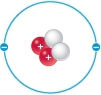 The figure represents a helium atom.What change to this figure would allow it to represent an isotope of hydrogen?
 (Multiple Choice)
4.9/5  (81)
(81) Refer to the figure below. 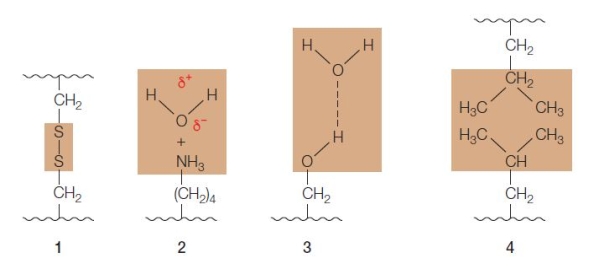 The figure shows four examples of molecular interactions in biological samples.Can any of these be used as examples of hydrophilic or hydrophobic interactions?
 (Multiple Choice)
4.8/5 (93)
(93) Sweating is a useful cooling device for humans because water
(Multiple Choice)
4.9/5 (82)
(82) A single carbon atom can bond a total of _______ hydrogen atoms, and the outer shell of each hydrogen atom then contains _______ electrons.
(Multiple Choice)
4.7/5 (68)
(68) Refer to the figure below showing part of the periodic table. 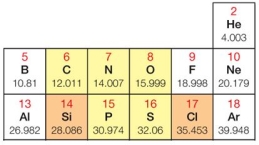 What is the name of the element that has the same number of valence electrons as silicon (Si)?
 (Short Answer)
4.7/5 (76)
(76) Which characteristic of water contributes most to the relatively constant temperatures of the oceans?
(Multiple Choice)
4.7/5 (78)
(78) Refer to the figure below. 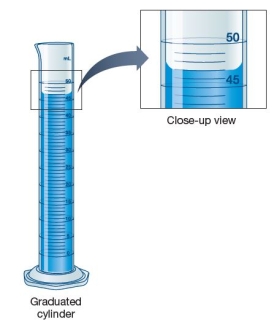 Which illustration represents the attractive forces responsible for the shape of the water surface in the glassware shown?
 (Multiple Choice)
4.9/5 (80)
(80) A biologist is conducting experiments on human muscle and collects a variety of data, listed below.Which type of data would provide evidence for the claim that living organisms are chemically dynamic?
(Multiple Choice)
4.8/5 (69)
(69) Given that Avogadro's number is 6.02 × 10²³, how many molecules of KCl are there in 10-13 liter of a 1 M KCl solution?
(Multiple Choice)
4.9/5 (74)
(74) Which correctly ranks the relative strengths of bonds and interactions?
(Multiple Choice)
4.8/5 (79)
(79) The mass number of an atom is determined primarily by the _______ it contains.
(Multiple Choice)
4.9/5 (91)
(91) The covalent bonds in methane, CH4, are very strong and require a great deal of energy to break.This is because in forming each bond, electrons are shared between carbon atoms and hydrogen atoms such that the _______ of each atom become filled, which is a highly stable condition.
(Short Answer)
4.8/5 (83)
(83) Refer to the figures below. 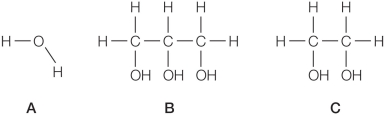 Rank the compounds in order of lowest to highest heat capacity per mole of compound.
 (Multiple Choice)
4.8/5 (73)
(73) According to the periodic table, the compound that sulfur forms with hydrogen is most like
(Multiple Choice)
5.0/5 (80)
(80) Although air temperatures at a site on the coast of California can swing widely in very short periods of time, marine animals in the ocean at this site do not experience the same wide temperature swings.Which statement explains this observation?
(Multiple Choice)
5.0/5 (89)
(89) 
Filters
- Essay(0)
- Multiple Choice(0)
- Short Answer(0)
- True False(0)
- Matching(0)