



 Chat with AI
Exam 2: Small Molecules and the Chemistry of Life

Exam 1: Studying Life246 Questions
Exam 2: Small Molecules and the Chemistry of Life246 Questions
Exam 3: Proteins, Carbohydrates, and Lipids246 Questions
Exam 4: Nucleic Acids and the Origin of Life246 Questions
Exam 5: Cells: the Working Units of Life248 Questions
Exam 6: Cell Membranes246 Questions
Exam 7: Cell Communication and Multicellularity246 Questions
Exam 8: Energy, Enzymes, and Metabolism246 Questions
Exam 9: Pathways That Harvest Chemical Energy246 Questions
Exam 10: Photosynthesis: Energy From Sunlight242 Questions
Exam 11: The Cell Cycle and Cell Division260 Questions
Exam 12: Inheritance, Genes, and Chromosomes250 Questions
Exam 13: Dna and Its Role in Heredity257 Questions
Exam 14: From Dna to Protein: Gene Expression252 Questions
Exam 15: Gene Mutation and Molecular Medicine251 Questions
Exam 16: Regulation of Gene Expression245 Questions
Exam 17: Genomes249 Questions
Exam 18: Recombinant Dna and Biotechnology243 Questions
Exam 20: Mechanisms of Evolution243 Questions
Exam 21: Reconstructing and Using Phylogenies246 Questions
Exam 22: Speciation247 Questions
Exam 23: Evolution of Genes and Genomes252 Questions
Exam 24: The History of Life on Earth246 Questions
Exam 25: Bacteria, Archaea, and Viruses262 Questions
Exam 26: The Origin and Diversification of Eukaryotes252 Questions
Exam 27: Plants Without Seeds: From Water to Land251 Questions
Exam 28: The Evolution of Seed Plants259 Questions
Exam 29: The Evolution and Diversity of Fungi261 Questions
Exam 30: Animal Origins and the Evolution of Body Plans248 Questions
Exam 31: Protostome Animals244 Questions
Exam 32: Deuterostome Animals246 Questions
Exam 33: The Plant Body243 Questions
Exam 34: Transport in Plants248 Questions
Exam 35: Plant Nutrition247 Questions
Exam 36: Regulation of Plant Growth246 Questions
Exam 37: Reproduction in Flowering Plants247 Questions
Exam 38: Plant Responses to Environmental Challenges246 Questions
Exam 39: Physiology, Homeostasis, and Temperature Regulation258 Questions
Exam 40: Animal Hormones249 Questions
Exam 41: Immunology: Animal Defense Systems265 Questions
Exam 42: Animal Reproduction261 Questions
Exam 43: Animal Development261 Questions
Exam 44: Neurons, Glia, and Nervous Systems250 Questions
Exam 45: Sensory Systems249 Questions
Exam 46: The Mammalian Nervous System: Structure and Higher Functions254 Questions
Exam 47: Musculoskeletal Systems259 Questions
Exam 48: Gas Exchange247 Questions
Exam 49: Circulatory Systems252 Questions
Exam 50: Nutrition, Digestion, and Absorption259 Questions
Exam 51: Salt and Water Balance and Nitrogen Excretion251 Questions
Exam 52: Animal Behavior249 Questions
Exam 53: The Physical Environment and Biogeography of Life248 Questions
Exam 54: Populations259 Questions
Exam 55: Species Interactions254 Questions
Exam 56: Communities247 Questions
Exam 57: Ecosystems238 Questions
Exam 58: A Changing Biosphere222 Questions
Select questions type


H2SO4 can ionize completely to yield two H+ ions and one SO42- ion.H2SO4 is therefore a
(Multiple Choice)
4.9/5  (86)
(86) A stable isotope of phosphorus has an atomic number of 15 and an atomic mass of 31.How many neutrons does this isotope of phosphorus have?
(Multiple Choice)
4.8/5 (77)
(77) Refer to the reaction shown. C3H8 + 5 O2 3 CO2 + 4 H2O + energy
Which statement about the reaction is true?
(Multiple Choice)
4.8/5 (86)
(86) Which is an instance of van der Waals forces operating in nature?
(Multiple Choice)
4.8/5 (72)
(72) An atom's electronegativity depends on how many _______ charges it has and on the distance between the _______ and the valence electrons.
(Short Answer)
4.8/5 (83)
(83) A neon atom has a total of ten electrons and is very unreactive.What accounts for this lack of reactivity?
(Multiple Choice)
4.8/5 (79)
(79) What is the molarity of 14.5 g of NaCl dissolved in water to give a final solution volume of 0.500 liters?
(Multiple Choice)
4.8/5 (81)
(81) Refer to the figure below showing part of the periodic table. 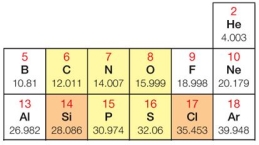 What is the name of the element that has an atomic number of 15?
 (Short Answer)
4.7/5 (82)
(82) Phosphate ion has the structure PO43−.This ion is reversibly added to and removed from many different protein molecules in the cell as a means of regulating the proteins' functions.Water's solvent properties are important in understanding the modification of proteins by phosphate ion because
(Multiple Choice)
4.8/5 (66)
(66) Refer to the figure below. 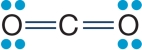 The figure shows the molecular structure of carbon dioxide.Carbon dioxide is nonpolar, whereas water is polar.Which of the true statements below explains these differences?
 (Multiple Choice)
4.8/5 (68)
(68) Refer to the table below. 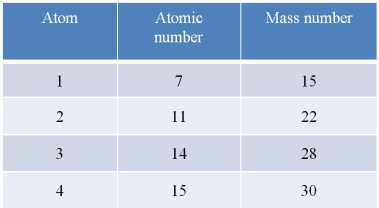 Which statement about the atoms in the table is accurate?
 (Multiple Choice)
4.7/5 (77)
(77) Which compound is expected to have a heat capacity per mole most similar to that of water?
(Multiple Choice)
4.9/5 (72)
(72) A fish swimming in a shallow pool of water on a hot summer day has a certain amount of protection from becoming too warm.This happens because a large amount of heat energy goes into breaking the _______ between water molecules before additional energy goes into raising the water temperature.
(Short Answer)
4.9/5 (87)
(87) Refer to the figure below. 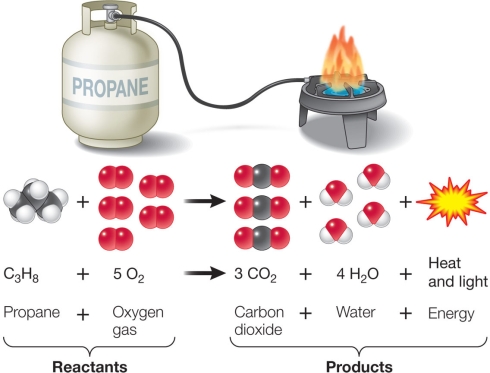 Explain how this reaction obeys the law of conservation of matter.
 (Essay)
4.8/5 (82)
(82) The tendency of atoms in stable molecules to have eight electrons in their outermost shells is known as the _______.
(Short Answer)
4.9/5 (85)
(85) What type of chemical bond connects the two carbon atoms in the molecule shown below? 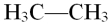
(Multiple Choice)
4.8/5 (70)
(70) Refer to the chemical equation below.
2 H2O + 572 kJ 2 H2 + O2
According to the law of _______, the sum of the bond energies in 2 moles of water plus 572 kJ equals the sum of the bond energies in 2 moles of hydrogen gas and 1 mole of oxygen gas.
(Short Answer)
4.7/5 (74)
(74) 
Filters
- Essay(0)
- Multiple Choice(0)
- Short Answer(0)
- True False(0)
- Matching(0)