



 Chat with AI
Exam 36: Regulation of Plant Growth

Exam 1: Studying Life246 Questions
Exam 2: Small Molecules and the Chemistry of Life246 Questions
Exam 3: Proteins, Carbohydrates, and Lipids246 Questions
Exam 4: Nucleic Acids and the Origin of Life246 Questions
Exam 5: Cells: the Working Units of Life248 Questions
Exam 6: Cell Membranes246 Questions
Exam 7: Cell Communication and Multicellularity246 Questions
Exam 8: Energy, Enzymes, and Metabolism246 Questions
Exam 9: Pathways That Harvest Chemical Energy246 Questions
Exam 10: Photosynthesis: Energy From Sunlight242 Questions
Exam 11: The Cell Cycle and Cell Division260 Questions
Exam 12: Inheritance, Genes, and Chromosomes250 Questions
Exam 13: Dna and Its Role in Heredity257 Questions
Exam 14: From Dna to Protein: Gene Expression252 Questions
Exam 15: Gene Mutation and Molecular Medicine251 Questions
Exam 16: Regulation of Gene Expression245 Questions
Exam 17: Genomes249 Questions
Exam 18: Recombinant Dna and Biotechnology243 Questions
Exam 20: Mechanisms of Evolution243 Questions
Exam 21: Reconstructing and Using Phylogenies246 Questions
Exam 22: Speciation247 Questions
Exam 23: Evolution of Genes and Genomes252 Questions
Exam 24: The History of Life on Earth246 Questions
Exam 25: Bacteria, Archaea, and Viruses262 Questions
Exam 26: The Origin and Diversification of Eukaryotes252 Questions
Exam 27: Plants Without Seeds: From Water to Land251 Questions
Exam 28: The Evolution of Seed Plants259 Questions
Exam 29: The Evolution and Diversity of Fungi261 Questions
Exam 30: Animal Origins and the Evolution of Body Plans248 Questions
Exam 31: Protostome Animals244 Questions
Exam 32: Deuterostome Animals246 Questions
Exam 33: The Plant Body243 Questions
Exam 34: Transport in Plants248 Questions
Exam 35: Plant Nutrition247 Questions
Exam 36: Regulation of Plant Growth246 Questions
Exam 37: Reproduction in Flowering Plants247 Questions
Exam 38: Plant Responses to Environmental Challenges246 Questions
Exam 39: Physiology, Homeostasis, and Temperature Regulation258 Questions
Exam 40: Animal Hormones249 Questions
Exam 41: Immunology: Animal Defense Systems265 Questions
Exam 42: Animal Reproduction261 Questions
Exam 43: Animal Development261 Questions
Exam 44: Neurons, Glia, and Nervous Systems250 Questions
Exam 45: Sensory Systems249 Questions
Exam 46: The Mammalian Nervous System: Structure and Higher Functions254 Questions
Exam 47: Musculoskeletal Systems259 Questions
Exam 48: Gas Exchange247 Questions
Exam 49: Circulatory Systems252 Questions
Exam 50: Nutrition, Digestion, and Absorption259 Questions
Exam 51: Salt and Water Balance and Nitrogen Excretion251 Questions
Exam 52: Animal Behavior249 Questions
Exam 53: The Physical Environment and Biogeography of Life248 Questions
Exam 54: Populations259 Questions
Exam 55: Species Interactions254 Questions
Exam 56: Communities247 Questions
Exam 57: Ecosystems238 Questions
Exam 58: A Changing Biosphere222 Questions
Select questions type


The likely result of treating a shoot cutting with auxin would be
(Multiple Choice)
4.9/5  (85)
(85) Suppose you have discovered a new effect of light on some aspect of plant development.How could you most easily show that phytochrome is the photoreceptor?
(Multiple Choice)
4.8/5 (61)
(61) Signal transduction for both auxin and gibberellins involves
(Multiple Choice)
4.7/5 (80)
(80) A homeowner has set up an outdoor gas-burning grill next to her favorite camellia bush.After the first few nights of using the grill, she notices that the camellia is beginning to lose its leaves.Which statement best explains what is happening?
(Multiple Choice)
5.0/5 (84)
(84) Refer to the figure below. 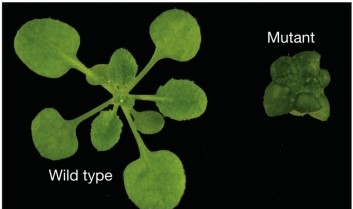 The mutant plant is most likely to have a defect in the signaling pathway for
 (Multiple Choice)
4.9/5 (79)
(79) Which plant hormone leads to exaggerated apical hook formation?
(Multiple Choice)
4.8/5 (95)
(95) A scientist receives a seed sample from a plant growing in an unknown location and discovers that prolonged cold treatment is needed to break seed dormancy.This suggests that in the native habitat of the plant, the colder part of the year
(Multiple Choice)
4.7/5 (83)
(83) Beer breweries use gibberellins to ensure consistent germination and liberation of sugars from starch in grain endosperm.Which layer of the grain responds to the applied gibberellins?
(Multiple Choice)
4.7/5 (76)
(76) Refer to the figure below, showing tomatoes subjected to different conditions. 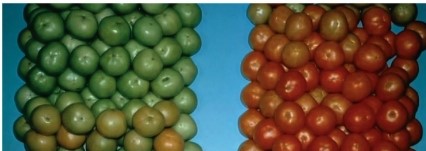 The green tomatoes on the left were not exposed to a plant hormone, whereas the red tomatoes on the right were most likely treated with _______.
 (Short Answer)
4.9/5 (76)
(76) Which of the following statements does not describe the signal transduction pathway initiated by the binding of auxin to its receptor protein?
(Multiple Choice)
4.9/5 (76)
(76) Auxin inhibits the phenomenon called _______, where separation occurs at the cell layer between petiole and stem, such as in autumn.
(Short Answer)
4.9/5 (81)
(81) Seeds from a Mediterranean habitat with frequent fast-burning fires would probably need what treatment to promote their germination?
(Multiple Choice)
4.9/5 (84)
(84) Based on its role in plant signaling, which substance is best described as a hormone?
(Multiple Choice)
4.8/5 (64)
(64) The effect of light on the growth and development of a plant is called
(Multiple Choice)
4.9/5 (58)
(58) Radishes provide a good demonstration of the pronounced swelling that cytokinins can cause in
(Multiple Choice)
4.7/5 (66)
(66) It is thought that cytokinins control growth by cell _______.
(Short Answer)
4.9/5 (82)
(82) 
Filters
- Essay(0)
- Multiple Choice(0)
- Short Answer(0)
- True False(0)
- Matching(0)