



 Chat with AI
Exam 31: Protostome Animals

Exam 1: Studying Life246 Questions
Exam 2: Small Molecules and the Chemistry of Life246 Questions
Exam 3: Proteins, Carbohydrates, and Lipids246 Questions
Exam 4: Nucleic Acids and the Origin of Life246 Questions
Exam 5: Cells: the Working Units of Life248 Questions
Exam 6: Cell Membranes246 Questions
Exam 7: Cell Communication and Multicellularity246 Questions
Exam 8: Energy, Enzymes, and Metabolism246 Questions
Exam 9: Pathways That Harvest Chemical Energy246 Questions
Exam 10: Photosynthesis: Energy From Sunlight242 Questions
Exam 11: The Cell Cycle and Cell Division260 Questions
Exam 12: Inheritance, Genes, and Chromosomes250 Questions
Exam 13: Dna and Its Role in Heredity257 Questions
Exam 14: From Dna to Protein: Gene Expression252 Questions
Exam 15: Gene Mutation and Molecular Medicine251 Questions
Exam 16: Regulation of Gene Expression245 Questions
Exam 17: Genomes249 Questions
Exam 18: Recombinant Dna and Biotechnology243 Questions
Exam 20: Mechanisms of Evolution243 Questions
Exam 21: Reconstructing and Using Phylogenies246 Questions
Exam 22: Speciation247 Questions
Exam 23: Evolution of Genes and Genomes252 Questions
Exam 24: The History of Life on Earth246 Questions
Exam 25: Bacteria, Archaea, and Viruses262 Questions
Exam 26: The Origin and Diversification of Eukaryotes252 Questions
Exam 27: Plants Without Seeds: From Water to Land251 Questions
Exam 28: The Evolution of Seed Plants259 Questions
Exam 29: The Evolution and Diversity of Fungi261 Questions
Exam 30: Animal Origins and the Evolution of Body Plans248 Questions
Exam 31: Protostome Animals244 Questions
Exam 32: Deuterostome Animals246 Questions
Exam 33: The Plant Body243 Questions
Exam 34: Transport in Plants248 Questions
Exam 35: Plant Nutrition247 Questions
Exam 36: Regulation of Plant Growth246 Questions
Exam 37: Reproduction in Flowering Plants247 Questions
Exam 38: Plant Responses to Environmental Challenges246 Questions
Exam 39: Physiology, Homeostasis, and Temperature Regulation258 Questions
Exam 40: Animal Hormones249 Questions
Exam 41: Immunology: Animal Defense Systems265 Questions
Exam 42: Animal Reproduction261 Questions
Exam 43: Animal Development261 Questions
Exam 44: Neurons, Glia, and Nervous Systems250 Questions
Exam 45: Sensory Systems249 Questions
Exam 46: The Mammalian Nervous System: Structure and Higher Functions254 Questions
Exam 47: Musculoskeletal Systems259 Questions
Exam 48: Gas Exchange247 Questions
Exam 49: Circulatory Systems252 Questions
Exam 50: Nutrition, Digestion, and Absorption259 Questions
Exam 51: Salt and Water Balance and Nitrogen Excretion251 Questions
Exam 52: Animal Behavior249 Questions
Exam 53: The Physical Environment and Biogeography of Life248 Questions
Exam 54: Populations259 Questions
Exam 55: Species Interactions254 Questions
Exam 56: Communities247 Questions
Exam 57: Ecosystems238 Questions
Exam 58: A Changing Biosphere222 Questions
Select questions type


_______have open circulatory systems, a complete digestive tract, and a reduction of the coelom.
(Multiple Choice)
4.9/5  (71)
(71) A thick cuticle provides an animal with protection, but it also can seal it off from the external environment, obstructing the exchange of gases.How do animals overcome this?
(Essay)
4.8/5 (75)
(75) Animals with thin cuticles are generally restricted to moist habitats because
(Multiple Choice)
4.7/5 (91)
(91) Which statement about the difference between larval and adult forms of insects is false?
(Multiple Choice)
4.8/5 (76)
(76) The following are all characteristics of earthworms: segmented bodies, a spiral cleavage pattern, a terrestrial lifestyle, a complete gut, a blastopore that develops into a mouth, tight junctions between cells, and bilateral symmetry.In what order did these characteristics evolve?
(Essay)
4.9/5 (79)
(79) A distinguishing feature of mollusks is the _______, a sheet of specialized tissue that covers the internal organs like a body wall, and that also secretes a shell.
(Short Answer)
4.8/5 (95)
(95) In _______, air sacs and tubular channels called tracheae are responsible for gas exchange with cells.
(Multiple Choice)
4.9/5 (76)
(76) Unlike in all other living mollusks, in _______ the gas exchange organs, muscles, and excretory pores are repeated over the length of the body.These organisms were the most abundant mollusks during the Cambrian period, 500 million years ago, but only a few species survive today.
(Multiple Choice)
4.9/5 (84)
(84) Spiral cleavage is found in a subset of lophotrochozoans, including the ribbon worms, annelids, and
(Multiple Choice)
4.8/5 (74)
(74) Approximately what proportion of living species on Earth are insects?
(Multiple Choice)
5.0/5 (80)
(80) In prescientific times, a discredited notion held that human health depended on the correct balance of four "humors," including blood, which was not known to circulate.At that time, leeches were used in bleeding to supposedly reduce the amount of blood as a humor, but today
(Multiple Choice)
4.9/5 (92)
(92) 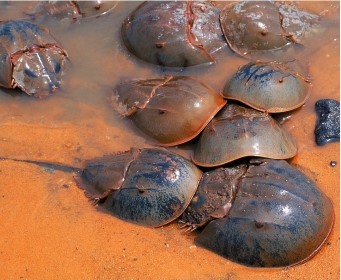 This organisms shown are
Insects differ from other hexapods in that most groups possess
(Multiple Choice)
4.8/5 (88)
(88) Refer to the figure. 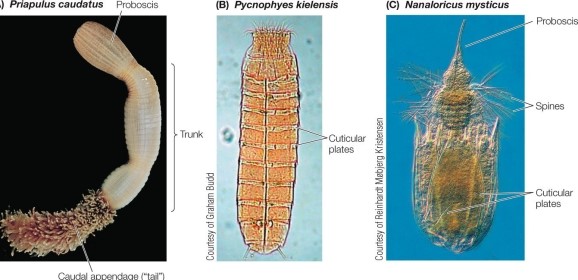 Which of the following correctly names the organisms shown, from left to right?
 (Multiple Choice)
4.9/5 (81)
(81) The oligochaetes are _______; each organism has both male and female sex organs.
(Short Answer)
4.8/5 (70)
(70) A head with complex sensory organs, including eyes that are comparable to those of vertebrates in their ability to resolve images, is found in
(Multiple Choice)
4.8/5 (80)
(80) 
Filters
- Essay(0)
- Multiple Choice(0)
- Short Answer(0)
- True False(0)
- Matching(0)