



 Chat with AI
Exam 31: Protostome Animals

Exam 1: Studying Life246 Questions
Exam 2: Small Molecules and the Chemistry of Life246 Questions
Exam 3: Proteins, Carbohydrates, and Lipids246 Questions
Exam 4: Nucleic Acids and the Origin of Life246 Questions
Exam 5: Cells: the Working Units of Life248 Questions
Exam 6: Cell Membranes246 Questions
Exam 7: Cell Communication and Multicellularity246 Questions
Exam 8: Energy, Enzymes, and Metabolism246 Questions
Exam 9: Pathways That Harvest Chemical Energy246 Questions
Exam 10: Photosynthesis: Energy From Sunlight242 Questions
Exam 11: The Cell Cycle and Cell Division260 Questions
Exam 12: Inheritance, Genes, and Chromosomes250 Questions
Exam 13: Dna and Its Role in Heredity257 Questions
Exam 14: From Dna to Protein: Gene Expression252 Questions
Exam 15: Gene Mutation and Molecular Medicine251 Questions
Exam 16: Regulation of Gene Expression245 Questions
Exam 17: Genomes249 Questions
Exam 18: Recombinant Dna and Biotechnology243 Questions
Exam 20: Mechanisms of Evolution243 Questions
Exam 21: Reconstructing and Using Phylogenies246 Questions
Exam 22: Speciation247 Questions
Exam 23: Evolution of Genes and Genomes252 Questions
Exam 24: The History of Life on Earth246 Questions
Exam 25: Bacteria, Archaea, and Viruses262 Questions
Exam 26: The Origin and Diversification of Eukaryotes252 Questions
Exam 27: Plants Without Seeds: From Water to Land251 Questions
Exam 28: The Evolution of Seed Plants259 Questions
Exam 29: The Evolution and Diversity of Fungi261 Questions
Exam 30: Animal Origins and the Evolution of Body Plans248 Questions
Exam 31: Protostome Animals244 Questions
Exam 32: Deuterostome Animals246 Questions
Exam 33: The Plant Body243 Questions
Exam 34: Transport in Plants248 Questions
Exam 35: Plant Nutrition247 Questions
Exam 36: Regulation of Plant Growth246 Questions
Exam 37: Reproduction in Flowering Plants247 Questions
Exam 38: Plant Responses to Environmental Challenges246 Questions
Exam 39: Physiology, Homeostasis, and Temperature Regulation258 Questions
Exam 40: Animal Hormones249 Questions
Exam 41: Immunology: Animal Defense Systems265 Questions
Exam 42: Animal Reproduction261 Questions
Exam 43: Animal Development261 Questions
Exam 44: Neurons, Glia, and Nervous Systems250 Questions
Exam 45: Sensory Systems249 Questions
Exam 46: The Mammalian Nervous System: Structure and Higher Functions254 Questions
Exam 47: Musculoskeletal Systems259 Questions
Exam 48: Gas Exchange247 Questions
Exam 49: Circulatory Systems252 Questions
Exam 50: Nutrition, Digestion, and Absorption259 Questions
Exam 51: Salt and Water Balance and Nitrogen Excretion251 Questions
Exam 52: Animal Behavior249 Questions
Exam 53: The Physical Environment and Biogeography of Life248 Questions
Exam 54: Populations259 Questions
Exam 55: Species Interactions254 Questions
Exam 56: Communities247 Questions
Exam 57: Ecosystems238 Questions
Exam 58: A Changing Biosphere222 Questions
Select questions type


Refer to the figure. 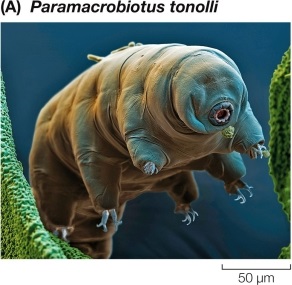 Which statement about the organism shown in the figure is false?
 (Multiple Choice)
4.9/5  (77)
(77) Evidence from developmental, structural, and molecular biology indicates that the protostomes split into two major monophyletic lineages that have been evolving separately since ancient times.These two lineages are the lophotrochozoans and the _______.
(Short Answer)
4.8/5 (78)
(78) The figure shows several bryozoans. 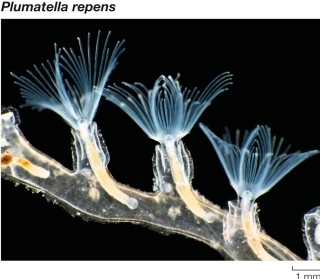 Which statement about these organisms cannot be inferred from the evidence in the figure?
 (Multiple Choice)
4.8/5 (80)
(80) Terry Erwin fogged 19 trees in the Amazon rainforest.Which statement about his study is true?
(Multiple Choice)
4.8/5 (80)
(80) Refer to the figure. 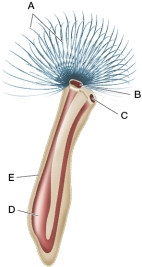 Label the lettered structures with the following: lophophore tentacles, mouth, anus, outer covering (chitinous tube), and gut.Is the organism a phoronid or an ecdysozoan?
 (Short Answer)
4.9/5 (69)
(69) Bdelloid rotifers may have existed for tens of millions of years without regular sexual reproduction, though long-term asexual reproduction typically leads to extinction.Bdelloid rotifers acquire gene fragments from the environment during the desiccation-rehydration cycle.Which statement best explains their survival?
(Multiple Choice)
4.8/5 (86)
(86) The mollusks are a very diverse group morphologically, but they share three common morphological traits.Describe these traits, their functions, and modifications in different groups of mollusks.
(Essay)
4.8/5 (85)
(85) What characteristics make the nematode species Caenorhabditis elegans an ideal model organism?
(Essay)
4.9/5 (88)
(88) A caterpillar developing into a butterfly is an example of complete metamorphosis.During this process, a larva transforms itself into an adult during a specialized phase in which it is called a(n)
(Multiple Choice)
4.8/5 (94)
(94) Functions of arthropod appendages include all of the following except
(Multiple Choice)
4.9/5 (78)
(78) Eight overlapping calcareous plates and a feeding structure called a radula occur in which lophotrochozoan group?
(Multiple Choice)
4.9/5 (90)
(90) Which group includes a segmented marine animal that is wormlike, has parapodia, and develops through spiral cleavage?
(Multiple Choice)
4.8/5 (69)
(69) 
Filters
- Essay(0)
- Multiple Choice(0)
- Short Answer(0)
- True False(0)
- Matching(0)