



 Chat with AI
Exam 12: Pharmacology

Exam 1: Anatomy291 Questions
Exam 2: Behavioral science240 Questions
Exam 3: Biochemistry156 Questions
Exam 4: Biostatistics117 Questions
Exam 5: Embryology52 Questions
Exam 6: Genetics103 Questions
Exam 7: Histology24 Questions
Exam 8: Immunology129 Questions
Exam 9: Microbiology336 Questions
Exam 10: Pathology816 Questions
Exam 11: Pathophysiology464 Questions
Exam 12: Pharmacology538 Questions
Exam 13: Physiology272 Questions
Select questions type


A 33-year-old woman, gravida 2 para 1, comes to the office due to a positive home urine pregnancy test. Her last menstrual period was 6 weeks ago, and pelvic ultrasonography confirms an intrauterine pregnancy. The patient has idiopathic pulmonary hypertension complicated by Eisenmenger syndrome. She is aware that pregnancy poses a major mortality risk to herself and the fetus due to the hemodynamic changes of gestation, labor, and delivery. The patient consents to pregnancy termination with a mifepristone and misoprostol regimen. Which of the following is the mechanism of action for mifepristone in this clinical situation?
(Multiple Choice)
4.9/5  (80)
(80) A 42-year-old woman is hospitalized for surgical removal of a mediastinal mass. The patient has had intermittent episodes of double vision, difficulty chewing food, and weakness of the extremities for the past several months. During evaluation she was found to have a circumscribed anterior mediastinal mass. Preoperative nerve conduction studies revealed a decremental response to repetitive motor nerve stimulation. She has no other medical conditions and does not use tobacco, alcohol, or illicit drugs. The patient has no drug allergies. Compared to a healthy individual, which of the following anesthesia-related medications is most likely to have increased potency in this patient?
(Multiple Choice)
5.0/5 (86)
(86) A 21-year-old man with asthma comes to the office for follow-up. His asthma symptoms are not adequately controlled with albuterol as needed, and a daily inhaled therapy was added at the previous visit. The patient says he feels much better and has been using his rescue inhaler less frequently. He has no other medical conditions. The patient does not use tobacco or illicit drugs and drinks one or two 12-oz cans of beer daily. He received childhood vaccinations but has refused the flu and pneumococcal vaccines. Vital signs are within normal limits, and lungs are clear to auscultation. White mucosal plaques that can be easily scraped off using a tongue depressor are present in the oropharynx. The remainder of the physical examination shows no abnormalities. Which of the following measures would have been most effective in preventing this patient's abnormal oropharyngeal findings?
(Multiple Choice)
4.8/5 (84)
(84) A 68-year-old man comes to the office due to several weeks of progressive exertional dyspnea and lower extremity edema. Medical history is significant for non-Hodgkin lymphoma, which is in remission after chemotherapy 8 years ago. Blood pressure is 126/76 mm Hg and pulse is 88/min. Physical examination reveals bibasilar lung crackles and 1+ bilateral lower extremity edema. Echocardiography shows biventricular dilation and a left ventricular ejection fraction of 35%. Stress myocardial perfusion scan is negative for inducible ischemia. After initial stabilization, long-term use of which of the following medications will most likely improve survival in this patient?
(Multiple Choice)
4.9/5 (65)
(65) A 26-year-old man with depressed mental status is brought to the emergency department by police. Due to fear of arrest, he swallowed a handful of pills as the officers approached him. On examination, the patient responds to painful stimuli but is somnolent. Respiratory rate is 6/min and after naloxone bolus infusion increases to 14/min. Lungs are clear to auscultation. Which of the following additional findings were most likely present in this patient on initial assessment?
(Multiple Choice)
4.7/5 (76)
(76) A 76-year-old man comes to the office due to severe insomnia of several months' duration. He has trouble falling asleep and feels tired and irritable during the day. The patient's other medical problems include hypertension and a prior cerebrovascular accident with residual right leg weakness. He takes aspirin, rosuvastatin, and lisinopril regularly as prescribed. Temperature is 36.7 C (98.1 F), blood pressure is 118/76 mm Hg, pulse is 62/min, and respirations are 14/min. Examination shows clear lungs with normal S1 and S2. The abdomen is soft and nontender. In addition to nonpharmacologic interventions for insomnia, short-term pharmacologic therapy is being considered. Which of the following medications has the lowest risk of causing adverse effects in this patient?
(Multiple Choice)
4.9/5 (70)
(70) A 23-year-old man is evaluated for prolonged paralysis following general anesthesia for an elective surgical procedure. Anesthesia was induced with propofol, succinylcholine was used for intubation, and anesthesia was maintained via propofol and fentanyl infusions. The patient has not had a return of neuromuscular function after several hours. His mother then discloses that she has also been "slow to wake up" from anesthesia. Which of the following is the most likely reason for this patient's prolonged paralysis?
(Multiple Choice)
4.8/5 (86)
(86) A 58-year-old man is seen in the clinic 6 months after undergoing right coronary artery stent placement due to unstable angina. His father died at age 50 from coronary artery disease. The patient follows a healthy diet and exercise plan and is compliant with his current medication regimen. BMI is 29 kg/m2. Physical examination is unremarkable. After extensive discussion with the patient, evolocumab is added to his treatment plan. Which of the following is expected as an immediate result of this treatment?
(Multiple Choice)
4.8/5 (81)
(81) A 55-year-old woman comes for evaluation of persistent morning stiffness. She was diagnosed with rheumatoid arthritis 4 months ago and was prescribed methotrexate. The patient currently takes the maximum tolerated dose, along with folic acid and as-needed naproxen. Vital signs are normal. On examination, swelling, tenderness, and pain on range of motion are found at the metacarpophalangeal and proximal interphalangeal joints and wrists bilaterally. Treatment with etanercept is considered. Which of the following tests should be performed before beginning treatment with this agent?
(Multiple Choice)
4.9/5 (82)
(82) A 56-year-old man with a history of severe depression seeks a new physician after immigrating to the United States. His depression has been treated with phenelzine since diagnosis, and his new physician decides to switch him to sertraline. The patient is informed that he must wait at least 2 weeks after discontinuing phenelzine before starting the new drug. Which of the following processes occurs during this washout interval to allow sertraline therapy to be initiated safely?
(Multiple Choice)
4.8/5 (82)
(82) A 22-year-old woman comes to the office due to palpitations, weight loss, and insomnia. She has lost 7 kg (15.4 lb) in the past 3 months. The patient has no other medical problems and takes no medication. She does not use tobacco, alcohol, or illicit drugs. Blood pressure is 130/80 mm Hg and pulse is 104/min and regular. The thyroid gland is diffusely enlarged and nontender on palpation. Laboratory studies show markedly decreased serum TSH and elevated thyroxine levels. Methimazole monotherapy is initiated. Two months later, her symptoms had resolved. The treatment most likely improved this patient's condition by directly inhibiting which of the following processes?
(Multiple Choice)
4.9/5 (75)
(75) A 32-year-old woman is brought to the emergency department due to severe shortness of breath. She has no chest pain. The patient does not use tobacco. Temperature is 36.7 C (98 F), blood pressure is 132/81 mm Hg, pulse is 102/min, and respirations are 30/min. During physical examination, her condition deteriorates and she is emergently intubated due to acute respiratory failure. Shortly after intubation, she goes into cardiac arrest and dies despite resuscitation efforts. Review of the patient's medical records shows that she had been prescribed multiple medications but had a history of noncompliance. Autopsy shows hyperinflated lungs, airway mucus plugging, and cellular infiltration of the bronchial wall. Long-term use of which of the following drugs would have best prevented the cellular reaction in this patient's airways?
(Multiple Choice)
4.8/5 (86)
(86) A 16-year-old boy comes to the office due to 3 days of burning with urination and yellow penile discharge. The patient is sexually active with one female partner; they engage in vaginal intercourse and do not use condoms. He has no other medical conditions, takes no medications, and has no allergies. Urine nucleic acid amplification test results are pending, and urethral Gram stain is shown in the exhibit.
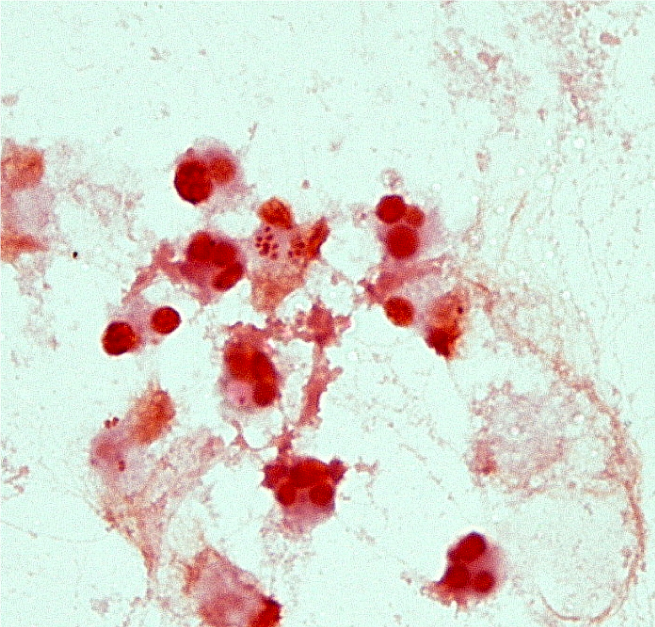 Appropriate treatment of this patient's condition involves antibiotics from which of the following drug classes?
 (Multiple Choice)
4.8/5 (95)
(95) A 17-year-old girl is brought to the emergency department by a friend an hour after she was observed having a seizure. The patient has no known history of a seizure disorder. Her friend reports she has a history of depression and substance use disorder and was released yesterday from a psychiatric hospital after 3 days of inpatient treatment. The patient's medications are unknown. Temperature is 38.3 C (100.9 F), blood pressure is 90/50 mm Hg, and pulse is 130/min. On examination, the patient is sedated and disoriented. The pupils are dilated and bowel sounds are decreased. She has 700 mL of urine return when a urinary catheter is placed. ECG reveals sinus tachycardia and a QRS duration of 130 msec. Which of the following is the most likely cause of this patient's symptoms?
(Multiple Choice)
4.8/5 (74)
(74) A 68-year-old man comes to the emergency department due to a 1-week history of increasing leg and abdominal swelling. The patient has a history of pulmonary hypertension and cor pulmonale from advanced chronic obstructive pulmonary disease. Other medical conditions include hypertension and gout. Physical examination shows scattered rhonchi, prolonged expiratory phase of expiration, mild ascites, and extensive edema of the abdominal wall and lower extremities. The patient is hospitalized and intravenous loop diuretic therapy is begun. Two days later, acetazolamide is added to his treatment regimen. Which of the following most likely prompted the additional therapy in this patient?
(Multiple Choice)
4.8/5 (82)
(82) A 72-year-old man is brought to the emergency department with waxing and waning chest pressure over the past several hours. The patient says he occasionally gets a similar sensation that lasts 5-10 minutes when he walks briskly up the stairs. Medical history is significant for hypertension and hyperlipidemia; he has been nonadherent with prescribed medical therapy and follow-up visits. The patient has a 25-pack-year smoking history. Blood pressure is 211/105 mm Hg, and pulse is 88/min and regular. Chest examination reveals no heart murmurs, and the lungs are clear. ECG shows sinus rhythm and nonspecific ST-segment changes. A medication is administered intravenously and produces the following hemodynamic effects compared to baseline: 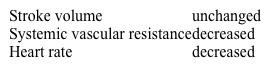 Which of the following medications was most likely used in this patient?
 (Multiple Choice)
4.9/5 (83)
(83) An 18-year-old man comes to the office due to acne. The patient has had mild facial acne for the past 3 years that has responded well to topical agents. Since he started college 2 months ago, the acne has worsened and has spread to his torso and neck. Despite use of the topical agents, it has continued to worsen. The patient plays on the university's baseball team, which requires him to practice outdoors for several hours 3 days a week. He also swims in an indoor pool several hours a week. Since starting college, the patient has adopted a dairy-free, low-glycemic-index diet. Physical examination shows severe, nodulocystic acne on the face, neck, chest, and back. Which of the following most likely caused this patient's worsening acne?
(Multiple Choice)
4.9/5 (81)
(81) A 60-year-old man comes to the office due to 2 months of low back pain unresponsive to over-the-counter analgesics. The pain is worse at night and interferes with sleep. On examination, the lumbar vertebrae are tender to palpation, and the prostate is indurated and firm. After a thorough evaluation, leuprolide therapy is started. Which of the following changes in testosterone (solid line) and dihydrotestosterone (dashed line) levels are most likely to occur in this patient after initiation of therapy?
(Multiple Choice)
4.9/5 (86)
(86) A 52-year-old woman comes to the office due to 2 weeks of constant back pain. She has also had several months of nonproductive cough, anorexia, and unintentional weight loss. The patient has a 40-pack-year smoking history. Physical examination shows diffuse muscle wasting, left lung crackles, and vertebral tenderness. Imaging reveals a left lung mass and lytic lesions in the vertebrae. Further evaluation confirms metastatic non-small cell lung cancer. Treatment with a cisplatin-based chemotherapy is begun, and the patient is also started on a neurokinin-1 receptor antagonist. The latter medication is most likely to improve which of the following in this patient?
(Multiple Choice)
4.9/5 (87)
(87) A 56-year-old man comes to the urgent care center with severe knee pain. He was feeling well until he awoke this morning with acute pain, redness, and swelling in the knee. The patient does not smoke but did drink heavily at a wedding reception the night before. Past medical history is notable for recent peptic ulcer disease. He is treated with oral colchicine and experiences significant relief of symptoms within 12 hours. The drug used in this patient most likely affects which of the steps shown in the diagram below? 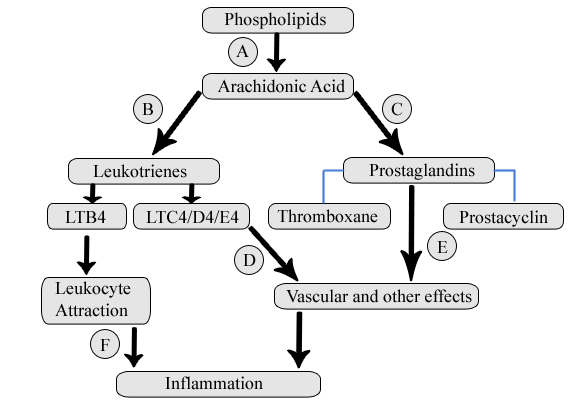
(Multiple Choice)
4.9/5 (75)
(75) 
Filters
- Essay(0)
- Multiple Choice(0)
- Short Answer(0)
- True False(0)
- Matching(0)