



 Chat with AI
Exam 12: Pharmacology

Exam 1: Anatomy291 Questions
Exam 2: Behavioral science240 Questions
Exam 3: Biochemistry156 Questions
Exam 4: Biostatistics117 Questions
Exam 5: Embryology52 Questions
Exam 6: Genetics103 Questions
Exam 7: Histology24 Questions
Exam 8: Immunology129 Questions
Exam 9: Microbiology336 Questions
Exam 10: Pathology816 Questions
Exam 11: Pathophysiology464 Questions
Exam 12: Pharmacology538 Questions
Exam 13: Physiology272 Questions
Select questions type


A 24-year-old man comes to the oncology clinic for a follow-up visit. The patient was diagnosed with Hodgkin lymphoma 4 months ago and received combination chemotherapy. He has had a nonproductive cough and shortness of breath with exertion over the past 2 weeks. On examination, there is no jugular venous distension or pedal edema. Heart sounds are normal with no murmurs. Lung auscultation reveals bilateral fine inspiratory crackles. Chest radiograph shows bilateral reticular interstitial opacities. Pulmonary function testing shows a restrictive pattern with decreased diffusion capacity for carbon monoxide. Chest x-ray and pulmonary function testing prior to the initiation of chemotherapy were normal. Which of the following is the most likely mechanism of action of the medication causing this patient's current symptoms?
(Multiple Choice)
4.7/5  (95)
(95) A 52-year-old man is evaluated for low-grade fever, malaise, abdominal pain, and diarrhea. The patient underwent a cadaveric renal transplant 6 months ago to treat renal failure from underlying polycystic kidney disease. He takes maintenance immunosuppressive therapy. Physical examination shows mild tenderness in the lower abdominal quadrants with no rebound tenderness. Serum immunosuppressant levels are within therapeutic range, and renal function studies are normal. Colonoscopy reveals mucosal erythema and ulcerations. Biopsy shows large cells with inclusion bodies, and a polymerase chain reaction-based test detects viral DNA. First-line therapy for the infection is initiated. This patient is at greatest risk of which of the following from the treatment?
(Multiple Choice)
5.0/5 (80)
(80) A 64-year-old African American woman is brought to the clinic by her husband due to a fall. She was walking in her living room when she tripped over an electrical cord. The patient has had several other ground-level falls in the last 6 months but has had no significant injuries. She also gave up driving a year ago following a near-miss motor vehicle accident. Past medical history is notable for hypertension and type 2 diabetes mellitus, for which she takes appropriate medications. Mental status and neurologic examinations are normal. Ophthalmic examination reveals reduced vision in her peripheral visual fields bilaterally and an elevated intraocular pressure. After discussion of treatment options, the patient is initiated on timolol ophthalmic drops. Which of the following structures is the most likely target of this medication?
(Multiple Choice)
4.9/5 (73)
(73) A 68-year-old woman comes to the office due to a burning sensation in her chest and throat for the past 2 weeks. Associated symptoms include trouble swallowing. Medical history is significant for osteoporosis, and she has no known drug allergies. The patient has smoked half a pack of cigarettes daily for 50 years, and does not use alcohol or illicit drugs. Temperature is 36.7 C (98 F), blood pressure is 110/70 mm Hg, and pulse is 70/min. BMI is 20 kg/m2. Cardiopulmonary examination shows clear lungs and normal S1 and S2. The abdomen is soft and nontender. Laboratory results are normal. It is determined that the patient's current symptoms are caused by one of her medications, which is discontinued. Her symptoms subsequently resolve. The medication responsible for this patient's presentation is also associated with which of the following side effects?
(Multiple Choice)
4.8/5 (78)
(78) A group of investigators is currently conducting a phase I clinical trial for a newly developed synthetic opioid that has twice the analgesic capability of morphine. After oral ingestion of a fixed dose by several volunteers, the plasma concentration of the drug is measured and determined to be subtherapeutic. Rectal administration of the same dose of the drug shows a plasma concentration well within the therapeutic range, almost double the level measured after oral intake. Which of the following best accounts for the observed difference in drug concentration following rectal administration when compared to oral administration?
(Multiple Choice)
4.7/5 (83)
(83) A 32-year-old man comes to the office due to a substernal burning sensation that has been occurring intermittently over the last 6 months. The sensation worsens with spicy and fatty meals and is associated with food regurgitation and a sour taste in the back of the throat. He has no projectile vomiting, dysphagia, or unexpected weight loss. Medical history is significant for cystic fibrosis complicated by pancreatic insufficiency, for which the patient takes pancreatic enzyme replacement therapy with all meals. Vital signs are within normal limits. The abdomen is soft and nontender. He is prescribed omeprazole with subsequent improvement in his gastroesophageal reflux symptoms. In this patient, absorption of which of the following nutrients will likely improve due to initiation of this new medication?
(Multiple Choice)
4.8/5 (79)
(79) A 27-year-old man with schizophrenia comes to the emergency department due to an acute muscle spasm in his neck that developed several days after starting treatment with haloperidol. He is extremely distressed and unable to turn his head. The patient is treated with intravenous diphenhydramine, which relieves his symptoms within minutes. A psychiatrist is consulted, and recommendations are made to discontinue haloperidol and start the second-generation antipsychotic quetiapine because of its lower risk for similar dystonic side effects. In addition to dopamine D2 receptor antagonism, this new medication has which of the following pharmacological properties?
(Multiple Choice)
4.8/5 (64)
(64) A 24-year-old woman with a medical history of bronchial asthma comes to the office due to shortness of breath and wheezing for the past 2-3 days. She developed a cold 4 days ago and is not feeling well. The patient has a nebulizer at home and used multiple doses of albuterol with little response prior to arriving. She takes no other medications. The patient is diaphoretic and in moderate respiratory distress. Respiratory examination shows bilateral wheezing, diffusely decreased breath sounds, and increased use of accessory muscles of respiration. Laboratory results reveal a serum potassium of 3 mEq/L. Which of the following mechanisms is the most likely cause of this patient's hypokalemia?
(Multiple Choice)
4.9/5 (68)
(68) A 57-year-old man comes to the office for a follow-up appointment. He has a history of systolic heart failure, which has been managed with appropriate medical therapy. The patient experiences significant functional impairment at baseline and is able to walk only short distances. His most recent echocardiogram revealed a left ventricular ejection fraction of 30% (normal ≥55%). The physician decides to add spironolactone to the treatment regimen. The addition of this medication is most likely to cause a decrease in which of the following?
(Multiple Choice)
4.8/5 (90)
(90) The antiviral activity of a guanosine derivative is tested by examining cells infected with different viruses for characteristic abnormal changes in cell morphology due to the viruses. These changes are known as the cytopathic effect (CPE). In the presence of significant antiviral activity, CPE will be inhibited. The following results are obtained from the study: 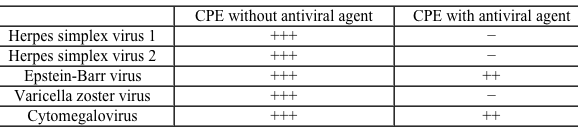 A difference in which of the following best explains the variation in susceptibility of the various viruses to this specific antiviral agent?
 (Multiple Choice)
4.8/5 (77)
(77) A 5-year-old girl is brought to the emergency department for evaluation of a rash. Her mother noticed a few red spots on the child's cheeks this morning, which subsequently spread to the neck and trunk as the day progressed. The patient has a history of partial complex seizures, which have been well controlled with carbamazepine. Vital signs are normal. The lips are slightly pale, and the oropharynx is clear. There is no lymphadenopathy. The abdomen is soft with no palpable masses or hepatosplenomegaly. Skin examination shows flat, red, pinpoint lesions that do not blanch on the face, neck, trunk, and extremities. Neurological examination is unremarkable. Laboratory results are as follows: 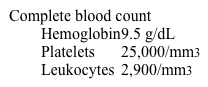 Peripheral smear reveals a paucity of cells with normal morphologic appearance of all cell lines. Which of the following mechanisms is most likely responsible for this patient's current condition?
 (Multiple Choice)
4.9/5 (78)
(78) A 36-year-old man comes to the emergency department due to severe, acute knee pain that awoke him from sleep. He has a history of end-stage renal disease for which he underwent a renal transplant 8 weeks ago. The patient takes an immunosuppressive regimen that includes cyclosporine and low-dose prednisone. He visited his nephrologist last week and serum creatinine levels were normal with no proteinuria. Temperature is 37.5 C (99.5 F), blood pressure is 136/78 mm Hg, and pulse is 88/min. Examination shows redness, warmth, and a small effusion in the left knee. Passive range of motion at the knee causes severe pain. Microscopic examination of joint fluid from the knee shows numerous neutrophils as well as both intra- and extracellular crystals as shown in the exhibit.
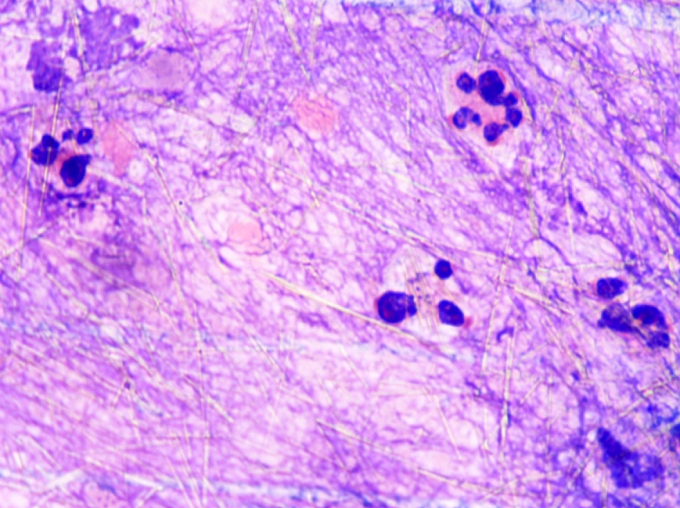 Which of the following mechanisms is most likely responsible for this patient's acute symptoms?
 (Multiple Choice)
4.9/5 (78)
(78) A 57-year-old man comes to the office accompanied by his wife for follow-up of Parkinson disease. The patient reports no change in motor symptoms, and the disease has been well controlled with anti-Parkinson medication. However, his wife is very concerned about a change in behavior, reporting that he recently started gambling and has lost a significant amount of their savings. The patient drives several hours multiple times a week to gamble at a casino in a neighboring state. His only other medical condition is major depressive disorder for which he takes sertraline. The patient does not use tobacco, alcohol, or illicit drugs. Vital signs are within normal limits. Physical examination shows a mild resting hand tremor and minimal rigidity. Which of the following is most likely responsible for this patient's recent change in behavior?
(Multiple Choice)
4.8/5 (68)
(68) A 64-year-old woman is brought to the emergency department due to confusion and lethargy. The patient was asymptomatic when her husband left for work in the morning, but when he arrived home, he found her in bed weak and disoriented. The patient's medical conditions include type 2 diabetes mellitus and hypertension, for which she takes multiple medications. She does not use tobacco, alcohol, or illicit drugs. Temperature is 37 C (98.6 F), blood pressure is 140/70 mm Hg, pulse is 74/min, and respirations are 18/min. On physical examination, the patient is somnolent but withdraws all extremities to pain. Laboratory testing shows an elevated serum C-peptide level. If her current condition is due to an antidiabetic drug, which of the following is the most likely culprit agent?
(Multiple Choice)
4.8/5 (63)
(63) A 55-year-old man comes to the emergency department with severe right foot pain that started suddenly in the middle of the night. He has never had such symptoms before. He has a history of diet-controlled type 2 diabetes mellitus. His BMI is 32 kg/m2. Physical examination shows swelling and tenderness of the first metatarsophalangeal joint. His leukocyte count is 13,500/µL and serum creatinine is 0.8 mg/dL. Joint aspiration is performed, and synovial fluid microscopic findings are shown in the image below. 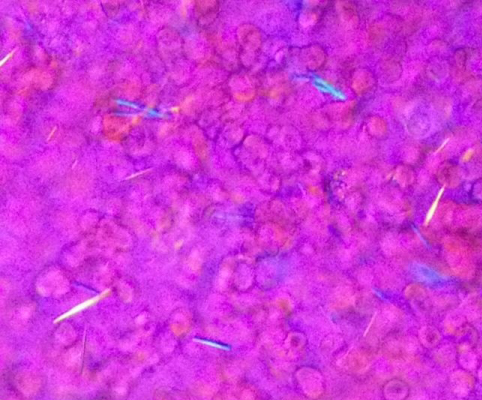 Which of the following is the best initial treatment for this patient?
 (Multiple Choice)
5.0/5 (90)
(90) Gram-positive bacteria are injected under the skin of experimental animals. Three days later, the animals are treated with antibiotic therapy. Aspirates taken from the infection site are plated on nutrient-rich agar. The isolated bacteria assume a spherical configuration when placed in an isotonic solution and disintegrate rapidly when placed in a hypotonic solution. Which of the following antibiotics was most likely administered to the animals in this experiment?
(Multiple Choice)
4.7/5 (78)
(78) A 48-year-old woman with a complex medical history comes to the clinic due to a change in her body habitus. She says her legs are "like sticks" while her "belly is getting bigger." The patient also feels increasingly fatigued but does not have excessive daytime somnolence. She has been homeless for much of the last 5 years but has been living in a residential care facility for the last 12 months. On physical examination, she is distractible and has an inappropriate affect but is cooperative. Neurologic and mental status examination is otherwise normal. There is loss of adipose tissue from the extremities and face, with a noticeable increase in abdominal girth. Which of the following types of medications is most likely to be responsible for this patient's symptoms?
(Multiple Choice)
4.7/5 (74)
(74) A 72-year-old man comes to the office due to watery diarrhea and abdominal cramps. The symptoms began several days after he started chemotherapy for metastatic colon cancer. He denies hematochezia, melena, or bulky, foul-smelling stools. Vital signs are within normal limits, and physical examination is unremarkable. Laboratory testing reveals no electrolyte abnormalities and no leukocytosis. Stool testing is negative for infection and fecal occult blood. The patient is advised to take a medication after each loose stool. The medication works by inhibiting the release of acetylcholine in the intestinal wall but does not cross the blood-brain barrier. Which of the following is the most likely medication prescribed for this patient?
(Multiple Choice)
4.8/5 (67)
(67) A 48-year-old woman comes to the emergency department due to back pain after minor trauma. She has no leg weakness or numbness. Review of systems is positive for recent-onset hot flashes and irregular menses; her most recent menstruation was 2 weeks ago. The patient has a long history of hypothyroidism treated with levothyroxine and rheumatoid arthritis treated with methotrexate. She has also taken oral prednisone for frequent symptom flares. The patient does not use tobacco, alcohol, or illicit drugs, and she consumes a balanced diet. Physical examination shows point tenderness over the midthoracic spine. The straight-leg raising test is negative, and neurologic examination of the lower extremities shows no abnormalities. Spine imaging is shown below: 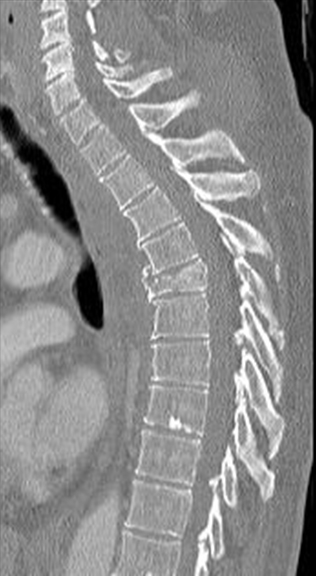 Which of the following contributed most to this patient's current condition?
 (Multiple Choice)
4.8/5 (88)
(88) A pharmaceutical researcher is studying a new drug being developed for treatment of asthma that works by reversing irritant-induced bronchoconstriction. Laboratory guinea pigs are divided into 2 groups: a postvagotomy (complete transection of the vagus nerve) group and a normal study group. Both groups are exposed to irritants without receiving the study medication, and changes in bronchial diameters are recorded. Subsequently, both groups are exposed again to the irritants but are also given the study drug. 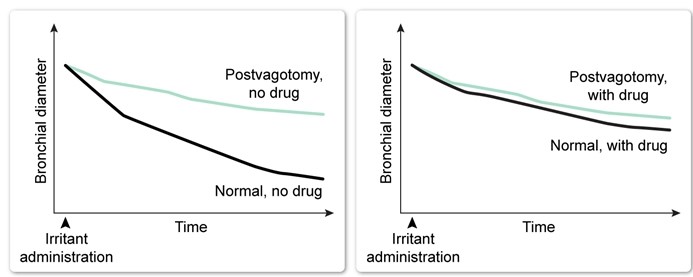 The study drug is most likely similar to which of the following medications?
 (Multiple Choice)
4.9/5 (85)
(85) 
Filters
- Essay(0)
- Multiple Choice(0)
- Short Answer(0)
- True False(0)
- Matching(0)