



 Chat with AI
Exam 12: Pharmacology

Exam 1: Anatomy291 Questions
Exam 2: Behavioral science240 Questions
Exam 3: Biochemistry156 Questions
Exam 4: Biostatistics117 Questions
Exam 5: Embryology52 Questions
Exam 6: Genetics103 Questions
Exam 7: Histology24 Questions
Exam 8: Immunology129 Questions
Exam 9: Microbiology336 Questions
Exam 10: Pathology816 Questions
Exam 11: Pathophysiology464 Questions
Exam 12: Pharmacology538 Questions
Exam 13: Physiology272 Questions
Select questions type


A 77-year-old man comes to the office after he was found to have high blood pressure during a health fair. The patient denies any medical problems and feels proud that he has not needed to see a doctor for many years. His blood pressure is 170/70 mm Hg and pulse is 74/min. Other physical examination findings are normal. The patient is started on a medication to treat his hypertension. During his follow-up visit 3 weeks later, he reports bilateral leg swelling. He has no chest pain, shortness of breath, or abdominal symptoms. His blood pressure is 135/65 mm Hg and pulse is 80/min. Cardiopulmonary examination is normal, but there is bilateral, symmetrical, 2+ pitting lower extremity edema. Laboratory studies show serum creatinine of 0.8 mg/dL, and urinalysis is negative for proteinuria. Which of the following was most likely prescribed to treat this patient's hypertension?
(Multiple Choice)
4.7/5  (84)
(84) A 36-year-old male is undergoing a major surgical procedure under general anesthesia. A fluorinated inhaled anesthetic (isoflurane) is used to achieve the desirable depth of central nervous system depression. An increase in which of the following parameters is most likely to happen during the anesthesia in this patient?
(Multiple Choice)
4.9/5 (74)
(74) A 21-year-old man is brought to the emergency department by his mother after she found him violently shaking on the kitchen floor of her home. The patient urinated on himself and bit his tongue during the incident. He has a past medical history of posttraumatic epilepsy and is noncompliant with his antiseizure medications. In the hospital, he has several brief, back-to-back generalized tonic-clonic seizures and never fully regains consciousness between episodes. Intravenous lorazepam 2 mg is administered, and the seizures stop. Intravenous infusion of another drug is started simultaneously to prevent seizure recurrence. Which of the following is the most likely mechanism of action of the second drug infused in this patient?
(Multiple Choice)
4.8/5 (83)
(83) A 40-year-old woman is brought to the emergency department due to difficulty breathing and muscle weakness. She was one of several people who developed symptoms in a movie theater. Temperature is 36.7 C (98.1 F), blood pressure is 112/62 mm Hg, pulse is 51/min, and respirations are 24/min. On physical examination, the patient is diaphoretic. The pupils are pinpoint and unreactive, and significant tearing is noted. Diffuse rhonchi and wheezing are present in the lungs bilaterally. Muscle strength is diminished throughout, and fasciculations are noted in the extremities. First-line therapy is administered, but the patient remains weak. Treatment with which of the following is most likely to improve this patient's current condition?
(Multiple Choice)
4.8/5 (77)
(77) A 22-year-old man comes to the emergency department with abdominal pain and vomiting. His symptoms began acutely 24 hours ago with nausea and decreased appetite. His medical history is unremarkable. The patient drinks 3-4 beers a week and does not use tobacco or illicit drugs. BMI is 37 kg/m2. Physical examination is notable for moderate epigastric tenderness with decreased bowel sounds but no rebound tenderness, guarding, or abdominal rigidity. Fasting laboratory studies show a serum triglyceride concentration of 1,500 mg/dL (normal: <200 mg/dL). Once the patient has been medically stabilized, which of the following medications would be most helpful in preventing recurrences of his condition?
(Multiple Choice)
4.9/5 (76)
(76) A 45-year-old quadriplegic man with suspected bacterial pneumonia is admitted to the hospital and started on intravenous antibiotics. Over the next 24 hours, he develops progressive respiratory failure requiring mechanical ventilation. Prior to intubation, a skeletal muscle relaxant is administered and the patient subsequently goes into cardiac arrest. His attached cardiac monitor shows ventricular fibrillation. While he is being resuscitated, his serum potassium level is drawn and later comes back as 9.5 mEq/L. Administration of which of the following agents is most likely responsible for this patient's condition?
(Multiple Choice)
4.8/5 (84)
(84) A 66-year-old man is evaluated for recurrent syncope. He has had 3 episodes of dizziness and palpitations followed by brief loss of consciousness over the last 6 months. He has no chest pain or dyspnea. The patient has a history of hypertension and hyperlipidemia. There is no family history of sudden death. Initial evaluation shows normal ECG and echocardiogram. A cardiac electrophysiologic study is performed. During the study, intravenous infusion of a medication is administered and produces the responses shown below. 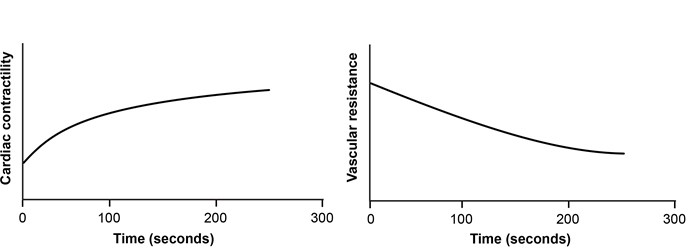 Which of the following medications was most likely administered to this patient?
 (Multiple Choice)
4.8/5 (88)
(88) A 55-year-old man comes to the office due to intermittent shortness of breath, cough, and chest tightness over the past 3 months. The patient had asthma as a child that improved in adolescence, and he has not required inhalers or steroids since. He feels that his current symptoms are similar to his prior asthma symptoms. The patient was recently diagnosed with essential tremor, which has improved with medical therapy; he has no other chronic medical conditions. He is a lifetime nonsmoker and does not use alcohol or illicit drugs. Blood pressure is 125/75 mm Hg, pulse is 58/min, and respirations are 16/min. Physical examination reveals bilateral scattered expiratory wheezes. Heart sounds are normal and there is no extremity edema. This patient's symptom recurrence is most likely attributable to a medication that affects which of the following steps? 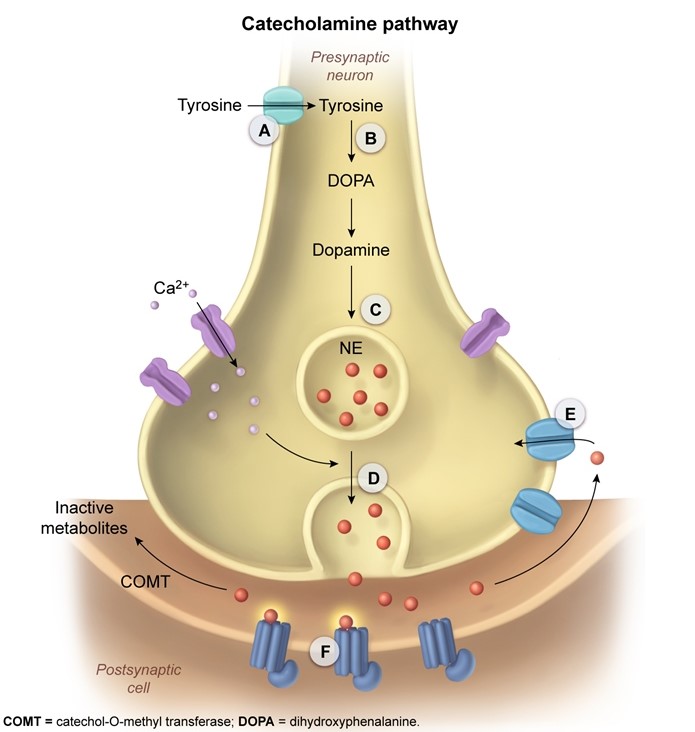
(Multiple Choice)
5.0/5 (88)
(88) A 5-year-old boy is brought to the emergency department due to an hour of epistaxis after he was elbowed in the face during a basketball game. He has a history of prolonged bleeding from the gums after brushing his teeth. Vital signs are normal. The patient has scattered bruises along his arms and legs. He receives desmopressin, which stops the bleeding. This treatment most likely improved the patient's condition through which of the following therapeutic mechanisms?
(Multiple Choice)
4.8/5 (84)
(84) A 66-year-old man comes to the emergency department due to several episodes of lightheadedness and a recent fall. The symptoms are especially pronounced in the morning when he gets up from bed. The patient takes medications for hypertension, stable angina pectoris, gout, and benign prostate hyperplasia. He also has osteoarthritis of the right knee and takes occasional nonsteroidal anti-inflammatory drugs. His blood pressure is 120/80 mm Hg and pulse is 70/min in the supine position, and 90/60 mm Hg and 87/min on standing, respectively. Cardiopulmonary examination is normal. Blockade of which of the following receptors is most likely contributing to this patient's current condition?
(Multiple Choice)
4.7/5 (74)
(74) A 43-year-old previously healthy man is hospitalized after sustaining a head injury in a motor vehicle collision. Several days later, the patient develops worsening serum electrolyte disturbances. Further evaluation reveals the cause is inappropriate antidiuretic hormone secretion. Treatment with a vasopressin V2 receptor antagonist is initiated. Which of the following changes are most likely to occur as a direct result of the administered medication?
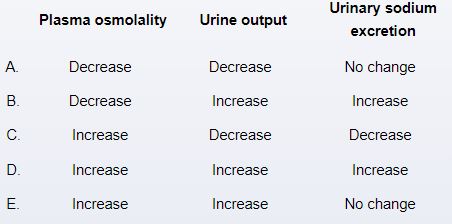
(Multiple Choice)
4.8/5 (60)
(60) A 65-year-old man comes to the physician after missing a follow-up appointment for congestive heart failure. He missed his appointment due to an upset stomach that will not go away. A detailed history reveals disturbed color perception, anorexia, nausea, vomiting, and diarrhea that have worsened over the past 2 weeks. His congestive heart failure has thus far been controlled effectively with multiple medications. If the cause of this patient's current symptoms is not corrected, which of the following complications is most likely to develop?
(Multiple Choice)
4.9/5 (63)
(63) A 43-year-old male with multiple medical problems including seizure disorder and mental illness comes to your office for the first time in order to establish a primary care physician. On routine physical examination, you notice the findings shown in the photo below.  Which of the following is most likely responsible for the condition of this patient's teeth and gums?
 (Multiple Choice)
4.8/5 (77)
(77) A 42-year-old woman is evaluated due to frequent episodes of shortness of breath, chest tightness, and cough. The patient has been hospitalized on several occasions because of these symptoms and recently required mechanical ventilation due to respiratory failure. She takes multiple inhaled and systemic medications. The patient does not use tobacco, alcohol, or illicit drugs. Physical examination reveals scattered expiratory wheezes in both lungs. Peak expiratory flow rate is decreased from baseline. The treatment regimen is expanded to include a monoclonal antibody that binds circulating IgE, with the resulting complexes being subsequently cleared by reticuloendothelial cells. This medication is most likely to help this patient through which of the following mechanisms?
(Multiple Choice)
4.9/5 (76)
(76) In a series of animal experiments, the insulin concentration in the pancreatic veins is measured after the administration of various agents. Epinephrine administration is found to cause a decrease in insulin levels. However, after pretreatment with Drug A, epinephrine injection causes a paradoxical increase in insulin concentration. Which of the following receptors does Drug A most likely block?
(Multiple Choice)
4.8/5 (91)
(91) A physician is conducting a clinical trial for a new hemodynamic drug developed for a variety of indications. The drug's pharmacodynamic profile indicates that it is a pure adrenergic agonist with no significant antagonistic properties. It is infused into a volunteer, and hemodynamic parameters are recorded in the graphs below. 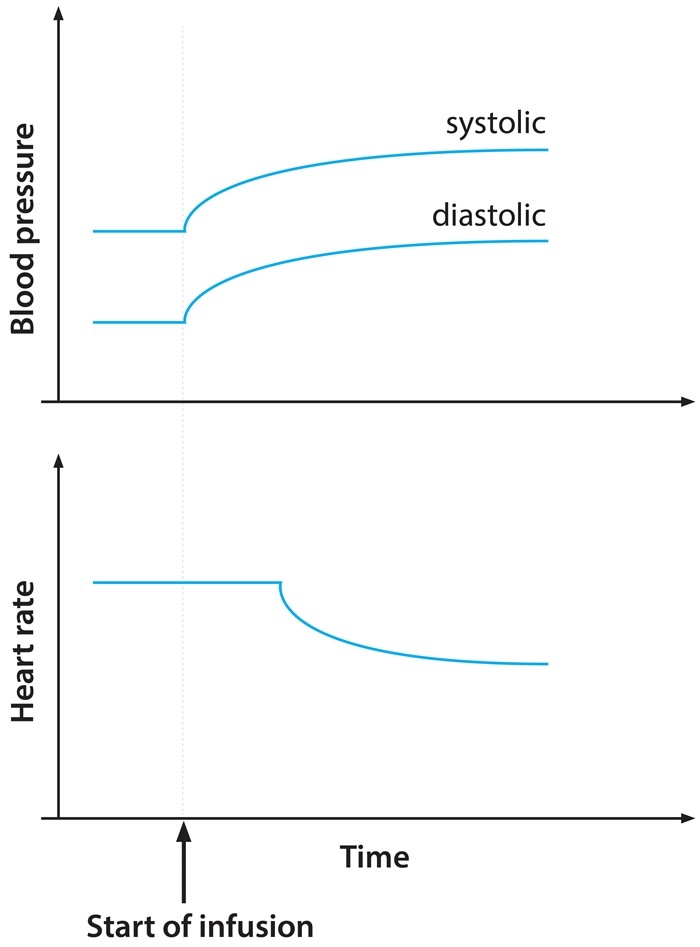 Administration of the drug to healthy individuals would most likely result in which of the following physiologic changes?
 (Multiple Choice)
4.9/5 (93)
(93) A 67-year-old smoker comes to the office with a 2-week history of decreased vision in his right eye that he describes as "blurry" and "distorted." The patient has been having vision problems over the past year, and these have made it more difficult to drive and require that he use a bright light to read the newspaper. He has no history of diabetes mellitus or hypertension. The patient uses an albuterol inhaler for occasional wheezing and shortness of breath. Ophthalmologic examination of the right eye shows a grayish discoloration of the macula with areas of adjacent hemorrhage. Which of the following should be specifically targeted in treatment of this patient's condition?
(Multiple Choice)
4.8/5 (70)
(70) A 62-year-old man comes to the emergency department with severe shortness of breath and orthopnea. His medical history is significant for long-standing hypertension and myocardial infarction a year ago. Physical examination reveals elevated jugular venous pressure, crackles on lung auscultation, and pitting edema of the lower extremities. The patient is given a medication and experiences brisk diuresis with significant symptom relief. The drug most likely used to treat this patient's condition predominantly acts on which of the following nephron segments? 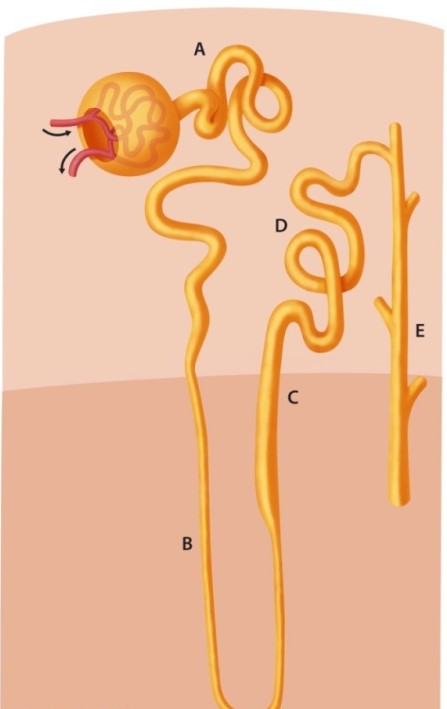
(Multiple Choice)
4.8/5 (83)
(83) A 56-year-old man with type 2 diabetes mellitus, hypertension, and chronic kidney disease is found to have a persistently elevated serum potassium level. He takes lisinopril. Blood pressure is 130/90 mm Hg. Physical examination shows no abnormalities. The patient is prescribed patiromer therapy. Which of the following best describes the mechanism of action of this medication?
(Multiple Choice)
4.9/5 (85)
(85) A 42-year-old woman is hospitalized due to fever and chills after a hemodialysis session. The patient has a history of end-stage kidney disease due to IgA nephropathy and recently began intermittent dialysis through a tunneled catheter. Medical history includes depression, for which she takes citalopram. Temperature is 38.4 C (101.1 F), blood pressure is 130/80 mm Hg, and pulse is 94/min. There is no erythema or tenderness at the catheter site, and the remainder of the physical examination shows no abnormalities. Blood cultures are obtained, and empiric vancomycin and ceftazidime are initiated. While receiving the intravenous vancomycin infusion, the patient reports a burning, itching sensation. Vital signs are unchanged, but repeat examination shows an erythematous rash involving the face and neck. She reports no history of drug allergy but has never received these antibiotics. Which of the following is the most likely underlying cause of this patient's current condition?
(Multiple Choice)
5.0/5 (84)
(84) 
Filters
- Essay(0)
- Multiple Choice(0)
- Short Answer(0)
- True False(0)
- Matching(0)