



 Chat with AI
Exam 12: Pharmacology

Exam 1: Anatomy291 Questions
Exam 2: Behavioral science240 Questions
Exam 3: Biochemistry156 Questions
Exam 4: Biostatistics117 Questions
Exam 5: Embryology52 Questions
Exam 6: Genetics103 Questions
Exam 7: Histology24 Questions
Exam 8: Immunology129 Questions
Exam 9: Microbiology336 Questions
Exam 10: Pathology816 Questions
Exam 11: Pathophysiology464 Questions
Exam 12: Pharmacology538 Questions
Exam 13: Physiology272 Questions
Select questions type


A 10-year-old boy with a history of mild, persistent asthma is brought to the office for follow-up. His asthma symptoms are controlled with an inhaled beta-agonist and inhaled glucocorticoid therapy. There is no family history of asthma, but both his parents and older brother have short stature. The patient's mother is concerned about the use of glucocorticoids because she read on the Internet that they cause growth retardation. The patient's glucocorticoid medication is stopped, and he is started on a trial of inhaled cromolyn. Which of the following is the most likely site of action of this new medication? 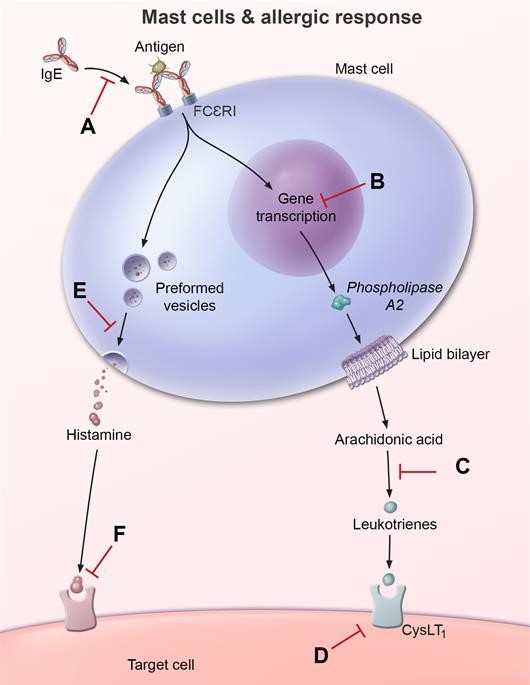
(Multiple Choice)
4.8/5  (75)
(75) A 50-year-old man is brought to the emergency department after developing blurred vision and confusion. Earlier today, he was clearing and burning foliage and weeds on his property. His medical history is insignificant, and he does not take any medications. The patient has no history of illicit drug use. Temperature is 38.9 C (102 F), blood pressure is 110/76 mm Hg, pulse is 120/min, and respirations are 16/min. He is disoriented to time, place, and person. Physical examination shows flushed skin and dry oral mucosa. Both pupils are dilated and nonreactive to light and accommodation. Bowel sounds are decreased. Which of the following drugs can potentially reverse this patient's condition?
(Multiple Choice)
4.8/5 (92)
(92) A 46-year-old man comes to the emergency department due to shortness of breath, cough, and fever. The patient began experiencing mild upper respiratory illness a week ago. He has a history of asthma and was using inhaled bronchodilators more frequently since the onset of respiratory illness. Over the past 2 days, he has had worsening breathlessness, productive cough, and high fever. The patient has no other medical conditions. Temperature is 38.9 C (102 F), blood pressure is 90/60 mm Hg, pulse is 120/min, and respirations are 28/min. On physical examination, the patient appears in severe respiratory distress with intercostal retractions. Lung auscultation reveals bilateral wheezing. Prompt endotracheal intubation for respiratory support is planned. Prior to endotracheal intubation, intravenous ketamine is administered for induction of anesthesia. Which of the following characteristics is the most likely reason for use of this anesthetic agent in this patient?
(Multiple Choice)
4.9/5 (82)
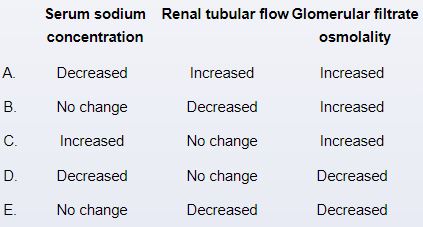
(82) A 62-year-old man is brought to the emergency department with a 1-hour history of sudden-onset severe headache and progressive lethargy. Medical history is significant for hypertension. Temperature is 37 C (98.6 F), blood pressure is 180/95 mm Hg, pulse is 60/min, and respirations are 10/min. On physical examination, the patient responds to painful stimuli only but does not move his left extremities to pain. The right pupil is larger than the left and is sluggish to react. CT scan of the head shows right basal ganglia hemorrhage causing compression of the right lateral ventricle and shift of the midline structures. Blood cell counts, serum chemistry studies, and coagulation profile are within normal limits. Endotracheal intubation is performed for airway protection, and an intravenous bolus of mannitol is administered. Which of the following is the most likely acute effect of the medication given to this patient?
(Multiple Choice)
4.9/5 (78)
(78) A 6-year-old asthmatic has the finding shown in the image below on routine examination. 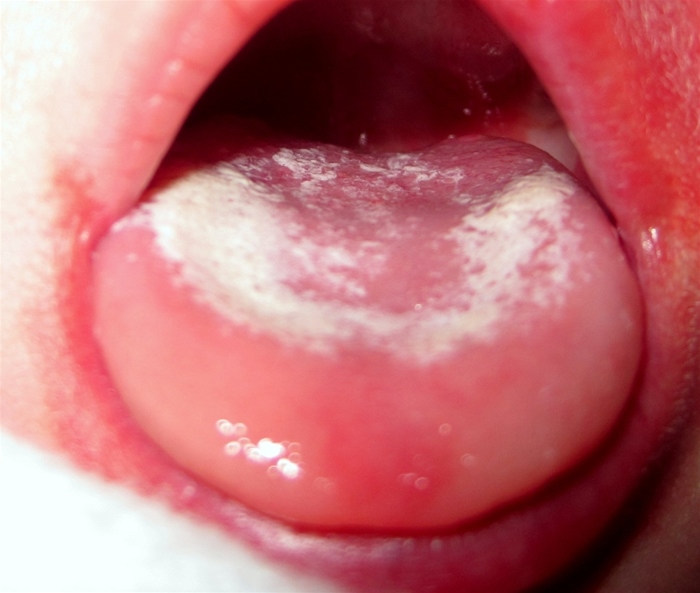 Which of the following is the most appropriate pharmacotherapy for the lesions on this patient's oral mucosa?
 (Multiple Choice)
4.9/5 (90)
(90) A 25-year-old man comes to the office due to shortness of breath. He states that even moderate exertion forces him to stop to catch his breath. The patient has no family history of sudden cardiac death. He does not use tobacco or illicit drugs. On examination, the patient has a faint systolic murmur at the left sternal border in the supine position that increases to 3/6 in intensity with Valsalva maneuver. Echocardiography shows interventricular septal hypertrophy and increased left ventricular mass. The patient is started on high-dose beta blocker therapy. On follow-up 2 weeks later, he reports significant improvement in his shortness of breath. Physical examination reveals no murmurs supine or with Valsalva. Which of the following best accounts for improvement of this patient's symptoms?
(Multiple Choice)
4.8/5 (81)
(81) A 65-year-old male is undergoing rehabilitation after a stroke. Ten days ago, he presented to the emergency department with abrupt onset of left upper and lower extremity weakness. He has a history of hypertension, hypercholesterolemia, gastroesophageal reflux disease and hypothyroidism. He does not use tobacco, alcohol or illicit drugs. His blood pressure is 140/90 mm Hg and pulse is 72/min. He has weakness and increased tone in the left upper and lower extremities. You prescribe diazepam to this patient in order to decrease muscle spasticity of involved extremities. This patient should primarily be cautioned to avoid which of the following drugs?
(Multiple Choice)
4.9/5 (76)
(76) A 63-year-old man with a history of chronic obstructive pulmonary disease comes to the physician for a follow-up visit. He uses a tiotropium inhaler daily and his pulmonary symptoms are sufficiently controlled. During a previous visit, he was counseled on the benefits of smoking cessation. He reports that despite trying he has been unable to stop smoking due to overwhelming cravings. The physician prescribes a drug that reduces nicotine cravings while decreasing the pleasurable effects of cigarettes and other tobacco products. Which of the following medications was most likely prescribed to the patient?
(Multiple Choice)
4.9/5 (83)
(83) A 30-year-old man comes to the emergency department due to a week of fever, chills, and generalized malaise. The patient uses intravenous heroin and has been hospitalized several times due to skin and soft tissue infections. Cardiac auscultation shows a systolic ejection murmur, and subsequent echocardiography reveals a vegetative lesion of the aortic valve. Blood cultures from admission grow Enterococcus faecalis; subsequent testing reveals D-lactate rather than D-alanine as the terminal amino acid in the bacteria's pentapeptide peptidoglycan cell wall precursor. This substitution is likely to significantly decrease the efficacy of which of the following antibiotics?
(Multiple Choice)
4.9/5 (89)
(89) A 27-year-old nulligravid woman comes to the office for a routine visit. Medical history is significant for epilepsy that is well controlled with valproate and chronic hypertension for which she takes nifedipine. She hopes to conceive in the next few months and plans to start prenatal vitamins soon. The patient takes no other medications and does not use tobacco, alcohol, or illicit drugs. Blood pressure is 120/80 mm Hg. Physical examination is normal. If the patient conceives now, her fetus is at increased risk for which of the following anomalies?
(Multiple Choice)
4.8/5 (79)
(79) A 63-year-old man comes to the emergency department because of 1 hour of sudden-onset chest pain. He developed the pain after eating dinner and did not have relief with antacids. His other medical problems include hypertension, hyperlipidemia, and type 2 diabetes mellitus. In the emergency department, his blood pressure is 100/60 mm Hg, pulse is 100/min, and respirations are 18/min. His EKG shows ST-segment depression in the inferior leads, and his cardiac serum troponin T is positive. The following anticoagulants are being considered for treatment: 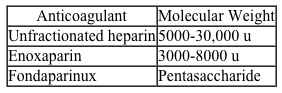 Which of the following anticoagulants is most effective in inactivating thrombin?
 (Multiple Choice)
4.8/5 (85)
(85) A researcher is conducting a retrospective study on breast cancer recurrence. Records of a number of patients with hormone receptor-positive, early-stage breast cancer who received adjuvant therapy with tamoxifen were evaluated. Various clinical, demographic, and drug concentration data were analyzed. A comparison of patients who had disease recurrence with those who remained cancer free showed that some of the relapsed patients had lower serum concentrations of endoxifen and 4-hydroxytamoxifen, the active metabolites of tamoxifen. Which of the following is the most likely cause of the drug's ineffectiveness in this subset of patients?
(Multiple Choice)
5.0/5 (79)
(79) A 7-year-old boy is evaluated for fatigue. For the last year, he has been avoiding any significant outdoor activities with his peers due to poor energy and shortness of breath. He also describes occasional pounding in the chest. Physical examination shows a holosystolic murmur best heard at the lower sternal border. Echocardiography reveals apical displacement of the tricuspid valve leaflets, decreased right ventricular volume, and atrialization of the right ventricle. Moderate to severe tricuspid regurgitation is also present. If this patient's diagnosis is due to a side effect of a drug taken during pregnancy, his biological mother most likely had which of the following conditions?
(Multiple Choice)
4.7/5 (85)
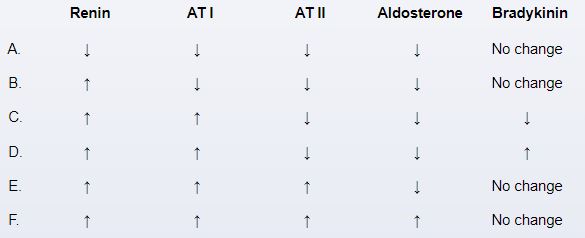
(85) A 44-year-old woman comes to the office for a follow-up appointment. Six months earlier, the patient was diagnosed with essential hypertension; she has followed dietary and exercise recommendations since then. At a follow-up visit 3 months ago, she reported episodic headaches due to migraines. Her blood pressure at that visit was 145/92 mm Hg. Antihypertensive therapy with a beta blocker was started due to its beneficial effect on migraine prophylaxis. Now, 3 months later, the patient's blood pressure has decreased to 120/80 mm Hg. She is compliant with her medication and has had no serious adverse effects. Which of the following is the most likely combination of changes in response to this patient's treatment (AT = Angiotensin)?
(Multiple Choice)
4.9/5 (96)
(96) A 36-year-old woman comes to the office for follow-up of a mood disorder. The patient has a history of several depressive episodes that started in her twenties. Two years ago, she was hospitalized after staying up for several nights without sleeping and claiming that she had special powers to "end global poverty and climate change." Her symptoms responded well to treatment and she has remained on the same drug regimen since then. However, the patient now has new-onset constipation, dry skin, and hair loss. She is also concerned about a weight gain of 2.27 kg (5 lb) over the last 3-4 months despite eating healthy, low-calorie foods. Blood pressure is 110/70 mm Hg and pulse is 55/min. The patient appears tired, but physical examination is otherwise normal. The diagnosis is established and her current condition is attributed to adverse effects from one of her medications. Which of the following is the most likely culprit drug?
(Multiple Choice)
4.8/5 (81)
(81) A 77-year-old woman is brought to the emergency department due to fever and confusion. The patient has a history of Alzheimer dementia and lives in a nursing home. Temperature is 38.4 C (101.1 F), blood pressure is 104/74 mm Hg, pulse is 110/min, and respirations are 18/min. Suprapubic tenderness is present on physical examination. Urinalysis shows numerous bacteria and leukocytes, and urine culture grows Pseudomonas aeruginosa. Further analysis reveals that the isolated organism produces an enzyme that is located on the cytoplasmic surface of the cell membrane and that catalyzes the transfer of acetyl groups to exogenous substances. The bacteria are most likely resistant to which of the following antibiotics?
(Multiple Choice)
4.9/5 (76)
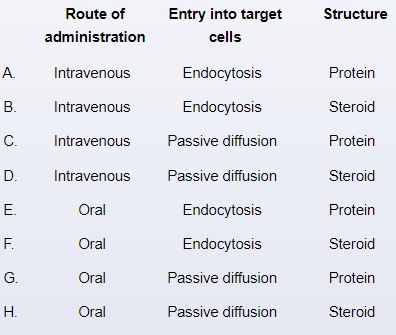
(76) An 8-year-old boy is brought to the office due to fatigue and intermittent bone pain for the past year. The patient's parents are concerned because he has stopped playing outside and mostly stays indoors watching television. On examination, height and weight are at the 5th percentile for age. The abdomen is soft and nontender with the liver palpable 4 cm below the right costal margin and the spleen palpable 8 cm below the left costal margin. Laboratory results show anemia and thrombocytopenia. A bone marrow biopsy shows macrophages with wrinkled, paperlike cytoplasm due to the accumulation of glycolipids within lysosomes. The patient is prescribed enzyme replacement therapy. Which of the following sets of pharmacologic properties best characterizes the administered medication?
(Multiple Choice)
4.8/5 (75)
(75) A 14-year-old Caucasian boy is brought to the physician by his mother due to chronic diarrhea and failure to gain weight appropriately. He has a history of recurrent respiratory infections, and prior sputum cultures have been positive for Pseudomonas aeruginosa. His younger brother died from a severe respiratory infection at age 9. Which of the following agents is most likely to improve this patient's condition in the long term?
(Multiple Choice)
4.7/5 (71)
(71) A 54-year-old man comes to the hospital due to 4 days of progressive nasal congestion, facial pain, swelling, and fever. The patient has taken over-the-counter decongestants, which provided no relief. He has a history of uncontrolled diabetes mellitus due to dietary and medication noncompliance. The patient's temperature is 38.3 C (101 F). Examination shows right facial swelling and purulent nasal discharge with necrotic destruction of the nasal mucosa and turbinates. The diagnosis of invasive mucormycosis is made, and surgical debridement is performed. He is started on an antifungal agent that binds to ergosterol and alters cell membrane permeability. Considering the adverse effects of this medication, which of the following should be routinely monitored in this patient?
(Multiple Choice)
4.8/5 (81)
(81) A 22-year-old man is brought to the office by his mother due to a change in behavior over the past year. Nine months ago, the patient abruptly decided to quit college in his last year and insisted on moving back home to "work on my research without being disturbed." Since then, he has stopped going out with friends, seems uninterested in his usual hobbies of playing and watching football, and spends hours on his computer researching government cover-ups. He stays up late at night, sleeps during the day, and showers only once a week. The patient has no motivation to look for work; his mother reports that when she encourages him to go back to school or work, he becomes agitated and starts accusing her of "being one of the black suits." Physical examination shows poor hygiene but is otherwise normal. Laboratory evaluation, including urine drug screen, is unremarkable. A medication with which of the following primary mechanisms of action is most appropriate for this patient's condition?
(Multiple Choice)
5.0/5 (82)
(82) 
Filters
- Essay(0)
- Multiple Choice(0)
- Short Answer(0)
- True False(0)
- Matching(0)