



 Chat with AI
Exam 12: Pharmacology

Exam 1: Anatomy291 Questions
Exam 2: Behavioral science240 Questions
Exam 3: Biochemistry156 Questions
Exam 4: Biostatistics117 Questions
Exam 5: Embryology52 Questions
Exam 6: Genetics103 Questions
Exam 7: Histology24 Questions
Exam 8: Immunology129 Questions
Exam 9: Microbiology336 Questions
Exam 10: Pathology816 Questions
Exam 11: Pathophysiology464 Questions
Exam 12: Pharmacology538 Questions
Exam 13: Physiology272 Questions
Select questions type


A 75-year-old man comes to the office due to 4 weeks of increased urinary hesitancy and progressive low back pain. Spinal imaging reveals multiple lesions suspicious for metastatic cancer. Biopsy of a bone lesion shows well-differentiated adenocarcinoma. Treatment with a medication that does which of the following would most likely reduce the spread of this patient's cancer?
(Multiple Choice)
4.9/5  (77)
(77) A 16-year-old girl is brought to the emergency department because of progressively increasing nausea, vomiting and right upper quadrant pain. She was initially seen in the emergency department 24 hours ago for nausea and vomiting but was discharged when her examination and laboratory studies were unremarkable. At today's visit, the patient reveals, "I am so upset. My boyfriend broke up with me and I have been taking a lot of pain medication to relieve my pain." Temperature is 37.1 C (98.8 F), blood pressure is 108/70 mm Hg, pulse is 102/min, and respirations are 16/min. Pulse oximetry is 98% on room air. On examination, scleral icterus and marked right upper quadrant tenderness are present. Pupils are normal in size and reactive to light. Neurologic examination shows no abnormalities. Laboratory results are as follows: 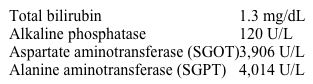 Which of the following is the most likely underlying mechanism of drug toxicity in this patient?
 (Multiple Choice)
4.9/5 (81)
(81) A 23-year-old man comes to the office due to chest discomfort that usually occurs during exercise, such as jogging or climbing stairs. The symptoms go away 5 to 10 minutes after he stops. The patient has not had syncope but mentions some shortness of breath that accompanies the chest pain. Family history includes an uncle who died suddenly at age 35. Blood pressure is 122/70 mm Hg and pulse is 70/min and regular. The apical impulse is strong and sustained. While supine, the patient has a soft crescendo-decrescendo systolic murmur at the apex and left sternal border; it becomes quite pronounced when he stands. Which of the following medications should be avoided while treating this patient's condition?
(Multiple Choice)
4.8/5 (79)
(79) A 61-year-old man comes to the office due to tingling of his hands and feet. He has a history of diffuse large B cell lymphoma and has received several cycles of systemic chemotherapy with a regimen that includes cyclophosphamide, doxorubicin, and vincristine. Neurologic examination is notable for a symmetric distal neuropathy in a "stocking and glove" distribution. His electrolytes and fasting blood glucose are normal. The drug responsible for this patient's neurologic symptoms causes cell cycle arrest during which of the following stages? 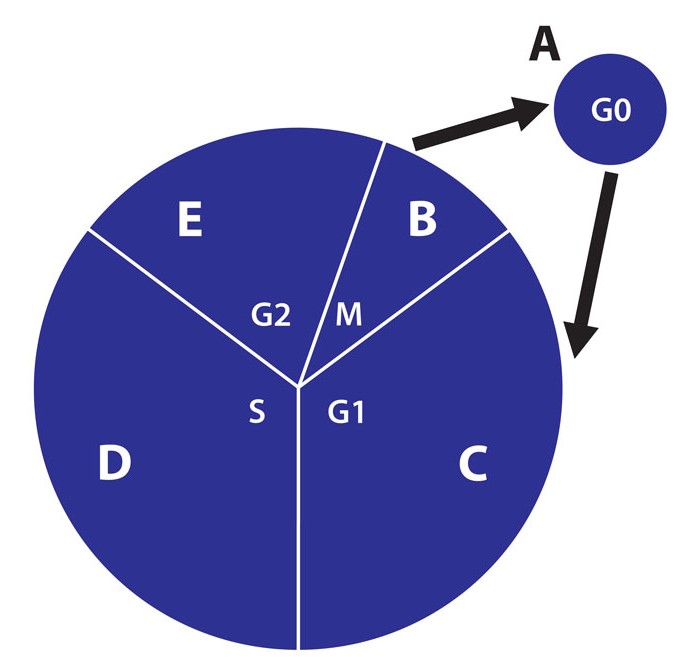
(Multiple Choice)
4.9/5 (77)
(77) A 64-year-old man comes to the office due to exertional chest pain over the last 6 months. He is a lifelong 1 pack per day cigarette smoker and has a history of type 2 diabetes mellitus and peripheral artery disease. The patient undergoes treadmill exercise stress testing and develops substernal chest pain on moderate exertion accompanied by ECG changes that resolve immediately upon rest. He refuses invasive cardiac testing. The patient is started on low-dose aspirin therapy for secondary prevention of cardiovascular disease but experiences shortness of breath and wheezing with the medication. Which of the following is the best alternate therapy for this patient?
(Multiple Choice)
4.7/5 (73)
(73) A 60-year-old Caucasian male is diagnosed with exertional angina. His treatment regimen includes metoprolol, isosorbide dinitrate and aspirin. He takes isosorbide dinitrate early in the morning and again in the afternoon, but he does not take an evening dose. Such a pattern of drug administration is intended to decrease which of the following?
(Multiple Choice)
4.8/5 (71)
(71) A 24-year-old previously healthy man is brought to the emergency department after a motor vehicle collision in which he sustained trauma to the left side of the chest and the abdomen. On arrival, the patient is hypotensive and tachycardic. Evaluation reveals left-sided rib fractures and hemoperitoneum due to splenic laceration. Urgent exploratory laparotomy under general anesthesia is planned. In the operating room, etomidate is administered for rapid sequence induction. Which of the following characteristics best describes etomidate as compared to propofol?
(Multiple Choice)
4.9/5 (79)
(79) A 42-year-old woman comes to the office due to a 2-month history of an intermittent burning sensation in her chest with an occasional simultaneous acidic taste at the back of her throat. The symptoms occur soon after she eats a meal. The patient has no shortness of breath, lightheadedness, nausea, vomiting, or weight loss. She has no other medical conditions. The patient has smoked a pack of cigarettes daily for the last 10 years but does not use alcohol. Family history is unremarkable. Vital signs are within normal limits. BMI is 32 kg/m2. Physical examination shows no abnormalities. Urine pregnancy test is negative. Smoking cessation is discussed, and a medication is prescribed for treatment of her symptoms. The patient returns in 2 weeks for a follow-up visit and reports near-complete resolution of her symptoms. Which of the following is the most likely mechanism of action of this drug?
(Multiple Choice)
4.8/5 (79)
(79) A 62-year-old man who underwent mitral valve replacement 1 month ago is being evaluated in the emergency department for low-grade fevers. He has some malaise and dyspnea. Multiple sets of blood cultures are drawn and, within hours, all bottles grow gram-positive cocci in clusters that are catalase-positive and coagulase-negative. The decision is made to begin empiric antibiotic therapy. Initial empiric treatment should include which of the following antibiotics?
(Multiple Choice)
4.8/5 (71)
(71) A phase II trial is being conducted at an academic medical center to assess the safety and efficacy of a novel antifungal medication that has yielded promising results in preclinical studies. The medication is known to inhibit fungal colony growth by changing the composition of the fungal cell membrane. Phase 0 and phase I trials on healthy volunteers have been uneventful. The current phase II trial includes 175 subjects. In 168 subjects, the new antifungal agent is found to inhibit liver cytochrome P450-dependent metabolism of several drugs. Based on these data, the new antifungal agent is most similar to which of the following?
(Multiple Choice)
4.7/5 (79)
(79) A 17-year-old girl with a history of depression is brought to the emergency department after attempting suicide. Her parents report that she consumed 2 bottles of insecticide after having an argument with her sister approximately 2 hours prior to presentation. The patient's symptoms include nausea, vomiting, abdominal pain, and copious watery diarrhea. She has a known history of self-cutting and suicidal ideations but no prior suicide attempts. Blood pressure is 86/42 mm Hg and pulse is 120/min. Her breath has a faint garlic odor, and she has numerous healing linear scars on her forearms. Which of the following medications should be administered immediately?
(Multiple Choice)
4.8/5 (85)
(85) A 24-year-old man is brought to the emergency department due to weakness, lethargy, nausea, and dizziness. He took fifty 325-mg acetaminophen tablets approximately 6 hours ago. Vital signs are normal. Pupils are equal, round, and reactive to light; there is mild epigastric tenderness. Laboratory results include an elevated serum acetaminophen level. Intravenous infusion of N-acetylcysteine is started. This treatment is most likely to improve the patient's condition by which of the following mechanisms?
(Multiple Choice)
4.9/5 (84)
(84) A 63-year-old man comes to the office due to blurred vision in both eyes for the last 2 days. The blurriness is worse when he reads but is not noticeable when he drives. The patient has no associated headache, double vision, or weakness. However, he did start taking diphenhydramine several days ago for seasonal allergies. Past medical history is unremarkable. Vital signs are normal. On physical examination, there is edema and clear drainage affecting the nasal mucosa. Funduscopic examination is normal. This patient's visual symptoms are most likely due to blockade of which of the following mediators?
(Multiple Choice)
4.9/5 (75)
(75) A 44-year-old woman comes to the office due to fatigue, nausea, and weight loss for the last 3-4 months. She also has noticed her freckles becoming darker and reports frequent dizziness upon standing. Temperature is 36.8 C (98.2 F), blood pressure is 120/80 mm Hg when sitting and 95/65 mm Hg when standing, and pulse is 77/min. Hyperpigmentation of the vermillion border of the lips is noted. The remainder of the physical examination is unremarkable. Comprehensive diagnostic workup reveals a diagnosis of idiopathic primary adrenal insufficiency. The patient is started on hydrocortisone and fludrocortisone. Fludrocortisone is most likely to cause which of the following effects in this patient?
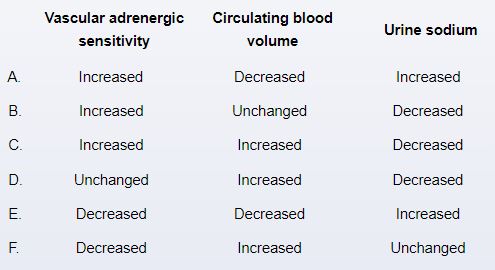
(Multiple Choice)
4.9/5 (73)
(73) A 63-year-old man comes to the office for a follow-up visit. Two months ago, he was hospitalized for chest pain and was found to have a blockage in the left anterior descending artery. He had percutaneous coronary intervention with placement of a drug-eluting stent, and was discharged on appropriate medical therapy. His other medical problems include hypertension, type 2 diabetes mellitus, and degenerative joint disease. The patient has been taking all his medications as prescribed. He has no chest pain but does have diffuse muscle aches and cramps, especially after exercise. Physical examination is unremarkable. Laboratory testing reveals elevated serum creatine kinase. The medication most likely responsible for this patient's current findings also causes which of the following effects?
(Multiple Choice)
5.0/5 (66)
(66) A 69-year-old man comes to the office due to a 6-month history of chest tightness when he walks uphill or climbs stairs. The discomfort radiates to his throat and lasts 5-10 minutes before slowly subsiding. Medical history is significant for hyperlipidemia and type 2 diabetes mellitus. His father had coronary artery bypass surgery at age 60 and his mother suffered a stroke. Vital signs are normal. Cardiac examination reveals no murmurs or additional heart sounds. The patient is prescribed a medication that is metabolized to S-nitrosothiols in the vascular smooth muscle cells, and he reports rapid and significant symptom relief. Which of the following components of the cardiovascular system is most susceptible to the medication prescribed to this patient?
(Multiple Choice)
4.8/5 (64)
(64) Three alpha-agonist drugs are tested as potential vasoconstrictors. The degree of vasoconstriction is determined by measuring the cross-sectional area of an isolated vessel after application of the drug. The following curves are obtained: 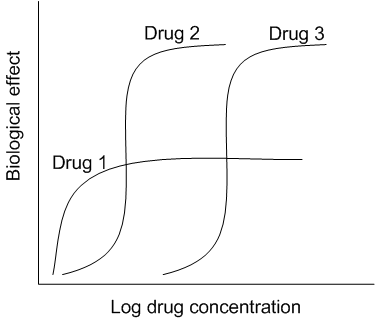 Which of the following is the best statement concerning the effects of these drugs?
 (Multiple Choice)
4.8/5 (75)
(75) A 60-year-old man comes to the office for follow-up of type 2 diabetes mellitus. His current treatment regimen includes metformin and a once-daily injection of a long-acting subcutaneous insulin. The patient is adherent with the treatment and has a healthy lifestyle. Review of his home glucose measurements shows that his postprandial glucose levels are frequently elevated; however, fasting levels are normal. He has no other medical conditions and does not use tobacco, alcohol, or illicit drugs. Vital signs are within normal limits. Physical examination shows no abnormalities. Laboratory testing reveals hemoglobin A1c is 8.3%. Additional insulin therapy 3 times a day before each meal is planned to improve glycemic control. Which of the following types of insulin would be most appropriate for the additional therapy?
(Multiple Choice)
4.9/5 (77)
(77) A 6-day-old boy in the neonatal intensive care unit has a heart murmur. The patient was born at 27 weeks gestation and intubated due to surfactant deficiency. Birth weight was 1.14 kg (2 lb 8 oz). Temperature is 37 C (98.6 F), blood pressure is 66/12 mm Hg, and pulse is 182/min. A continuous murmur with systolic accentuation is best heard at the left heart border. There are bounding femoral and palmar pulses. Abdominal examination is unremarkable. Blood culture is sterile. Elevated levels of which of the following substances is most likely contributing to this patient's condition?
(Multiple Choice)
4.9/5 (95)
(95) An 18-year-old woman comes to the clinic due to intermittent dry cough, wheezing, and shortness of breath. She recently began practicing twice a day for her college track team and has been experiencing these symptoms with running. Her symptoms have been limiting her ability to complete practice but usually resolve after several minutes of rest. Medical history includes childhood asthma that has not required treatment for the past 5 years. The patient is prescribed a medication that reduces bronchoconstriction by inhibiting the interaction of inflammatory mediators with cell surface receptors. Which of the following drugs was most likely used in this patient?
(Multiple Choice)
4.7/5 (82)
(82) 
Filters
- Essay(0)
- Multiple Choice(0)
- Short Answer(0)
- True False(0)
- Matching(0)