



 Chat with AI
Exam 11: Pathophysiology

Exam 1: Anatomy291 Questions
Exam 2: Behavioral science240 Questions
Exam 3: Biochemistry156 Questions
Exam 4: Biostatistics117 Questions
Exam 5: Embryology52 Questions
Exam 6: Genetics103 Questions
Exam 7: Histology24 Questions
Exam 8: Immunology129 Questions
Exam 9: Microbiology336 Questions
Exam 10: Pathology816 Questions
Exam 11: Pathophysiology464 Questions
Exam 12: Pharmacology538 Questions
Exam 13: Physiology272 Questions
Select questions type


A 32-year-old woman comes to the office due to worsening fatigue and exercise intolerance. She has no history of blood disorders. Physical examination shows mild mucosal pallor. Hemoglobin is 7.8 g/dL. Peripheral blood smear is shown in the image below. 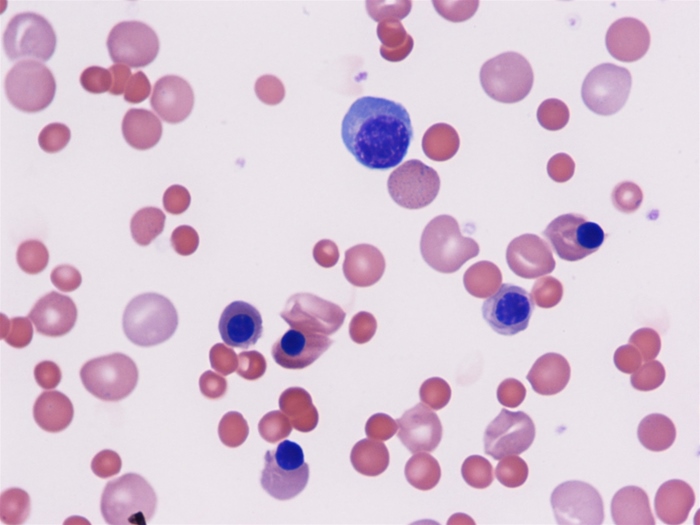 Which of the following is the most likely cause of this patient's anemia?
 (Multiple Choice)
5.0/5  (88)
(88) A 40-year-old woman is evaluated for intermittent headaches, insomnia, diaphoresis, and unintentional weight loss over the past several months. The patient has no other medical problems and takes no medications. She does not use tobacco, alcohol, or illicit drugs and has no significant family history. The patient is found to have a neoplastic mass producing excessive amounts of hormones that are causing her symptoms. Surgical resection of the abnormal tissue is performed with no operative complications. Microscopic examination of the tumor cells shows electron-dense, membrane-bound secretory granules. Immunohistochemistry is positive for synaptophysin, chromogranin, and neuron-specific enolase. The abnormal tissue most likely originated from which of the following?
(Multiple Choice)
4.7/5 (74)
(74) A 22-year-old man is undergoing surgical repair of an inguinal hernia. Anesthesia is induced and an endotracheal tube is placed. He then develops severe spasm of the masseter muscles, and there is a dramatic increase in expired carbon dioxide measured from the endotracheal tube. His core body temperature begins to increase and is now 38.9 C (102 F). Which of the following is the most likely underlying mechanism leading to elevated body temperature in this patient?
(Multiple Choice)
4.9/5 (78)
(78) A 13-year-old girl is brought to the clinic by her mother for a yearly physical examination. The patient feels well but is worried that she has not yet started puberty. Temperature is 36.7 C (98 F), blood pressure is 152/91 mm Hg, pulse is 75/min, and respirations are 18/min. Physical examination is significant for a lack of secondary sexual characteristics; a blind vagina is noted on pelvic examination. Laboratory studies reveal hypokalemia and low testosterone and estradiol levels. Cytogenetic analysis shows a 46,XY karyotype. This patient most likely has deficiency of which of the following enzymes?
(Multiple Choice)
4.7/5 (84)
(84) A newborn is evaluated for cyanosis immediately after birth. On examination, oxygen saturation is 70% in all 4 extremities and does not change despite 100% oxygen administration. The patient's lungs are clear to auscultation, and there are no heart murmurs or gallops. Peripheral pulses are normal. A chest radiograph reveals clear lungs and a normal cardiac silhouette but a narrowed mediastinal shadow. Which of the following is the most likely cause of cyanosis in this patient?
(Multiple Choice)
4.9/5 (83)
(83) A 48-year-old woman comes to the office for follow-up of primary hypothyroidism due to chronic autoimmune (Hashimoto) thyroiditis. She feels well and has no palpitations, heat/cold intolerance, diarrhea/constipation, or changes in weight. The patient takes levothyroxine daily on an empty stomach. She has no other medical conditions and takes no other medications. The patient has no drug allergies and does not use tobacco, alcohol, or illicit drugs. Blood pressure is 120/70 mm Hg and pulse is 72/min. BMI is 27 kg/m2. On physical examination, the thyroid is normal to palpation. There is no peripheral edema. Laboratory results show a serum TSH level of <0.01 µU/mL. Maintaining the current dose of levothyroxine would put this patient at the greatest risk for which of the following complications?
(Multiple Choice)
4.8/5 (76)
(76) A 72-year-old man comes to the clinic due to episodic lightheadedness. The episodes typically occur in the morning when the patient adjusts his shirt collar or tightens his tie and he briefly feels like he is going to pass out. The patient had a thyroidectomy 5 years ago for a large benign tumor. He also has hypertension and takes amlodipine. Blood pressure is 135/78 mm Hg and pulse is 78/min. Physical examination reveals no heart murmurs or carotid bruits. ECG shows normal sinus rhythm. The patient is given an ambulatory ECG monitoring device. During symptomatic episodes, the device is most likely to show which of the following?
(Multiple Choice)
4.9/5 (86)
(86) A 63-year-old man undergoes a sleep study, during which he is closely observed for a full night. Several physiologic parameters, such as oxygen saturation, heart rhythm, cerebral electrical activity, respiratory airflow, and movements of the chest and upper abdominal walls, are continuously recorded. The following graph depicts a recording obtained over a period of several minutes: 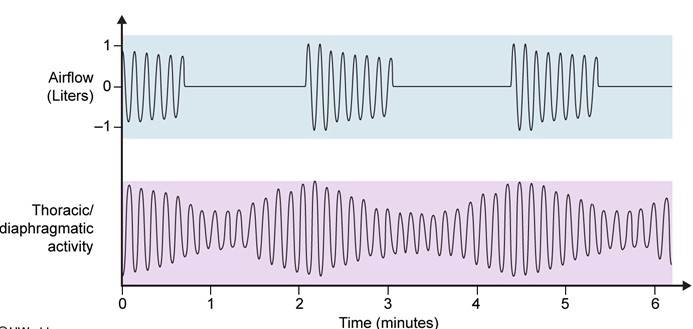 Which of the following is the most likely cause of the observed findings?
 (Multiple Choice)
4.8/5 (64)
(64) A 21-year-old man comes to the office due to recurrent heart palpitations that start and stop abruptly. After initial workup, the physician suspects that there is an abnormal conduction pathway in this patient's heart that bypasses the atrioventricular node. Assuming the diagnosis is correct, which part of the patient's ECG is most likely to be affected during normal sinus rhythm? 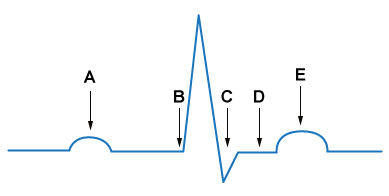
(Multiple Choice)
4.7/5 (76)
(76) A group of researchers is studying population-based screening interventions to reduce mortality from abdominal aortic aneurysm. This disorder develops primarily in elderly patients and is often asymptomatic until an acute rupture event, which is frequently fatal. Screening of high-risk patients for abdominal aortic aneurysm is found to reduce mortality. Which of the following risk factor combinations would likely define the highest-risk group for screening purposes?
(Multiple Choice)
5.0/5 (74)
(74) Biochemists identify a mutation affecting the trypsinogen molecule that disrupts a critical site on the protein involved in inhibiting the active trypsin moiety. This mutation prevents trypsin from being permanently inactivated by enzymatic cleavage. Patients with this mutation would most likely suffer from which of the following conditions?
(Multiple Choice)
4.8/5 (92)
(92) A 64-year-old man comes to the office due to acute-onset right upper quadrant abdominal pain, nausea, and vomiting. The patient had an extensive small bowel resection due to bowel ischemia a year ago and has been receiving total parenteral nutrition since then. His other medical problems include atrial fibrillation and hypertension. Examination shows right upper quadrant tenderness on deep palpation. Initial laboratory studies show moderate leukocytosis with normal hepatic transaminase, amylase, and lipase levels. Abdominal ultrasonography reveals gallstones and edema of the gallbladder wall. Review of prior records indicates that he had no gallstones noted on abdominal imaging performed prior to the bowel resection. Which of the following is most likely responsible for the development of gallstones in this patient?
(Multiple Choice)
4.7/5 (79)
(79) A 58-year-old man is hospitalized due to sudden onset of chest pain. Blood pressure is 160/110 mm Hg and pulse is 90/min. BMI is 26.9 kg/m2. A baseline ECG shows nonspecific ST-segment and T-wave abnormalities, and serial troponin measurements are normal. The patient's fasting plasma glucose level is 160 mg/dL, although he has not been diagnosed previously with diabetes mellitus. Serum triglyceride level is elevated, and the HDL level is low. Which of the following additional findings would be most suggestive of increased insulin resistance in this patient?
(Multiple Choice)
4.8/5 (88)
(88) A 26-year-old woman, gravida 1 para 0, at 36 weeks gestation comes to the office for a routine prenatal visit. She has had no headaches, changes in vision, or right upper quadrant pain. Fetal movement is normal. The patient has no chronic medical conditions, and her pregnancy has been uncomplicated. Blood pressure today is 150/100 mm Hg, and a repeat measurement is 154/102 mm Hg. All other vital signs are normal. Urinalysis shows 2+ protein. This patient's condition is most likely due to decreased activity of which of the following?
(Multiple Choice)
4.8/5 (77)
(77) A 55-year-old man comes to the office for evaluation of chronic muscle weakness. Over the past several months, he has had increasing difficulty walking up stairs and lately has had trouble removing objects out of the overhead cabinets in his kitchen. Temperature is 36.7 C (98 F), blood pressure is 125/80 mm Hg, and pulse is 78/min. On examination, the patient has symmetric proximal muscle weakness and mild muscle tenderness. There is no rash. Muscle biopsy reveals an endomysial mononuclear infiltrate and patchy muscle fiber necrosis. An autoantibody directed against which of the following antigens is most likely to be seen in this patient?
(Multiple Choice)
4.9/5 (71)
(71) A 63-year-old woman comes to the office due to slowly progressive dyspnea on exertion and cough productive of white-yellow sputum over the past several years. She has a history of rheumatoid arthritis and seasonal allergies. The patient has smoked a pack of cigarettes daily for 40 years. Blood pressure is 135/80 mm Hg and pulse is 76/min. Lung examination demonstrates mild, bilateral expiratory wheezes, and chest x-ray reveals hyperinflated lungs. Pulmonary function test results are as follows:  Which of the following cells most likely played a major role in the pathogenesis of this patient's lung condition?
 (Multiple Choice)
4.7/5 (84)
(84) A 33-year-old woman comes to the office due to swelling affecting her extremities. Over the last 12 months her fingers, arms, and legs have become progressively swollen and somewhat itchy. Physical examination shows diffuse skin thickening extending proximally to the arms, thighs, and trunk. A skin biopsy is performed. Histologic sections show expansion of the dermal layer with atrophy of the intradermal adipose tissue and dermal appendages. High-power images of the dermis demonstrate extensive deposition of dense, eosinophilic connective tissue. This patient is most at risk for which of the following conditions?
(Multiple Choice)
5.0/5 (80)
(80) A 2-year-old child is brought to his pediatrician because of failure to thrive and polyuria. He is found to have glucosuria on urinalysis, although his serum glucose is within normal limits. What renal defect is responsible for his condition?
(Multiple Choice)
4.9/5 (82)
(82) A 7-year-old girl is brought to the clinic due to nasal congestion with facial pain. The patient first developed congestion over a year ago. Her parents have been treating it with over-the-counter allergy medications, but there has been no improvement. Over the past 4 months, the congestion has worsened, and now the patient has difficulty breathing through her nose. She also developed a dry cough and a constant, dull pain over her cheeks. The patient's stools have been loose. Temperature is 37.8 C (100 F). Weight is at <1st percentile at 18 kg (39.7 lb), decreased from 19 kg (41.9 lb) 3 months ago. Examination reveals copious yellow mucus within both nares. Translucent, gray, shiny masses obscure the middle turbinates bilaterally. Lymphadenopathy is not present. The lungs have coarse breath sounds bilaterally. The abdomen is soft with no organomegaly. Which of the following is the most likely diagnosis?
(Multiple Choice)
4.8/5 (76)
(76) A 65-year-old woman comes to the office due to intermittent leakage of urine. For the past 3 months, the patient has had to change her undergarments multiple times a day due to urine leakage. She voids 4 or 5 times during the day and occasionally wakes up at night to void. The patient has type 2 diabetes mellitus and was recently diagnosed with chronic obstructive pulmonary disease after evaluation for a chronic cough. Her only surgeries were 2 cesarean deliveries in her 20s. BMI is 30 kg/m2. Pelvic examination shows leakage of urine from the urethra during the Valsalva maneuver. Postvoid residual volume and urinalysis are normal. Which of the following is the most likely cause of this patient's clinical presentation?
(Multiple Choice)
4.8/5 (82)
(82) 
Filters
- Essay(0)
- Multiple Choice(0)
- Short Answer(0)
- True False(0)
- Matching(0)