



 Chat with AI
Exam 11: Pathophysiology

Exam 1: Anatomy291 Questions
Exam 2: Behavioral science240 Questions
Exam 3: Biochemistry156 Questions
Exam 4: Biostatistics117 Questions
Exam 5: Embryology52 Questions
Exam 6: Genetics103 Questions
Exam 7: Histology24 Questions
Exam 8: Immunology129 Questions
Exam 9: Microbiology336 Questions
Exam 10: Pathology816 Questions
Exam 11: Pathophysiology464 Questions
Exam 12: Pharmacology538 Questions
Exam 13: Physiology272 Questions
Select questions type


A 7-year-old girl is brought to the emergency department due to 2 days of fever, productive cough, and shortness of breath. Medical history is significant for recurrent lung infections and cystic fibrosis. Weight is at the 5th percentile. Temperature is 38.1 C (100.6 F), pulse is 104/min, and respirations are 30/min. Pulse oximetry is 86% on room air. Examination shows a thin girl with digital clubbing and a hyperexpanded chest. Diffuse wheezes and crackles are present bilaterally. The rest of the examination is unremarkable. Chest x-ray reveals hyperinflation, chronic interstitial changes, and an infiltrate in the right lower lobe. Gram stain of sputum shows gram-negative rods. Which of the following is the most likely cause of this patient's recurrent infections?
(Multiple Choice)
4.8/5  (90)
(90) A 49-year-old woman comes to the emergency department with a 2-day history of fever, dysuria, and flank pain. The patient has a history of poorly controlled type 2 diabetes mellitus. Temperature is 38.3 C (101 F), blood pressure is 80/44 mm Hg, pulse is 134/min, and respirations are 34/min. On physical examination, the patient appears lethargic, flushed, and diaphoretic. Neck veins are flat. The lungs are clear on auscultation and heart sounds are normal. There is right-sided costovertebral tenderness. Which of the following hemodynamic parameters are most likely to be present in this patient?
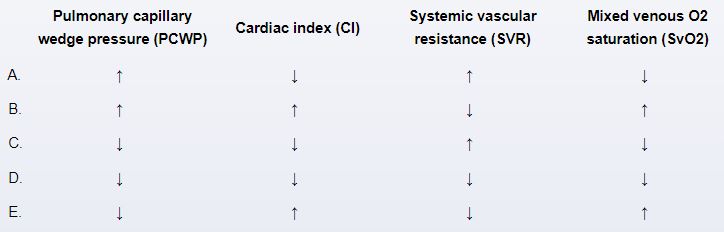
(Multiple Choice)
4.8/5 (87)
(87) A 37-year-old woman comes to the office due to right-sided abdominal discomfort that has been getting progressively worse over the past few weeks. She has not had any nausea or vomiting. The patient's family moved to the United States from rural Kazakhstan when she was a child. The patient has no drug allergies. She does not use tobacco or alcohol. She has a dog at home. Temperature is 36.7 C (98.1 F). Physical examination is notable for hepatomegaly. Ultrasound reveals a large liver mass with cystic lesions. During surgery to resect the mass, the patient suffers from a procedural complication and dies. At the family's request, an autopsy is performed. A cut section of a portion of the mass is shown in the image below. 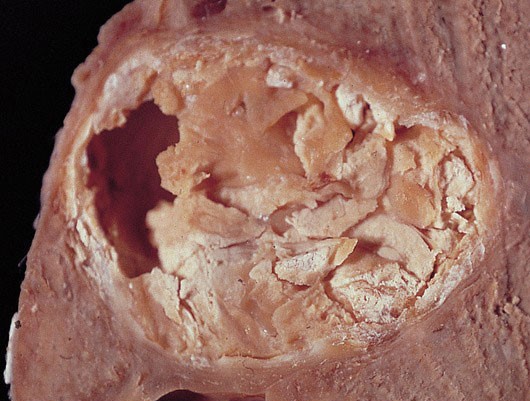 Which of the following is the most likely cause of this patient's death?
 (Multiple Choice)
4.7/5 (72)
(72) A 74-year-old man comes to the office due to several months of choking spells, dysphagia, and cough. He has also had recurrent episodes of pneumonia. His other medical problems include hypertension and osteoarthritis. Blood pressure is 130/70 mm Hg. The patient has foul-smelling breath, but his oropharyngeal and neck examinations are normal. Cardiopulmonary examination is also normal. A barium swallow study is performed and reveals an abnormality in the upper esophagus, as shown in the image below. 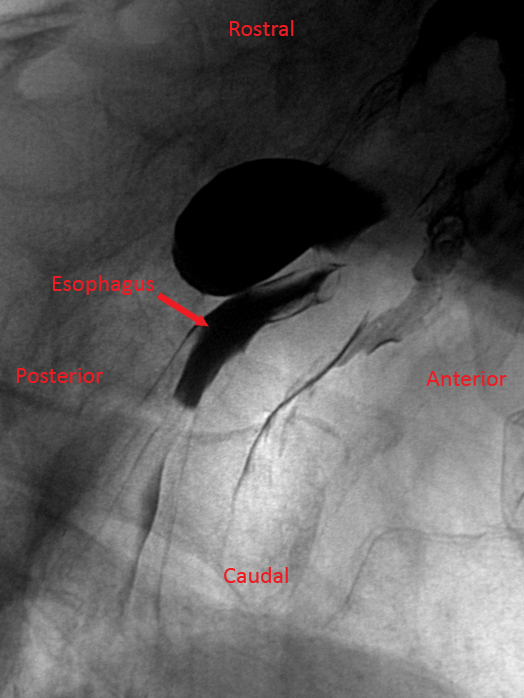 Which of the following mechanisms is the most likely cause of his symptoms?
 (Multiple Choice)
4.9/5 (84)
(84) A 34-year-old man comes to the office due to shortness of breath. He reports an episodic cough and chest tightness for the past 4 months. The patient was recently on a 2-week vacation in Arizona and reports that he had no symptoms during the trip but that they restarted when he returned home. He has no prior medical conditions and takes no medications. The patient smoked marijuana in his early 20s for several years but does not use tobacco or alcohol. He started working at a chemical manufacturing factory 7 months ago and has had no sick contacts. Temperature is 36.7 C (98 F), blood pressure is 120/80 mm Hg, pulse is 76/min, and respirations are 18/min. On physical examination, expiration is mildly prolonged and there are scattered wheezes. Office spirometry shows an FEV1/FVC of 82%, and chest radiography reveals no abnormalities. Which of the following features is most likely involved in the pathogenesis of this patient's condition?
(Multiple Choice)
4.9/5 (71)
(71) Cardiac catheterization is performed on a 7-year-old boy. The image below shows the pattern of oxygen saturation in the patient's cardiac chambers and outflow tracts (structural abnormalities are not shown). 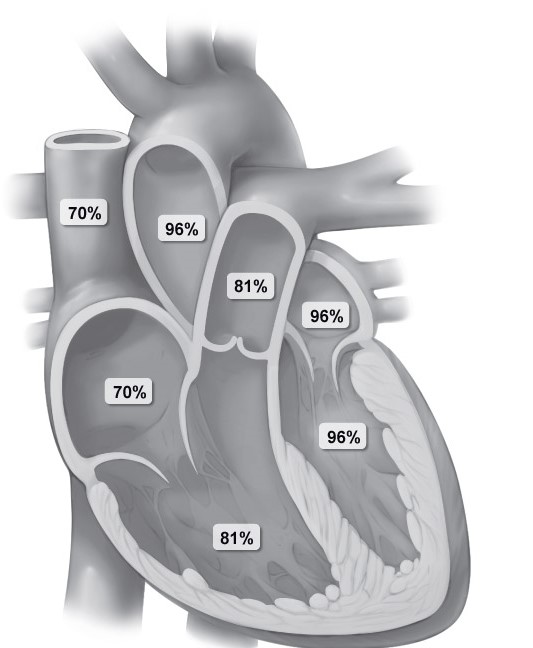 This patient most likely has which of the following findings on physical examination?
 (Multiple Choice)
4.9/5 (79)
(79) A 34-year-old woman comes to the office due to a 1-year history of pain and swelling in her wrists and hands. The patient has no other medical conditions and takes no medications. Vital signs are normal. No wrinkles are noted on the face and neck. A photograph of her left hand is shown in the exhibit.
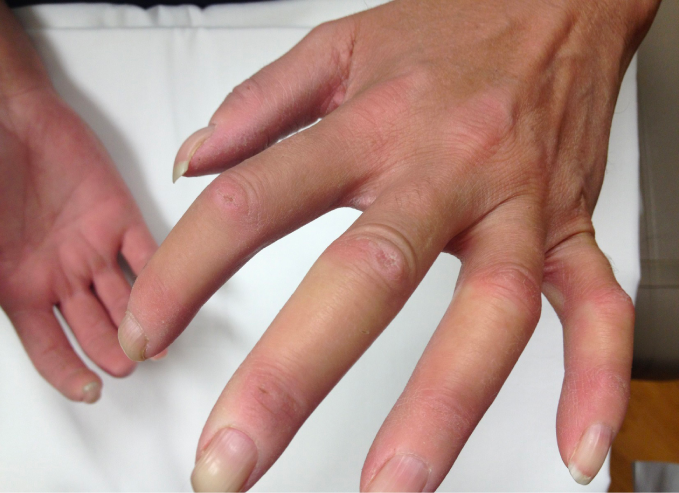 Interplay among which of the following cells is most likely responsible for this patient's condition?
 (Multiple Choice)
4.8/5 (75)
(75) A 60-year-old woman comes to the emergency department due to shortness of breath and productive cough. The patient has a 30-pack-year smoking history. Oxygen saturation is 88% on room air. On physical examination, she appears uncomfortable and uses her accessory respiratory muscles to breathe. Expiratory wheezes are heard throughout the lungs. The patient is started on high-flow oxygen supplementation. Shortly afterward, she becomes increasingly lethargic and confused. This patient's clinical decline is most likely attributable to an increase in which of the following parameters?
(Multiple Choice)
4.7/5 (97)
(97) A 65-year-old woman with chronic obstructive pulmonary disease comes to the office for a follow-up appointment. The patient reports increasing shortness of breath that is not relieved by her inhalers. Her other medical conditions include osteoarthritis. She is a former smoker with a 45-pack-year history. Blood pressure is 120/70 mm Hg, pulse is 75/min, and respirations are 22/min. Oxygen saturation on room air is 91% at rest. On physical examination, jugular venous pressure is elevated. There is increased intensity of the pulmonic component of S2. Breath sounds are decreased bilaterally with scattered wheezes but no crackles. There is 2+ lower extremity edema. Which of the following hemodynamic parameters is most likely to be increased in this patient?
(Multiple Choice)
4.9/5 (87)
(87) A 32-year-old woman, gravida 2 para 1, has a spontaneous vaginal delivery. Immediately after delivery of the placenta, the patient has a large amount of vaginal bleeding with passage of fist-sized clots, findings consistent with postpartum hemorrhage. A dose of tranexamic acid is administered. Which of the following is the most likely mechanism of action of this drug?
(Multiple Choice)
4.9/5 (85)
(85) A 38-year-old woman comes to the emergency department due to an acute episode of heavy menstrual bleeding. The patient has a history of menorrhagia, with monthly cycles lasting 7-10 days and brisk blood flow with the passage of large clots. Pelvic examination reveals an enlarged fibroid uterus, and she is found to have significant anemia due to blood loss. The patient is prescribed continuous leuprolide therapy. After several weeks, which of the following sustained hormonal changes are expected to have occurred as a result of the treatment?
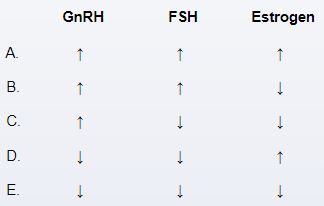
(Multiple Choice)
4.8/5 (88)
(88) A 73-year-old man is evaluated for exertional dyspnea. His exercise tolerance has decreased over the last year, and he can barely walk 2-3 blocks without stopping. The patient also reports occasional episodes of lightheadedness and palpitations. He has had no chest pain or syncope. He was diagnosed with hypertension in the past but does not take any medications. Physical examination reveals a cardiac murmur. The patient is referred to a cardiologist for further evaluation. Cardiac catheterization is performed, and the findings are shown in the image below. Which of the following points most likely corresponds to the peak murmur intensity in this patient? 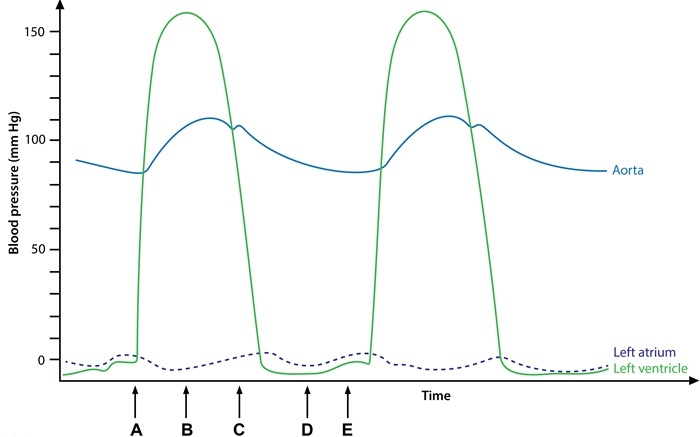
(Multiple Choice)
4.7/5 (84)
(84) A 4-year-old boy is evaluated due to 4 days of fever and leg pain. Medical history includes recurrent skin abscesses and lymphadenitis. A maternal uncle died of recurrent infections during childhood. The patient is at the 10th percentile for height and weight. Temperature is 38.3 C (100.9 F). Examination shows an ill-appearing patient with point tenderness over the right lower tibia. There are healed incisions over the thighs and neck from prior drainage sites. Imaging reveals evidence of tibial osteomyelitis. Blood and bone cultures grow Serratia marcescens. Evaluation of the patient's neutrophils by dihydrorhodamine flow cytometry shows an absence of fluorescence. This patient's condition is most likely due to impaired activity of which of the following enzymes?
(Multiple Choice)
4.8/5 (81)
(81) A 45-year-old man comes to the office for evaluation of fatigue that has been gradually increasing over the past 4 months. The patient has had difficulty keeping up with the labor involved with his job as a construction worker. Over the past 2 weeks, he has been unable to climb past the second floor of the building his company is renovating. The patient also has increasing shortness of breath with minor activities, such as lifting his toolbox out of the car. Review of systems reveals constipation and decreased concentration. Physical examination shows an overweight male with conjunctival pallor who has difficulty getting onto the examination table due to shortness of breath. Laboratory test results are as follows: 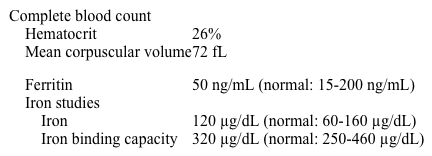 Which of the following findings would most likely be seen on this patient's peripheral blood smear?
 (Multiple Choice)
4.8/5 (76)
(76) A 34-year-old woman is brought to the emergency department due to chest pain. The patient reports that she went to bed feeling well and woke up in the middle of the night with severe, crushing chest pain that radiated to her left arm. She has had similar episodes over the past year that typically occur in early morning and spontaneously resolve after several minutes. The patient has a history of occasional migraine that responds to acetaminophen. She does not use tobacco, alcohol, or illicit drugs. Blood pressure is 150/100 mm Hg, pulse is 110/min, and respirations are 14/min. On physical examination, the patient appears distressed and is diaphoretic. ECG reveals ST-segment elevations in leads I, aVL, and V4-V6. The patient is given nitroglycerin, which improves her symptoms. Percutaneous coronary angiography is performed, and no obstructive lesions are observed. Which of the following is most likely to be involved in the pathogenesis of this patient's chest pain?
(Multiple Choice)
4.8/5 (88)
(88) A 55-year-old woman comes to the office due to vaginal bleeding. The patient underwent menopause at age 49 but has had intermittent, light vaginal bleeding for the last 6 months. She has no pelvic pain and otherwise feels well. The patient has type 2 diabetes mellitus, which is managed with diet and exercise. Vital signs are normal. BMI is 38 kg/m2. Speculum examination shows dark red blood at the cervical os. On bimanual examination, the uterus is small and nontender and there are no palpable adnexal masses. Which of the following is the most likely underlying cause of this patient's symptoms?
(Multiple Choice)
4.9/5 (79)
(79) An 8-hour-old boy is being assessed for a murmur in the newborn nursery. The patient was born at 37 weeks via cesarean delivery. Apgar scores were 7 and 8 at 1 and 5 minutes, respectively. He was noted to have a harsh ejection systolic murmur of 4/6 intensity during initial newborn examination. Brachial and femoral pulses are 2+ with no delay. While the patient is breastfeeding for the first time, his face, lips, hands, and feet become cyanotic. The murmur cannot be heard during the cyanotic episode. Which of the following oxygen saturation percentages are most likely present during the cyanotic episode?
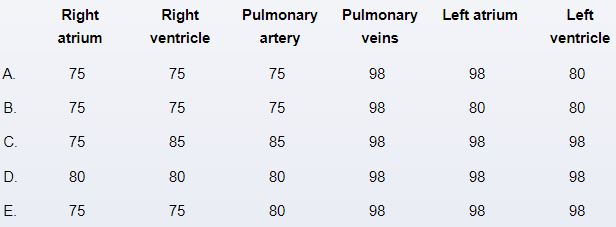
(Multiple Choice)
4.8/5 (71)
(71) A 41-year-old woman comes to the office due to a 6-month history of increasingly severe fatigue and malaise. For the past 5 years, she has lived on a small farm and eats only vegetables, fruits, and grains that she grows herself. Medical history is unremarkable. The patient takes no medications or nutritional supplements. She does not use tobacco or alcohol. This patient is at increased risk for deficiencies of which of the following nutrients?
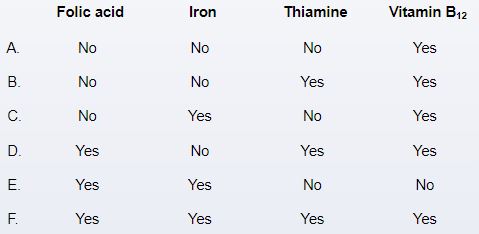
(Multiple Choice)
4.9/5 (71)
(71) A 17-year-old girl is brought to the office for evaluation of a right wrist mass. She noticed swelling on the top of her wrist approximately 3 months ago but said that it did not bother her until she was teased about it in school. She has no other concerns. Examination shows a nontender, rounded mass on the dorsal wrist that transilluminates with a penlight. An image of the mass is shown below: 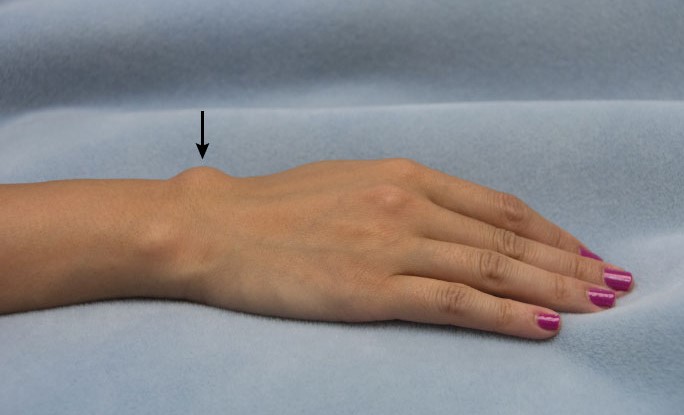 Which of the following is the most likely underlying etiology?
 (Multiple Choice)
4.8/5 (82)
(82) A 14-year-old girl with sickle cell disease is admitted to the hospital due to fever for 2 days. Temperature is 38 C (100.4 F), blood pressure is 120/80 mm Hg, pulse is 120/min, and respirations are 18/min. Examination shows no abnormalities. Laboratory studies reveal: 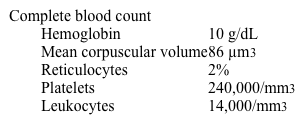 Blood cultures are obtained, and appropriate pharmacotherapy is initiated. Her peripheral blood smear is shown in the exhibit.
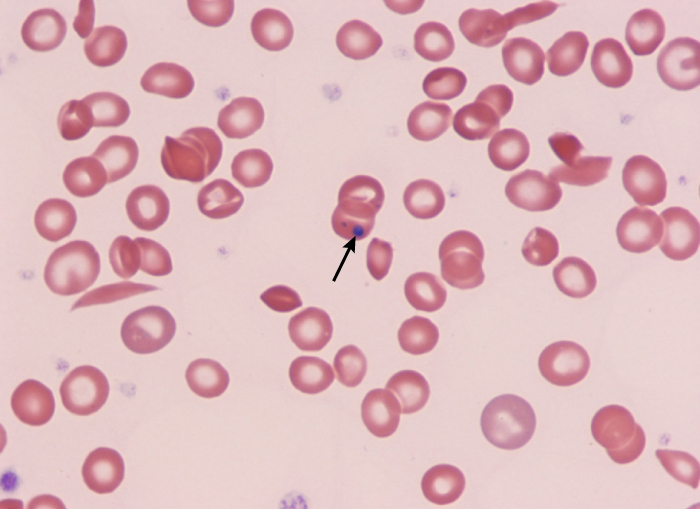 The smear findings indicated by the arrow most likely reflect which of the following processes?
Blood cultures are obtained, and appropriate pharmacotherapy is initiated. Her peripheral blood smear is shown in the exhibit. The smear findings indicated by the arrow most likely reflect which of the following processes? (Multiple Choice)
4.8/5 (81)
(81) 
Filters
- Essay(0)
- Multiple Choice(0)
- Short Answer(0)
- True False(0)
- Matching(0)