



 Chat with AI
Exam 11: Pathophysiology

Exam 1: Anatomy291 Questions
Exam 2: Behavioral science240 Questions
Exam 3: Biochemistry156 Questions
Exam 4: Biostatistics117 Questions
Exam 5: Embryology52 Questions
Exam 6: Genetics103 Questions
Exam 7: Histology24 Questions
Exam 8: Immunology129 Questions
Exam 9: Microbiology336 Questions
Exam 10: Pathology816 Questions
Exam 11: Pathophysiology464 Questions
Exam 12: Pharmacology538 Questions
Exam 13: Physiology272 Questions
Select questions type


A 67-year-old man comes to the emergency department due to progressive shortness of breath and chest tightness. He has had no lightheadedness or syncope. The patient takes lisinopril for hypertension and metformin for type 2 diabetes mellitus. He has smoked a pack of cigarettes daily for the last 40 years. The blood pressure cuff is inflated to 140 mm Hg and the pressure is released very slowly. At 120 mm Hg, intermittent Korotkoff sounds are heard only during expiration. At 100 mm Hg, Korotkoff sounds are heard throughout the respiratory cycle. This physical examination finding can be seen in which of the following conditions?
(Multiple Choice)
4.9/5  (77)
(77) A 42-year-old man is brought to the hospital after a motor vehicle collision. The patient was driving while intoxicated with alcohol and collided with another car. Evaluation reveals a left tibia and fibula fracture but no other major injuries. He reports no prior medical conditions. The patient is hospitalized and operative repair of the fracture is performed. On the third day in the hospital, he becomes agitated and demands to leave. Temperature is 37.2 C (99 F), blood pressure is 162/94 mm Hg, and pulse is 125/min. On physical examination, the patient is diaphoretic, tremulous, and disoriented. There are mild hand tremors but no other neurologic abnormalities. Increased activity of which of the following central nervous system receptors is the most likely cause of this patient's condition?
(Multiple Choice)
4.8/5 (77)
(77) A 72-year-old man comes to the office due to palpitations and mild fatigue for the last 3 weeks. He has otherwise been feeling well. The patient walks 2 miles around his neighborhood twice per week with no chest pain or shortness of breath. Medical history is remarkable for benign prostatic hyperplasia, for which he takes terazosin. He drinks 1-2 cups of coffee every day and a glass of wine once or twice per month. Temperature is 37 C (98.6 F), blood pressure is 128/68 mm Hg, and pulse is 78/min and irregular. Physical examination reveals a 2/6 early-peaking systolic murmur at the right upper sternal border. Carotid pulses are prompt and full bilaterally. The lungs are clear to auscultation. There is no peripheral edema. ECG is shown in the exhibit. 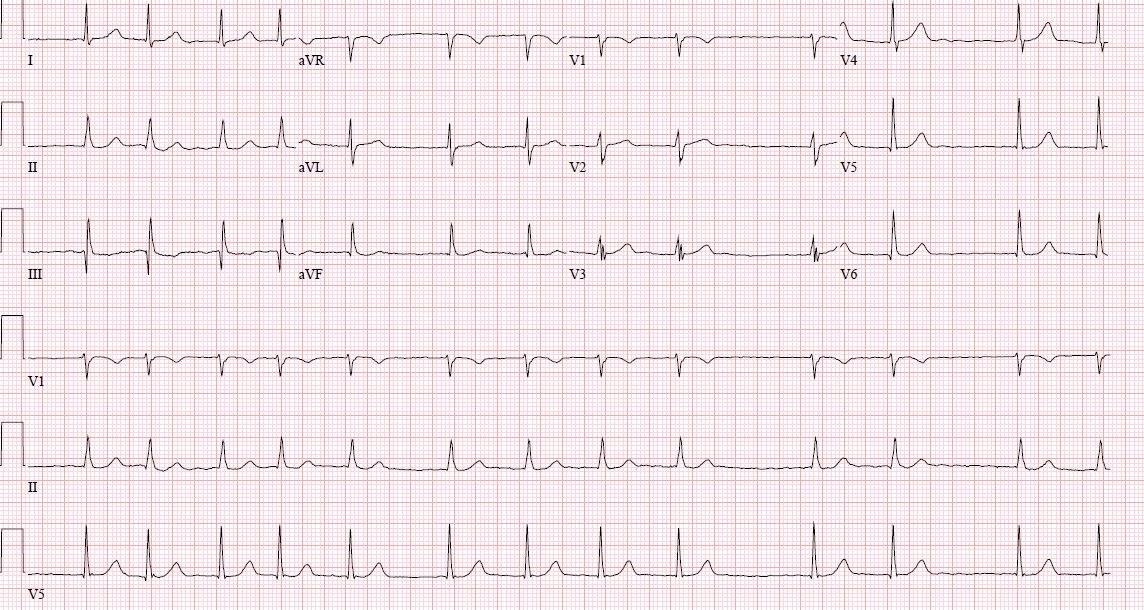 Which of the following is most likely the strongest risk factor for this patient's presentation?
 (Multiple Choice)
4.9/5 (73)
(73) A study was conducted to determine the utility of adjunctive therapy in bacterial meningitis. Patients with acute bacterial meningitis whose cerebrospinal fluid (CSF) analysis showed gram-positive diplococci were divided into 2 groups. The first (control) group was given systemic antibiotics only, and the second (experimental) group was given dexamethasone followed by systemic antibiotics. Compared to the control group, patients in the experimental group developed fewer neurologic sequelae and had a lower risk of death. The experimental patients most likely benefited from the use of this drug due to which of the following?
(Multiple Choice)
5.0/5 (92)
(92) A 29-year-old woman, gravida 1 para 0, at 28 weeks gestation comes to the office to establish prenatal care after recently moving to a new city. She has had no complications in this pregnancy and had a normal anatomy ultrasound at 20 weeks gestation. On physical examination, the fundal height measures 28 cm. Cardiac auscultation reveals a 2/6 blowing systolic murmur best heard at the left sternal border. The murmur intensifies with inspiration, and there is no ejection click or palpable thrill at the sternal notch. The lungs are clear to auscultation. There is 1+ pitting edema to the midshins bilaterally. Which of the following is most likely responsible for this patient's murmur?
(Multiple Choice)
4.8/5 (68)
(68) A 53-year-old man comes to the office with progressive exertional dyspnea. He has smoked 2 packs of cigarettes per day for the last 35 years. Physical examination shows increased anteroposterior diameter of his chest. Auscultation reveals decreased breath sounds and scattered wheezes throughout his lungs. Examination of his extremities is unremarkable. Echocardiography reveals moderate dilation of the right ventricle and increased central venous pressure. The absence of peripheral edema in this patient is best explained by which of the following compensatory mechanisms?
(Multiple Choice)
4.9/5 (92)
(92) A group of investigators is studying the mechanisms of signal transduction involved in the pathogenesis of type 2 diabetes mellitus. Their research focuses on the intracellular signaling cascade that begins when insulin binds to the insulin receptor. In a series of experiments, they demonstrate that pre-treatment with tumor necrosis factor alpha (TNF-α) results in decreased insulin-mediated glucose uptake. This effect of TNF-α is most likely mediated through upregulation of which of the following processes?
(Multiple Choice)
4.9/5 (87)
(87) A 40-year-old woman is hospitalized due to a femoral neck fracture that occurred when she slipped while stepping out of the bathtub. The patient was diagnosed with a prolactinoma 3 years ago during evaluation of amenorrhea, but she refused medical or surgical treatments. The tumor is being monitored closely and has not increased in size or caused any visual symptoms. The patient has no other medical problems, takes no medications, and does not use tobacco, alcohol, or illicit drugs. She has 3 healthy children and no significant family history. The underlying mechanism for this patient's susceptibility to fracture is most likely to cause which of the following additional manifestations?
(Multiple Choice)
4.9/5 (83)
(83) A 31-year-old woman comes to the office due to transient visual changes that are characterized by "loss of vision for a minute" and commonly precipitated by bending forward or lifting objects. During the last 3 months, she has had persistent headaches that she attributes to migraines. The patient takes over-the-counter analgesics as needed. Blood pressure is 140/90 mm Hg and pulse is 72/min and regular. BMI is 32.4 kg/m2. Funduscopic findings of the left eye are shown in the image below, with similar findings in the right eye. 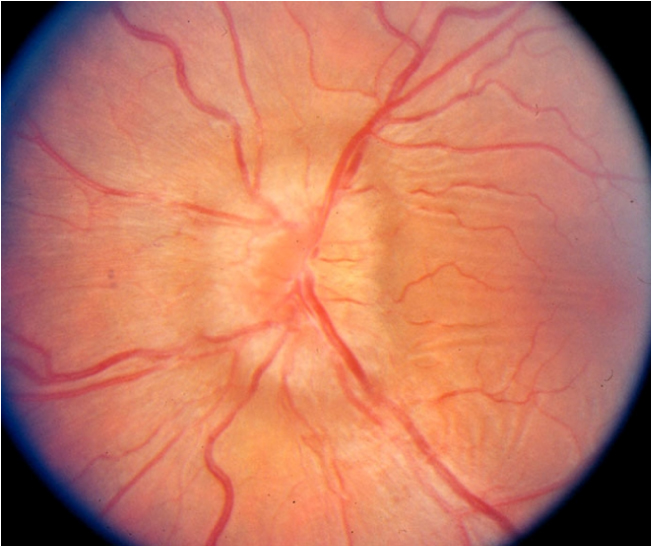 Which of the following is the most likely cause of the observed funduscopic findings in this patient?
 (Multiple Choice)
4.8/5 (84)
(84) A 26-year-old woman comes to the office due to recurrent nausea and vomiting for the past several months. The patient experiences nausea and epigastric discomfort after meals and often feels full after eating only a small portion of food. On several occasions, she has had emesis containing particles of food that she ate several hours earlier. The patient has a 15-year history of type 1 diabetes mellitus complicated by diabetic nephropathy. Her medications include a basal-bolus insulin regimen and lisinopril. She does not use tobacco, alcohol, or illicit drugs. Vital signs are within normal limits. The abdomen is soft and nontender with no organomegaly. Bowel sounds are normal. Testing of stool for occult blood is negative. An upper gastrointestinal endoscopy is unremarkable. Which of the following mechanisms is most likely responsible for this patient's current symptoms?
(Multiple Choice)
4.7/5 (77)
(77) A 22-year-old woman comes to the office due to several years of persistent facial blemishing that has failed to respond to over-the-counter treatment. The patient has no other medical conditions. She does not use tobacco, alcohol, or illicit drugs. Skin examination findings are shown in the image below:  Which of the following most likely contributed to the pathogenesis of this patient's skin condition?
 (Multiple Choice)
4.8/5 (72)
(72) A 75-year-old man is brought to the emergency department after his family found him to be lethargic and confused. The patient has a history of hypertension, coronary artery disease, and heart failure. Temperature is 35 C (95 F), blood pressure is 78/46 mm Hg, and pulse is 110/min. The patient is admitted to the intensive care unit and a pulmonary artery catheter is placed, which demonstrates the following readings: 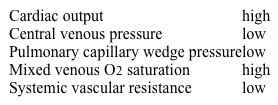 Which of the following is the most likely cause of this patient's hypotension?
 (Multiple Choice)
4.9/5 (75)
(75) A 68-year-old man comes to the office for gradually increasing shortness of breath. He initially experienced symptoms with exertion but now feels short of breath at rest. The patient has smoked 2 packs of cigarettes per day for 40 years. Blood pressure is 138/78 mm Hg, pulse is 80/min, and respirations are 22/min. The chest x-ray is shown in the image below: 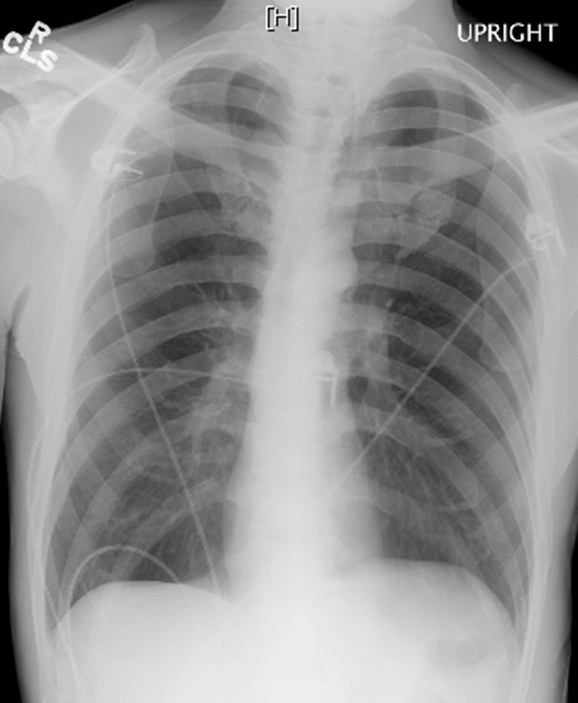 Which of the following measures is most likely increased in this patient?
 (Multiple Choice)
4.9/5 (86)
(86) A 57-year-old man is being evaluated for progressive shortness of breath. His respiratory flow-volume curve is shown in red below. 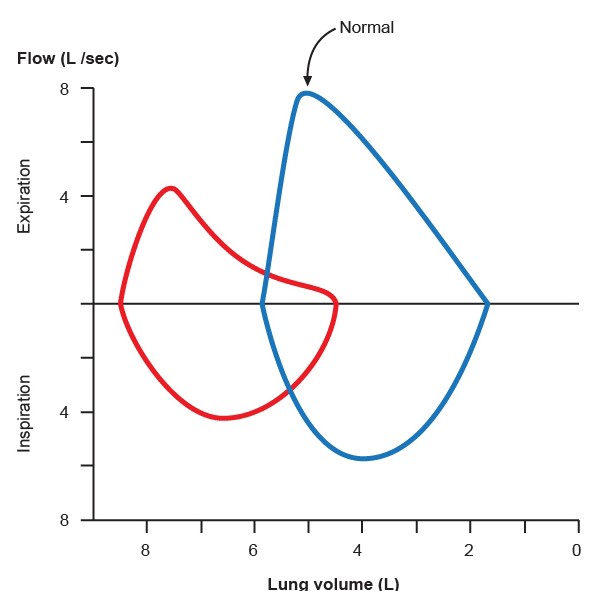 Which of the following pathologic findings is most likely to be present in this patient?
 (Multiple Choice)
4.8/5 (87)
(87) A 48-year-old homeless man is brought to the emergency department after being found unresponsive on the sidewalk. Medical history is unknown. Temperature is 38.3 C (101 F), blood pressure is 116/70 mm Hg, pulse is 108/min, and respirations are 26/min. Oxygen saturation is 88% on 100% oxygen via face mask. The patient is ill-appearing, thin, and disheveled with poor dentition. There are a few white patches on the oral mucosa, but no skin rash is present. Lung auscultation reveals bilateral crackles. There are healed abdominal scars from a previous surgery. The abdomen is soft with no hepatomegaly or splenomegaly. Chest x-ray reveals bilateral interstitial infiltrates. A silver-stained bronchoalveolar lavage specimen is shown in the image. 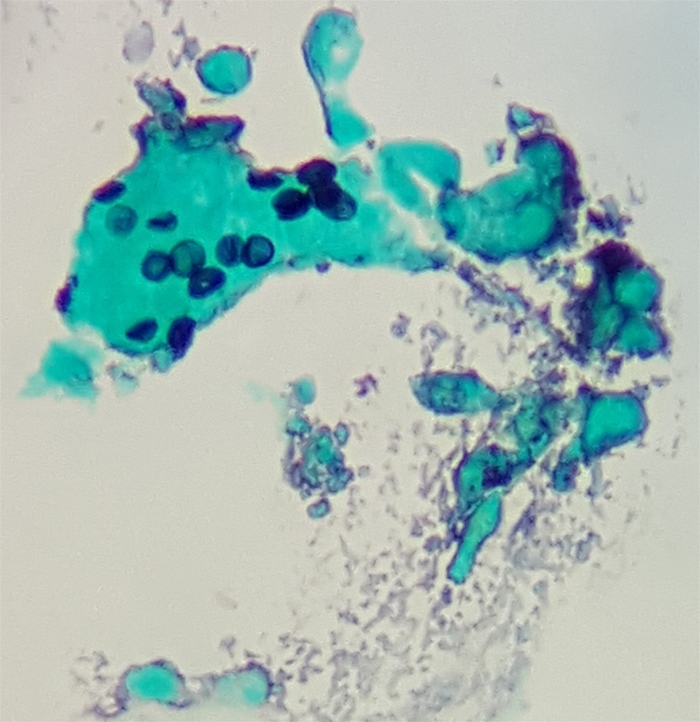 Which of the following most likely predisposed this patient to his current lung condition?
 (Multiple Choice)
4.8/5 (79)
(79) A 34-year-old woman is being evaluated for fatigue and progressive exertional dyspnea. She goes mountain biking with friends a few times a month and recently noticed that she has to stop and rest more frequently when traveling uphill. The patient has no significant medical history and takes no medications. She occasionally drinks alcohol but does not use tobacco or illicit drugs. Her father died of a myocardial infarction at age 72. Lung auscultation is normal. An echocardiogram shows an enlarged coronary sinus. Which of the following is the most likely cause of the observed finding in this patient?
(Multiple Choice)
4.9/5 (72)
(72) A 52-year-old man comes to the office with concerns about a "heart problem." Three years ago, the patient was told during a routine physical examination that he had a heart murmur. Currently, he has no specific complaints, but he mentions that he has become tired more easily in the past year. He has no chest pain or lower extremity swelling or significant medical history. The patient was healthy as a child and received all his childhood vaccinations. Blood pressure is 145/90 mm Hg and pulse is 80/min and regular. Physical examination reveals a holosystolic murmur best heard at the apex of the heart that radiates to the axilla. The lungs are clear on auscultation and abdominal examination is unremarkable. Which of the following is the best indicator of the severity of this patient's valve disease?
(Multiple Choice)
4.8/5 (71)
(71) A 19-year-old man comes to the office due to difficulty seeing and blurred vision, which have worsened slowly over the past year. He is a second-year college student pursuing a degree in biochemistry. His grades are excellent, but he is concerned about the effect his poor vision has had on his classes this semester. The patient is also an avid swimmer. He weighs 71 kg (156.5 lb) and is 195 cm (6 ft 5 in) tall. Physical examination shows the findings seen in the exhibits.

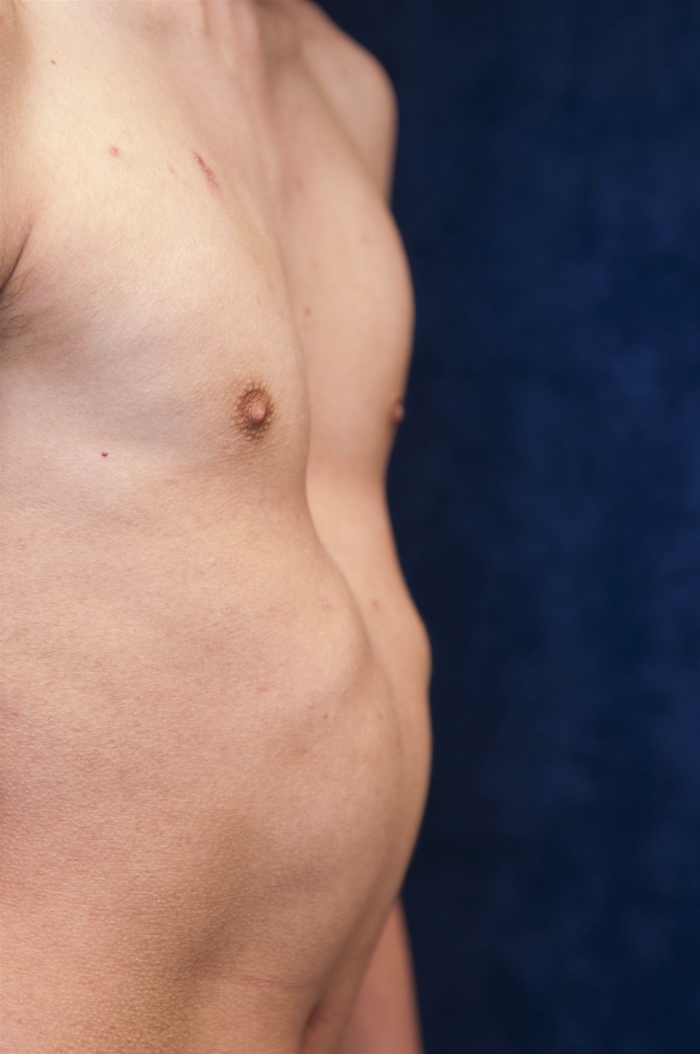 This patient is most likely to die from which of the following conditions?
 (Multiple Choice)
4.9/5 (76)
(76) A 65-year-old man is evaluated for right lower extremity weakness and difficulty walking. The patient has a history of hypertension, type 2 diabetes mellitus, and osteoarthritis. He has smoked a pack of cigarettes daily for 30 years. During physical examination, the lateral border of his right sole is stroked using the blunt tip of a reflex hammer. The maneuver, starting near the heel and proceeding to the base of the fifth toe, elicits extension of the great toe and fanning out of the other toes. Which of the following additional findings is most likely to be observed in this patient's right lower extremity?
(Multiple Choice)
5.0/5 (62)
(62) A 2-hour-old newborn has a blood glucose concentration of 30 mg/dL. The patient was delivered via caesarean to a 32-year-old woman at 38 weeks gestation. Birth weight is 4.5 kg (9 lb 14 oz). The pregnancy was complicated by gestational diabetes treated with insulin. However, glycemic control remained suboptimal due to maternal noncompliance with insulin treatment and poor adherence to dietary recommendations. Examination of the neonate is unremarkable. Which of the following is the most likely primary mechanism responsible for this patient's low blood glucose concentration?
(Multiple Choice)
4.9/5 (81)
(81) 
Filters
- Essay(0)
- Multiple Choice(0)
- Short Answer(0)
- True False(0)
- Matching(0)