



 Chat with AI
Exam 55: Energy Flow and Chemical Cycling in Ecosystems

Exam 1: Biology and Its Themes46 Questions
Exam 2: Atoms and Molecules61 Questions
Exam 3: The Chemistry of Water55 Questions
Exam 4: Carbon: the Basis of Molecular Diversity52 Questions
Exam 5: Biological Macromolecules and Lipids71 Questions
Exam 6: Energy and Life65 Questions
Exam 7: Cell Structure and Function66 Questions
Exam 8: Cell Membranes67 Questions
Exam 9: Cellular Signaling62 Questions
Exam 10: Cell Respiration68 Questions
Exam 11: Photosynthetic Processes64 Questions
Exam 12: Mitosis63 Questions
Exam 13: Sexual Life Cycles and Meiosis64 Questions
Exam 14: Mendelian Genetics65 Questions
Exam 15: Linkage and Chromosomes54 Questions
Exam 16: Nucleic Acids and Inheritance65 Questions
Exam 17: Expression of Genes70 Questions
Exam 18: Control of Gene Expression66 Questions
Exam 19: Dna Technology56 Questions
Exam 20: The Evolution of Genomes47 Questions
Exam 21: How Evolution Works60 Questions
Exam 22: Phylogenetic Reconstruction66 Questions
Exam 23: Microevolution65 Questions
Exam 24: Species and Speciation65 Questions
Exam 25: Macroevolution58 Questions
Exam 26: Introduction to Viruses54 Questions
Exam 27: Prokaryotes61 Questions
Exam 28: The Origin and Evolution of Eukaryotes66 Questions
Exam 29: Nonvascular and Seedless Vascular Plants72 Questions
Exam 30: Seed Plants64 Questions
Exam 31: Introduction to Fungi56 Questions
Exam 32: An Introduction to Animal Diversity58 Questions
Exam 33: Invertebrates58 Questions
Exam 34: Vertebrates66 Questions
Exam 35: Plant Structure and Growth68 Questions
Exam 36: Transport in Vascular Plants73 Questions
Exam 37: Plant Nutrition51 Questions
Exam 38: Reproduction of Flowering Plants59 Questions
Exam 39: Plant Signals and Behavior60 Questions
Exam 40: The Animal Body58 Questions
Exam 41: Chemical Signals in Animals62 Questions
Exam 42: Animal Digestive Systems58 Questions
Exam 43: Animal Transport Systems58 Questions
Exam 44: Animal Excretory Systems49 Questions
Exam 45: Animal Reproductive Systems64 Questions
Exam 46: Development in Animals68 Questions
Exam 47: Animal Defenses Against Infection65 Questions
Exam 48: Electrical Signals in Animals62 Questions
Exam 49: Neural Regulation in Animals69 Questions
Exam 50: Sensation and Movement in Animals68 Questions
Exam 51: An Overview of Ecology71 Questions
Exam 52: Behavioral Ecology64 Questions
Exam 53: Populations and Life History Traits73 Questions
Exam 54: Biodiversity and Communities71 Questions
Exam 55: Energy Flow and Chemical Cycling in Ecosystems80 Questions
Exam 56: Conservation and Global Ecology75 Questions
Select questions type


The discipline that applies ecological principles to returning degraded ecosystems to a more natural state is known as ________.
(Multiple Choice)
4.8/5  (82)
(82) Which of the following has the greatest effect on the rate of chemical cycling in an ecosystem?
(Multiple Choice)
4.9/5 (98)
(98) If you applied a fungicide to a cornfield, what would you expect to happen to the rate of decomposition and net ecosystem production (NEP)?
(Multiple Choice)
4.9/5 (84)
(84) Use the following figure to answer the question. 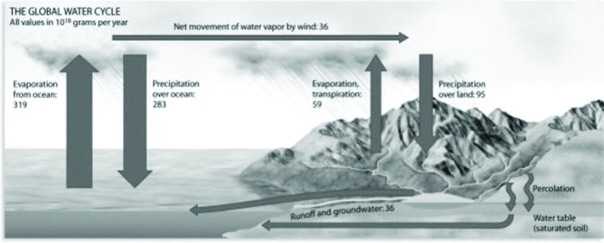 Based on information provided, which of the following represents the greatest flux of water from one reserve to another?
 (Multiple Choice)
4.9/5 (85)
(85) If the sun stopped providing energy to Earth, most ecosystems would eventually vanish. Which of the following ecosystems would likely survive the longest after this hypothetical disaster?
(Multiple Choice)
4.8/5 (66)
(66) Which of the following best explains why terrestrial productivity is higher in equatorial climates than in temperate climates?
(Multiple Choice)
4.8/5 (96)
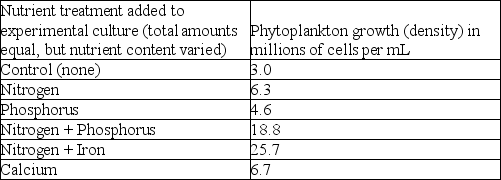
(96) Given the following data set, reducing the availability of which nutrient would best help aquatic biologists and managers reduce a eutrophication problem in a lake?
(Multiple Choice)
4.9/5 (63)
(63) Use the following figure to answer the question. 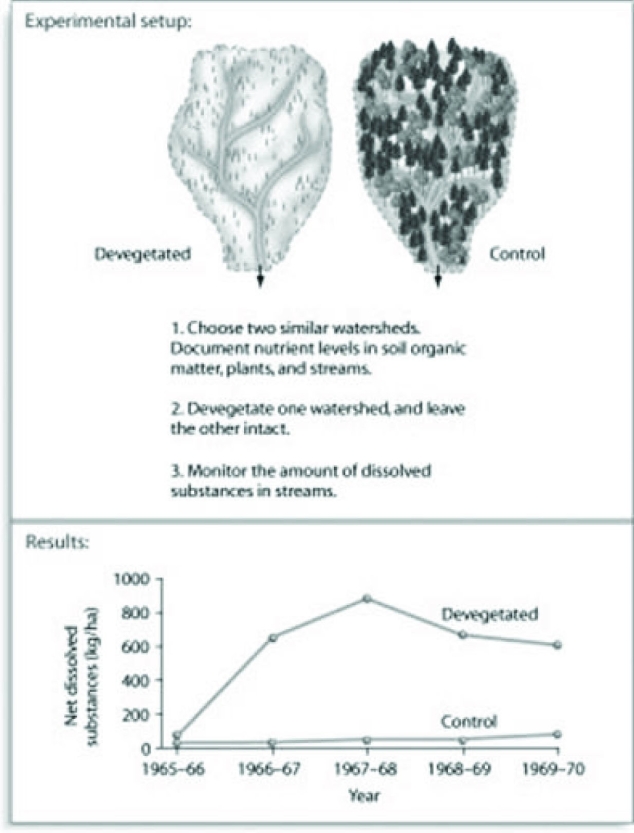 Based on the figure, which of the following is the most complete explanation for the results?
 (Multiple Choice)
4.8/5 (84)
(84) Use the following figure to answer the question. 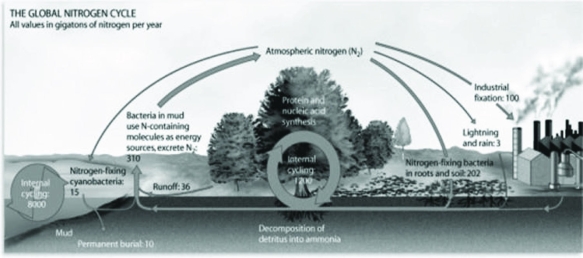 Based on the information provided, which of the following represents the human impact on the global nitrogen cycle?
 (Multiple Choice)
4.9/5 (79)
(79) Which of the following organisms is correctly paired with its trophic level?
(Multiple Choice)
4.8/5 (77)
(77) Use the following figure to answer the question. 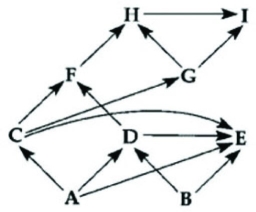 Diagram of a food web (arrows represent energy flow and letters represent species)
If the figure represents a terrestrial food web, the combined biomass of C + D would probably be ________.
Diagram of a food web (arrows represent energy flow and letters represent species)
If the figure represents a terrestrial food web, the combined biomass of C + D would probably be ________. (Multiple Choice)
4.8/5 (74)
(74) Use the following figure to answer the question. 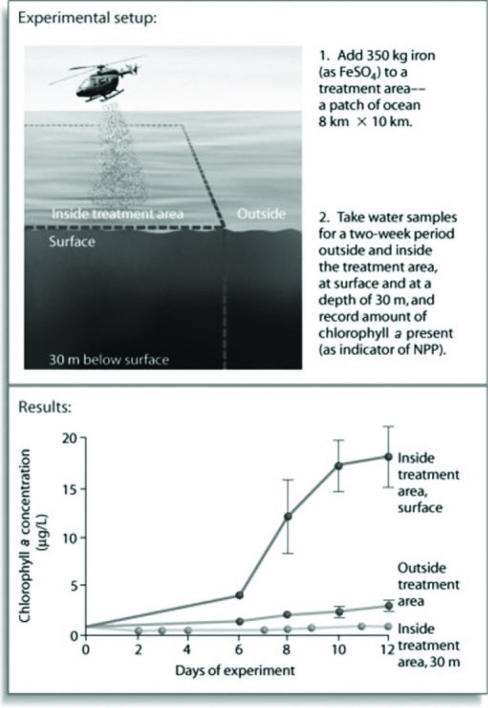 Which of the following conclusions about productivity within the confines of the experimental ecosystem is most consistent with the data?
 (Multiple Choice)
4.9/5 (80)
(80) Which of the following best explains the need for a constant influx of sunlight to sustain Earth's biosphere?
(Multiple Choice)
4.9/5 (76)
(76) Nitrifying bacteria participate in the nitrogen cycle mainly by ________.
(Multiple Choice)
4.8/5 (89)
(89) Which of the following best explains the observation that matter may be gained by, or lost from, ecosystems?
(Multiple Choice)
4.8/5 (85)
(85) Use the following figure to answer the question. 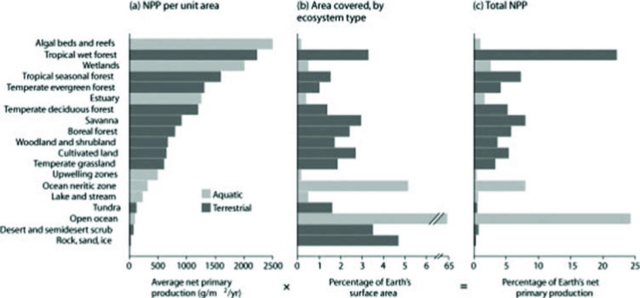 Which land-based ecosystem in the figure makes has the highest productivity per square meter?
 (Multiple Choice)
4.8/5 (83)
(83) Which of the following has the greatest effect on the rate of chemical cycling within an ecosystem?
(Multiple Choice)
4.8/5 (85)
(85) In order to recycle nutrients, which of the following minimum components must an ecosystem have?
(Multiple Choice)
4.8/5 (74)
(74) Which of the following ecosystems would likely have the largest net primary productivity per hectare and why?
(Multiple Choice)
4.8/5 (73)
(73) Which of the following are the main forms of energy inputs and outputs that move through an ecosystem?
(Multiple Choice)
4.8/5 (84)
(84) 
Filters
- Essay(0)
- Multiple Choice(0)
- Short Answer(0)
- True False(0)
- Matching(0)