



 Chat with AI
Exam 9: Cellular Signaling

Exam 1: Biology and Its Themes46 Questions
Exam 2: Atoms and Molecules61 Questions
Exam 3: The Chemistry of Water55 Questions
Exam 4: Carbon: the Basis of Molecular Diversity52 Questions
Exam 5: Biological Macromolecules and Lipids71 Questions
Exam 6: Energy and Life65 Questions
Exam 7: Cell Structure and Function66 Questions
Exam 8: Cell Membranes67 Questions
Exam 9: Cellular Signaling62 Questions
Exam 10: Cell Respiration68 Questions
Exam 11: Photosynthetic Processes64 Questions
Exam 12: Mitosis63 Questions
Exam 13: Sexual Life Cycles and Meiosis64 Questions
Exam 14: Mendelian Genetics65 Questions
Exam 15: Linkage and Chromosomes54 Questions
Exam 16: Nucleic Acids and Inheritance65 Questions
Exam 17: Expression of Genes70 Questions
Exam 18: Control of Gene Expression66 Questions
Exam 19: Dna Technology56 Questions
Exam 20: The Evolution of Genomes47 Questions
Exam 21: How Evolution Works60 Questions
Exam 22: Phylogenetic Reconstruction66 Questions
Exam 23: Microevolution65 Questions
Exam 24: Species and Speciation65 Questions
Exam 25: Macroevolution58 Questions
Exam 26: Introduction to Viruses54 Questions
Exam 27: Prokaryotes61 Questions
Exam 28: The Origin and Evolution of Eukaryotes66 Questions
Exam 29: Nonvascular and Seedless Vascular Plants72 Questions
Exam 30: Seed Plants64 Questions
Exam 31: Introduction to Fungi56 Questions
Exam 32: An Introduction to Animal Diversity58 Questions
Exam 33: Invertebrates58 Questions
Exam 34: Vertebrates66 Questions
Exam 35: Plant Structure and Growth68 Questions
Exam 36: Transport in Vascular Plants73 Questions
Exam 37: Plant Nutrition51 Questions
Exam 38: Reproduction of Flowering Plants59 Questions
Exam 39: Plant Signals and Behavior60 Questions
Exam 40: The Animal Body58 Questions
Exam 41: Chemical Signals in Animals62 Questions
Exam 42: Animal Digestive Systems58 Questions
Exam 43: Animal Transport Systems58 Questions
Exam 44: Animal Excretory Systems49 Questions
Exam 45: Animal Reproductive Systems64 Questions
Exam 46: Development in Animals68 Questions
Exam 47: Animal Defenses Against Infection65 Questions
Exam 48: Electrical Signals in Animals62 Questions
Exam 49: Neural Regulation in Animals69 Questions
Exam 50: Sensation and Movement in Animals68 Questions
Exam 51: An Overview of Ecology71 Questions
Exam 52: Behavioral Ecology64 Questions
Exam 53: Populations and Life History Traits73 Questions
Exam 54: Biodiversity and Communities71 Questions
Exam 55: Energy Flow and Chemical Cycling in Ecosystems80 Questions
Exam 56: Conservation and Global Ecology75 Questions
Select questions type


When a neuron responds to a particular neurotransmitter by opening gated ion channels, the neurotransmitter is serving as which part of the signal pathway?

Free
(Multiple Choice)
4.9/5  (89)
(89) Correct Answer: Verified
C
Activation of which of the following molecules generally requires protein phosphorylation?
Free
(Multiple Choice)
4.8/5 (81)
(81) Correct Answer:Verified
VerifiedA
In which of the following ways do plant hormones differ from hormones in animals?
Free
(Multiple Choice)
4.9/5 (70)
(70) Correct Answer:Verified
VerifiedA
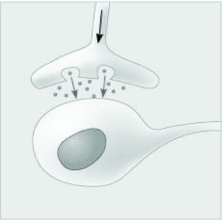 The dots in the space between the two structures in the accompanying figure represent which of the following components of a cell signaling pathway?
 (Multiple Choice)
4.9/5 (87)
(87) Which of the following observations suggests that a second messenger is required for the activation of glycogen phosphorylase by epinephrine?
(Multiple Choice)
4.9/5 (79)
(79) Which of the following statements best describes steroid receptors?
(Multiple Choice)
4.7/5 (75)
(75) Which of the following signal transduction proteins are activated by phosphorylation after binding to a signal molecule?
(Multiple Choice)
4.7/5 (87)
(87) If yeast cells of mating type α with normal mating factor receptors are genetically modified to produce only mating factor a, they will mate with which of the following cells?
(Multiple Choice)
4.9/5 (74)
(74) Which of the following statements best describes a key aspect of a G protein signaling pathway?
(Multiple Choice)
4.9/5 (81)
(81) Which of the following statements best describes the events of apoptosis?
(Multiple Choice)
4.8/5 (88)
(88) Which of the following statements best describes a reason that C. elegans is an excellent model organism for investigating apoptosis?
(Multiple Choice)
4.9/5 (90)
(90) How does the toxin of Vibrio cholerae cause profuse diarrhea?
(Multiple Choice)
4.9/5 (78)
(78) Which of the following statements best would best explain the inability of an animal cell to reduce the Ca2+ concentration in its cytosol?
(Multiple Choice)
4.8/5 (71)
(71) Which observation suggested to Sutherland the involvement of a second messenger in epinephrine's effect on liver cells?
(Multiple Choice)
4.7/5 (87)
(87) Which of the following statements best describes scaffolding proteins?
(Multiple Choice)
4.9/5 (85)
(85) Which of the following statements best describes a typical cAMP-mediated signal transduction event?
(Multiple Choice)
4.8/5 (74)
(74) Which of the following enzymes essentially reverses the reaction catalyzed by adenylyl cyclase?
(Multiple Choice)
4.8/5 (73)
(73) Which of the following statements best describes an aspect of signal transduction?
(Multiple Choice)
4.9/5 (81)
(81) A signal transmitted via phosphorylation of a series of proteins is generally associated with which of the following events?
(Multiple Choice)
4.9/5 (63)
(63) The activation of receptor tyrosine kinases is characterized by ________.
(Multiple Choice)
4.8/5 (84)
(84) 
Filters
- Essay(0)
- Multiple Choice(0)
- Short Answer(0)
- True False(0)
- Matching(0)