



 Chat with AI
Exam 1: Biology and Its Themes

Exam 1: Biology and Its Themes46 Questions
Exam 2: Atoms and Molecules61 Questions
Exam 3: The Chemistry of Water55 Questions
Exam 4: Carbon: the Basis of Molecular Diversity52 Questions
Exam 5: Biological Macromolecules and Lipids71 Questions
Exam 6: Energy and Life65 Questions
Exam 7: Cell Structure and Function66 Questions
Exam 8: Cell Membranes67 Questions
Exam 9: Cellular Signaling62 Questions
Exam 10: Cell Respiration68 Questions
Exam 11: Photosynthetic Processes64 Questions
Exam 12: Mitosis63 Questions
Exam 13: Sexual Life Cycles and Meiosis64 Questions
Exam 14: Mendelian Genetics65 Questions
Exam 15: Linkage and Chromosomes54 Questions
Exam 16: Nucleic Acids and Inheritance65 Questions
Exam 17: Expression of Genes70 Questions
Exam 18: Control of Gene Expression66 Questions
Exam 19: Dna Technology56 Questions
Exam 20: The Evolution of Genomes47 Questions
Exam 21: How Evolution Works60 Questions
Exam 22: Phylogenetic Reconstruction66 Questions
Exam 23: Microevolution65 Questions
Exam 24: Species and Speciation65 Questions
Exam 25: Macroevolution58 Questions
Exam 26: Introduction to Viruses54 Questions
Exam 27: Prokaryotes61 Questions
Exam 28: The Origin and Evolution of Eukaryotes66 Questions
Exam 29: Nonvascular and Seedless Vascular Plants72 Questions
Exam 30: Seed Plants64 Questions
Exam 31: Introduction to Fungi56 Questions
Exam 32: An Introduction to Animal Diversity58 Questions
Exam 33: Invertebrates58 Questions
Exam 34: Vertebrates66 Questions
Exam 35: Plant Structure and Growth68 Questions
Exam 36: Transport in Vascular Plants73 Questions
Exam 37: Plant Nutrition51 Questions
Exam 38: Reproduction of Flowering Plants59 Questions
Exam 39: Plant Signals and Behavior60 Questions
Exam 40: The Animal Body58 Questions
Exam 41: Chemical Signals in Animals62 Questions
Exam 42: Animal Digestive Systems58 Questions
Exam 43: Animal Transport Systems58 Questions
Exam 44: Animal Excretory Systems49 Questions
Exam 45: Animal Reproductive Systems64 Questions
Exam 46: Development in Animals68 Questions
Exam 47: Animal Defenses Against Infection65 Questions
Exam 48: Electrical Signals in Animals62 Questions
Exam 49: Neural Regulation in Animals69 Questions
Exam 50: Sensation and Movement in Animals68 Questions
Exam 51: An Overview of Ecology71 Questions
Exam 52: Behavioral Ecology64 Questions
Exam 53: Populations and Life History Traits73 Questions
Exam 54: Biodiversity and Communities71 Questions
Exam 55: Energy Flow and Chemical Cycling in Ecosystems80 Questions
Exam 56: Conservation and Global Ecology75 Questions
Select questions type


The evolution two or more species from one species as a result of different populations becoming reproductively isolated from each other is best described as ________.

Free
(Multiple Choice)
4.8/5  (86)
(86) Correct Answer: Verified
A
A cell lacking which of the following structures is most likely to be a prokaryote?
Free
(Multiple Choice)
4.9/5 (77)
(77) Correct Answer:Verified
VerifiedA
Agrobacterium infects plants and causes them to form tumors. You are asked to determine how long a plant must be exposed to these bacteria to become infected. Which of the following experiments will provide the best data to address that question?
Free
(Multiple Choice)
4.8/5 (83)
(83) Correct Answer:Verified
VerifiedD
In presenting data that result from an experiment, a group of students shows that most of their measurements fall on a straight diagonal line on their graph. However, two of their data points are "outliers" and fall far to one side of the expected relationship. Which of the following is the most reasonable way to handle the outliers when analyzing the data?
(Multiple Choice)
4.9/5 (81)
(81) How does a scientific theory differ from a scientific hypothesis?
(Multiple Choice)
4.8/5 (89)
(89) Which of the following is one of Charles Darwin's observations?
(Multiple Choice)
4.9/5 (88)
(88) Which of the following instructions contribute to a productive experimental design?
(Multiple Choice)
4.8/5 (79)
(79) As letters are to English language, ________ is/are to genetic information.
(Multiple Choice)
4.9/5 (75)
(75) An individual is suffering from a streptococcus infection in their throat. Which of the following do the individual and the streptococcus bacteria have in common?
(Multiple Choice)
4.9/5 (66)
(66) In an experiment to test the hypothesis, "temperature controls sex determination in crocodile embryos" a researcher incubates crocodile eggs in incubators set at different temperatures. Which of the following correctly identifies the dependent and independent variables in the experiment?
(Multiple Choice)
4.8/5 (88)
(88) Cotton-topped tamarins are small primates with tufts of long white hair on their heads. While studying these creatures, researchers noticed that males with longer hair get more opportunities to mate and father more offspring. Which of the following research questions would best test the hypothesis that having longer hair is adaptive in these males?
(Multiple Choice)
4.9/5 (72)
(72) Use the information in the graph to answer the following question. 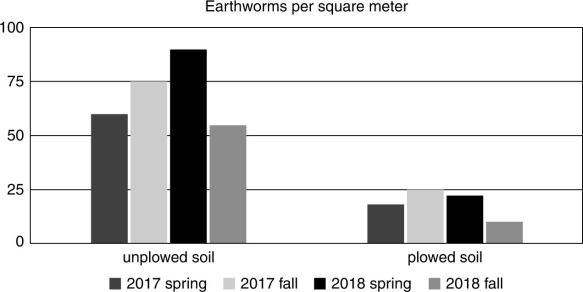 Which of the following claims is best supported using the graph?
 (Multiple Choice)
4.9/5 (74)
(74) Apple on tree ripens ripe apple produces ethylene ethylene signals neighboring apples to ripen neighbor apples produce more ethylene more apples ripen. The above process is an example of which of the following?
(Multiple Choice)
4.9/5 (82)
(82) Which of the following questions is considered a thought-provoking scientific query?
(Multiple Choice)
4.9/5 (74)
(74) 
Filters
- Essay(0)
- Multiple Choice(0)
- Short Answer(0)
- True False(0)
- Matching(0)