



 Chat with AI
Exam 4: Carbon: the Basis of Molecular Diversity

Exam 1: Biology and Its Themes46 Questions
Exam 2: Atoms and Molecules61 Questions
Exam 3: The Chemistry of Water55 Questions
Exam 4: Carbon: the Basis of Molecular Diversity52 Questions
Exam 5: Biological Macromolecules and Lipids71 Questions
Exam 6: Energy and Life65 Questions
Exam 7: Cell Structure and Function66 Questions
Exam 8: Cell Membranes67 Questions
Exam 9: Cellular Signaling62 Questions
Exam 10: Cell Respiration68 Questions
Exam 11: Photosynthetic Processes64 Questions
Exam 12: Mitosis63 Questions
Exam 13: Sexual Life Cycles and Meiosis64 Questions
Exam 14: Mendelian Genetics65 Questions
Exam 15: Linkage and Chromosomes54 Questions
Exam 16: Nucleic Acids and Inheritance65 Questions
Exam 17: Expression of Genes70 Questions
Exam 18: Control of Gene Expression66 Questions
Exam 19: Dna Technology56 Questions
Exam 20: The Evolution of Genomes47 Questions
Exam 21: How Evolution Works60 Questions
Exam 22: Phylogenetic Reconstruction66 Questions
Exam 23: Microevolution65 Questions
Exam 24: Species and Speciation65 Questions
Exam 25: Macroevolution58 Questions
Exam 26: Introduction to Viruses54 Questions
Exam 27: Prokaryotes61 Questions
Exam 28: The Origin and Evolution of Eukaryotes66 Questions
Exam 29: Nonvascular and Seedless Vascular Plants72 Questions
Exam 30: Seed Plants64 Questions
Exam 31: Introduction to Fungi56 Questions
Exam 32: An Introduction to Animal Diversity58 Questions
Exam 33: Invertebrates58 Questions
Exam 34: Vertebrates66 Questions
Exam 35: Plant Structure and Growth68 Questions
Exam 36: Transport in Vascular Plants73 Questions
Exam 37: Plant Nutrition51 Questions
Exam 38: Reproduction of Flowering Plants59 Questions
Exam 39: Plant Signals and Behavior60 Questions
Exam 40: The Animal Body58 Questions
Exam 41: Chemical Signals in Animals62 Questions
Exam 42: Animal Digestive Systems58 Questions
Exam 43: Animal Transport Systems58 Questions
Exam 44: Animal Excretory Systems49 Questions
Exam 45: Animal Reproductive Systems64 Questions
Exam 46: Development in Animals68 Questions
Exam 47: Animal Defenses Against Infection65 Questions
Exam 48: Electrical Signals in Animals62 Questions
Exam 49: Neural Regulation in Animals69 Questions
Exam 50: Sensation and Movement in Animals68 Questions
Exam 51: An Overview of Ecology71 Questions
Exam 52: Behavioral Ecology64 Questions
Exam 53: Populations and Life History Traits73 Questions
Exam 54: Biodiversity and Communities71 Questions
Exam 55: Energy Flow and Chemical Cycling in Ecosystems80 Questions
Exam 56: Conservation and Global Ecology75 Questions
Select questions type


Organic chemistry is currently defined as ________.

Free
(Multiple Choice)
4.7/5  (69)
(69) Correct Answer: Verified
B
Which of the following is true of carbon?
Free
(Multiple Choice)
4.7/5 (81)
(81) Correct Answer:Verified
VerifiedD
Which of the following functional groups is unreactive but when added to bases of DNA can alter gene expression?
Free
(Multiple Choice)
4.9/5 (61)
(61) Correct Answer:Verified
VerifiedB
What is the relationship between the following two molecules? 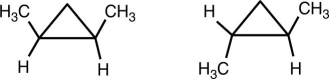
(Multiple Choice)
4.7/5 (71)
(71) Which of the following molecules has the fewest characteristics of an organic molecule?
(Multiple Choice)
4.8/5 (72)
(72) Which of the following functional groups is present in acetic acid?
(Multiple Choice)
4.8/5 (83)
(83) Which of the following functional groups is hydrophobic in nature?
(Multiple Choice)
4.9/5 (84)
(84) Which of the following characteristics of an atom determines the number and kind of bonds it can form?
(Multiple Choice)
4.8/5 (91)
(91) A compound contains hydroxyl groups as its predominant functional group. Which of the following properties of the molecule can be predicted with the information provided?
(Multiple Choice)
4.8/5 (77)
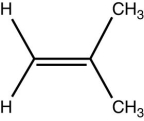
(77) 
Use the figures to answer the question. 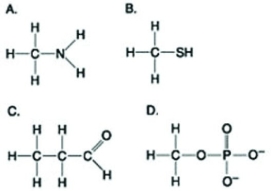 Which molecule shown above contains a functional group that is a part of the principal molecule that stores and transfers energy in cells?
 (Multiple Choice)
4.9/5 (87)
(87) Hydrolysis of ADP produces which of the following products?
(Multiple Choice)
4.7/5 (85)
(85) The results from Stanley Miller's 1953 experiments can best be used to support which of the following hypotheses?
(Multiple Choice)
4.9/5 (87)
(87) Use the figures to answer the following question. 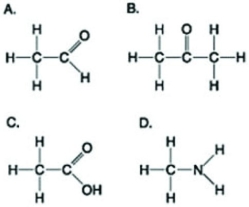 Which molecule shown can be a result of mercaptoethanol reduction of a disulfide bridge?
 (Multiple Choice)
5.0/5 (82)
(82) Which of the pairs of molecular structures shown depict enantiomers (enantiomeric forms) of the same molecule?
(Multiple Choice)
4.9/5 (81)
(81) Which of the following statements is correct for organic molecules with only hydrogens and five carbon atoms?
(Multiple Choice)
4.7/5 (78)
(78) Use the following figure to answer the following question. 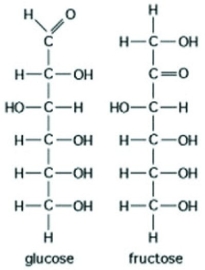 The figure shows the structures of glucose and fructose. Which of the following describes a difference between the two molecules?
 (Multiple Choice)
4.9/5 (76)
(76) Which of the following accurately describes a characteristic of isomers?
(Multiple Choice)
4.9/5 (84)
(84) Which of the following structures is a correct representation of an alcohol?
(Multiple Choice)
4.7/5 (91)
(91) 
Filters
- Essay(0)
- Multiple Choice(0)
- Short Answer(0)
- True False(0)
- Matching(0)