



 Chat with AI
Exam 2: Atoms and Molecules

Exam 1: Biology and Its Themes46 Questions
Exam 2: Atoms and Molecules61 Questions
Exam 3: The Chemistry of Water55 Questions
Exam 4: Carbon: the Basis of Molecular Diversity52 Questions
Exam 5: Biological Macromolecules and Lipids71 Questions
Exam 6: Energy and Life65 Questions
Exam 7: Cell Structure and Function66 Questions
Exam 8: Cell Membranes67 Questions
Exam 9: Cellular Signaling62 Questions
Exam 10: Cell Respiration68 Questions
Exam 11: Photosynthetic Processes64 Questions
Exam 12: Mitosis63 Questions
Exam 13: Sexual Life Cycles and Meiosis64 Questions
Exam 14: Mendelian Genetics65 Questions
Exam 15: Linkage and Chromosomes54 Questions
Exam 16: Nucleic Acids and Inheritance65 Questions
Exam 17: Expression of Genes70 Questions
Exam 18: Control of Gene Expression66 Questions
Exam 19: Dna Technology56 Questions
Exam 20: The Evolution of Genomes47 Questions
Exam 21: How Evolution Works60 Questions
Exam 22: Phylogenetic Reconstruction66 Questions
Exam 23: Microevolution65 Questions
Exam 24: Species and Speciation65 Questions
Exam 25: Macroevolution58 Questions
Exam 26: Introduction to Viruses54 Questions
Exam 27: Prokaryotes61 Questions
Exam 28: The Origin and Evolution of Eukaryotes66 Questions
Exam 29: Nonvascular and Seedless Vascular Plants72 Questions
Exam 30: Seed Plants64 Questions
Exam 31: Introduction to Fungi56 Questions
Exam 32: An Introduction to Animal Diversity58 Questions
Exam 33: Invertebrates58 Questions
Exam 34: Vertebrates66 Questions
Exam 35: Plant Structure and Growth68 Questions
Exam 36: Transport in Vascular Plants73 Questions
Exam 37: Plant Nutrition51 Questions
Exam 38: Reproduction of Flowering Plants59 Questions
Exam 39: Plant Signals and Behavior60 Questions
Exam 40: The Animal Body58 Questions
Exam 41: Chemical Signals in Animals62 Questions
Exam 42: Animal Digestive Systems58 Questions
Exam 43: Animal Transport Systems58 Questions
Exam 44: Animal Excretory Systems49 Questions
Exam 45: Animal Reproductive Systems64 Questions
Exam 46: Development in Animals68 Questions
Exam 47: Animal Defenses Against Infection65 Questions
Exam 48: Electrical Signals in Animals62 Questions
Exam 49: Neural Regulation in Animals69 Questions
Exam 50: Sensation and Movement in Animals68 Questions
Exam 51: An Overview of Ecology71 Questions
Exam 52: Behavioral Ecology64 Questions
Exam 53: Populations and Life History Traits73 Questions
Exam 54: Biodiversity and Communities71 Questions
Exam 55: Energy Flow and Chemical Cycling in Ecosystems80 Questions
Exam 56: Conservation and Global Ecology75 Questions
Select questions type


Which of the following atoms has the smallest number of neutrons?
(Multiple Choice)
4.9/5  (92)
(92) A neutral atom has 2, 8, 8 electrons in its first, second, and third energy levels. This information ________.
(Multiple Choice)
4.9/5 (72)
(72) If an atom has a charge of +1, which of the following must be true?
(Multiple Choice)
4.9/5 (81)
(81) In the term trace element, the adjective trace means that ________.
(Multiple Choice)
5.0/5 (79)
(79) Based on electron configuration, which of the elements would exhibit a chemical behavior similar to oxygen?
(Multiple Choice)
4.7/5 (74)
(74) Considering that the reactants have no charge, what are the products of the reaction shown above?
(Multiple Choice)
4.8/5 (83)
(83) Elements 72Zn, 75As, and 74Ge have the same number of ________.
(Multiple Choice)
4.8/5 (95)
(95) Nitrogen (N) normally forms three covalent bonds with a valence of five. However, ammonium has four covalent bonds, each to a different hydrogen (H) atom (H has a valence of one). What do you predict to be the charge on ammonium?
(Multiple Choice)
4.8/5 (82)
(82) Elements found in the first two columns of the periodic table contain outer electron shells that are ________; these elements tend to form ________ in solution.
(Multiple Choice)
4.8/5 (82)
(82) How many electrons will a single atom of nitrogen with no charge and no bonds have in its valence shell?
(Multiple Choice)
4.8/5 (92)
(92) The atomic number of nitrogen is 7. Which of the following explains the greater mass number of nitrogen-15 compared to nitrogen-14? Nitrogen-15 contains ________.
(Multiple Choice)
4.9/5 (78)
(78) To find out the number of neutrons in an atom, we need to know the following.
(Multiple Choice)
4.7/5 (88)
(88) In the above diagram, what kind of bond is most likely to form between V and Z?
(Multiple Choice)
5.0/5 (81)
(81) The atomic number of chlorine is 17. The atomic number of magnesium is 12. Given this information, what is the formula for magnesium chloride?
(Multiple Choice)
4.9/5 (74)
(74) Which of the following types of bond is broken when water evaporates?
(Multiple Choice)
4.9/5 (82)
(82) Which pair of elements in the diagram is most likely to form a covalent bond?
(Multiple Choice)
5.0/5 (77)
(77) 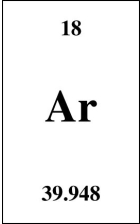 What is the atomic number of the neutral atom represented by the Periodic Table block in the figure?
 (Multiple Choice)
4.7/5 (78)
(78) 
Filters
- Essay(0)
- Multiple Choice(0)
- Short Answer(0)
- True False(0)
- Matching(0)