



 Chat with AI
Exam 5: Biological Macromolecules and Lipids

Exam 1: Biology and Its Themes46 Questions
Exam 2: Atoms and Molecules61 Questions
Exam 3: The Chemistry of Water55 Questions
Exam 4: Carbon: the Basis of Molecular Diversity52 Questions
Exam 5: Biological Macromolecules and Lipids71 Questions
Exam 6: Energy and Life65 Questions
Exam 7: Cell Structure and Function66 Questions
Exam 8: Cell Membranes67 Questions
Exam 9: Cellular Signaling62 Questions
Exam 10: Cell Respiration68 Questions
Exam 11: Photosynthetic Processes64 Questions
Exam 12: Mitosis63 Questions
Exam 13: Sexual Life Cycles and Meiosis64 Questions
Exam 14: Mendelian Genetics65 Questions
Exam 15: Linkage and Chromosomes54 Questions
Exam 16: Nucleic Acids and Inheritance65 Questions
Exam 17: Expression of Genes70 Questions
Exam 18: Control of Gene Expression66 Questions
Exam 19: Dna Technology56 Questions
Exam 20: The Evolution of Genomes47 Questions
Exam 21: How Evolution Works60 Questions
Exam 22: Phylogenetic Reconstruction66 Questions
Exam 23: Microevolution65 Questions
Exam 24: Species and Speciation65 Questions
Exam 25: Macroevolution58 Questions
Exam 26: Introduction to Viruses54 Questions
Exam 27: Prokaryotes61 Questions
Exam 28: The Origin and Evolution of Eukaryotes66 Questions
Exam 29: Nonvascular and Seedless Vascular Plants72 Questions
Exam 30: Seed Plants64 Questions
Exam 31: Introduction to Fungi56 Questions
Exam 32: An Introduction to Animal Diversity58 Questions
Exam 33: Invertebrates58 Questions
Exam 34: Vertebrates66 Questions
Exam 35: Plant Structure and Growth68 Questions
Exam 36: Transport in Vascular Plants73 Questions
Exam 37: Plant Nutrition51 Questions
Exam 38: Reproduction of Flowering Plants59 Questions
Exam 39: Plant Signals and Behavior60 Questions
Exam 40: The Animal Body58 Questions
Exam 41: Chemical Signals in Animals62 Questions
Exam 42: Animal Digestive Systems58 Questions
Exam 43: Animal Transport Systems58 Questions
Exam 44: Animal Excretory Systems49 Questions
Exam 45: Animal Reproductive Systems64 Questions
Exam 46: Development in Animals68 Questions
Exam 47: Animal Defenses Against Infection65 Questions
Exam 48: Electrical Signals in Animals62 Questions
Exam 49: Neural Regulation in Animals69 Questions
Exam 50: Sensation and Movement in Animals68 Questions
Exam 51: An Overview of Ecology71 Questions
Exam 52: Behavioral Ecology64 Questions
Exam 53: Populations and Life History Traits73 Questions
Exam 54: Biodiversity and Communities71 Questions
Exam 55: Energy Flow and Chemical Cycling in Ecosystems80 Questions
Exam 56: Conservation and Global Ecology75 Questions
Select questions type


Which polysaccharide is an important component in the structure of many animal and fungal cells?
(Multiple Choice)
4.9/5  (81)
(81) The following question is based on the 15 molecules illustrated in the figures. 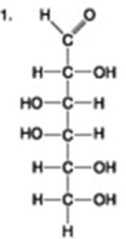


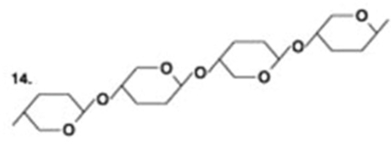
 Which of the following molecules is the pentose sugar found in RNA?
 (Multiple Choice)
4.8/5 (89)
(89) In a bottle of salad dressing, the vinegar separates from the oil because ________.
(Multiple Choice)
4.9/5 (71)
(71) Hemoglobin, when subjected to 40% acetonitrile at pH 10.0, loses its quaternary structure, which means the ________.
(Multiple Choice)
4.8/5 (64)
(64) Which of the following statements correctly describes "saturated fats"?
(Multiple Choice)
4.8/5 (70)
(70) The following question is based on the 15 molecules illustrated in the figures. 


 Which molecule is a saturated fatty acid?
 (Multiple Choice)
5.0/5 (81)
(81) During a 12-hour fast in a human, the first macromolecule to get depleted is typically ________.
(Multiple Choice)
4.7/5 (72)
(72) Which of the following terms does not describe a molecule of glucose?
(Multiple Choice)
4.8/5 (89)
(89) Use the following figure to answer the question.  What is the molecule represented by the figure above?
 (Multiple Choice)
4.9/5 (73)
(73) When nucleotides polymerize to form a nucleic acid, ________.
(Multiple Choice)
4.7/5 (81)
(81) Which of the following best compares dehydration reactions and hydrolysis?
(Multiple Choice)
5.0/5 (80)
(80) What is the role of hydrogen in the synthesis of "hardened fats" from vegetable oil?
(Multiple Choice)
4.8/5 (82)
(82) People who are lactose intolerant cannot extract energy from milk because ________.
(Multiple Choice)
4.8/5 (84)
(84) Use the following table to answer the question.
Absorbance at Various pH Levels
 The table represents the results of an experiment where the effects of pH buffers on an enzyme found in saliva (amylase) were studied. A spectrophotometer set at 500 nm was used to measure absorbance at the various pH levels every 20 seconds for 2 minutes. The higher absorbance values would indicate greater enzyme activity. All experiments were conducted at the same temperature.
Which statement correctly identifies the result that the optimum pH for amylase function is 7?
The table represents the results of an experiment where the effects of pH buffers on an enzyme found in saliva (amylase) were studied. A spectrophotometer set at 500 nm was used to measure absorbance at the various pH levels every 20 seconds for 2 minutes. The higher absorbance values would indicate greater enzyme activity. All experiments were conducted at the same temperature.
Which statement correctly identifies the result that the optimum pH for amylase function is 7? (Multiple Choice)
4.7/5 (78)
(78) Which of the following statements about hemoglobin is most consistent with the information in the passage?
(Multiple Choice)
4.9/5 (71)
(71) Which of the following features of cooking oil and gasoline (hydrocarbons) identifies why the molecules are NOT amphipathic?
(Multiple Choice)
4.8/5 (77)
(77) Which of the following ratios of nucleotides is constant for DNA?
(Multiple Choice)
4.9/5 (74)
(74) Olestra is a calorie-free fat that is synthesized by reacting sucrose with fatty acids. What is the maximum number of fatty acid molecules that can crosslink with the sucrose molecule? 
(Multiple Choice)
4.7/5 (84)
(84) 
Filters
- Essay(0)
- Multiple Choice(0)
- Short Answer(0)
- True False(0)
- Matching(0)