



 Chat with AI
Exam 11: Pharmacology and Toxicology

Exam 1: Anatomy265 Questions
Exam 2: Behavioral Sciences178 Questions
Exam 3: Biochemistry102 Questions
Exam 4: Embryology59 Questions
Exam 5: Epidemiology, Biostatistics, and Medical Informatics94 Questions
Exam 6: Genetics88 Questions
Exam 7: Histology46 Questions
Exam 8: Immunology147 Questions
Exam 9: Microbiology and Virology330 Questions
Exam 10: Pathology817 Questions
Exam 11: Pharmacology and Toxicology509 Questions
Exam 12: Physiology339 Questions
Exam 13: Psychiatry and Psychotherapy23 Questions
Select questions type


A 21-year-old man arrives at the emergency department after experiencing dizziness and extreme fatigue for several days. For the past two weeks, the patient has been drinking a lot of water and urinating more than usual. He experienced nausea and vomiting a day ago and has struggled to keep food and liquids down since then. There are no other medical conditions or medications that the patient is taking. The blood pressure is 90/60 mm Hg, the pulse is 120 beats per minute, and the respirations are 20 bpm. Urinalysis reveals glucose and ketones. The patient is given intravenous fluids as well as an intravenous infusion of recombinant human insulin that has not been modified in any way. When his condition has stabilized, the insulin infusion is stopped and the same insulin formulation is given subcutaneously. Which of the following drug concentration curves is most likely to be obtained after the subcutaneous insulin injection? 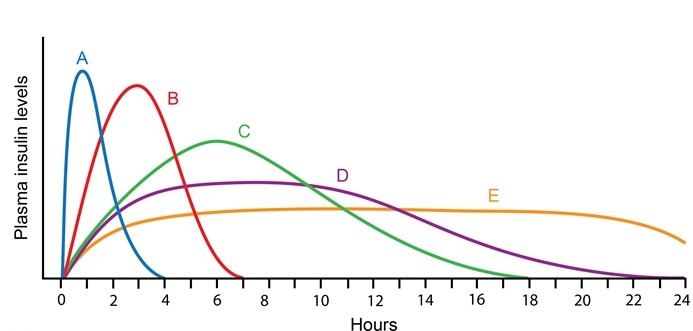
(Multiple Choice)
4.9/5  (78)
(78) A 60-year-old woman comes to the office for a 3-day history of dysuria, urgency and frequency. Urinalysis show many WBCs in the urine speciman and nitrates positive. She has no fever and she is a sexual active with her partner. Physical examination shows no abnormalities. A trimethoprim-sulfamethoxazole is prescribed to treat her urinary tract infection. This patient is at greatest risk for which of the following drug-induced adverse effects?
(Multiple Choice)
4.9/5 (91)
(91) A 73-year-old woman with Parkinson disease comes to the physician with worsening stiffness, shuffling gait, and unsteadiness despite taking the maximum dose of levodopa/carbidopa combination medication. Neurologic examination shows a rigidity of the upper extremities. Her gait is slow, with shortened stride length. Entacapone is added to her medication regimen. This drug most likely improves this patient's symptoms by which of the following mechanisms?
(Multiple Choice)
4.9/5 (75)
(75) A 68-year-old man comes to the emergency department 12 hoursdue to a large, painful skin lesion. He began taking a medication 4 days ago after failed cardioversion for atrial fibrillation, but he cannot remember the name. Physical examination shows a tender bluish-black discoloration on the forearm. Temperature is 36.7 C (98 F), blood pressure is 130/82 mm Hg, and pulse is 88/min and irregularly irregular. Physical examination findings are shown in the image below. 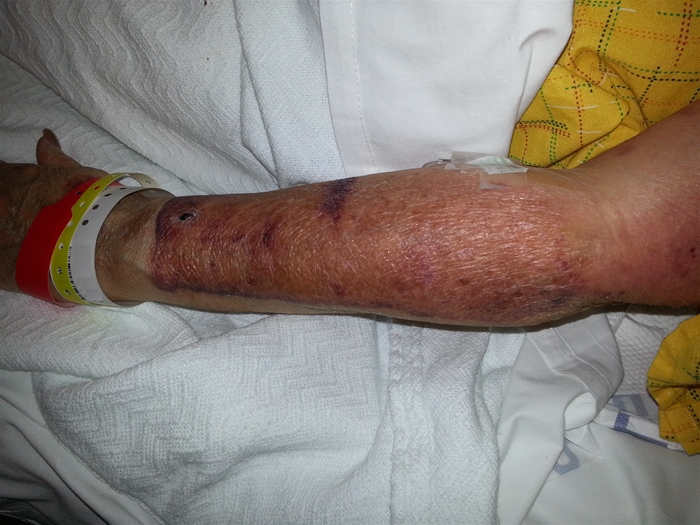 The remainder of the skin examination is normal. Which of the following is the most likely cause of this patient's skin lesion?
 (Multiple Choice)
4.7/5 (87)
(87) An investigator investigates the effects of two different medications on the heart rate of patients suffering from persistent atrial fibrillation. After several days of receiving therapeutic doses of medication, participants' heart rates are measured for 24 hours at rest and during 10 minutes of moderate exercise. The results are compared to placebo and are depicted in the graphs below. Which of the following medications is the red line most likely to represent? (drug 1)? 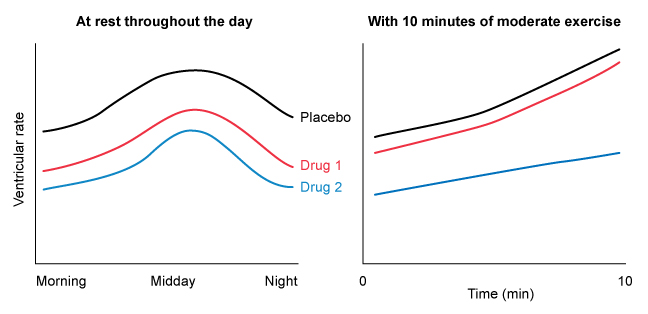
(Multiple Choice)
4.8/5 (69)
(69) A 6-year-old boy is brought to the physician by his father due progressive lethargy. He feels that he is out of the energy and he cannot play or do any outdoor activity due to fatigue and dyspnea. He has no prior medical conditions and takes no medications. During the auscultation, there is a holosystolic murmur at the lower sternal border. Echocardiography reveals apical displacement of the tricuspid valve leaflets, decreased right ventricular volume, and atrialization of the right ventricle. If this patient's diagnosis is due to a side effect of a drug taken during pregnancy, his biological mother most likely had which of the following conditions?
(Multiple Choice)
4.9/5 (85)
(85) Researchers develop a novel glycopeptide antibiotic similar to vancomycin that is bactericidal against many gram-positive bacteria. From animal studies, they determine that the effective drug dosage is 5 mg/kg/day administered intravenously in divided doses. In a clinical trial, the antibiotic is administered to adult and neonatal patients with gram-positive infections. The drug is found to be effective in adults but not in neonates. During further analysis, plasma concentrations of the drug are measured in both groups, with the results shown in the image below: 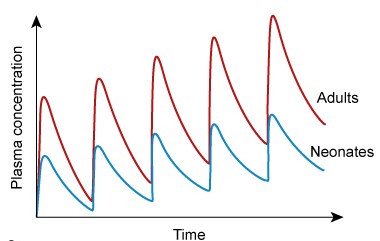 Compared to adults, which of the following neonatal factors is the most likely cause of the difference in drug effectiveness?
 (Multiple Choice)
4.8/5 (86)
(86) A 56-year-old Caucasian female arrives at your office with a persistent cough. She claims that her cough is dry and has a negative impact on her quality of life. She denies experiencing chest pain, hemoptysis, or shortness of breath. Her previous medical history is significant due to long-standing hypertension, diabetes, and a myocardial infarction two months ago. She doesn't smoke or drink alcohol. Her blood pressure is 130/70 mmHg, and her heart rate is 70 bpm. Which of the following is the best next step in the management of this patient?
(Multiple Choice)
4.9/5 (73)
(73) 28-year-old man comes to the emergency department for an injury sustained while doing construction. Physical examination shows a long, superficial, irregular laceration on the lateral aspect of the left forearm with exposed fascia and with an anterior dislocation of the humerus. Reduction of the patient's dislocated joint is performed under procedural sedation with intravenous propofol. A single bolus of propofol provides adequate sedation for the procedure, and he becomes clinically alert several minutes after administration. Which of the following mechanisms most likely explains this patient's rapid recovery from anesthesia?
(Multiple Choice)
4.9/5 (71)
(71) A 13-year-old girl is brought to the hospital by her father because of a worsening pruritic skin rash and fever. Five weeks ago, she was diagnosed with seizure and treatment with phenytoin was begun. Her immunizations are up-to-date. Her temperature is 38.8°C (101.8°F). There is a diffuse confluent erythema involving 65% of the body, palpable generalized lymphadenopathy, and symmetrical facial swelling. Which of the following laboratory findings is most likely to be present in this patient?
(Multiple Choice)
5.0/5 (93)
(93) A 68-year-old man arrives at the office with thigh and leg pain that worsens with activity. He finds it difficult to walk through the local mall with his wife. For hypertension and diabetes mellitus, previous medical history is important. The patient smokes two packs of cigarettes per day and drinks alcohol on occasion. Physical examination reveals weak dorsalis pedis pulses in both feet. Further testing reveals moderate peripheral arterial disease in both lower extremities. Which of the following drugs would best provide symptomatic improvement due to direct dilation of arteries and inhibition of platelet aggregation?
(Multiple Choice)
4.9/5 (64)
(64) A 35-year-old woman with irritable bowel syndrome comes to the physician because of increased diarrhea. She has not had any fever, bloody stools, nausea, or vomiting. The increase in stool frequency began when she started a new job. She is started on loperamide, and her symptoms improve. Which of the following is the primary mechanism of action of this drug?
(Multiple Choice)
5.0/5 (71)
(71) The office receives a follow-up visit from a 54-year-old man who has nonischemic cardiomyopathy. He currently experiences dyspnea with light exertion due to acute decompensated heart failure for which he has regularly been hospitalized. Along with taking several drugs, the patient has a history of hypertension. With a steady pulse of 72 beats per minute, blood pressure measures 116/70 mm Hg. Bibasilar lung crackles, increased jugular venous pressure, and edema in the lower extremities are all visible during a physical examination. Both serum potassium and serum creatinine are 1.0 mg/dL and 4.2 mEq/L, respectively. The patient reports symptom relief three weeks after beginning digoxin treatment. Which of the following is the initial cellular event triggering this response to the new medication?
(Multiple Choice)
4.8/5 (85)
(85) A 55-year-old man arrives at the emergency department complaining of recurring retrosternal chest pain. The episodes usually occur during physical activity, such as climbing stairs or walking uphill. The patient has no known medical problems and does not smoke, drink alcohol, or use illegal drugs. He is given a sublingual tablet and reports immediate pain relief. This drug most likely improved this patient's symptoms by causing which of the following hemodynamic changes?
(Multiple Choice)
4.9/5 (75)
(75) A 20-year-old woman comes to the physician because of a 2-day history of dysuria, increased urinary frequency, and urgency. The patient has no fever, flank pain, nausea, or vomiting. She has no chronic medical conditions and no known drug allergie. She is sexually active with her new boyfriend, and they use condoms inconsistently. Her temperature is 37.2°C (99.0°F). Examination shows suprapubic tenderness to palpation. Pelvic examination shows normal-appearing external genitalia. Which of the following is the most appropriate pharmacotherapy for this patient?
(Multiple Choice)
4.9/5 (88)
(88) An 81-year-old woman is brought to the emergency department by staff of an assisted living facility where she resides with fever and a cough. Her temperature is 39.1°C (102.3°F). Physical examination shows diffuse crackles over the right lung fields. The patient has a history of recurrent hospitalizations with multiple antibiotic courses for urinary tract infection, infected decubitus ulcer, and pneumonia. Blood and sputum cultures are obtained, and the patient is started on intravenous fluids and empiric ceftriaxone. Her blood culture shows extended-spectrum beta-lactamase (ESBL)-producing Escherichia coli. Which of the following features is most likely to be found in this organism?
(Multiple Choice)
4.8/5 (71)
(71) A 44-year-old woman comes to the physician because of a 6-month history of fatigue, intermittent fever, a 4.0-kg (9-lb) weight loss, and a progressive, nonproductive cough. She does not smoke. Physical examination shows mild wheezing over bilateral lung fields. Chest x-ray demonstrates enlarged hilar lymph nodes, and laboratory testing reveals an elevated ACE level. Purified protein derivative testing is negative. Appropriate pharmacotherapy is initiated. At follow-up a few days later, the symptoms have improved but blood glucose is elevated. Which of the following additional changes is most likely present in this patient due to her treatment?
(Multiple Choice)
4.9/5 (74)
(74) The effects of cortisol on vascular reactivity are studied in a series of experiments in hypophysectomized rats. Their preliminary research demonstrates that administering cortisol by itself does not cause a vascular response. After that, the scientists assess the vascular response to an injection of norepinephrine both with and without a cortisol pretreatment. The graph below displays the outcomes of their experiments. 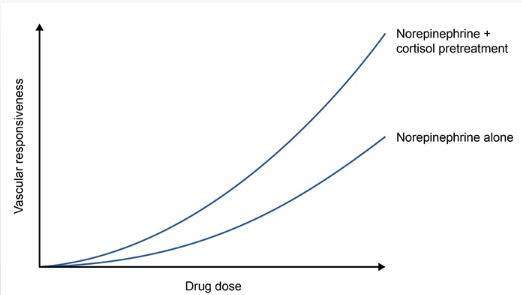 Which of the following pharmacologic principles best describes the effect of cortisol in this experiment?
 (Multiple Choice)
4.9/5 (74)
(74) An 8-year-old boy is brought to the physician because of a 1-day history of severe left hand pain. He has had similar painful episodes in the past that required hospitalization. Physical examination shows pale conjunctivae. There is tenderness on palpation of the wrist and the small joints of the left hand. Peripheral blood smear shows crescent-shaped erythrocytes. He is started on a pharmacologic agent that is known to cause macrocytosis. This drug causes an arrest in which of the following cell cycle phases? 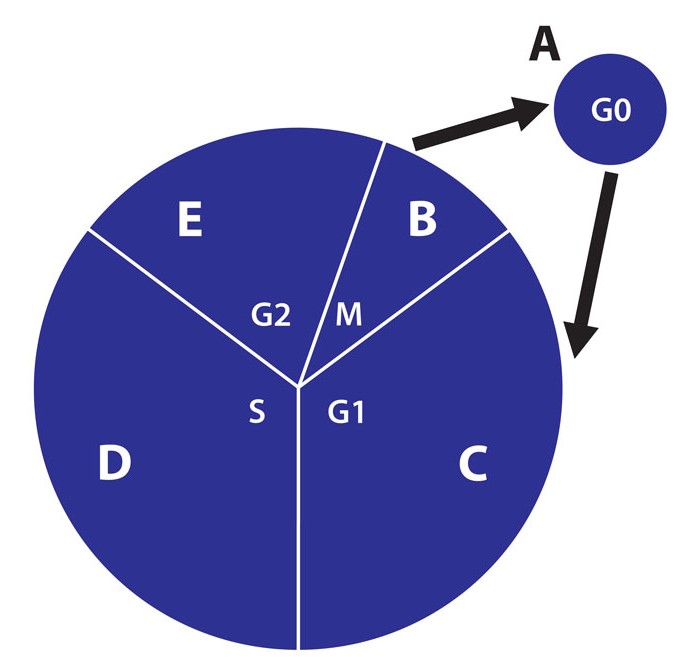
(Multiple Choice)
4.7/5 (70)
(70) A 27-year-old woman comes to the physician because of a 2-month history of palpitations, diaphoresis, and a 5-kg (11-lb) weight loss. The patient has no other medical problems and takes no medication. She does not use tobacco, alcohol, or illicit drugs. Her pulse is 101/min and blood pressure is 141/84 mm Hg. Physical examination shows a diffusely enlarged of thyroid gland and nontender on palpation and a fine tremor when the fingers are outstretched. Laboratory studies show markedly decreased serum TSH and elevated thyroxine levels. Methimazole monotherapy is initiated. Two months later, her symptoms had resolved. The treatment most likely improved this patient's condition by directly inhibiting which of the following processes?
(Multiple Choice)
4.9/5 (75)
(75) 
Filters
- Essay(0)
- Multiple Choice(0)
- Short Answer(0)
- True False(0)
- Matching(0)