



 Chat with AI
Exam 11: Pharmacology and Toxicology

Exam 1: Anatomy265 Questions
Exam 2: Behavioral Sciences178 Questions
Exam 3: Biochemistry102 Questions
Exam 4: Embryology59 Questions
Exam 5: Epidemiology, Biostatistics, and Medical Informatics94 Questions
Exam 6: Genetics88 Questions
Exam 7: Histology46 Questions
Exam 8: Immunology147 Questions
Exam 9: Microbiology and Virology330 Questions
Exam 10: Pathology817 Questions
Exam 11: Pharmacology and Toxicology509 Questions
Exam 12: Physiology339 Questions
Exam 13: Psychiatry and Psychotherapy23 Questions
Select questions type


A 76-year-old woman is taken to the emergency room by her son as a result of recent confusion and lack of energy. The patient takes a number of drugs and has congestive heart failure and chronic atrial fibrillation. She has been feeling nauseous and less hungry lately. Today, she vomited three times. Additionally, the patient mentions eyesight issues. Blood pressure is 133/80 mm Hg and the temperature is 36.7 C (98 F). Laboratory results are as follows: 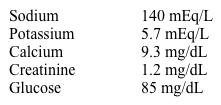 ECG shows junctional escape rhythm at a rate of 48/min with occasional ventricular premature beats. Increased blood level of which of the following medications is most likely responsible for her symptoms?
 (Multiple Choice)
4.8/5  (86)
(86) A 63-year-old woman with rheumatoid arthritis comes to the physician for a follow-up examination one week after being discharged from the hospital. While she was in the hospital, she received acetaminophen and erythropoietin. This patient most likely has which of the following additional conditions?
(Multiple Choice)
4.8/5 (88)
(88) A 22-year-old woman comes to the office due to dysuria and increased urinary frequency for the past 2 days. She has no hematuria, vaginal discharge, or irritation. The patient has no other medical problems. Her temperature is 37 C (98.6 F). Physical examination reveals mild suprapubic tenderness on deep palpation; there is no costovertebral angle tenderness. Urine dipstick is positive for leukocyte esterase and nitrites. The patient is started on trimethoprim, which leads to rapid resolution of her symptoms. Which of the following drugs has the same intracellular target as the drug used to treat this patient?
(Multiple Choice)
4.9/5 (75)
(75) A 71-year-old woman visits the emergency room after experiencing orthopnea and increasing dyspnea for the past week. She has a 15% left ventricular ejection fraction, a history of myocardial infarction, and systolic heart failure. Medications taken by the patient, including carvedilol, furosemide, aspirin, lisinopril, and atorvastatin, are taken as prescribed. Both the blood pressure and the pulse measure 118/74 mm Hg. Bilateral lower extremities pitting edema, bibasilar crackles, an S3 heart sound, and high jugular venous pressure are all found during the examination. Dobutamine infusion is started for the patient, which significantly reduces their symptoms. A little improvement in cardiac contractility is seen on an echocardiogram. Which of the following is the likely mechanism underlying this patient's clinical improvement?
(Multiple Choice)
4.8/5 (90)
(90) A 23-year-old man is brought to the emergency department from a college party because of a 1-hour history of a crawling sensation under his skin. He appears anxious and is markedly pale. His temperature is 38°C (100.4°F), pulse is 104/min, respirations are 18/min, and blood pressure is 145/90 mm Hg. Physical examination shows diaphoretic skin, moist mucous membranes, and dilated pupils. His speech is loud, rapid, and difficult to interrupt. Which of the following is the most likely diagnosis?
(Multiple Choice)
4.9/5 (74)
(74) A 34-year-old woman comes to the physician for a follow-up appointment because of muscle weakness She feels well. The patient has a history of hypertension and migraine. was started on hydrochlorothiazide 4 weeks ago. Blood pressure is 138/86 mm Hg and pulse is 78/minFor the past year, the frequency of headaches has been increasing and they now occur 1-2 times per week. Her medications are sumatriptan and hydrochlorothiazide. Based on his most recent laboratory results, triamterene is added to the current therapy. Which of the following best describes the mechanism of action of this medication?
(Multiple Choice)
4.8/5 (84)
(84) A 67-year-old woman visits the office for a check-up on her type 2 diabetes mellitus. Six months ago, she was diagnosed with diabetes. Although lifestyle changes were initially recommended, the patient's glycemic control did not improve significantly. The patient was started on metformin one month ago and has remained on it; however, she has been experiencing abdominal discomfort and diarrhea as a result of the therapy. She has no other medical issues. The BMI is 28 kg/m22. The physical exam is unremarkable. According to laboratory results, hemoglobin A1c is 8.2 percent. After further discussion, metformin is discontinued and glyburide is prescribed. Compared to metformin, this new therapy is most likely to increase the risk of which of the following?
(Multiple Choice)
4.8/5 (66)
(66) A 55-year-old man comes to the physician for a follow-up examination. He feels well. He has hyperlipidemia and type 2 diabetes mellitus. The patient has been taking all his medications as prescribed. Four months ago, fasting serum studies showed an LDL-cholesterol of 136 mg/dL and his medications were adjusted. Vital signs are within normal limits. On physical examination, there is generalized weakness of the proximal muscles. Deep tendon reflexes are 2+ bilaterally. Laboratory testing reveals elevated serum creatine kinase. The medication most likely responsible for this patient's current findings also causes which of the following effects?
(Multiple Choice)
4.9/5 (76)
(76) A 68-year-old man with type 2 diabetes mellitus comes to the physician because of a 5-month history of episodic palpitations, dizziness, and fatigue. His pulse is 134/min and irregularly irregular, and his blood pressure is 165/92 mm Hg. An ECG shows a narrow complex tachycardia with absent P waves. He is prescribed a drug that decreases the long-term risk of thromboembolic complications by inhibiting the extrinsic pathway of the coagulation cascade. The expected beneficial effect of this drug is most likely due to which of the following actions?
(Multiple Choice)
4.8/5 (73)
(73) On routine examination, a 6-year-old asthmatic has the finding shown in the image below. 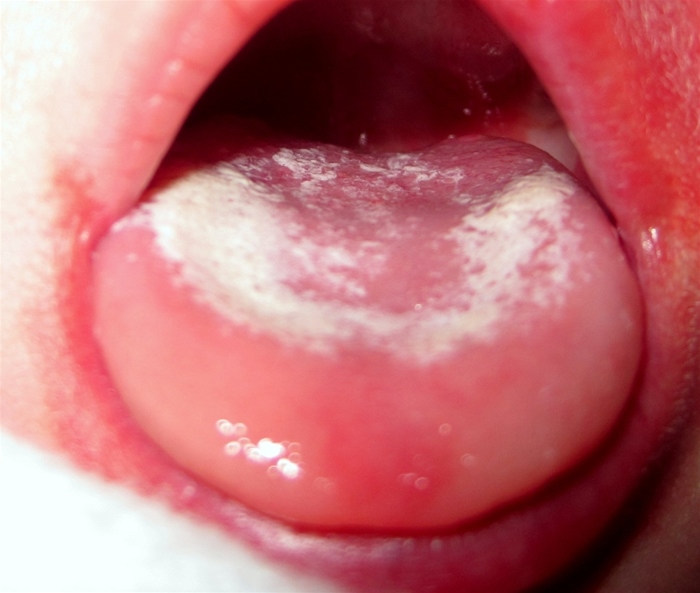 Which of the following is the most appropriate pharmacotherapy for the lesions on this patient's oral mucosa?
 (Multiple Choice)
4.9/5 (73)
(73) A 54-year-old man comes to the physician for a follow up visit. He reports that he feels well. He is a smokerr of 2 packs daily and drinks three 12-oz bottles of beer each night. He works as an accountant and says he does not have time to exercise regularly. He is 178 cm (5 ft 10 in) tall and weighs 98 kg (216 lb); BMI is 31 kg/m2. His blood pressure is 146/90 mm Hg. Physical examination shows no abnormalities. During a previous visit, he was counseled on the benefits of smoking cessation. He reports that despite trying he has been unable to stop smoking due to overwhelming cravings. The physician prescribes a drug that reduces nicotine cravings while decreasing the pleasurable effects of cigarettes and other tobacco products. Which of the following medications was most likely prescribed to the patient?
(Multiple Choice)
4.8/5 (86)
(86) A researcher is developing a new antiretroviral medication to treat HIV infection. He working to add an adjuvant substance to inhibit viral proliferation in the brain. Treatment success rates improve when Drug X is combined with an adjuvant agent. Data comparing the two medication regimens is shown in the table below.  Based on the data, the adjuvant agent most likely improves viral control through which of the following mechanisms?
 (Multiple Choice)
4.9/5 (79)
(79) A 22-year-old man comes to the emergency department due to a persistent, painful erection that has lasted for more than 8 hours. Medical history is significant for treatment-resistant major depressive disorder, and insomnia. The patient does not use tobacco, alcohol, or illicit drugs. Temperature is 37 C (98.6 F), blood pressure is 124/82 mm Hg, pulse is 84/min, and respirations are 16/min. Examination shows an engorged corpora cavernosa and a rigid, tender penis. Which of the following drugs is the most likely cause of this patient's condition?
(Multiple Choice)
4.7/5 (84)
(84) A 44-year-old woman comes to the physician because of progressive pain and stiffness in her hands and wrists for the past several months. Her hands are stiff in the morning; the stiffness improves as she starts her chores. Physical examination shows bilateral swelling and tenderness of the wrists, metacarpophalangeal joints, and proximal interphalangeal joints. Her range of motion is limited by pain. Laboratory studies show an increased erythrocyte sedimentation rate. . Following initial diagnostic testing, a multidrug treatment regimen is started. Soon after treatment begins, she develops painful mouth ulcers and nausea. Liver function tests show new aspartate transaminase and alanine transaminase elevations. Which of the following medications is most likely responsible for the adverse effects seen in this patient?
(Multiple Choice)
4.8/5 (84)
(84) A 23-year-old woman comes to the physician due to acute nausea and vomiting. She recently returned from a vacation to Mexico and started to feel "queasy" on the last day of her trip. The patient then developed nausea with frequent vomiting and intermittent bouts of watery diarrhea. She has no visible blood in her stools. Her temperature is 36.8 C (98 F), blood pressure is 118/70 mm Hg, pulse is 86/min, and respirations are 12/min. Abdominal examination shows mild tenderness and increased bowel sounds. Improvement of this patient's vomiting would best be achieved by a medication targeting which of the following receptors?
(Multiple Choice)
4.8/5 (94)
(94) A 54-year-old woman comes to the physician for a follow-up examination. She has been recently diagnosed with hypertension and was given lisinopril but stopped it a week ago due to progressive dry cough. Her temperature is 37.3°C (99.1°F), pulse is 93/min, and blood pressure is 152/93 mm Hg. She has a history of type 2 diabetes mellitus. Examination shows no abnormalities. She is sexually active with her husband and uses condoms inconsistently. Which of the following is the best treatment for this patient's hypertension?
(Multiple Choice)
4.8/5 (82)
(82) A 60-year-old man comes to the office for follow up appointment. He feels shortenss of breath while walking his dog around the block. He states that he is experiencing a dyspnea while sleeping therefore he uses 3 pillows or sleep on the recliner. The patient had an acute myocardial infarction 2 years ago and has been nonadherent with his medications. Physical examination shows bibasilar lung crackles, jugular venous distension, and bilateral pitting edema in the lower extremities. Which of the following diuretics would most likely improve survival if added to this patient's current regimen?
(Multiple Choice)
4.7/5 (92)
(92) A 56-year-old man comes to the physician because of progressive worsening of vision in both eyes over the past 6 months. The patient reports that during this period he has had blurry vision and a glare in the evenings. The patient has systemic lupus erythematosus, which is treated with hydroxychloroquine and prednisone. She avoids sun exposure due to photosensitivity and has vitamin D deficiency for which she takes a vitamin D supplement. Ophthalmologic examination shows visual acuity of 20/100 in both eyes. Ocular movements are full. The remainder of the examination shows no abnormalities. Which of the following is the most significant contributing factor for the eye findings in this patient?
(Multiple Choice)
4.9/5 (93)
(93) Diffuse headache and progressive lethargy. Medical history is significant for hypertension and he is nonadherent to his medication. There is no history of head trauma. He drinks 1-2 beers daily and occasionally more on weekends. Temperature is 37 C (98.6 F), blood pressure is 182/95 mm Hg, pulse is 65/min, and respirations are 9/min. On physical examination, the patient responds to painful stimuli only but does not move his right extremities to pain. The left pupil is larger than the right and is sluggish to react to the light. CT scan of the head shows left basal ganglia hemorrhage causing compression of left lateral ventricle and shift of the midline structures. Endotracheal intubation is performed for airway protection, and an intravenous bolus of mannitol is administered. Which of the following is the most likely acute effect of the medication given to this patient?
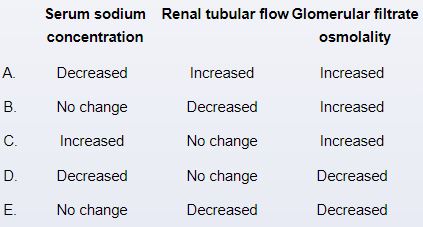
(Multiple Choice)
5.0/5 (68)
(68) A 46-year-old woman is admitted to the hospital because of tarry-black stools and epigastric pain for 2 weeks. The epigastric pain is relieved after meals, but worsens after 1-2 hours. She has a history of hypertension and hyperlipidemia, for which he takes amlodipine and simvastatin. Physical examination shows no abnormalities. Helicobacter pylori infection is diagnosed and she is started on treatment and has had partial symptom improvement. After two weeks she presents with progressive myopathy and fatigue. Physical examination shows diffuse muscle tenderness. Laboratory evaluation reveals elevated blood urea nitrogen and serum creatinine levels. Urine microscopy shows no red or white blood cells. Which of the following medications most likely precipitated this patient's current condition?
(Multiple Choice)
4.9/5 (74)
(74) 
Filters
- Essay(0)
- Multiple Choice(0)
- Short Answer(0)
- True False(0)
- Matching(0)