Multiple Choice
Researchers develop a novel glycopeptide antibiotic similar to vancomycin that is bactericidal against many gram-positive bacteria. From animal studies, they determine that the effective drug dosage is 5 mg/kg/day administered intravenously in divided doses. In a clinical trial, the antibiotic is administered to adult and neonatal patients with gram-positive infections. The drug is found to be effective in adults but not in neonates. During further analysis, plasma concentrations of the drug are measured in both groups, with the results shown in the image below: 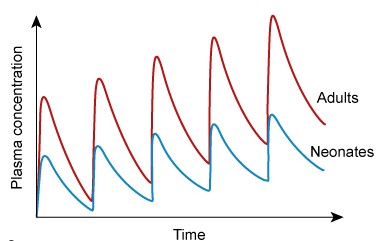 Compared to adults, which of the following neonatal factors is the most likely cause of the difference in drug effectiveness?
A) Decreased cytochrome P450 activity
B) Decreased renal blood flow
C) Elevated plasma protein level
D) High body water content
Correct Answer:

Verified
Correct Answer:
Verified
Q362: A 60-year-old woman comes to the office
Q363: A 73-year-old woman with Parkinson disease comes
Q364: A 68-year-old man comes to the emergency
Q365: An investigator investigates the effects of two
Q366: A 6-year-old boy is brought to the
Q368: A 56-year-old Caucasian female arrives at your
Q369: 28-year-old man comes to the emergency department
Q370: A 13-year-old girl is brought to the
Q371: A 68-year-old man arrives at the office
Q372: A 35-year-old woman with irritable bowel syndrome