



 Chat with AI
Exam 4: Surgery

Exam 1: Medicine2 k Questions
Exam 2: Pediatric723 Questions
Exam 3: Psychiatry336 Questions
Exam 4: Surgery563 Questions
Exam 5: Obstetrics & Gynecology469 Questions
Select questions type


An 80-year-old man is brought to the emergency department due to 2 days of fever, productive cough, and shortness of breath. The patient has a history of hypertension, coronary artery disease, and ascending aortic aneurysm with moderate aortic insufficiency. He has not been hospitalized or used antibiotics recently. The patient is an ex-smoker with a 30-pack-year history and has no drug allergies. Temperature is 38.4 C (101.1 F), blood pressure is 110/68 mm Hg, pulse is 102/min, and respirations are 20/min. Physical examination reveals right-sided lung crackles and a soft, early diastolic murmur. Leukocytes are 14,000/mm3, and a chest x-ray shows infiltrates in the right upper lobe of the lung. Which of the following antibiotics should be avoided in this patient to prevent complications associated with his comorbid conditions?
(Multiple Choice)
4.8/5  (81)
(81) A 58-year-old man comes to the urgent care center with a 2-week history of an ulcer on his right foot. He recalls no injury and found a "dime sized" ulcer on the bottom of the foot after noticing soakage on his sock. The patient has been cleaning the wound with antiseptics and applying topical antibiotics, but it has failed to heal. He has had no pain, surrounding redness, fever, or chills. The patient was diagnosed with hypertension several years ago but had no follow-up with a physician. He takes ibuprofen for occasional back pain. The patient has a 30-pack-year smoking history and drinks 1 or 2 beers daily. He works in a warehouse, where he is "constantly on the move" and considers himself to be in good health. Temperature is 36.7 C (98.1 F), blood pressure is 156/98 mm Hg, and pulse is 88/min. BMI is 32 kg/m2. On examination, the feet are warm and dry. A 2-cm nontender ulcer is present on the sole of the foot just below the head of the first metatarsal bone. There is scant discharge and necrotic tissue at the ulcer bed, but the bone probe is negative. Which of the following will most likely diagnose the underlying cause of this patient's foot ulcer?
(Multiple Choice)
4.8/5 (75)
(75) A 65-year-old woman comes to the office due to 4 weeks of progressive abdominal pain that is constant and worse with eating. It has caused her to eat less often, and she has noticed some weight loss. The patient has had several years of heartburn, which is relieved by over-the-counter medications. She has taken omeprazole for the last 4 weeks, but it has not improved the pain. The patient has a 10-pack-year smoking history but quit several years ago. She does not use alcohol. Vital signs are within normal limits. BMI is 34 kg/m2. Abdominal examination shows epigastric tenderness. Stool occult blood testing is negative. Complete blood count, liver studies, and serum chemistry are normal. Upper gastrointestinal endoscopy is performed and reveals mild esophagitis but no gastritis. Abdominal ultrasound shows 2 large gallstones with no gallbladder wall thickening or pericholecystic fluid, and there is no ductal dilatation. The pancreas is poorly visualized due to overlying gas. Which of the following is the most appropriate next step in management of this patient?
(Multiple Choice)
4.7/5 (74)
(74) A 37-year-old man with a history of intravenous drug use is admitted to the hospital for treatment of cellulitis due to chronic lower extremity venous stasis ulcers. Intravenous antibiotic therapy is administered, and saline-moistened wet-to-dry gauze dressing changes are performed. Following resolution of the cellulitis, the patient is evaluated for potential wound coverage with skin grafting. He declines the procedure but agrees to perform any recommended wound care. Examination of the affected area on the left lower leg is shown in the exhibit. 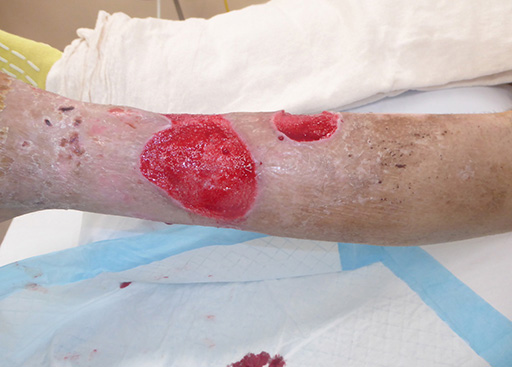 Irrigation of the wound is performed. Which of the following is the best next step in management of this patient's wound?
 (Multiple Choice)
4.8/5 (84)
(84) A 45-year-old man with HIV comes to the emergency department due to increasing shortness of breath, left-sided chest pain, chills, and productive cough. The symptoms began 7 days ago. At first, the patient thought he had the flu, but after 3 days he began coughing up green phlegm and developed left-sided chest pain. The pain is worse with deep breaths or cough. CD4 count is unknown. He smokes cigarettes and drinks alcohol regularly. Temperature is 38.9 C (102 F), blood pressure is 110/70 mm Hg, pulse is 110/min, and respirations are 26/min. Physical examination shows poor dentition and decreased breath sounds over the left lung base. Chest x-ray is shown below. 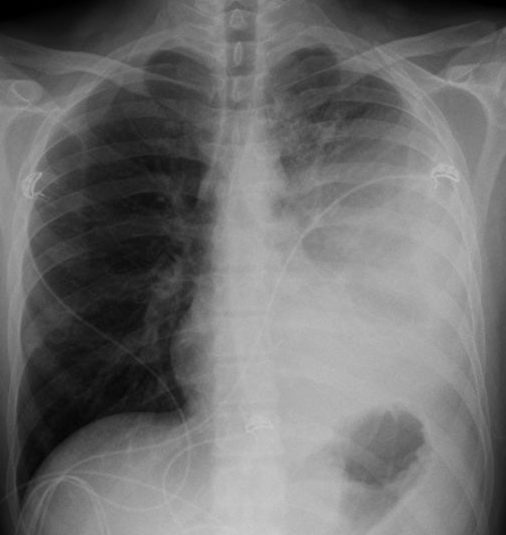 Which of the following is the most likely cause of this patient's current symptoms?
 (Multiple Choice)
4.8/5 (66)
(66) A 28-year-old woman, gravida 1 para 1, comes to the office for follow-up 10 days after cesarean delivery. Her pregnancy was uneventful; she went into labor spontaneously at full term but underwent cesarean section due to failure to progress. The patient received epidural analgesia during labor and general anesthesia during surgery. She notes that she still has some lower back discomfort. In addition, her legs feel weaker, and she has been experiencing tingling and numbness in the lower extremities. The patient reports malaise but has had no significant pain or discharge from the surgical wound or vaginal bleeding. She has no other significant medical issues, and her only medication is a daily multivitamin. Temperature is 38.2 C (100.8 F), blood pressure is 110/70 mm Hg, and pulse is 94/min. Physical examination shows clear lungs; normal heart sounds; well-healing surgical incision with no surrounding erythema or discharge; and nontender uterus. Back examination reveals moderate tenderness over the lumbar region. Neurological examination shows weakness of left quadriceps and decreased left knee reflex. Sensation to light touch is decreased over bilateral dorsa of the feet. Which of the following is the most appropriate management for this patient's current symptoms?
(Multiple Choice)
4.9/5 (86)
(86) A 5-year-old boy is brought to the office due to left wrist pain lasting a day. His mother states that he refuses to use the left hand because of the pain. The patient has no previous medical conditions and is up to date with immunizations. He consumes a balanced diet. Vital signs and growth parameters are within normal limits for his age. On physical examination, the patient holds the left arm against his body. There is tenderness of the left wrist with no visible deformity. When instructed, the patient moves all fingers except the left thumb. Radiograph of the left forearm is shown in the image below: 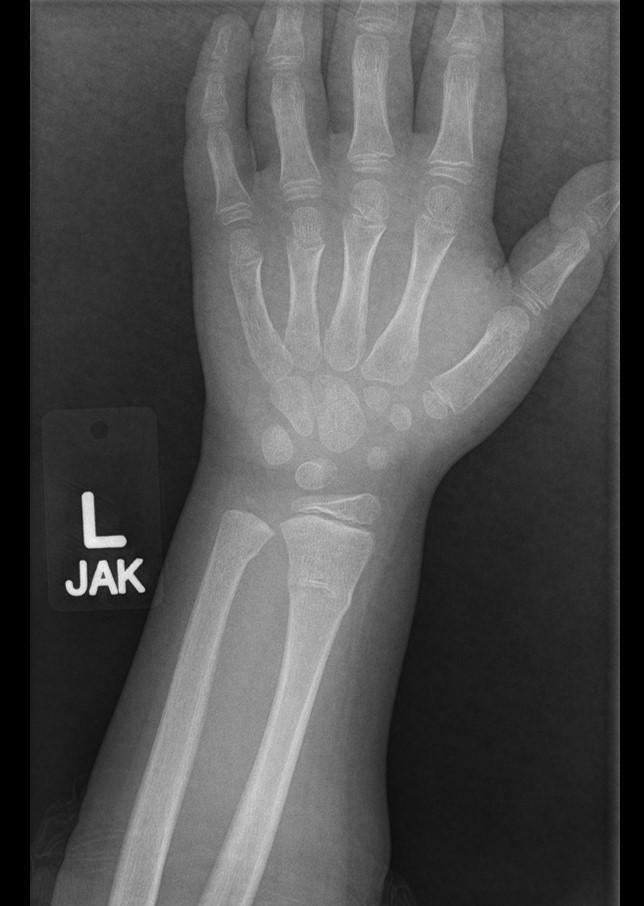 Which of the following is the most likely cause of this patient's symptoms?
 (Multiple Choice)
5.0/5 (69)
(69) A 40-year-old woman with a medical history significant for obstructive hypertrophic cardiomyopathy is scheduled for elective hysterectomy under general anesthesia due to large, symptomatic uterine fibroids and blood loss anemia. At baseline, the patient develops mild dyspnea with moderate exercise. She takes metoprolol. Blood pressure is 120/80 mm Hg and pulse is 65/min. Examination shows clear lungs and a midsystolic murmur. There is no jugular venous distension or peripheral edema. During anesthesia, which of the following is recommended to prevent perioperative complications in this patient?
(Multiple Choice)
4.8/5 (85)
(85) A 50-year-old man comes to the office due to a 4-month history of achy joint pain in the lower back, shoulders, hips, and knees. The pain increases with activity, and he has no morning stiffness. The patient also has excessive sweating, polyuria, and erectile dysfunction. Medical history is unremarkable. The patient has a 25-pack-year smoking history and drinks moderate amounts of alcohol on social occasions. Blood pressure is 150/90 mm Hg, pulse is 80/min, and respirations are 16/min. Examination shows crepitus on passive movement of the knee joints. There is increased interdental spacing and an enlarged tongue, and the remainder of the examination is normal. Plain radiography of the hand reveals widening of the joint spaces, osteophytes, and thickened soft tissues. Laboratory evaluation reveals low testosterone and hyperglycemia. What is the most likely diagnosis?
(Multiple Choice)
4.9/5 (94)
(94) A 20-year-old man comes to the office for a follow-up after a recent shoulder dislocation. He has had multiple joint dislocations since childhood, including both shoulder joints. The patient also notes easy bruising and poor wound healing, even with small cuts. Height is 176 cm and weight is 70 kg. Blood pressure is 122/73 mm Hg and pulse is 78/min and regular. On physical examination, several wide, atrophic scars are present on the upper extremities. Echocardiogram shows normal aortic root size, normal left ventricular function, and no significant valvular abnormalities. Which of the following is the most likely diagnosis?
(Multiple Choice)
4.9/5 (87)
(87) A 20-year-old collegiate football player is brought to the emergency department due to severe right knee pain following a hard tackle. He cannot bear weight on the right leg. Blood pressure is 142/90 mm Hg, pulse is 108/min, and respirations are 18/min. The right knee is deformed, swollen, and bruised; the lower leg is warm and soft, with a palpable dorsalis pedal pulse. Lateral x-ray of the knee reveals a posterior dislocation, as shown in the exhibit. 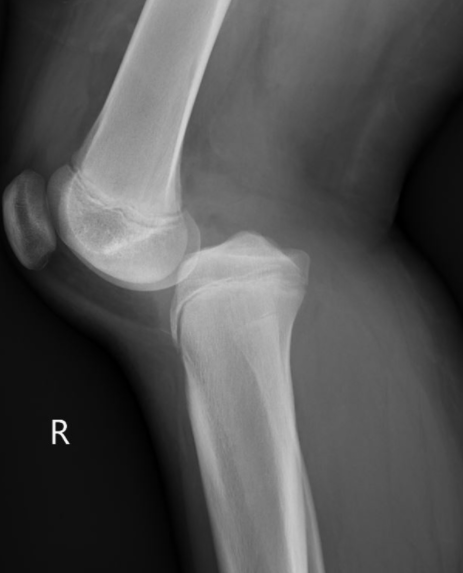 Immediate reduction is performed under sedation. Which of the following is the best next step in management of this patient?
 (Multiple Choice)
4.8/5 (77)
(77) A 74-year-old woman is brought to the emergency department after acute onset of abdominal pain followed by syncope. The patient was in an exercise class when she suddenly had pain in the left side of her abdomen, quickly followed by loss of consciousness for 30 seconds. She has persistent nausea, dizziness, and diffuse abdominal pain. The patient had no seizure-like activity, chest pain, palpitations, rectal bleeding, or incontinence. There was no trauma. She was diagnosed with chronic lymphocytic leukemia 5 years ago. Other medical conditions include recurrent infections, atrial fibrillation, diverticulosis, and hypertension. Medications include apixaban, metoprolol, and amlodipine, and she has been taking them as prescribed. The patient drinks 4 glasses of wine daily. She does not use tobacco. On examination, the patient is lethargic, pale, and in moderate distress due to abdominal pain. Temperature is 37.3 C (99.1 F), blood pressure is 80/54 mm Hg, pulse is 120/min, and respirations are 14/min. The abdomen is diffusely tender. Bowel sounds are decreased. Laboratory results are as follows: 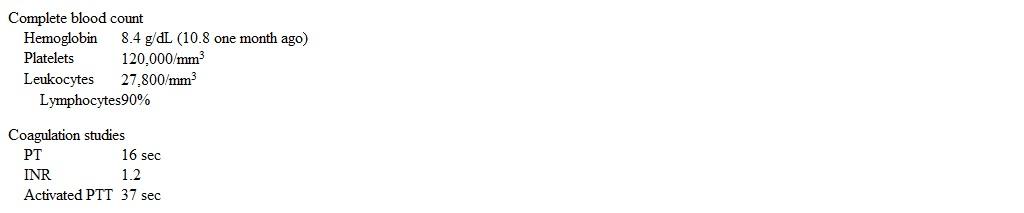 Which of the following is the most likely diagnosis?
 (Multiple Choice)
4.7/5 (86)
(86) A 35-year-old man comes to the office for follow-up of an abnormal chest x-ray finding. The patient went to the emergency department 2 weeks ago after a chest injury; during a softball game, he was struck in the chest by a ball thrown from a distance of 4 feet. Initial evaluation showed no significant trauma or rib fracture, but the chest x-ray revealed an air/fluid level posterior to the cardiac silhouette consistent with a sliding hiatal hernia. The patient feels well and has had no heartburn, regurgitation, difficulty swallowing, or abdominal discomfort. He has no other medical conditions and takes no medications. The patient does not use tobacco, alcohol, or illicit drugs. Vital signs are within normal limits. Physical examination shows no abnormalities. Which of the following is the best next step in management of this patient?
(Multiple Choice)
4.9/5 (91)
(91) A 62-year-old hospitalized woman is evaluated for worsening skin lesions. She was admitted 6 days ago for elective coronary artery bypass grafting due to extensive coronary artery disease. The surgery was uncomplicated, and the patient was extubated on hospital day 2. She has recovered well, but yesterday she noticed red patches on her abdomen that progressed to purple lesions today. The patient has a history of non-ST elevation myocardial infarction, type 2 diabetes mellitus, hypertension, and hyperlipidemia. She is receiving low-dose subcutaneous heparin for prophylaxis of deep venous thrombosis and has not received any oral anticoagulation. Temperature is 37.1 C (98.7 F), blood pressure is 130/82 mm Hg, and heart rate is 90/min. Cardiopulmonary examination reveals patchy rales and normal heart sounds. The sternal surgical site is healing well. Several large purple/black patches are seen in the periumbilical area, surrounded by erythema. Peripheral pulses are normal. Neurologic examination is unremarkable. Which of the following is the most likely cause of this patient's skin lesions?
(Multiple Choice)
4.9/5 (76)
(76) A 35-year-old man who underwent emergency cholecystectomy a day ago begins having seizures. The surgery was uneventful, but since then, the patient has gradually become restless. His medical history is remarkable for gastritis and a period of heroin abuse in his 20s. The patient lives alone. Medications include omeprazole. Temperature is 37.2 C (99 F), blood pressure is 145/92 mm Hg, pulse is 114/min, and respirations are 18/min. Examination shows diaphoresis and tremors. Wound incisions show no evidence of inflammation, and biliary drainage appears adequate. Laboratory results are as follows: 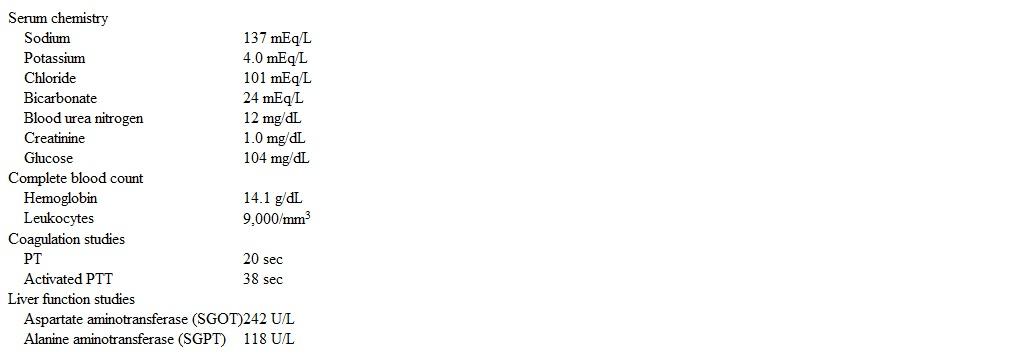 Which of the following is the most appropriate immediate treatment for this patient?
 (Multiple Choice)
4.9/5 (75)
(75) A 64-year-old man is brought to the emergency department after a high-speed motor vehicle collision. The patient was a restrained passenger in a truck involved in a head-on collision with another vehicle. On examination, he is alert and oriented with severe pain and deformity of the right lower extremity. The patient is lying on his left side with a shortened and internally rotated right leg. The right hip is flexed and adducted, the right knee is flexed, and he is unable to dorsiflex or to straighten the right leg, even with assistance. Which of the following is the most likely diagnosis?
(Multiple Choice)
4.8/5 (80)
(80) A 14-year-old girl is brought to the emergency department for evaluation of acute right knee pain. The patient is a gymnast and was dismounting the balance beam when she landed awkwardly and collapsed to the ground. She heard an audible pop when she landed and has been unable to straighten her knee since. Temperature is 36.7 C (98 F), blood pressure is 120/70 mm Hg, pulse is 88/min, and respirations are 16/min. BMI is 17 kg/m2. Cardiopulmonary examination is unremarkable. The right knee is in a flexed position and has decreased range of motion with significant swelling and tenderness over the medial side. The lateral aspect of the knee has a large, painful, immobile deformity. Palpation of the anterior aspect reveals a divot over the trochlea and minimal pain over the tibial tuberosity. Which of the following is the most likely diagnosis in this patient?
(Multiple Choice)
4.8/5 (80)
(80) A 52-year-old woman comes to the office due to several years of shortness of breath with exertion. She describes her symptoms as progressive. Recently, the patient has barely been able to walk a block without becoming out of breath. Occasionally, she becomes dyspneic even at rest. She has noticed puffiness of both ankles at the end of the day. The patient denies any palpitations, chest pain, weight loss, lightheadedness, or syncope. She emigrated from Mexico at age 25. Medical history is unremarkable. On physical examination, the patient appears comfortable. Blood pressure is 131/78 mm Hg and pulse is 86/min and regular. With the patient on her left side, an early diastolic heart sound is heard followed by a diastolic rumble. Which of the following are the most likely hemodynamic findings in this patient?
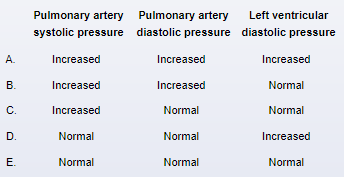
(Multiple Choice)
4.7/5 (72)
(72) A 45-year-old man comes to the emergency department for colicky, right upper quadrant pain; vomiting; and melena for 24 hours. He has no hematemesis. Medical history is significant for nonalcoholic steatohepatitis, which was diagnosed by percutaneous liver biopsy 5 days ago. The biopsy also showed mild fibrosis around portal tracts without bridging fibrosis or regenerative hepatocyte nodules. Temperature is 37.4 C (99.3 F), blood pressure is 95/60 mm Hg, pulse is 110/min, and respirations are 15/min. Scleral icterus is present. Cardiopulmonary examination is unremarkable. The abdomen is tender to palpation in the right upper quadrant. Laboratory results are as follows:  Which of the following is the likely diagnosis?
 (Multiple Choice)
4.9/5 (70)
(70) A 59-year-old man comes to the emergency department after he fell while walking in his yard and struck his right upper chest on a brick. The patient has severe pain in the right upper chest but none elsewhere. He did not hit his head or lose consciousness. Medical history is significant for coronary artery bypass surgery a year ago. Blood pressure is 90/62 mm Hg, pulse is 118/min, and respirations are 20/min. Pulse oximetry is 96% on room air. On examination, the patient appears diaphoretic. There is swelling, bruising, and tenderness to palpation over the right clavicle and right upper chest. Heart and lung sounds are normal; the abdomen is soft and nontender to palpation. After an intravenous fluid bolus is administered, blood pressure improves to 110/64 mm Hg and pulse to 100/min. ECG reveals sinus tachycardia. A plain film chest x-ray is obtained, as shown in the exhibit. 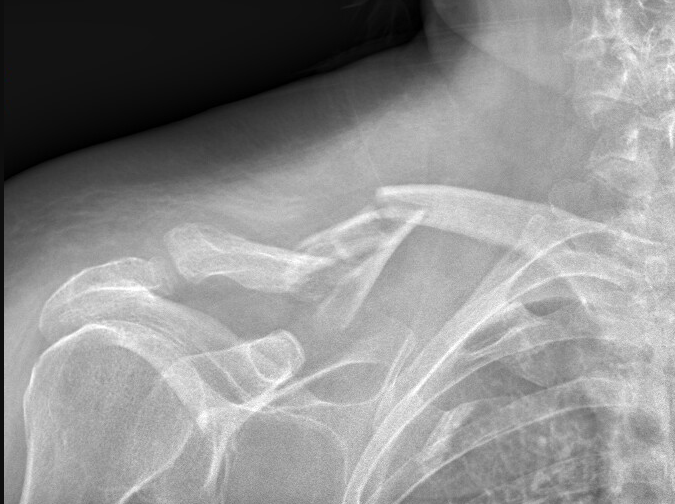 Which of the following is the best next step in evaluation of this patient?
 (Multiple Choice)
4.9/5 (77)
(77) 
Filters
- Essay(0)
- Multiple Choice(0)
- Short Answer(0)
- True False(0)
- Matching(0)