



 Chat with AI
Exam 4: Surgery

Exam 1: Medicine2 k Questions
Exam 2: Pediatric723 Questions
Exam 3: Psychiatry336 Questions
Exam 4: Surgery563 Questions
Exam 5: Obstetrics & Gynecology469 Questions
Select questions type


An 18-year-old football player is brought to the emergency department due to persistent pain following a hard tackle. The patient had just caught a pass when he was tackled from the front, with the opponent landing all his weight on the patient's abdomen. Immediately afterward, he began to experience abdominal discomfort and nausea. Blood pressure is 92/64 mm Hg, pulse is 118/min, and respirations are 24/min. The patient is alert but appears anxious. Bilateral breath sounds are clear and equal. Heart sounds are normal without murmur. The abdomen is mildly distended and tender to palpation diffusely. Chest x-ray and pelvic x-ray are normal. Focused Assessment with Sonography for Trauma reveals intraperitoneal free fluid. Further evaluation of this patient is most likely to reveal which of the following?
(Multiple Choice)
4.8/5  (69)
(69) A 58-year-old woman is evaluated due to increasing leakage of fluid from her abdominal incision. The patient underwent a total abdominal hysterectomy and bilateral salpingo-oophorectomy for ovarian cancer 5 days ago and initially had a normal postoperative course. However, after walking the hallway this morning, she had increasing fluid leakage and a bulge at her incision site. The patient has had no increase in pain and is continuing to tolerate a regular diet and pass flatus. Temperature is 36.7 C (98.1 F), blood pressure is 144/92 mm Hg, and pulse is 88/min. BMI is 40 kg/m2. Palpation of the abdomen shows no rebound or guarding. The vertical midline abdominal incision has surrounding erythema and a large amount of serosanguineous fluid seeping through the incision. After some of the skin staples are removed, fatty tissue and a loop of bowel are seen protruding from a separation of the rectus abdominus muscles. A moist dressing is placed over the wound. Which of the following is the best next step in management of this patient?
(Multiple Choice)
4.9/5 (82)
(82) A 40-year-old man comes to the emergency department due to worsening right lower abdominal pain that radiates to the right groin area. He has had the pain for the past 7 days, and it is slowly increasing. He also describes fever and anorexia. Two weeks ago, he was treated for furunculosis of the right thigh. The patient has a history of type 1 diabetes mellitus and takes insulin. His temperature is 38.8 C (101.9 F). Abdominal examination shows tenderness on deep palpation in the right lower quadrant without rebound or guarding. No masses are palpated. Bowel sounds are present. Extension of the right hip increases pain, and flexion decreases pain. Rectal examination shows no abnormalities, and skin is normal. Laboratory results are as follows: 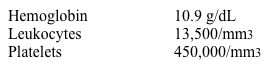 Which of the following is the best next step in management of this patient?
 (Multiple Choice)
4.8/5 (81)
(81) A 42-year-old man is brought to the emergency department 35 minutes after being struck by a car while crossing the intersection. The paramedics found him hypotensive and intubated him in the field for respiratory distress. After resuscitation with 2 liters of normal saline, his blood pressure is 110/80 mm Hg and pulse is 90/min. There is diffuse bruising across the chest, and the right lower leg is visibly deformed. CT scan of the head, cervical spine, and abdomen are normal. CT scan of the chest reveals bilateral, mildly displaced rib fractures with underlying pulmonary contusions and a right-sided pneumothorax. A chest tube is placed. The patient undergoes open reduction and internal fixation of right tibial and fibular fractures and is extubated following surgery. One day later his chest tube is draining turbid, green fluid. Repeat chest-x ray shows resolution of the pneumothorax but there is a new right-sided pleural effusion. Which of the following is the most likely diagnosis?
(Multiple Choice)
4.8/5 (70)
(70) A 46-year-old hospitalized man is evaluated for confusion. He was admitted 3 days ago after a motor vehicle collision in which he was a passenger. He sustained fractures of the right tibia and fibula, which were surgically reduced and fixed. The patient had a small subdural hematoma without midline shift, which was managed nonoperatively. He has been receiving intravenous morphine for pain control. This morning, the patient was agitated and disruptive and was talking to persons who were not there. He has no significant medical history and takes no regular medications. Temperature is 37.5 C (99.5 F), blood pressure is 170/100 mm Hg, pulse is 120/min and regular, and respirations are 22/min. Pulse oximetry shows 96% on room air. The patient appears diaphoretic and tremulous and is trying to pull out the intravenous lines. He is not cooperative for funduscopic examination, but pupils are equal and reactive bilaterally. Breath sounds are normal and no heart murmurs are heard. The abdomen is soft and nontender. The surgical incision shows no surrounding erythema. The patient moves all extremities without limitations. Which of the following is the most likely cause of this patient's acute confusion?
(Multiple Choice)
4.9/5 (69)
(69) A 55-year-old man comes to the emergency department due to rectal pain. The pain, which is described as excruciating and unrelenting, started abruptly 2 hours ago while the patient was having a bowel movement. He denies fevers, abdominal pain, hematochezia, or unexpected weight loss. Medical history is significant for chronic constipation. Temperature is 37.5 C (99.5 F), blood pressure is 125/75 mm Hg, pulse is 75/min, and respirations are 12/min. The abdomen is nontender and nondistended. Rectal examination reveals an exquisitely tender, purplish bulge just below the dentate line. Which of the following is the immediate next step in management?
(Multiple Choice)
4.8/5 (82)
(82) A 55-year-old woman comes to the office due to pain, itching, and red streaks on her left arm. She had a similar episode on her chest almost 2 weeks ago that improved on its own. Review of systems is positive for heartburn and mild upper abdominal pain for the last several months that is partially relieved by antacids. The patient has a 15- to 30-pack-year smoking history and drinks alcohol occasionally. Physical examination shows mild epigastric tenderness to palpation. The lungs are clear to auscultation. There are no murmurs on cardiac examination. She has tender, erythematous, and palpable cord-like veins on the left arm and upper chest. Which of the following is the best next step in management of this patient?
(Multiple Choice)
4.8/5 (94)
(94) A 42-year-old man is evaluated for a 3-month history of burning, substernal chest pain after every meal. The patient has tried several over-the-counter antacids with partial relief. He undergoes upper gastrointestinal endoscopy, which reveals mucosal irregularity and ulceration of the squamocolumnar junction above the lower esophageal sphincter. Multiple biopsies are taken. Four hours after the procedure, the patient develops worsening substernal pain radiating to the back, along with mild shortness of breath. Temperature is 37.1 C (98.9 F), blood pressure is 110/70 mm Hg, pulse is 120/min, and respirations are 34/min. Chest x-ray reveals a small, left pleural effusion that was not present on a chest radiograph taken 2 weeks ago. ECG shows sinus tachycardia but is otherwise unremarkable. Which of the following is the best test to confirm the diagnosis?
(Multiple Choice)
4.7/5 (74)
(74) An 85-year-old woman is admitted to the hospital due to suspected acute pyelonephritis. On arrival, blood pressure is 100/80 mm Hg, pulse is 102/min, and respirations are 16/min with normal oxygen saturation. An internal jugular venous catheter is being placed for fluid resuscitation and antibiotics. During the procedure, the patient becomes restless and has shortness of breath. Repeat blood pressure is 80/50 mm Hg, pulse is 122/min and regular, and respirations are 30/min. Oxygen saturation is 85% on room air. Pupils are equal and reactive to light. The trachea is midline, and there is no stridor. Breath sounds are equal and normal. Neurological examination reveals no gross motor or sensory deficit. While being evaluated, the patient develops pulseless electrical activity. Which of the following is the most likely diagnosis?
(Multiple Choice)
4.8/5 (78)
(78) A 19-year-old woman comes to the emergency department due to shortness of breath. The patient has a history of cystic fibrosis and underwent bilateral lung transplant 3 months ago. Over the past 4 days, she has developed worsening tachypnea and now feels unable to catch her breath. The patient reports that fever started this morning. Medications include prednisone, tacrolimus, mycophenolate, trimethoprim-sulfamethoxazole, and pancreatic enzyme supplements. Temperature is 38.7 C (101.7 F), blood pressure is 125/86 mm Hg, pulse is 108/min, and respirations are 26/min. On examination, there is moderate respiratory distress with subcostal retractions and tachypnea. Lung auscultation demonstrates diffuse crackles bilaterally. There are no murmurs, rubs, or gallops. The abdomen is soft and nontender. Chest x-ray reveals diffuse interstitial infiltrates and a small amount of fluid at the bilateral lung bases. Which of the following is the most likely etiology of this patient's presentation?
(Multiple Choice)
4.8/5 (63)
(63) A 25-year-old man is brought to the emergency department following a high-speed motorcycle collision. The patient is alert and in distress due to pain. Blood pressure is 84/52 mm Hg and pulse is 130/min. The airway is patent, the trachea is midline, and breath sounds are present bilaterally. Heart sounds are normal. There is bruising across the left chest wall, the lower abdomen, and the left flank. The abdomen is soft and mildly tender to palpation diffusely, without rebound tenderness. The bony pelvis is unstable to gentle downward pressure. The left lower leg is visibly deformed but distal lower extremity capillary refill is symmetric. There is blood present at the urethral meatus. Chest x-ray reveals multiple rib fractures without pneumothorax. Focused Assessment with Sonography for Trauma reveals no pericardial effusion or intraperitoneal free fluid. Portable anteroposterior pelvic x-ray is shown in the image below: 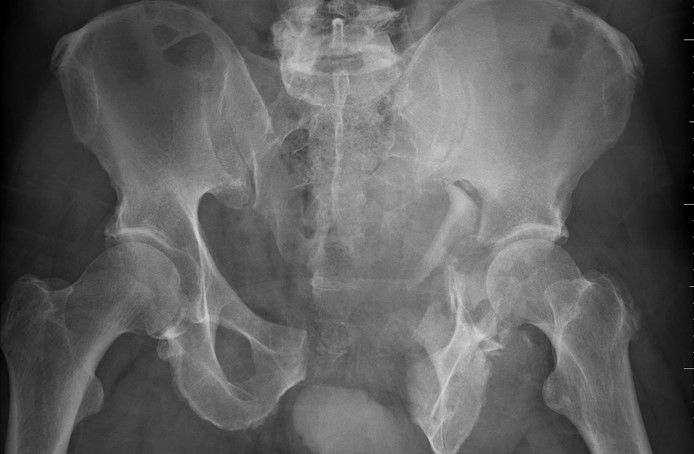 In addition to resuscitation with IV crystalloid and/or blood products, which of the following is the best next step in management of this patient?
 (Multiple Choice)
4.8/5 (96)
(96) A 23-year-old woman comes to the physician because of a 4-week history of a whistling noise during respiration. She underwent a difficult rhinoplasty a few months ago. The noise is getting louder and is annoying. Which of the following is the most likely diagnosis?
(Multiple Choice)
4.9/5 (83)
(83) A 62-year-old man is hospitalized for elective coronary artery bypass graft surgery. The patient had been having worsening exertional angina and was found to have 3-vessel coronary artery disease. His other medical conditions include hypertension, type 2 diabetes mellitus, and hyperlipidemia. He has had no infections and has not used antibiotics recently. The patient has a history of severe penicillin allergy causing anaphylactic shock. Blood pressure is 128/72 mm Hg and pulse is 78/min. The lungs are clear on auscultation and heart sounds are normal. Preoperative blood cell counts, serum chemistry, and coagulation studies are within normal limits. Which of the following is the most appropriate preoperative prophylactic antibiotic for this patient?
(Multiple Choice)
4.9/5 (88)
(88) A 62-year-old woman is sent to the emergency department from her rehabilitation facility due to sudden-onset dyspnea and nonproductive cough. The symptoms started acutely while the patient was trying to get out of bed. She has no subjective fever, hemoptysis, wheezing, palpitations, leg pain, or lower-extremity edema. The patient underwent right knee replacement 2 weeks ago for severe degenerative joint disease. Her other medical problems include peptic ulcer disease from nonsteroidal anti-inflammatory use, hypertension, and type 2 diabetes mellitus. She drinks alcohol socially and does not use tobacco. Her temperature is 38 C (100.4 F), blood pressure is 130/80 mm Hg, pulse is 110/min, and respirations are 22/min. Pulse oximetry is 91% on room air. BMI is 36 kg/m2. The patient is alert and cooperative without cyanosis or jaundice. Lungs are clear to auscultation. The abdomen is soft, nondistended, and nontender. Right knee is without erythema, warmth, or tenderness. ECG shows sinus tachycardia. Chest x-ray is normal. Complete blood count shows a leukocyte count of 6,500/mm3. Which of the following is the best next step in management of this patient?
(Multiple Choice)
4.8/5 (75)
(75) A 72-year-old man is brought to the emergency department by his daughter after she found him confused and febrile at home. Since the patient's wife died 6 months ago, he has insisted on continuing to live independently; however, he has taken worse care of his health, including refusing doctor's visits. Medical history includes type 2 diabetes, chronic kidney disease, and peripheral artery disease. Temperature is 38.3 C (101 F). Blood pressure is 98/54 mm Hg and pulse is 104/min. The patient is lethargic but opens his eyes when his name is called. He is not oriented to place, time, or situation. Both lower extremities are without palpable dorsalis pedis, posterior tibial, or popliteal pulses. The left foot is shown in the image below. In addition to obtaining blood cultures and administering antibiotics, which of the following is the best next step in management of this patient? 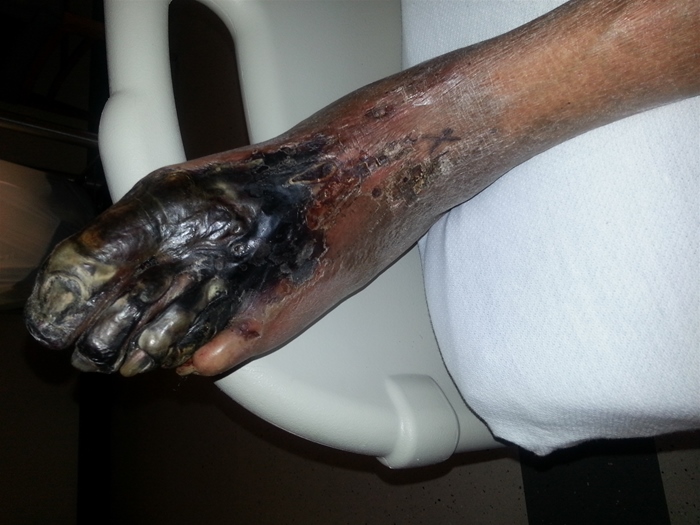
(Multiple Choice)
5.0/5 (76)
(76) A 44-year-old man comes to the office for follow-up after being evaluated in the emergency department for a shoulder injury. Two weeks ago, the patient fell on an outstretched hand at work; x-ray in the hospital showed a posterior glenohumeral dislocation without fracture. The dislocation was reduced successfully under procedural sedation, and the arm was placed in a sling. The patient was advised to follow up with the outpatient provider in 2 weeks. Since the injury, he has been unable to abduct the arm without severe pain and difficulty. He has no medical history and takes no medications regularly. On examination, the patient has no shoulder numbness but has limited abduction due to pain. Distal pulses and sensation are intact. There is no shoulder asymmetry. Which of the following is the most likely cause of this patient's current symptoms?
(Multiple Choice)
4.8/5 (69)
(69) A 20-year-old man is brought to the emergency department after falling off a trampoline. He had been drinking alcohol with some friends and began jumping on a trampoline in his neighbor's backyard. The patient tried to do a backflip and landed on his head. Paramedics were called and found him confused but able to follow commands. However, he was unable to move his legs or his hands. The patient was placed in spine immobilization and transported to the emergency department. On arrival, his vital signs are within normal limits, but he has increasing shortness of breath and requests to sit up to help his breathing. Chest x-ray is normal, and ECG reveals sinus tachycardia. Over the next 30 minutes, his respirations become faster and shallower with more use of accessory muscles. The patient becomes sleepier and has difficulty responding to commands. Which of the following is the most appropriate next step in management?
(Multiple Choice)
4.8/5 (85)
(85) A 65-year-old woman comes to the urgent care clinic for evaluation of a left foot wound that has been worsening despite wound care. The patient is a retired nurse and has been performing daily dressing changes to the wound; in addition, she has been using crutches for the past few weeks to minimize weight bearing on the foot. Medical history is significant for type 2 diabetes mellitus with neuropathy and hypertension. She has never smoked cigarettes. Temperature is 36.5 C (97.7 F), blood pressure is 136/82 mm Hg, and pulse is 82/min. Examination of the left foot shows a plantar ulcer, as shown in the exhibit. 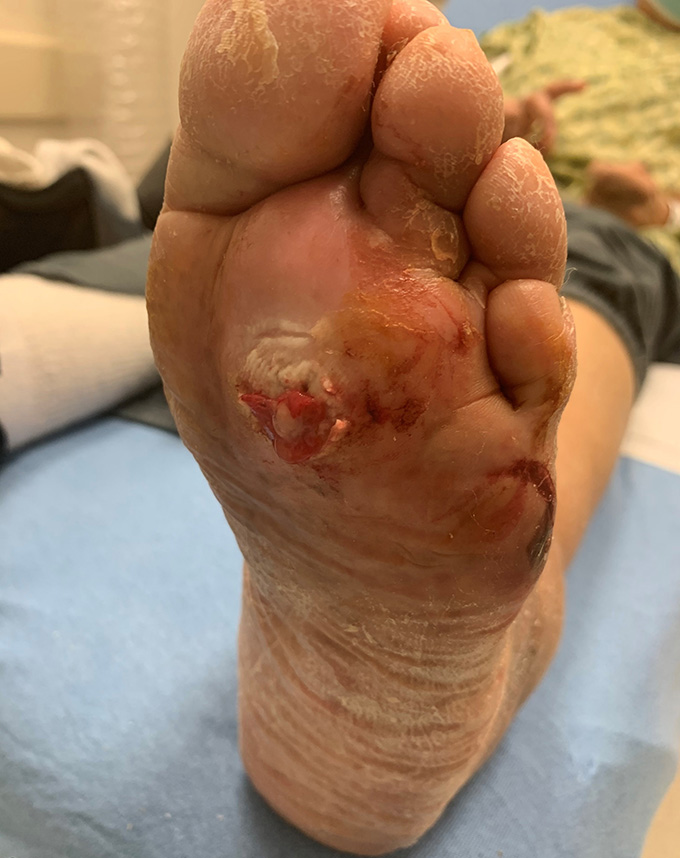 There is no lower extremity discoloration or edema; dorsalis pedis pulses are present bilaterally and symmetric. Which of the following factors is most likely to have increased this patient's risk for developing her current condition?
 (Multiple Choice)
4.7/5 (87)
(87) A 78-year-old man is brought to the emergency department after he was found obtunded and moaning in bed at his nursing care facility. For 2 days prior, he refused to eat most of his food. Medical history is significant for early Alzheimer disease, hypertension, hyperlipidemia, bilateral knee replacement, and right hemicolectomy for stage I colon cancer. The patient has a 50-pack-year smoking history but no longer smokes or drinks alcohol. Temperature is 38.7 C (101.7 F), blood pressure is 102/54 mm Hg, pulse is 114/min, and respirations are 22/min. The patient is holding his abdomen and groaning. He opens his eyes to a loud voice but does not follow commands. The abdomen is distended, tympanitic to percussion, and rigid to palpation. Stool guaiac test is negative. The patient cannot tolerate sitting upright. Lateral decubitus x-ray of the abdomen is shown below. 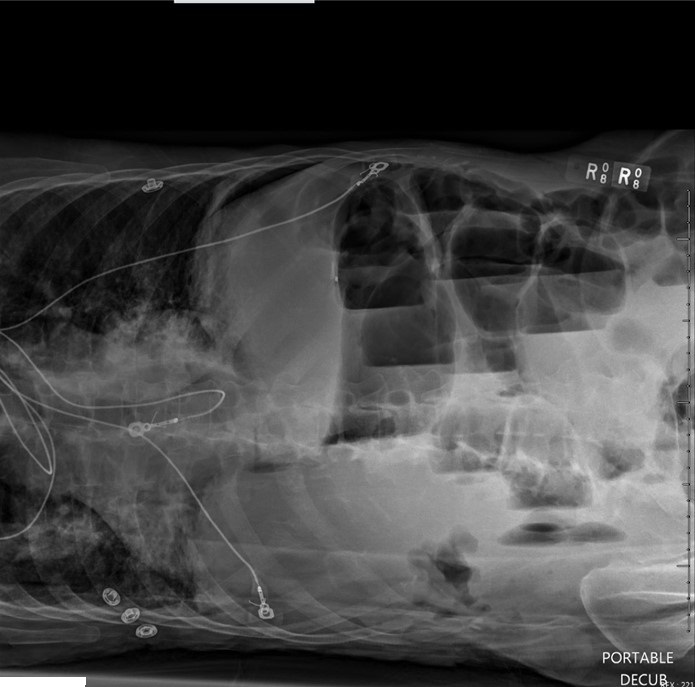 Which of the following is the best next step in management of this patient?
 (Multiple Choice)
4.8/5 (75)
(75) A 45-year-old woman comes to the office for preoperative evaluation. The patient had been having intermittent headaches and sweating for several months. During that time, plasma metanephrines were found to be markedly elevated, and she underwent an abdominal CT scan that showed a 4.9 cm left adrenal mass. She has no other medical problems and takes no medications. Family history is unremarkable. The patient does not use tobacco, alcohol, or illicit drugs. Blood pressure is 136/84 mm Hg and pulse is 92/min. Physical examination is normal. Surgical resection of the mass is scheduled in 2 weeks. Which of the following is the most appropriate next step in preparation for surgery?
(Multiple Choice)
4.8/5 (83)
(83) 
Filters
- Essay(0)
- Multiple Choice(0)
- Short Answer(0)
- True False(0)
- Matching(0)