



 Chat with AI
Exam 4: Surgery

Exam 1: Medicine2 k Questions
Exam 2: Pediatric723 Questions
Exam 3: Psychiatry336 Questions
Exam 4: Surgery563 Questions
Exam 5: Obstetrics & Gynecology469 Questions
Select questions type


A 76-year-old man with no past medical history has an operation for a strangulated inguinal hernia, with approximately 40 cm of small bowel resected. On the morning of his third postoperative day, he falls while getting out of bed. Immediately after the fall, the patient is responsive but confused with slurred speech. He cannot explain what happened. His blood pressure is 89/50 mm Hg, pulse is 122/min, and respirations are 24/min. Examination shows decreased bibasilar lung sounds and distended neck veins. Electrocardiogram shows new-onset right bundle branch block with nonspecific ST- and T-wave changes. Immediate resuscitation with wide-open intravenous fluids is attempted but unsuccessful. Shortly thereafter, the patient's pupils start to dilate, his pulse drops to 45/min, and he becomes unresponsive. He eventually dies despite resuscitative efforts. Which of the following is the most likely cause of this patient's death?
(Multiple Choice)
4.8/5  (75)
(75) A 38-year-old man comes to the office due to exertional shortness of breath over the past 6 months. The patient says that his exercise capacity has significantly decreased compared to that of last year. He has chronic back pain, which responds well to ibuprofen and naproxen, and intermittent bilateral heel pain. The patient is a lifetime nonsmoker and does not drink alcohol. He has no family history of early cardiovascular disease or lung disease. Height is 179 cm (5 ft 10 in) and weight is 76 kg (167.6 lb). BMI is 23.7 kg/m2. Physical examination shows impaired spinal mobility and limited chest expansion. The maximal apical impulse is displaced to the left. Which of the following is the most likely diagnosis?
(Multiple Choice)
4.9/5 (85)
(85) A 52-year-old man comes to the office for 6 months of abdominal pain. The pain is intermittent, epigastric, radiating to the back, exacerbated by eating, and associated with nausea. He has no diarrhea, hematochezia, or melena. Medical and family history are both unremarkable. The patient has smoked cigarettes for 20 years and drinks 7 or 8 beers a day. Temperature is 37.4 C (99.3 F), blood pressure is 134/82 mm Hg, heart rate is 78/min, and respirations are 13/min. BMI is 28 kg/m2. Physical examination reveals anicteric sclera, moist mucosal membranes, and normal heart and lung sounds. The abdomen is mildly tender to palpation in the epigastrium but without rebound or guarding. Laboratory results are as follows: 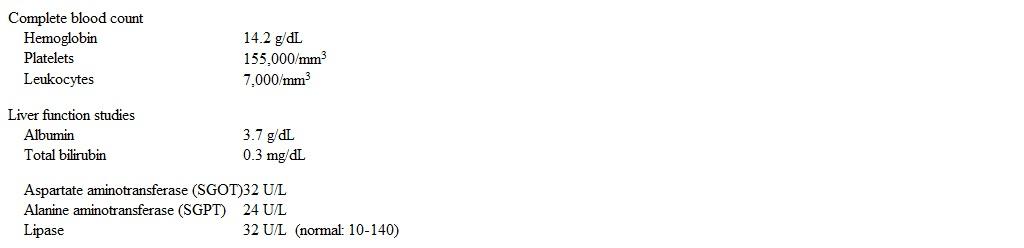 CT scan of the abdomen shows pancreatic atrophy along with multiple calcifications in the pancreatic parenchyma. MR cholangiopancreatography (MRCP) reveals a nondilated pancreatic duct without intraductal stones. In addition to lifestyle modification, which of the following is the best next step in management?
 (Multiple Choice)
4.9/5 (75)
(75) A 62-year-old man undergoes a partial pancreatectomy for exocrine pancreatic cancer. The surgery is complicated by excessive peripancreatic bleeding requiring careful surgical hemostasis. The patient receives packed red blood cell transfusion during the surgery as well as intravenous normal saline. He is transferred to the surgical intensive care unit for close monitoring and is successfully extubated. Twelve hours later, the nurse reports decreased oxygen saturation. The patient has received multiple doses of morphine for pain control since the surgery. Temperature is 37.5 C (99.5 F), blood pressure is 80/40 mm Hg, pulse is 112/min, and respirations are 28/min. The patient's pulse oximetry shows 87% on 4 L nasal cannula oxygen. Examination reveals bilateral basal crackles. The abdomen is mildly distended and tender, and bowel sounds are decreased. There is no rebound tenderness or rigidity. Pulmonary artery catheter readings show a cardiac index of 2 L/min/m2 (normal, 2.8-4.2) and a pulmonary capillary wedge pressure of 20 mm Hg (normal, 6-15). Which of the following is the most likely etiology of this patient's current condition?
(Multiple Choice)
4.8/5 (71)
(71) A 24-year-old man comes to the emergency department for evaluation of eye pain and swelling. He was involved in an altercation last night after significant alcohol use but does not remember any further details. The patient has double vision when he attempts to look up. On examination, the left side of the face is significantly swollen, tender, and ecchymotic. Visual acuity is normal. He is unable to look up with his left eye. CT scan is shown below: 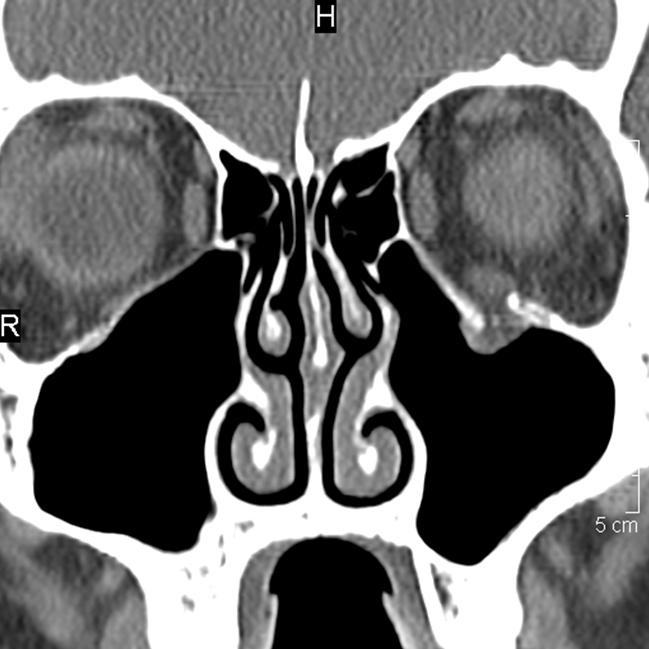 Which of the following is the most likely reason for this patient's diplopia?
 (Multiple Choice)
4.9/5 (89)
(89) A 64-year-old woman is evaluated in a nursing home for a foot ulcer. Three months ago, she had a cerebrovascular accident and now has residual hemiparesis with contractures. Her other medical problems include hypertension, diabetes mellitus, hypercholesterolemia, coronary artery disease, and mild dementia. Temperature is 37.2 C (98.9 F), blood pressure is 142/63 mm Hg, and pulse is 62/min. She is alert and oriented to person but not to time or place. There are no new focal neurologic deficits. Skin examination shows ulcerations on the left foot with mild erythema as shown in the image below. 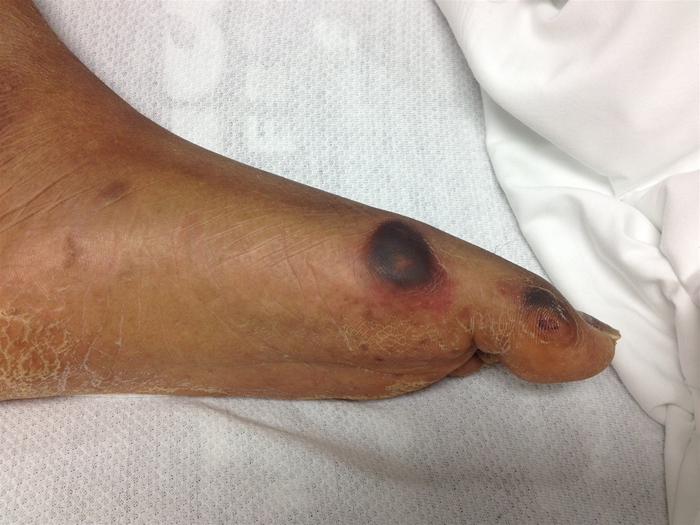 Which of the following is the primary cause of this patient's skin ulcers?
 (Multiple Choice)
4.8/5 (94)
(94) A 4-year-old boy is brought to the emergency department with vague chest discomfort. Two months ago, the patient was involved in a high-speed motor vehicle collision but sustained only minor injuries. He was observed in the emergency department overnight and discharged home. Medical history is otherwise unremarkable. Vital signs are normal. Auscultation of the lungs shows decreased air entry into the left lower base. An x-ray of the chest is shown below. 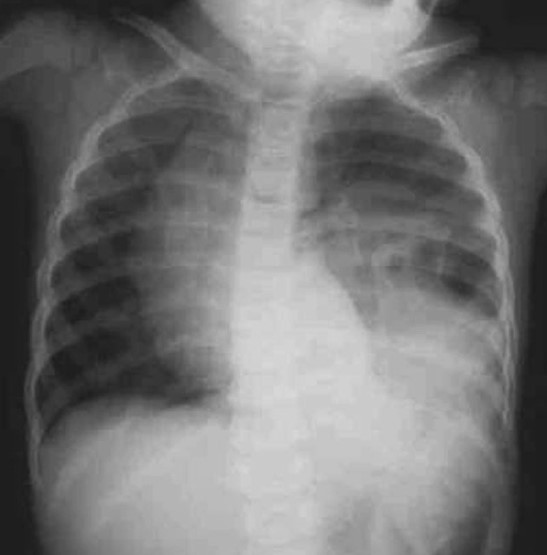 Which of the following is the best next step in management of this patient?
 (Multiple Choice)
4.9/5 (80)
(80) A 28-year-old woman is hospitalized following a motor vehicle accident. She was returning home following a wine-tasting event when she veered off the road and rolled her car. Initial evaluation in the emergency department found severe hypotension, a hip fracture, multiple rib fractures, and evidence of blunt abdominal trauma. The patient underwent emergent laparotomy, which revealed a liver laceration and extensive hemoperitoneum. Her condition was stabilized with surgical intervention, fluid resuscitation, and blood transfusions. In the early postoperative period soon after extubation, the patient developed numbness in the fingertips and around her lips. She also developed forceful flexion of the wrist with abduction of the thumb while her nurse was measuring her blood pressure. Temperature is 37.4 C (99.3 F), blood pressure is 120/68 mm Hg, pulse is 80/min, and respirations are 12/min. Neurologic examination shows hyperactive reflexes diffusely with 5/5 muscle strength in all extremities. Which of the following is the most likely diagnosis?
(Multiple Choice)
4.7/5 (68)
(68) A 26-year-old man with a history of seizure disorder and medication nonadherence is hospitalized after a generalized tonic-clonic seizure. A witness reports that the patient lost consciousness and fell to his right side; the seizure lasted about 2 minutes. Evaluation in the emergency department reveals a low serum level of his prescribed antiepileptic drug, levetiracetam, and a displaced right femur fracture. No other injuries or laboratory abnormalities are present. Levetiracetam is restarted and the patient undergoes intramedullary nailing of the fracture with no intraoperative complications. The next day the patient is noted to be confused. Temperature is 37.2 C (99 F), blood pressure is 142/86 mm Hg, pulse is 102/min, and respirations are 28/min. Oxygen saturation is 90% while breathing room air. On physical examination, the patient is disoriented but has no focal weakness or sensory loss. There are no skin rashes or hematoma at the surgical site. The remainder of the examination shows no abnormalities. Laboratory testing reveals the following: 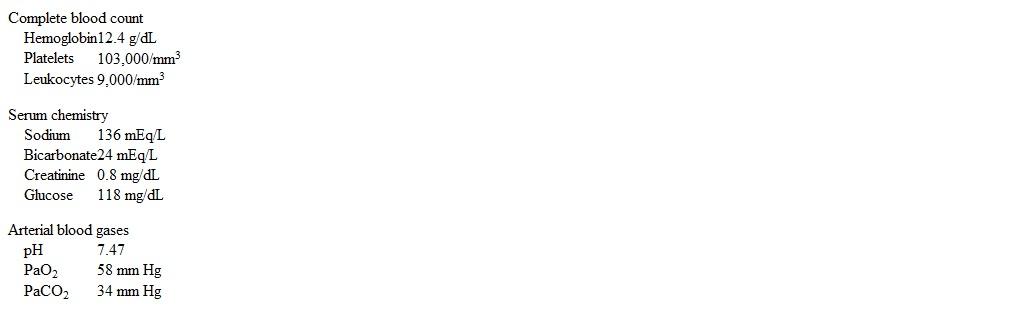 CT pulmonary angiography shows bilateral scattered ground-glass opacities but no filling defects within the pulmonary vasculature. Which of the following is the most likely cause of this patient's current condition?
 (Multiple Choice)
4.9/5 (84)
(84) A 6-year-old boy is brought to the emergency department due to an injury to his left arm. About an hour ago, he was jumping on the bed when he bounced off and landed on his outstretched left hand. He cried and has not wanted to use the arm since then. The patient has no chronic medical conditions. Examination shows mild edema of the left distal forearm with intact sensation and pulses distally. Palpation of the forearm produces sharp pain. The patient refuses to move the wrist. Radiograph is shown in the image below: 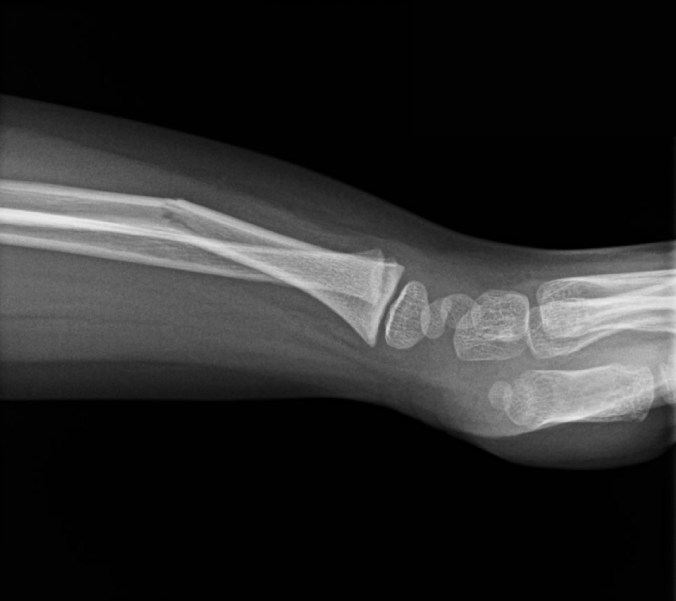 The forearm is immobilized. This patient is at greatest risk for developing which of the following long-term complications?
 (Multiple Choice)
4.9/5 (86)
(86) A 40-year-old man comes to the office for evaluation of recurrent epistaxis. Every morning, the patient wakes up with significant nasal congestion; when he blows his nose, he often sees crusting and blood clots in the tissue. Afterward, his nose frequently (several times a week) starts bleeding. It stops with <5 minutes of pinching his nasal alae. Medical history includes obesity, hypertension, and obstructive sleep apnea treated with continuous positive airway pressure (CPAP). Vital signs are within normal limits. On examination, the nose has bilateral crusting with excoriations on both sides of the nasal septum, but there is no bleeding. Which of the following is the most appropriate step in management of this patient's condition?
(Multiple Choice)
4.9/5 (71)
(71) A 72-year-old man is brought to the office due to 4 weeks of worsening productive cough. The patient has also had malaise and night sweats and has lost 3 kg (6.6 lb) during this period. His wife states that he has had occasional nonproductive cough in the past, particularly while eating, but it is now persistent and productive of abundant yellow sputum. The patient has a history of hypertension and Parkinson disease. He has a remote 5-pack-year history but does not use alcohol. He is a retired schoolteacher, lives in Ohio, and has not traveled or been exposed to sick contacts recently. Temperature is 38.3 C (100.9 F), blood pressure is 126/68 mm Hg, pulse is 88/min, and respirations are 14/min. Pulse oximetry is 96% on room air. On examination, the patient appears frail with resting tremor of both hands. Lung auscultation reveals scattered rhonchi but no wheezing. Heart sounds are normal. Laboratory results are as follows:  Chest x-ray reveals a density with cavitation in the right lower lobe. Which of the following is the most likely cause of this patient's current condition?
 (Multiple Choice)
4.8/5 (75)
(75) A 35-year-old woman comes to the emergency department with headaches and recurrent epistaxis. She has been told that her blood pressure is high during employee health visits but has not followed up. The patient does not use tobacco or illicit drugs. There is no family history of hypertension. Blood pressure is 170/100 mm Hg in the right arm and 175/105 mm Hg in the left arm, pulse is 80/min, and respirations are 14/min. Examination shows no jugular venous distension, normal lung sounds, and an S4 heart sound. Left upper quadrant abdominal bruit is present. Abdominal imaging reveals a left kidney size of 8 cm and a right kidney size of 12 cm. If measured, which of the following is most likely present in this patient?
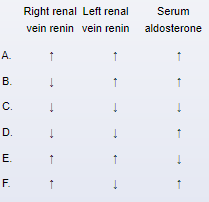
(Multiple Choice)
4.9/5 (75)
(75) A 63-year-old man comes to the emergency department due to 8 hours of constant epigastric pain, which has become more severe and diffuse over the past 2 hours. He also has nausea and has had one episode of vomiting containing bile but no blood. The patient has been having episodic upper abdominal discomfort that occasionally awakens him from sleep but is relieved by antacids. Other medical conditions include hypertension, hyperlipidemia, type 2 diabetes mellitus, persistent atrial fibrillation, and chronic kidney disease. Medications include atorvastatin, lisinopril, metoprolol, warfarin, insulin lispro, and glargine. Temperature is 38.2 C (100.9 F), blood pressure is 110/70 mm Hg, and pulse is 100/min and irregular. BMI is 36 kg/m2. The patient is in moderate distress due to pain. The abdomen is diffusely tender to palpation with rigidity, guarding, and rebound tenderness. Bowel sounds are absent. Laboratory findings are as follows: 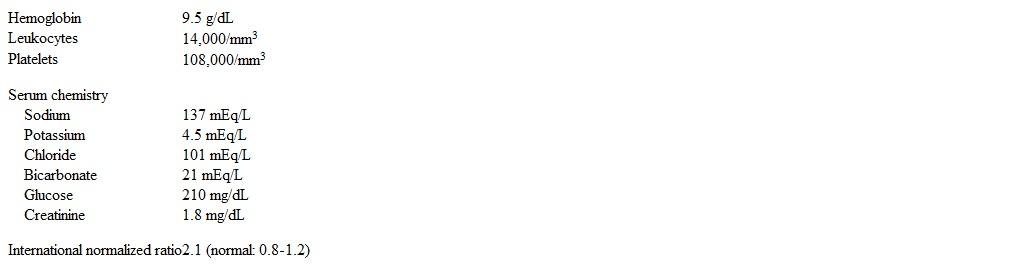 An upright chest x-ray shows a small amount of free air under the right diaphragm. Nasogastric suction, intravenous crystalloid, and antibiotics are started, and an urgent surgery is planned. Which of the following additional interventions is most appropriate at present?
 (Multiple Choice)
4.9/5 (66)
(66) An imaging study detects an incidental 3.5-cm infrarenal abdominal aortic aneurysm in a 70-year-old man. He has no associated symptoms. Medical history is significant for hypertension, type 2 diabetes, and hypercholesterolemia. The patient is maintained on anticoagulation due to paroxysmal atrial fibrillation. He has smoked 1-2 packs of cigarettes a day for the past 40 years, and he drinks 1 or 2 glasses of wine daily. The patient is physically active, bikes regularly, and enjoys hiking. On physical examination, blood pressure is 150/78 mm Hg and pulse is 80/min. Heart sounds are normal, and the lungs are clear. Laboratory results are as follows:  Which of the following is most strongly associated with aneurysm progression in this patient?
 (Multiple Choice)
4.7/5 (76)
(76) A 45-year-old man is brought to the emergency department following a motor vehicle collision. He has pain in his lower abdomen and right groin. The patient is unable to move his right lower extremity due to pain. Temperature is 37 C (98.6 F), blood pressure is 130/82 mm Hg, pulse is 100/min, and respirations are 16/min. There is fullness in the suprapubic region. The right lower extremity is adducted, flexed, and internally rotated. Bruising is present around the scrotum and perineum, and blood is seen at the urethral meatus. The testes are nontender on palpation. Digital rectal examination reveals a high-riding prostate. Which of the following is the best next step in management of this patient?
(Multiple Choice)
4.9/5 (77)
(77) A 32-year-old man comes to the emergency room (ER) because of acute onset left flank pain, hematuria and vomiting. His pain is relieved with analgesics in the ER. He has a history of abdominal pain due to Crohn disease, but that pain was always in the right lower quadrant and was never this severe. His temperature is 36.8°C (98.2°F), blood pressure is 120/65 mm Hg, pulse is 110/min and respirations are 16/min. Chest auscultation is clear. Abdomen is soft and mildly tender over the left flank. He has no rebound or rigidity. Bowel sounds are decreased. A laparotomy scar is present in right lower quadrant. Which of the following is the most likely cause of his symptoms?
(Multiple Choice)
4.8/5 (64)
(64) A 27-year-old man is brought to the emergency department after a high-speed motor vehicle collision. On arrival, his blood pressure is 90/52 mm Hg, pulse is 122/min, and respirations are 30/min. The patient is in moderate respiratory distress. There are bruises on the anterior chest wall and abdomen. No breath sounds are heard in the left lung, and initial chest x-ray shows hemopneumothorax. Fluid resuscitation is given, left-sided chest tubes and a nasogastric tube are placed, and the patient is admitted to the trauma floor after stabilization. Four days later, the chest tubes continue to drain appropriate serosanguinous fluid, but the patient still feels short of breath. He has an occasional dry, nonproductive cough. Current temperature is 36.8 C (98.2 F), blood pressure is 118/78 mm Hg, pulse is 88/min, and respirations are 20/min. A repeat chest x-ray shows the following. 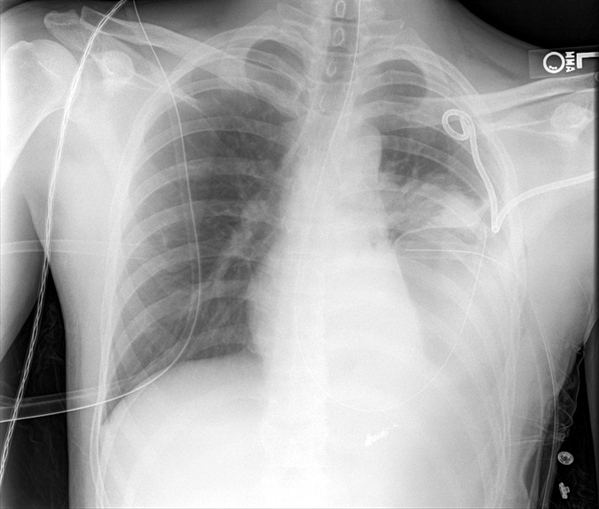 Which of the following is the most likely cause of the patient's continued respiratory distress?
 (Multiple Choice)
4.7/5 (75)
(75) A 56-year-old man comes to the office for evaluation of diarrhea. He has had 6 or 7 loose, watery brown stools every day for the past 4 weeks as well as frequent nocturnal episodes while sleeping. The patient has no fever, hematochezia, melena, unexpected weight loss, or abdominal pain. He was discharged from the hospital 5 weeks ago after a protracted stay for emphysematous cholecystitis complicated by intraabdominal abscess, which required an emergency cholecystectomy and abscess drainage as well as broad-spectrum intravenous antibiotics. Medical history is significant for morbid obesity, hypertension, and hyperlipidemia. There has been no change in the patient's home medications. Temperature is 37.4 C (99.3 F), blood pressure is 145/80 mm Hg, pulse is 80/min, and respirations are 13/min. Sclera are anicteric, and mucous membranes are moist. Surgical scars on the abdomen are well healed, and the abdomen is nontender and nondistended. Laboratory results are as follows: 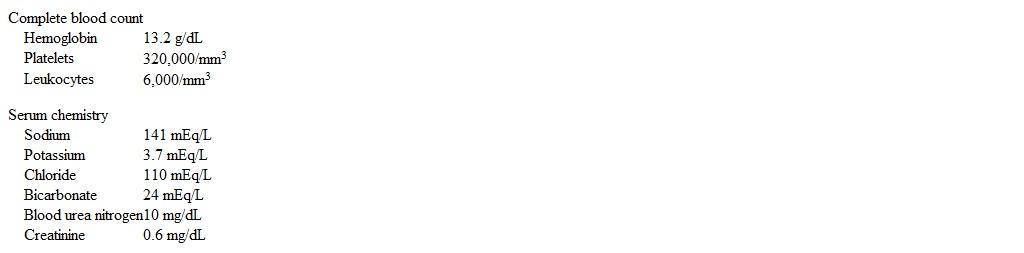 Stool is negative for occult blood and leukocytes. Test of the stool for Clostridioides difficile toxin is negative. Erythrocyte sedimentation rate is normal. What is the most appropriate next step in management of this patient?
 (Multiple Choice)
4.7/5 (72)
(72) A 34-year-old man comes to the office due to a persistent, painful erection for 12 hours without sexual stimulation. He has had no trauma to the perineal region. Over the past few months, the patient has also had fatigue. He has no prior medical conditions and takes no medications. Family history is significant for stroke in his father and hypothyroidism in his mother. The patient does not use tobacco, alcohol, or illicit drugs. Temperature is 36.8 C (98.2 F), blood pressure is 120/78 mm Hg, and pulse is 100/min. There is no lymphadenopathy. Cardiopulmonary examination is normal. The liver and spleen are palpable. The penis is erect, is tender, and has venous engorgement. The remainder of the examination shows no abnormalities. The patient is given appropriate treatment, with reduction of symptoms. Which of the following is the most appropriate diagnostic test to identify the cause of this patient's symptoms?
(Multiple Choice)
4.8/5 (77)
(77) 
Filters
- Essay(0)
- Multiple Choice(0)
- Short Answer(0)
- True False(0)
- Matching(0)