



 Chat with AI
Exam 4: Surgery

Exam 1: Medicine2 k Questions
Exam 2: Pediatric723 Questions
Exam 3: Psychiatry336 Questions
Exam 4: Surgery563 Questions
Exam 5: Obstetrics & Gynecology469 Questions
Select questions type


A 34-year-old woman comes to the office due to sudden onset epigastric pain radiating to the back, nausea, and vomiting. Her medical history is significant for major depression, generalized anxiety, and irregular menses. She takes sertraline and an oral contraceptive. The patient describes occasional heavy alcohol use and drinks hard liquor daily. She does not use tobacco or illicit drugs. Temperature is 37 C (98.6 F), blood pressure is 120/80 mm Hg, pulse is 98/min, and respirations are 18/min. BMI is 24 kg/m2. No jaundice is present. Examination shows epigastric tenderness. Serum lipase levels are markedly elevated. Abdominal ultrasonogram reveals an enlarged pancreas, no gallstones, and normal gallbladder; a mass is also noted in the right lobe of the liver. Subsequent abdominal CT scan reveals a well-circumscribed, 5-cm mass with a central scar that appears hypodense on noncontrast imaging. Imaging with contrast indicates the lesion is hyperdense. The rest of the liver appears to be normal, and there is no intra- or extrahepatic duct dilatation. Which of the following is the most likely diagnosis for the liver lesion?
(Multiple Choice)
4.9/5  (69)
(69) A 53-year-old man is brought to the emergency department after a fall while skiing. The patient immediately felt severe pain in the right hip and had to be brought down the mountain by ski patrol. He does not have any other injuries. Medical history is unremarkable, and the patient does not take any medications. Blood pressure is 168/94 mm Hg, pulse is 100/min, and respirations are 24/min. Pulse oximetry is 96% on room air. On examination, the patient appears uncomfortable and in pain. The right hip is flexed, displays an obvious deformity, and is tender to palpation. Hip range of motion is limited, and the right leg is shortened and internally rotated. Distal pulses are intact. X-ray of the pelvis is shown in the exhibit. 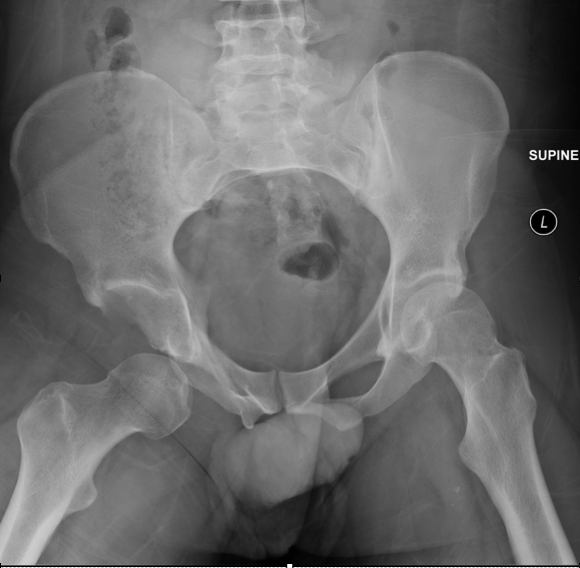 Which of the following is the best next step in management of this patient?
 (Multiple Choice)
4.7/5 (78)
(78) A 16-year-old boy is brought to the emergency department due to an eye injury. The patient was helping his father to mow the lawn when a flying object struck his left eye. He has had foreign body sensation, pain, excessive tearing, and decreased vision in the eye. His father noticed the eye being red but did not visualize any foreign objects. The patient has no other medical conditions and takes no medications. In the emergency department, the patient appears in obvious discomfort and keeps the left eye closed. Which of the following findings is most suggestive of acute globe perforation in this patient?
(Multiple Choice)
4.7/5 (78)
(78) A 53-year-old woman is evaluated in the postanesthesia care unit following thyroid surgery. She underwent a total thyroidectomy for a retrosternal goiter that was causing dysphagia from esophageal compression. The patient states her neck feels a little "tight" but has no significant pain or difficulty breathing. Medical history is otherwise unremarkable. Temperature is 37 C (98.6 F), blood pressure is 126/86 mm Hg, and pulse is 100/min. Oxygen saturation is 99% on room air. On physical examination, the patient appears comfortable, with no distress. Pupils are equal, round, and reactive. Voice is normal. Neck incision is well-approximated, and there is a 4-cm ballotable swelling under the incision. The lungs are clear to auscultation. Heart sounds are normal. The neck swelling increases in size during the examination. Which of the following is the best next step in management?
(Multiple Choice)
4.9/5 (84)
(84) A 63-year-old man comes to the emergency department due to a 2-day history of right knee pain and swelling. The pain is severe enough to interfere with walking. He does not recall any significant trauma to the knee. Medical history is notable for type 2 diabetes mellitus, hypertension, hypercholesterolemia, and mild chronic obstructive pulmonary disease. The patient has a 40-pack-year smoking history and drinks 3-5 alcoholic beverages a night. He is a gardener and frequently works extended hours when on a job. Temperature is 37.2 C (99 F), blood pressure is 115/75 mm Hg, and pulse is 92/min. On examination, there is a dome-shaped swelling anterior to the patella, along with faint erythema and sharp tenderness. Passive range of motion at the knee is normal. X-ray of the knee is shown below: 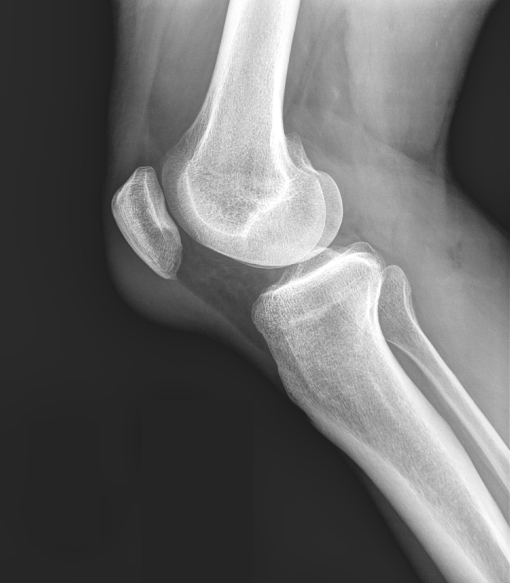 Which of the following is the most likely cause of this patient's acute symptoms?
 (Multiple Choice)
4.9/5 (81)
(81) A 70-year-old-man is admitted to the hospital with acute retrosternal chest pain and severe shortness of breath. His other medical conditions include hypertension and hyperlipidemia. Coronary angiography reveals critical stenosis of the left main coronary artery, and the patient subsequently undergoes emergency coronary artery bypass grafting. On the fourth postoperative day, he develops atrial flutter with a rapid ventricular response. Thyroid function test results are as follows:  Which of the following is the most likely etiology of this patient's abnormal thyroid function tests?
 (Multiple Choice)
4.8/5 (88)
(88) A 72-year-old retired plumber comes to the office to discuss treatment of chronic right knee pain. Over the past 10 years, the patient has had multiple rounds of glucocorticoid injections and physical therapy to manage the pain, which has increasingly worsened; using a cane, he can now walk only 2 blocks before it becomes unbearable. Medical history is notable for type 2 diabetes mellitus, hypertension, and depression. Blood pressure is 130/78 mm Hg and pulse is 80/min. BMI is 26 kg/m2. On examination, the right knee is stiff and swollen but has no erythema. There is tenderness on palpation at the medial and lateral joint lines, and patella grind test is positive. Ligament testing is stable to varus and valgus stress. Passive and active range of motion is limited because of pain. X-ray of the right knee shows bicompartmental joint space narrowing and multiple osteophytes. Which of the following is the best treatment option for this patient?
(Multiple Choice)
4.7/5 (99)
(99) A 74-year-old man is brought to the emergency department due to worsening lethargy and abdominal pain and distension. For the past several days, the patient has had watery diarrhea. However, in the last 24 hours, he has not had a bowel movement, and the abdominal pain and distension have worsened, with the patient becoming progressively more lethargic. Medical history is significant for hypertension, myocardial infarction, atrial fibrillation, and stroke with hemiplegia. He was recently hospitalized for treatment of an infected pressure ulcer. Temperature is 38.8 C (101.8 F), blood pressure is 106/60 mm Hg, and pulse is 118/min. On physical examination, the patient is ill appearing and somnolent. Mucous membranes are dry. The abdomen is distended and diffusely tender. Bowel sounds are decreased. Leukocyte count is 18,000/mm3. Serum potassium is 3.2 mEq/L. Abdominal x-ray is shown in the image below: 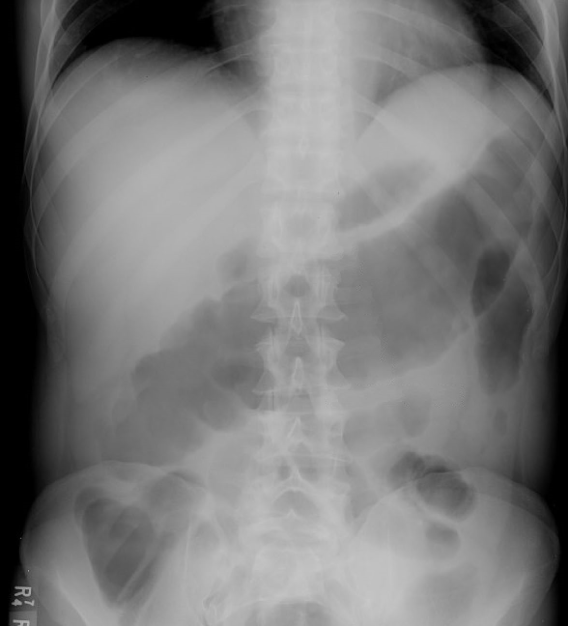 Which of the following is the most likely cause of this patient's current condition?
 (Multiple Choice)
4.8/5 (59)
(59) A 43-year-old woman on the surgical floor is being evaluated for increasing shortness of breath. She was brought to the emergency department 8 hours ago following a high-speed motor vehicle collision. The patient had been drinking alcohol prior to driving. She was restrained and air bags were deployed, but her right knee smashed against the front console. Trauma workup revealed a right femur fracture as well as bruising of the face and chest without underlying fractures. The patient received 3 L of isotonic fluids and was admitted for observation and pain management prior to anticipated fracture fixation. She now has increased work of breathing. Blood pressure is 138/82 mm Hg, pulse is 102/min, and respirations are 24/min. Pulse oximetry shows an oxygen saturation of 90% on 4 L of oxygen. The patient is alert with no focal neurological deficits. Diffuse rales are heard in the anterior lung fields bilaterally. Heart sounds are normal. There are no other changes to the clinical examination. CT scan of the chest reveals peripheral, anterior ground-glass opacities in both lungs. Which of the following is the most likely diagnosis in this patient?
(Multiple Choice)
4.7/5 (68)
(68) An 84-year-old man is brought to the emergency department due to severe left-sided flank pain and nausea over the last hour. He has also had syncope but no chest pain, bowel symptoms, or bladder symptoms. Other medical conditions include hypertension, dyslipidemia, sigmoid diverticulosis, and a transient ischemic attack 5 years ago. He has a 50-pack-year smoking history. Temperature is 37.1C (98.8 F), blood pressure is 90/60 mm Hg, and pulse is 112/min and regular. Pulse oximetry shows 94% on room air. The patient appears anxious, pale, and diaphoretic. Diffuse abdominal tenderness to deep palpation and left costovertebral angle tenderness is present. Bowel sounds are present. There is no rigidity or guarding. Peripheral pulses are decreased. Which of the following is the most likely diagnosis?
(Multiple Choice)
4.8/5 (64)
(64) A 25-year-old woman comes to the office due to a small ulcer on the right upper thigh. She went camping yesterday and while she was putting her pants on she suddenly had a feeling of being bitten over her right upper thigh. She ignored it, but the pain has been increasing. She has had no abdominal pain or difficulty breathing. The patient has no medical problems and takes no medications. Temperature is 36.8 C (98.2 F), blood pressure is 116/72 mm Hg, and pulse is 74/min. Physical examination shows an erythematous and painful ulcer on the lateral aspect of the right upper thigh; the remainder of the examination is unremarkable. Which of the following complications is most likely to develop in this patient over the next few days?
(Multiple Choice)
4.8/5 (85)
(85) A 20-year-old college football player is brought to the emergency department due to fever and worsening abdominal and right flank pain. The day prior, he received a direct blow to the central upper abdomen during a tackle and had to sit out the rest of practice. The patient also has nausea but no emesis or diarrhea. He has no chronic medical conditions. Temperature is 39.4 C (102.9 F). Blood pressure is 100/64 mm Hg, pulse is 112/min, and respirations are 18/min. Heart and lung sounds are normal. The abdomen is diffusely tender with guarding over the epigastrium. Abdominal imaging reveals free air in the retroperitoneum. Which of the following is the most likely diagnosis for this patient?
(Multiple Choice)
4.7/5 (76)
(76) A 65-year-old man is evaluated in the hospital for acute-onset shortness of breath. The patient was originally admitted 5 days ago for peritonitis due to a perforated peptic ulcer, for which he underwent surgical repair. A large-bore, right internal jugular venous catheter was placed during the operation. Today, he was out of bed, sitting in a chair, and comfortable on room air. The internal jugular catheter was removed. Minutes after catheter removal, the patient develops acute-onset shortness of breath and cough. On examination, he appears in respiratory distress. Blood pressure is 110/60 mm Hg, pulse is 110/min, and respirations are 25/min. Oxygen saturation is 85% on room air. The jugular veins are distended. Breath sounds are normal and equal on both sides. In addition to high-flow oxygen supplementation, the patient should be immediately placed in which of the following positions?
(Multiple Choice)
4.8/5 (77)
(77) A 34-year-old man is brought to the emergency department after a head-on motor vehicle collision. On arrival, blood pressure is 78/40 mm Hg and pulse is 134/min. On physical examination, the patient is alert but intoxicated. Pupils are equal and reactive to light. Ecchymosis in the distribution of a seat belt is present over the chest and abdominal wall. The left chest wall is tender to palpation. Breath sounds are equal bilaterally. Heart sounds are normal. The abdomen is distended and diffusely tender. Portable chest x-ray reveals multiple left rib fractures without pneumothorax or effusion. Cervical spine and pelvic radiographs are negative for fractures and dislocations. Focused Assessment with Sonography for Trauma is negative for pericardial effusion but positive for free intraperitoneal fluid. After rapid infusion of 2 L of intravenous crystalloid, blood pressure is 80/50 mm Hg and pulse is 118/min. Transfusion of uncrossmatched blood is pending. Which of the following is the best next step in management of this patient?
(Multiple Choice)
4.9/5 (88)
(88) A 65-year-old man returns to the office for follow-up 10 days after receiving a subacromial corticosteroid injection for right-sided rotator cuff tendinopathy. The tendinopathy was confirmed on musculoskeletal ultrasound of the shoulder prior to the injection. The patient initially experienced mild improvement of the shoulder pain, but starting 2 days ago, the pain significantly worsened and is now accompanied by generalized body ache and fatigue. He does not report trauma or excessive shoulder use since the injection. Medical history includes type 2 diabetes mellitus and gout. Temperature is 37.9 C (100.2 F), blood pressure is 130/85 mm Hg, and pulse is 109/min. On examination, there is mild swelling in the lateral right shoulder. Range of motion is limited in multiple axes due to significant pain, which is worse compared to examination prior to the injection. Which of the following is the most appropriate next step in management of this patient?
(Multiple Choice)
4.9/5 (69)
(69) A 56-year-old man comes to the office due to a right foot ulcer that is not healing. He first noticed a small wound on the right sole 2 weeks ago but does not remember any trauma. The patient applied over-the-counter antibiotic cream, but the wound gradually enlarged and began draining foul-smelling material. He has had no fever or significant pain. The patient has a history of hypertension and type 2 diabetes mellitus. Temperature is 37.2 C (99 F), blood pressure is 140/80 mm Hg, and pulse is 86/min. Right foot examination shows a 2×3 cm plantar ulcer under the first metatarsal head. There is purulent exudate and the bone can be palpated with a sterile metal probe. Distal pulses are present, but lower-extremity sensation to light touch and pain is decreased. A recent hemoglobin A1c level is 8.9%. Which of the following is the best next step in management of this patient's foot ulcer?
(Multiple Choice)
4.8/5 (74)
(74) A 65-year-old man comes to the office for a health maintenance visit. The patient has a history of hypertension and hypercholesterolemia. He smoked two packs of cigarettes per day for 25 years but stopped at age 50. Blood pressure is 128/80 mm Hg and pulse is 74/min. Physical examination shows no abnormalities. Screening abdominal ultrasonography reveals a 6-cm abdominal aortic aneurysm. The patient is referred to a vascular surgeon, who recommends endovascular repair of the aneurysm. Which of the following should be discussed with the patient as part of obtaining informed consent for the procedure?
(Multiple Choice)
4.8/5 (84)
(84) A 42-year-old woman comes to the office due to diarrhea. She has had 3 watery bowel movements daily for the past 7 months as well as mild, crampy abdominal pain that improves after defecation. The patient has no hematochezia, melena, or weight loss. Medical history and family history are both unremarkable. She has not traveled outside the United States. Temperature is 37.3 C (99.1 F), blood pressure is 120/78 mm Hg, pulse is 80/min, and respirations are 12/min. Physical examination shows moist mucous membranes and anicteric sclera. Heart and lung sounds are normal. The abdomen is mildly tender to palpation but nondistended. Laboratory results are as follows:  A colonoscopy reveals mild erythema and small, shallow ulcers in the rectum and sigmoid colon. Which of the following would be the best next step in management?
 (Multiple Choice)
4.8/5 (80)
(80) A 56-year-old man with a recent diagnosis of cirrhosis comes to the hospital for elective upper gastrointestinal endoscopy to evaluate for esophageal varices. The patient has elevated liver aminotransferase levels, and a hepatitis serology was positive for chronic hepatitis C. Abdominal imaging studies revealed mild ascites, a nodular-appearing liver, and splenomegaly. He has no other medical problems. The patient has a remote history of injection drug use and does not use tobacco or alcohol. Vital signs are within normal limits. Benzocaine throat spray is used for topical anesthesia, and procedural sedation is obtained with midazolam and fentanyl. During the procedure, the patient's oxygen saturation by pulse oximetry gradually decreases to 85% on ambient air and does not improve with application of supplemental oxygen via face mask. Physical examination demonstrates bluish discoloration of the lips and fingertips. Lung fields are clear to auscultation, and heart sounds are normal. Results of urgent laboratory tests are as follows:  Which of the following is the most likely cause of this patient's decrease in oxygen saturation?
 (Multiple Choice)
4.8/5 (73)
(73) A 16-year-old boy is brought to the emergency department due to left shoulder and hand pain after he fell on his outstretched hand while playing soccer. He immediately heard a crunching sound and had intense pain in the left shoulder following the injury. Blood pressure is 105/72 mm Hg and pulse is 85/min. On examination, he is holding his left arm with his right hand. There is bruising around the left shoulder and a small hematoma is noted at the base of the neck. Neurologic examination reveals intact sensation in the left upper extremity. The right radial pulse is easily palpable, and the left radial pulse is slightly decreased. X-ray of the left shoulder and chest reveals a displaced fracture of the clavicle with a normal cardiac silhouette. Which of the following is the best next step in management of this patient?
(Multiple Choice)
4.9/5 (84)
(84) 
Filters
- Essay(0)
- Multiple Choice(0)
- Short Answer(0)
- True False(0)
- Matching(0)