



 Chat with AI
Exam 4: Surgery

Exam 1: Medicine2 k Questions
Exam 2: Pediatric723 Questions
Exam 3: Psychiatry336 Questions
Exam 4: Surgery563 Questions
Exam 5: Obstetrics & Gynecology469 Questions
Select questions type


A 68-year-old woman comes to the office due to food getting "stuck" in her throat, which has worsened over the past 2 years. She occasionally has to get out of bed to vomit, although she does not vomit during the day. She has not changed her diet or lost weight. Medical history includes obesity, hypertension, and diabetes. A barium esophagogram is shown in the image below. Which of the following is the most appropriate next step in management of this patient? 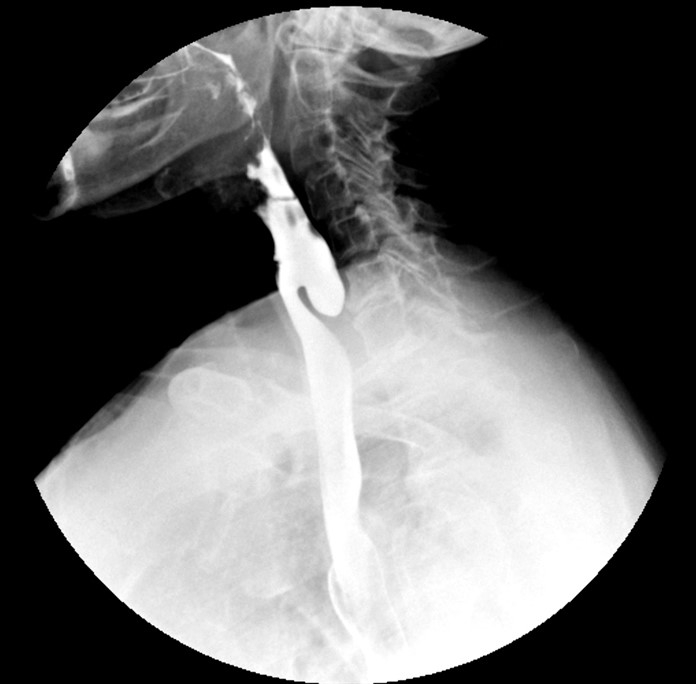
(Multiple Choice)
4.9/5  (78)
(78) A 59-year-old man comes to the office with a 3-month history of persistent right ear pain. He has tried to control the pain with acetaminophen and ibuprofen but with no improvement. He has no other medical issues. He works as a welder and has smoked a pack of cigarettes daily for 40 years and drinks a case of beer each weekend. Vital signs are within normal limits. Right ear examination shows a normal external ear, normal external auditory canal, and a clear tympanic membrane with no middle ear fluid. Palpation of the temporomandibular joint elicits no tenderness or crepitus. His left ear examination shows no abnormalities. Oral cavity examination shows poor dentition, but there are no ulcers. The tonsils are not enlarged, and posterior pharyngeal wall is nonerythematous. There is a nontender 2-cm lymph node on the right side of his neck. Which of the following is the best next step in management of this patient?
(Multiple Choice)
4.9/5 (76)
(76) A 68-year-old man is brought to the emergency department with 2 days of bright red blood per rectum. He complains of feeling dizzy and extremely fatigued. Six months ago, he had a diverticular bleed that required hospitalization. The patient has moderate chronic obstructive pulmonary disease (COPD) and uses his inhalers regularly. Three weeks ago, he was hospitalized for a COPD exacerbation and was also found to have a right femoral and popliteal vein thrombosis; he was discharged on warfarin. His mobility is significantly impaired by right hip osteoarthritis and back pain. Blood pressure is 80/60 mm Hg and pulse is 115/min and regular. Mucous membranes are pale. The abdomen is soft and nontender. There is swelling of the right ankle and calf. Laboratory results are as follows: 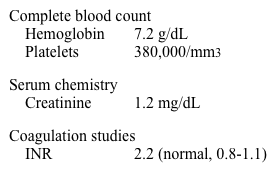 Warfarin is stopped. He is volume resuscitated and given a blood transfusion and fresh frozen plasma. Lower endoscopy reveals a diverticular bleed. Which of the following is the best management for this patient's deep venous thrombosis?
 (Multiple Choice)
4.7/5 (79)
(79) A 49-year-old man, who is in the post-anesthesia care unit recovering from cardiac ablation for atrial fibrillation, is experiencing chest pain and shortness of breath. The symptoms started suddenly while he was resting and have been rapidly getting worse. The patient has no other medical history. Blood pressure is 74/32 mm Hg, pulse is 140/min, and respirations are 30/min. Pulse oximetry is 92% on room air. On examination, the patient is diaphoretic and appears distressed. He has distant heart sounds and the jugular veins are distended. The lungs are clear to auscultation bilaterally. ECG shows sinus tachycardia and low-amplitude QRS complexes. Which of the following hemodynamic changes are most likely present in this patient?
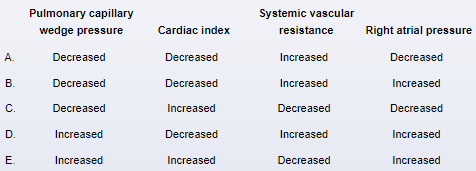
(Multiple Choice)
4.9/5 (76)
(76) A 35-year-old woman undergoes core needle biopsy for a suspicious, asymptomatic thyroid nodule that was discovered during a routine physical examination. TSH is normal. After the procedure, the patient develops an expanding hematoma at the biopsy site. She has no personal or family history of bleeding or easy bruising. Which of the following is the most likely diagnosis?
(Multiple Choice)
4.9/5 (90)
(90) An 82-year-old man comes to the office for evaluation of a spot on his back. He thinks the skin lesion has been present for many months to a few years but is unsure. The lesion was asymptomatic until it recently started itching; it is large and dark, but the patient is not sure whether it is evolving. The spot is shown in the image below: 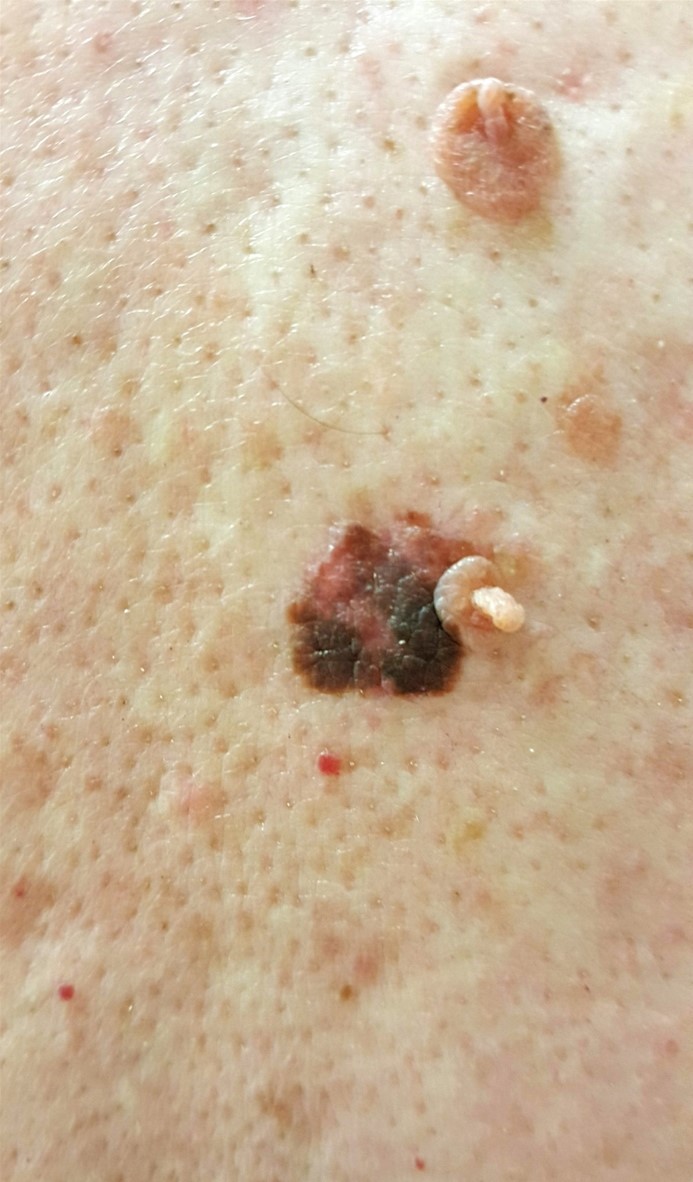 Which of the following is the most appropriate next step in management of this patient's skin lesion?
 (Multiple Choice)
4.9/5 (88)
(88) A 45-year-old woman is brought to the emergency department due to left groin and abdominal pain accompanied by nausea and vomiting. The patient has a history of systemic lupus erythematosus, hypertension, and glucocorticoid-induced hyperglycemia. Abdominal examination shows central obesity; skin striae; and a nonreducible, tender mass in the left groin. CT scan of the abdomen reveals a left femoral hernia containing a bowel segment and dilated small bowel loops. The patient undergoes urgent exploratory laparotomy for resection of the obstructed bowel loop and repair of the hernia. There are no intraoperative complications, but she abruptly develops hypotension in the postoperative recovery unit. Blood pressure remains <90/60 mm Hg despite intravenous fluid boluses. Which of the following is the best immediate step in management of this patient?
(Multiple Choice)
4.9/5 (83)
(83) A 21-year-old man comes to the emergency department due to a 6-week history of progressive shortness of breath and cough. The patient wheezes at night and has to sit up to relieve the chest discomfort. He has no other medical conditions. He takes no medications. The patient denies the use of tobacco, alcohol, and illicit drugs. Temperature is 36.1 C (97 F), blood pressure is 120/70 mm Hg, pulse is 70/min, and respirations are 14/min. Pulse oximetry is 98% on room air. The patient is awake, alert, and in no distress. No masses are palpable in the neck. Heart and lungs sounds are normal. CT scan of the chest reveals a large, anterior mediastinal mass causing tracheal compression. Serum levels of alpha fetoprotein and β-hCG are elevated. Which of the following is the most likely diagnosis?
(Multiple Choice)
4.9/5 (81)
(81) A 42-year-old woman, gravida 3 para 3, comes to the office due to left breast swelling and pain that have worsened over the past few weeks. The patient stopped breastfeeding her youngest child approximately 2 months ago. She developed left breast swelling and pain a month ago and was diagnosed with mastitis and prescribed a course of antibiotics. The patient completed the antibiotics and her symptoms initially improved, but she developed worsening symptoms again 2 weeks ago. She has type 2 diabetes mellitus for which she takes metformin but has no other chronic medical conditions. BMI is 46.6 kg/m2. Temperature is 37.6 C (99.7 F), blood pressure is 110/68 mm Hg, pulse is 88/min, and respirations are 18/min. The left breast is diffusely warm, erythematous, and has thickened skin dimpling. The right breast is normal. Which of the following is the most likely diagnosis for this patient?
(Multiple Choice)
4.8/5 (83)
(83) A 42-year-old man comes to the office to discuss abnormal blood work results that were obtained at a local health fair. The patient currently feels well and reports no symptoms. Temperature is 37.6 C (99.7 F), blood pressure is 125/72 mm Hg, pulse is 82/min, and respirations are 13/min. Examination shows no scleral icterus. Heart and lung sounds are normal; skin and abdominal examination are normal. Laboratory results are as follows:  Right upper quadrant ultrasound is normal. The patient undergoes magnetic resonance cholangiopancreatography, which reveals luminal irregularities with mild focal dilatations within both intrahepatic and extrahepatic biliary ducts. Which of the following additional testing should be obtained from this patient?
 (Multiple Choice)
4.7/5 (87)
(87) A 60-year-old man comes to the emergency department due to several hours of right lower quadrant pain and vomiting. His oral intake has been minimal for the last 12 hours. Past medical history is notable for well-controlled hypertension. An abdominal CT scan demonstrates appendicitis, and the patient is taken to the operating room. He vomits during rapid sequence induction for intubation, requiring repeat suctioning from the mouth and trachea. The surgery is otherwise uneventful; the patient receives a total of 2 liters of intravenous crystalloids in the intra- and peri-operative period and maintains normal hemodynamics and urine output. Approximately 4 hours later, he is tachypneic and hypoxemic. Temperature is 37.2 C (99 F), blood pressure is 150/80 mm Hg, and pulse is 95/min and regular. Pulmonary examination reveals bilateral crackles. ECG is unremarkable. Arterial blood gas analysis demonstrates PO2 of 67 mm Hg on a fraction of inspired oxygen of 90%. Chest x-ray reveals bilateral infiltrates. Which of the following is the most likely mechanism of lung injury?
(Multiple Choice)
4.9/5 (74)
(74) A 58-year-old man comes to the emergency department due to a week of fever, chills, and cough productive of foul-smelling sputum. He has also had night sweats, anorexia, and fatigue. The patient has no other medical conditions and takes no medications. He has unstable housing and often sleeps in doorways or at shelters. The patient smokes cigarettes and drinks alcohol but does not use injection drugs. Temperature is 39.5 C (103.1 F), blood pressure is 110/70 mm Hg, and pulse is 120/min. The patient appears ill and disheveled with poor dentition. Lung auscultation reveals right-sided crackles. Leukocyte count is 18,000/mm3, and serum sodium is 128 mEq/L. Chest imaging findings are shown in the image below: 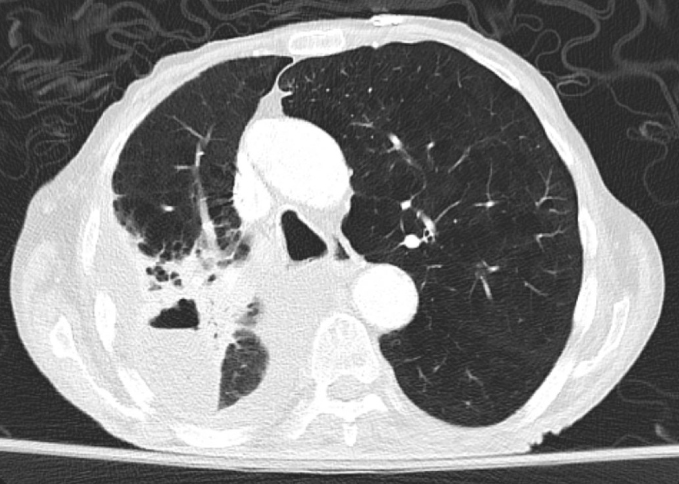 Which of the following is the most likely cause of this patient's current condition?
 (Multiple Choice)
4.9/5 (89)
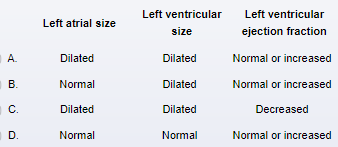
(89) A 26-year-old man is hospitalized for fevers and chills. Blood cultures grow gram-positive cocci in clusters. Chest examination is unremarkable. Echocardiogram shows a mobile density on the posterior mitral leaflet but is otherwise unremarkable. On the third day of hospitalization, the patient exhibits shortness of breath and an inability to lie flat. On examination, bibasilar crackles are present. A 2/6 holosystolic murmur is heard at the apex. Which of the following is likely to be present on repeat echocardiogram?
(Multiple Choice)
4.9/5 (80)
(80) A 40-year-old man is brought to the emergency department after a motor vehicle collision. Blood pressure is 130/84 mm Hg and pulse is 102/min. Heart and lung sounds are normal. Abdominal palpation shows fullness and tenderness in the suprapubic region. There is no blood at the urethral meatus, and digital rectal examination reveals a normal prostate. Chest x-ray is normal. Focused Assessment with Sonography for Trauma reveals no intraperitoneal free fluid. Pelvic x-ray reveals fracture of the left pubic ramus. A Foley catheter is placed without resistance, with immediate return of bloody urine. Emergency CT scan of the abdomen and pelvis is performed. Which of the following injuries is most likely to be seen on CT scan in this patient?
(Multiple Choice)
4.8/5 (78)
(78) A 30-year-old man comes to the office due to 3 days of dysuria and urinary frequency. He had similar symptoms twice over the past 4 months; both times, he was told he had a urinary tract infection and had complete resolution of symptoms following short courses of antibiotic therapy. He is sexually active and has pain with ejaculation but no urethral discharge or fever. The patient smokes a pack of cigarettes daily and does not use alcohol or illicit drugs. He has no other chronic medical issues. Temperature is 37.2 C (99 F), blood pressure is 120/80 mm Hg, and pulse is 78/min. Abdomen is soft and nontender. There is no costovertebral angle tenderness. External genitalia are normal without any focal tenderness, rashes, or ulcerations. Rectal examination reveals a smooth, nontender prostate. Urinalysis is as follows:  Which of the following is the most likely cause of this patient's current symptoms?
 (Multiple Choice)
4.8/5 (59)
(59) A 55-year-old man comes to the office for follow-up. Six months ago, the patient was diagnosed with papillary thyroid cancer and underwent total thyroidectomy, followed by radioactive iodine treatment. Since then, he has been taking levothyroxine and has had no issues. The patient has no other medical conditions and does not use tobacco, alcohol, or illicit drugs. Vital signs are within normal limits. Physical examination shows a well-healed surgical incision with no palpable neck masses or enlarged cervical lymph nodes. Laboratory testing shows significantly elevated serum thyroglobulin concentration compared with the previous level 6 months ago. Which of the following best explains the observed laboratory finding in this patient?
(Multiple Choice)
4.7/5 (67)
(67) A 22-year-old man comes to the urgent care clinic after being hit in the face with a basketball. He had bleeding from both sides of his nose for about 10 minutes that stopped with pressure. He is currently unable to breathe through his nose. Medical history is significant for allergic rhinitis treated with oral antihistamines. Temperature is 37 C (98.6 F), blood pressure is 110/70 mm Hg, pulse is 70/min, and respiratory rate is 14/min. Oxygen saturation is 99% on room air. On examination, there is bruising across the nose and under the eyes. Anterior rhinoscopy reveals no bleeding. There is soft, fluctuant swelling of the septum bilaterally. There is no blood in the oropharynx. Which of the following is the best next step in management of this patient?
(Multiple Choice)
4.9/5 (90)
(90) A 68-year-old woman comes to the office due to oral pain. For the last 3 days, she has had mild pain in the left lower jaw associated with swelling of the gums. The patient had a loose molar extracted 3 weeks ago, and the extraction site never completely healed. Medical history is notable for osteoporosis treated with calcium, vitamin D, and zoledronic acid. She has never used tobacco or alcohol. Vital signs are normal. Examination shows gingival edema and erythema surrounding an area of exposed bone at the left lower jaw. Which of the following is the most likely diagnosis?
(Multiple Choice)
4.9/5 (78)
(78) A 67-year-old man comes to the office due to a 2-day history of diarrhea and left-sided abdominal pain. The patient was seen in the emergency department 10 days ago due to left lower quadrant pain and low-grade fever; CT scan showed sigmoid diverticulitis. He was given amoxicillin-clavulanic acid therapy for 7 days. The patient completed the course of antibiotic therapy with good resolution of symptoms. However, over the past 2 days, he has developed left-sided abdominal pain and multiple watery stools. Temperature is 37 C (98.6 F), blood pressure is 120/80 mm Hg, and pulse is 98/min. Abdominal examination shows left-sided tenderness without rebound, rigidity, or guarding. Which of the following is the most appropriate empiric therapy while studies are pending in this patient?
(Multiple Choice)
4.8/5 (83)
(83) A 38-year-old man comes to the emergency department for evaluation of jaw swelling and pain. Two weeks ago, the patient cracked a molar in his right lower jaw after biting on an unpopped popcorn kernel and underwent tooth extraction. Yesterday, he developed a fever and the right side of his jaw began to swell. The pain has been worsening in that area, and the patient is having trouble swallowing. Temperature is 38.2 C (100.8 F), blood pressure is 130/82 mm Hg, pulse is 112/min, and respirations are 22/min. Oxygen saturation is 99% on room air. On examination, the patient appears ill and is drooling. His tongue appears elevated and is displaced posteriorly. The floor of the patient's mouth feels firm. His neck is erythematous, warm, and feels woody. This patient is at greatest risk for which of the following immediate complications?
(Multiple Choice)
4.8/5 (74)
(74) 
Filters
- Essay(0)
- Multiple Choice(0)
- Short Answer(0)
- True False(0)
- Matching(0)