



 Chat with AI
Exam 9: Microbiology

Exam 1: Anatomy291 Questions
Exam 2: Behavioral science240 Questions
Exam 3: Biochemistry156 Questions
Exam 4: Biostatistics117 Questions
Exam 5: Embryology52 Questions
Exam 6: Genetics103 Questions
Exam 7: Histology24 Questions
Exam 8: Immunology129 Questions
Exam 9: Microbiology336 Questions
Exam 10: Pathology816 Questions
Exam 11: Pathophysiology464 Questions
Exam 12: Pharmacology538 Questions
Exam 13: Physiology272 Questions
Select questions type


A 32-year-old man comes to the office due to diarrhea, flatulence, foul-smelling stools, and abdominal cramping. He recently returned home from a hiking trip. A smear of his stool sample is shown below: 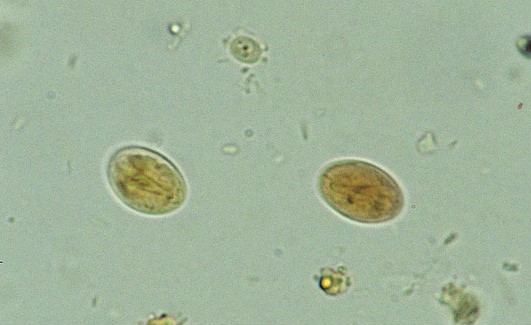 Which of the following is the drug of choice for this condition?
 (Multiple Choice)
4.8/5  (81)
(81) A 43-year-old man comes to the emergency department due to 2 weeks of intermittent fevers, malaise, and headaches. He has a history of HIV and has not been taking his antiretroviral drugs recently. Five years ago, the patient spent a year in jail. Temperature is 38.2 C (100.8 F). Cerebrospinal fluid (CSF) analysis shows markedly elevated protein and low glucose, and CSF cultures grow Mycobacterium tuberculosis. Resistance testing shows the following: 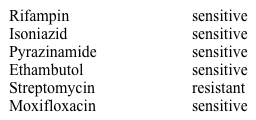 Which of the following best explains the resistance pattern seen in these bacteria?
 (Multiple Choice)
4.8/5 (86)
(86) A 27-year-old man comes to the emergency department due to several hours of right foot pain and swelling. The patient says he was working in his barn last night and stepped on an old nail. This morning, he awoke with pain near the injury site. It has increased throughout the day and is accompanied by progressive swelling. The patient has no chronic medical conditions and takes no medications. Temperature is 38.1 C (100.6 F), blood pressure is 135/75 mm Hg, and pulse is 95/min. The right foot is swollen with some erythema around the injury site. Radiographic imaging reveals gas in the tissues. Surgical exploration shows extensive tissue necrosis. Culture from the site reveals gram-positive rods. Which of the following best describes the mechanism of action of the toxin responsible for the necrotic effects seen in this patient?
(Multiple Choice)
4.8/5 (91)
(91) A 23-year-old woman comes to the emergency department due to 4 days of intermittent fever, chills, and diaphoresis accompanied by fatigue, myalgia, and dull headache. She recently returned from a 3-month trip to India, where she worked for a nongovernmental organization. The patient had similar symptoms during her first month abroad that improved after several days of treatment. She has no other medical history and takes no medications. Temperature is 38.3 C (101 F), blood pressure is 110/70 mm Hg, and pulse is 100/min. Physical examination shows mild jaundice and hepatosplenomegaly. Laboratory results reveal anemia and elevated indirect bilirubin levels. A peripheral blood smear using Giemsa stain shows intraerythrocytic ringed inclusions. This patient's current symptoms are most likely due to reactivation of a dormant infection from which of the following sources?
(Multiple Choice)
4.9/5 (83)
(83) A 32-year-old woman, gravida 1 para 1, comes to the office for vaginal discharge. The patient has no chronic medical conditions and takes no daily medications. Her last menstrual period was 3 weeks ago. The patient has recently become sexually active with a new partner and uses an intrauterine device for contraception. Cytology of the discharge is shown in the image below: 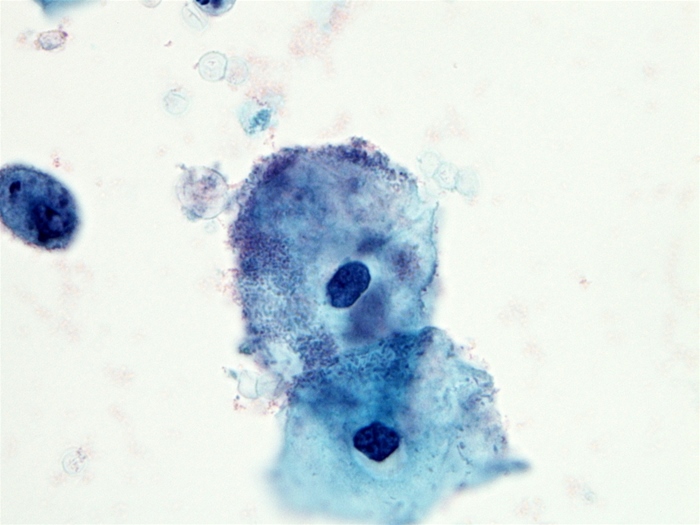 Which of the following best describes the predominant organism causing this patient's condition?
 (Multiple Choice)
4.9/5 (66)
(66) An outbreak of hepatitis in New Delhi was characterized by high incidence of fulminant hepatitis in pregnant women, who experienced a mortality rate of 20%. The virus responsible for the outbreak:
(Multiple Choice)
5.0/5 (79)
(79) A 9-year-old boy is brought to the office due to throat pain and rash. Two days ago, the patient was sent home early from summer camp because of fever, sore throat, pain with eating, and rash on his extremities. He has no prior medical conditions and is up to date on immunizations. Temperature is 37.2 C (99 F); vital signs are otherwise normal. On physical examination, the conjunctivae are normal, and the tympanic membranes are clear. Several superficial ulcers are present on the buccal mucosa and soft palate; the tonsils appear normal and do not have exudate. Skin examination findings are shown in the exhibit. 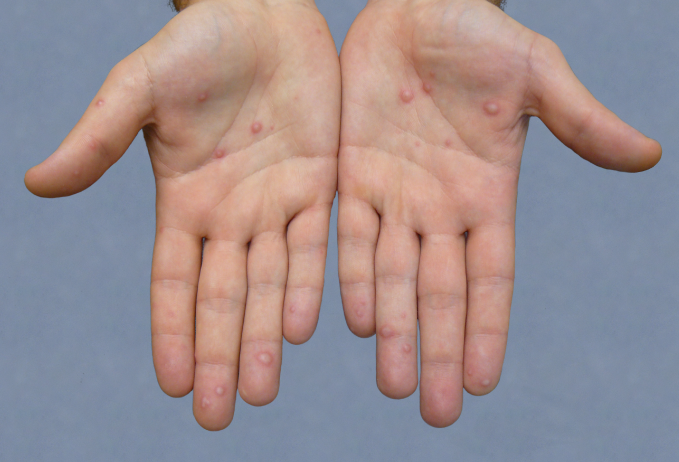 The infectious agent most likely responsible for this patient's current condition is also associated with which of the following?
 (Multiple Choice)
4.9/5 (69)
(69) A 23-year-old man has 2 days of fever, cough, sore throat, and runny nose. His temperature is 38 C (100.4 F). Lung sounds are clear to auscultation. A nasopharyngeal swab is obtained. Naked viral particles are seen, and purified RNA molecules are extracted from these particles. Once introduced into human cells, the purified RNA molecules induce viral protein synthesis and viral genome replication. Which of the following is the most likely cause of this patient's symptoms?
(Multiple Choice)
4.8/5 (67)
(67) A 45-year-old woman with HIV comes to the office due to the appearance of multiple tender nodules on her lower extremities over the past several weeks. The patient tried to squeeze open the lesions, but this led to profuse bleeding with no expression of pus. She works at a pet store in Mississippi and has regular contact with a variety of animals. Skin examination findings are shown below. 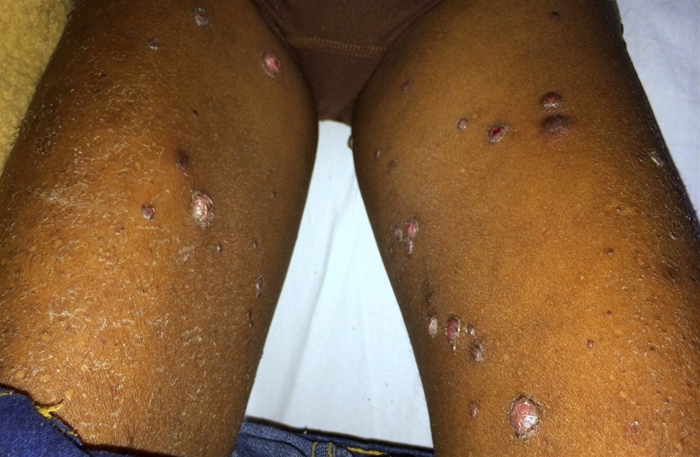 Biopsy of the lesions reveals large endothelial cells forming vascular channels with a mixed neutrophilic and lymphocytic infiltrate. Immunohistochemical staining for human herpesvirus 8 is negative. Infection with which of the following pathogens is most likely responsible for this patient's skin condition?
 (Multiple Choice)
4.9/5 (78)
(78) A 30-year-old primigravid woman at 35 weeks gestation comes to the emergency department due to fever, nausea, vomiting, watery diarrhea, and myalgias that began one day ago. She has no contractions, vaginal bleeding, or leakage of fluid. Temperature is 39.3 C (102.7 F), blood pressure is 90/60 mm Hg, and pulse is 126/min. The abdomen is soft, and the uterus is nontender. Fetal heart rate is 180/min on Doppler ultrasound. The remainder of the physical examination is normal. Blood cultures grow gram-positive rods. Which of the following is the major virulence factor of the organism responsible for this patient's clinical presentation?
(Multiple Choice)
4.7/5 (88)
(88) A 25-year-old primigravida has a stillbirth at 18 weeks gestation. Her only symptom during pregnancy was pain in both knees and feet, which she attributed to pregnancy-related weight gain and being "on my feet all day" as an elementary school teacher. The pain lasted approximately a week and resolved without medication. The patient was taking prenatal vitamins daily, and her prenatal care was appropriate. Fetal autopsy shows pleural effusion, pulmonary hypoplasia, and ascites. Infection with which of the following is the most likely etiology of the stillbirth?
(Multiple Choice)
4.8/5 (66)
(66) An isolate of Streptococcus pneumoniae from a patient with meningitis is incubated with low-dose radiolabeled ceftriaxone and then subjected to protein electrophoresis. Five distinct bands are detected by radioautography.
These bands most likely represent radiolabeled ceftriaxone that is bound to which of the following?
(Multiple Choice)
4.9/5 (75)
(75) A 45-year-old man comes to the urgent care clinic because of fever, severe headache, myalgia, and pleuritic chest pain. He has had these symptoms for several days. Physical examination shows fever and mild tachycardia. Lung auscultation reveals mild crackles. Radiographic examination is consistent with segmental pulmonary infiltrates. The patient fails to respond to empiric antibacterial antibiotic therapy. Microscopic examination of lung tissue obtained from this patient shows spherules packed with endospores. This patient's history is most likely to reveal which of the following?
(Multiple Choice)
4.8/5 (76)
(76) A 42-year-old homeless man comes to the emergency department due to painful muscle spasms. The patient has had frequent involuntary contractions of the jaw, neck, and trunk muscles, which are triggered by sensory stimuli. He has a history of injection drug use and has had several injection site infections. Physical examination shows neck stiffness and decreased opening of the jaw. Which of the following is the most likely path taken by the agent responsible for this patient's condition?
(Multiple Choice)
4.8/5 (74)
(74) A previously healthy 2-year-old boy is brought to the clinic with fever and mouth pain that began yesterday. He has consumed an adequate amount of fluids but refuses to eat due to the pain. The patient has no medical problems and takes no medications. Physical examination reveals swollen gums and vesicular, inflamed lesions on his hard palate and lips. He has enlarged and tender cervical lymph nodes. Which of the following is most likely responsible for this patient's condition?
(Multiple Choice)
4.9/5 (74)
(74) A 46-year-old woman comes to the office to be tested for HIV after one of her prior sexual partners found that he was HIV-positive. She feels healthy and has no symptoms. The patient has never had a sexually transmitted infection and has no chronic medical conditions. She has had several sexual partners in her lifetime and uses condoms inconsistently. Physical examination shows no abnormalities. HIV antigen/antibody immunoassay and a confirmatory HIV-1 antibody test are positive. Further studies reveal plasma HIV viral load is >250,000 copies/mL and CD4 lymphocyte count is 150 cells/mm3. After discussing the results and need for treatment, the patient agrees to start antiretroviral therapy. An additional medication to prevent opportunistic infections is also planned. This added treatment is most likely being used to prevent infection from which of the following pathogens?
(Multiple Choice)
4.8/5 (81)
(81) A 23-year-old woman comes to the hospital due to fever, chills, dyspnea, and cough for the past several days. She also has sharp right-sided chest pain exacerbated by breathing. Her temperature is 39 C (102 F), blood pressure is 115/70 mm Hg, and pulse is 108/min. On examination, the patient has several needle track marks on both arms. There is a 3/6 holosystolic murmur heard best at the lower sternal border that increases on inspiration. Chest imaging reveals scattered bilateral peripheral lung opacities. HIV testing is negative. This patient's blood cultures are most likely to grow which of the following organisms?
(Multiple Choice)
4.9/5 (68)
(68) An 83-year-old man comes to the emergency department due to a 1-week history of fever, malaise, cough, right-sided chest pain, and worsening dyspnea. Temperature is 38.4 C (101.1 F), blood pressure is 116/70 mm Hg, and pulse is 98/min. On physical examination, the patient is frail appearing. Breath sounds are decreased on the right side. Heart sounds are normal. The abdomen is soft and nontender. Chest x-ray shows a moderate-sized right pleural effusion. Thoracentesis yields purulent fluid. Pleural fluid analysis reveals a large number of leukocytes with 80% neutrophils. Which of the following is the most likely underlying mechanism for this patient's pleural effusion?
(Multiple Choice)
4.8/5 (73)
(73) A 61-year-old man comes to the office due to a painful rash on his face for the past 3 days. The patient has no other medical conditions and takes no medications. He is a retired schoolteacher and lives with his wife. Skin examination findings are shown in the exhibit. 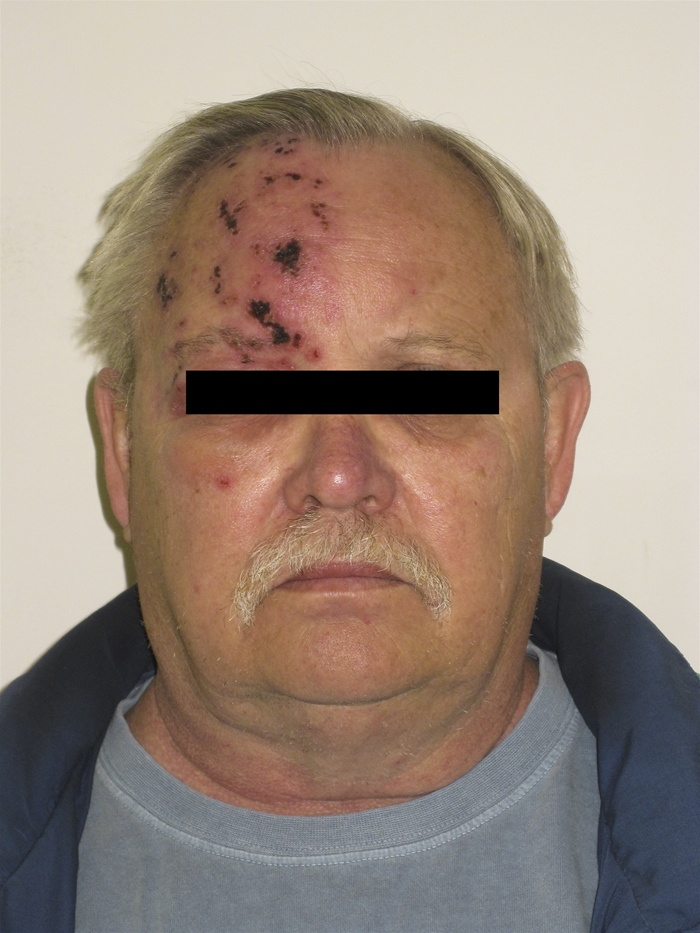 The remainder of the physical examination shows no abnormalities. Which of the following events most likely immediately preceded the appearance of skin rash in this patient?
 (Multiple Choice)
4.7/5 (82)
(82) An 8-year-old boy is brought to the emergency department due to 2 days of fever, abdominal pain, and diarrhea. The patient has no significant medical history and has received all recommended vaccinations. He attends a primary school and has not traveled recently. The family recently brought home a new puppy from a kennel. The patient's stool is positive for occult blood but negative for ova and parasites. Which of the following is the most likely cause of this patient's symptoms?
(Multiple Choice)
4.7/5 (83)
(83) 
Filters
- Essay(0)
- Multiple Choice(0)
- Short Answer(0)
- True False(0)
- Matching(0)