



 Chat with AI
Exam 9: Microbiology

Exam 1: Anatomy291 Questions
Exam 2: Behavioral science240 Questions
Exam 3: Biochemistry156 Questions
Exam 4: Biostatistics117 Questions
Exam 5: Embryology52 Questions
Exam 6: Genetics103 Questions
Exam 7: Histology24 Questions
Exam 8: Immunology129 Questions
Exam 9: Microbiology336 Questions
Exam 10: Pathology816 Questions
Exam 11: Pathophysiology464 Questions
Exam 12: Pharmacology538 Questions
Exam 13: Physiology272 Questions
Select questions type


A 38-year-old man is brought to the emergency department after a generalized tonic-clonic seizure. He had several days of progressive headache, vomiting, and confusion prior to the episode. Temperature is 38 C (100.4 F). Physical examination shows a lethargic patient with bilateral papilledema and neck rigidity. His condition progressively worsens, and the patient dies in the hospital several days later. An autopsy is performed, and the brain histopathology is shown below. 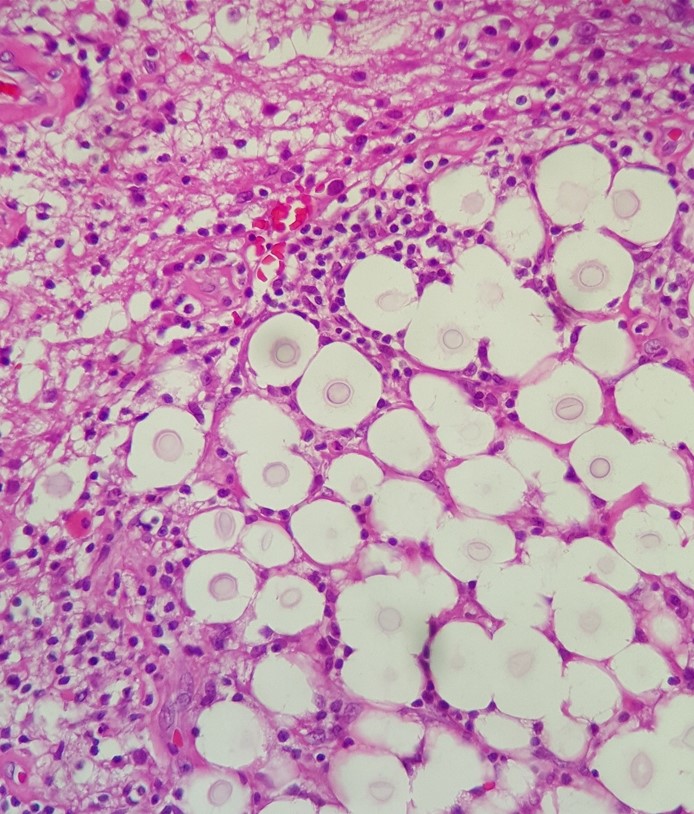 Which of the following pathogens is most likely responsible for these findings?
 (Multiple Choice)
4.7/5  (74)
(74) A 24-year-old man comes to the emergency department due to severe nausea and vomiting 2 hours after a church picnic. He ate chicken salad that had been sitting out in the sun. The patient has no prior medical conditions. Temperature is 37.2 C (98.9 F), blood pressure is 126/84 mm Hg, and pulse is 86/min. No abdominal tenderness is present, and bowel sounds are normal. Blood cell counts and serum chemistry studies are within normal limits. Symptoms improve significantly within several hours with supportive care. Which of the following is the most likely cause of this patient's symptoms?
(Multiple Choice)
4.9/5 (87)
(87) Another isolate of Streptococcus pneumoniae from a patient with meningitis is also incubated with low-dose radioactive ceftriaxone and subjected to protein electrophoresis. Only two bands are detected using radioautography. Which of the following best explains the observed finding?
(Multiple Choice)
4.9/5 (70)
(70) Researchers find that even though the current recombinant hepatitis B vaccine is immunogenic, about 10% of immunocompetent individuals do not develop high enough levels of anti-HB antibodies to confer immunity despite receiving the recommended 3 doses of the vaccine. To increase the vaccine immunogenicity, they use a lipopolysaccharide derivative as a vaccine adjuvant. The new vaccine induces an exaggerated immune response in previous nonresponders, which results in high antibody titers and, possibly, lifelong protection. Universal vaccination with the new vaccine would most likely lead to eradication of which of the following conditions?
(Multiple Choice)
4.8/5 (71)
(71) A 36-year-old man is hospitalized due to worsening fever, productive cough, and shortness of breath. He has no prior medical conditions but experienced an influenza-like illness during the previous week. Temperature is 38.3 C (102 F), blood pressure is 100/50 mm Hg, pulse is 122/min, and respirations are 26/min. Pulse oxymetry is 86% on room air. On physical examination, the patient is ill-appearing and lethargic. There are crackles over the right lower lung. Leukocyte count is 20,000 cells/mm3. Chest imaging reveals extensive parenchymal consolidation and cavitations suggestive of abscesses in the right middle and lower lobes. The patient is endotracheally intubated for mechanical ventilation due to worsening respiratory failure. Culture of the tracheal aspirate grows gram-positive cocci in clusters. Which of the following bacterial virulence factors most likely contributed to this patient's necrotizing infection?
(Multiple Choice)
4.9/5 (84)
(84) Researchers are studying mechanisms of human infection by animal viruses. The investigators induce random mutations in the genome of an avian influenza virus that is unable to infect humans but is structurally similar to human influenza A virus. A mutated isolate is found to be able to infect human upper respiratory tract epithelial cells. Alteration in which of the following viral components most likely enabled this novel strain to cause cross-species infection?
(Multiple Choice)
5.0/5 (79)
(79) A diarrheal outbreak is reported at a private school in Columbus, Ohio. Six healthy children age 10-11 and two teachers developed acute vomiting and diarrhea within a 2-day period. They describe the diarrhea as watery and without blood or mucus. Three of those affected are febrile during their illness. None of the patients have traveled abroad recently, and all are up to date with their vaccinations. Stool test results are pending. Which of the following pathogens is the most likely cause of the illness?
(Multiple Choice)
4.9/5 (73)
(73) A 4-year-old boy is brought to the physician by his mother with decreased appetite, abdominal cramps, and diarrhea over the last 3 days. The stools were initially watery but have now become bloody. On physical examination, his temperature is 100.4 F (38 C). There are signs of dehydration and he has a mildly distended abdomen with diffuse pain elicited on palpation. Stool studies are positive for fecal leukocytes and occult blood. Fecal cultures grow non-lactose fermenting, gram-negative rods on MacConkey agar. The bacteria ferment glucose without gas production, do not generate hydrogen sulfide when grown on triple sugar iron agar, and cannot replicate at refrigeration temperatures. Which of the following bacterial factors is the most important during the pathogenesis of this patient's disease?
(Multiple Choice)
4.9/5 (75)
(75) A 36-year-old immigrant from Peru comes to the office due to difficulty swallowing liquids. He also has difficulty belching. Eating slowly and extending the neck partially relieves his symptoms. The patient has had no fever, weight loss, chest pain, cough, dyspnea, or neurologic symptoms. He has no chronic medical problems and takes no medications. He has been an active smoker for the last 18 years but does not use alcohol or illicit drugs. The patient is afebrile with normal vital signs. BMI is 24 kg/m2. On examination, the abdomen is soft, nondistended, and nontender, with no masses or organomegaly. Bowel sounds are normal. Other examination findings are unremarkable. Barium swallow shows a dilated esophagus, and manometry confirms absent peristalsis in the smooth muscle portion of the esophagus. If this patient's symptoms are caused by an infection, which of the following organisms is the most likely cause?
(Multiple Choice)
4.9/5 (79)
(79) A 60-year-old woman comes to the physician with 10 days of diffuse itching. A rash began on her hands and quickly spread to involve her wrists, arms, and axillae. She has difficulty sleeping and complains of intense itching in these areas. She works in a day care center and primarily takes care of children age 2-5. The patient has no other medical conditions and takes no chronic medications. Vital signs are normal. Her BMI is 24 kg/m2. Skin examination shows small erythematous papules on the palms with excoriations, scattered vesicles, and pustules on the finger webs, palms, and wrist creases, as seen in the image below. She has similar lesions in her axillary skin folds bilaterally. The remainder of the examination is within normal limits. 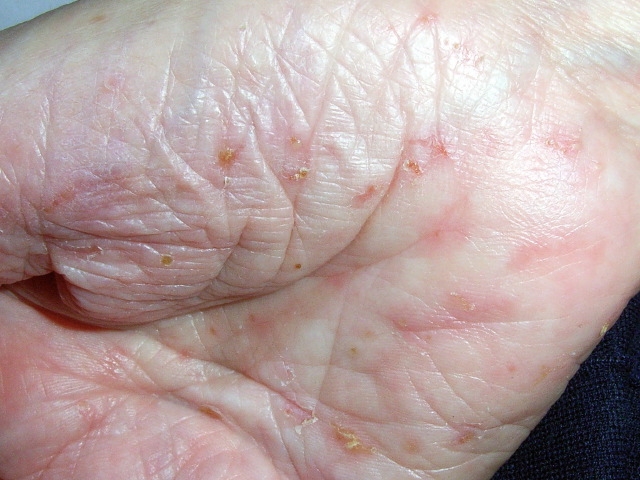 Which of the following is the most likely finding on skin sampling of this patient's lesions?
 (Multiple Choice)
4.9/5 (79)
(79) A 46-year-old man comes to the physician due to 3 days of fever, shortness of breath, pleuritic chest pain, and cough productive of green sputum. He has smoked a pack of cigarettes daily for 20 years. On examination, there are crackles at the base of the left lung. Chest x-ray reveals a left lower-lobe consolidation. Microscopic analysis of a sputum sample shows gram-positive, lancet-shaped cocci in pairs. Which of the following characteristics are these bacteria likely to demonstrate?
(Multiple Choice)
4.9/5 (73)
(73) A 34-year-old man is admitted to the intensive care unit due to fever, chills, shortness of breath, and altered mental status. His symptoms began 3 days ago and have progressively worsened over the last 24 hours. His past medical history is significant for a motor vehicle accident 2 years ago in which he sustained blunt abdominal trauma and required emergency laparotomy due to internal bleeding. His blood pressure is 81/44 mm Hg and pulse is 122/min. He is started on broad-spectrum antibiotics, intravenous fluids, and vasopressors. His condition continues to deteriorate and he dies in the hospital several hours later despite extensive resuscitation efforts. Blood cultures obtained on admission grow Streptococcus pneumoniae. Impairment of which of the following mechanisms most likely contributed to the severity of this patient's infection?
(Multiple Choice)
4.8/5 (76)
(76) A pharmaceutical researcher is developing a novel agent to prevent meningococcal disease in people exposed to the bacteria. Pili antigens from Neisseria meningitidis are extracted and used to generate monoclonal antibodies that impair normal pili function. The antibodies are administered to experimental animals with no prior exposure to N meningitidis. These animals, along with control animals that had not received the antibodies, are subsequently exposed to the bacteria. Compared to the control animals, a significantly greater proportion of the animals that received the antibodies remain healthy and develop no symptoms. The efficacy of these antibodies in preventing meningococcal disease is most likely due to direct interference with which of the following microbial processes?
(Multiple Choice)
4.8/5 (87)
(87) A day-old girl is being evaluated in the newborn nursery. The patient was born at 39 weeks gestation to a 38-year-old primigravida who immigrated to the United States during her third trimester. The patient had a strong cry and good tone at delivery but appears small for gestational age. Apgar scores were 8 and 9 at 1 and 5 minutes, respectively. Physical examination demonstrates white pupils bilaterally. A continuous harsh murmur is heard over the left infraclavicular area. The abdomen is nondistended, and there is no hepatosplenomegaly. Both ears fail the hearing screening. Which of the following maternal interventions would have most likely prevented this infant's condition?
(Multiple Choice)
4.9/5 (81)
(81) An 8-year-old boy who recently moved to the United States from Indonesia is brought to the emergency department due to fever, sore throat, and difficulty breathing. His immunization status cannot be determined. Physical examination shows extensive, coalescing, gray pharyngeal exudate and cervical adenopathy. Several days after being admitted to the hospital, he dies of myocarditis and severe heart failure. The presence of which of the following would most likely have prevented this patient's death?
(Multiple Choice)
5.0/5 (67)
(67) A 12-year-old girl is brought to an urgent care clinic due to nausea, vomiting, and crampy abdominal pain 3 hours after a summer cookout in a park, where she consumed potato salad, coleslaw, and a hamburger. Two other children who attended the event also had similar symptoms. She has no chronic medical conditions and previously felt well. On examination, the patient is afebrile, and the abdomen is soft and nontender. Her symptoms quickly resolve with supportive care. Which of the following strategies would have been most effective in preventing this patient's illness?
(Multiple Choice)
4.8/5 (83)
(83) 
Filters
- Essay(0)
- Multiple Choice(0)
- Short Answer(0)
- True False(0)
- Matching(0)