



 Chat with AI
Exam 9: Microbiology

Exam 1: Anatomy291 Questions
Exam 2: Behavioral science240 Questions
Exam 3: Biochemistry156 Questions
Exam 4: Biostatistics117 Questions
Exam 5: Embryology52 Questions
Exam 6: Genetics103 Questions
Exam 7: Histology24 Questions
Exam 8: Immunology129 Questions
Exam 9: Microbiology336 Questions
Exam 10: Pathology816 Questions
Exam 11: Pathophysiology464 Questions
Exam 12: Pharmacology538 Questions
Exam 13: Physiology272 Questions
Select questions type


A 35-year-old woman comes to the office due to a vulvar lesion. She has also experienced occasional headaches and memory loss recently. The patient has had unprotected sexual intercourse with multiple partners. Cardiovascular examination is notable for a diastolic murmur with a prominent second heart sound. There is a painless indurated nodule on her vulva. Cervical cultures are negative for gonorrhea, but a serum Venereal Disease Research Laboratory (VDRL) test is positive. Chest x-ray reveals calcifications at the level of the ascending aortic arch. Blood cultures are negative. Lumbar puncture shows mild pleocytosis and a positive VDRL result. HIV testing is negative. Which of the following best describes this patient's vulvar lesion?
(Multiple Choice)
4.8/5  (78)
(78) A 32-year-old man comes to the emergency department due to a 2-day history of progressive difficulty walking and tingling in his feet. He says that his feet feel "like they've gone to sleep" and states that he tripped while walking this morning. Medical history is unremarkable except for an episode of acute diarrhea 2 weeks ago that resolved spontaneously. The patient takes no medications. He drinks 1-2 alcoholic beverages daily and does not use tobacco products or illicit drugs. Vital signs are within normal limits. Physical examination shows decreased muscular strength in the lower extremities bilaterally with absent deep tendon reflexes. Which of the following agents is most likely associated with this patient's condition?
(Multiple Choice)
4.9/5 (83)
(83) A 36-year-old man comes to the office to discuss a skin rash on his shoulders and upper chest. The patient first noticed the rash 2 months ago while vacationing at a beach resort. The rash has worsened progressively and is associated with mild pruritus, but he has no other associated symptoms. The patient is a road construction worker, and often works in hot, humid areas. Past medical history is notable for seasonal allergies and childhood asthma. He does not use tobacco or alcohol. Skin examination findings are shown in the image below. 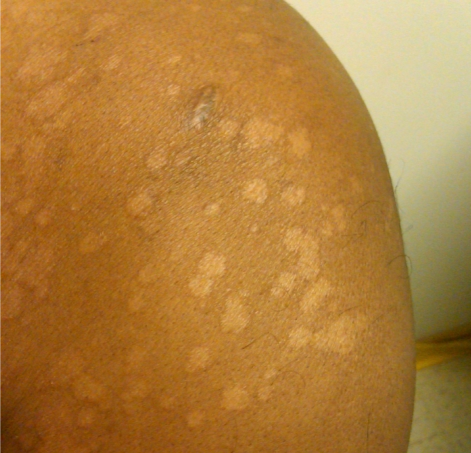 Which of the following is the most likely cause of this patient's condition?
 (Multiple Choice)
4.7/5 (87)
(87) A 22-year-old woman participates in a research study. She is asymptomatic and has not had a respiratory illness in the last 8 weeks. She reports no chronic medical problems and takes no medications. A nasopharyngeal specimen is obtained and cultured on a selective medium containing vancomycin, colistin, nystatin, and trimethoprim. The organism most likely to be isolated is typically associated with which of the following conditions?
(Multiple Choice)
4.8/5 (76)
(76) A 35-year-old man comes to the emergency department due to urinary urgency, a burning sensation on urination, and urethral discharge. The patient had similar symptoms 3 months ago, and urethral swab microscopy showed numerous neutrophils and intracellular gram-negative diplococci. The symptoms resolved after treatment with ceftriaxone and doxycycline but recurred 4 days ago. The patient was advised to use condoms but has had unprotected sexual encounters recently. He has no other medical conditions. The patient occasionally drinks alcohol and smokes cigarettes. Temperature is 37.1 C (98.8 F). BMI is 18.8 kg/m2. No suprapubic or flank tenderness is present. Mild erythema is noted at the urethral meatus. Nucleic acid amplification testing of a clean catch urine specimen is positive for Neisseria gonorrhoeae and negative for Chlamydia trachomatis. Which of the following is the most likely reason for the recurrence of infection in this patient?
(Multiple Choice)
4.9/5 (71)
(71) A 4-year-old boy is brought to the office due to skin lesions on his chin for the past 2 days. Temperature is 36.1 C (97 F). The patient is well-appearing. There are mildly tender perioral papules and pustules, some of which appear to have broken down and are covered with amber-colored crusting. A wound culture is taken, and Gram stain shows gram-positive cocci in chains. Which of the following symptoms would be most likely to develop as a potential complication of this patient's infection?
(Multiple Choice)
4.9/5 (88)
(88) A 23-year-old pregnant woman is found to have chronic viral hepatitis B on liver biopsy. The presence of which of the following serologic markers is most likely to increase the risk of vertical transmission of the virus?
(Multiple Choice)
4.7/5 (87)
(87) A 34-year-old woman comes to the emergency department due to 6 days of fatigue and intermittent fever. Medical history is significant for depression. She does not use tobacco, alcohol, or illicit drugs and has no drug allergies. The patient lives in New York City and recently traveled to central Africa, where she helped establish a nutrition program. Her blood microscopy findings are shown in the exhibit. 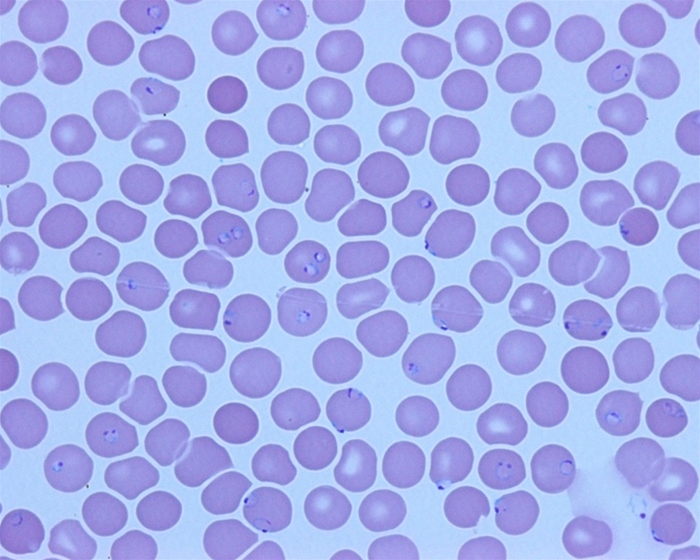 Urine pregnancy test is negative. Which of the following is the best treatment for this patient?
 (Multiple Choice)
4.9/5 (81)
(81) A 35-year-old man is found to have elevated alanine aminotransferase and aspartate aminotransferase levels. He has no abdominal pain, nausea, or vomiting. The patient has used intravenous drugs in the past but denies significant alcohol use. His past medical history is negative for blood transfusions or excessive acetaminophen use. Physical examination findings are normal. Laboratory studies show high titers of IgG directed against the hepatitis C envelope protein. Which of the following is the most likely reason that these antibodies do not confer effective immunity against the infection?
(Multiple Choice)
4.8/5 (81)
(81) A 21-year-old man comes to the emergency department due to shortness of breath, fatigue, myalgias, and debilitating retroorbital headaches for the past several days. The patient is on summer break and came to work at his grandparents' dairy farm 3 weeks ago. He cleans out animal waste from the barn, but he does not handle hay. His past medical history is insignificant. He does not use tobacco or illicit drugs. The patient's temperature is 38.8 C (101.8 F). Bronchial breath sounds are heard in the right lower lung. There are no cardiac murmurs. Abdominal examination is unremarkable. Chest x-ray demonstrates right lower and middle lobe consolidation. Laboratory results are as follows: 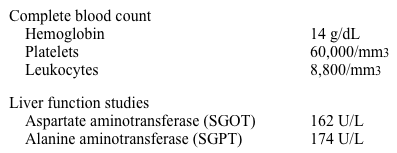 An HIV test is negative.Which of the following is the most likely cause of this patient's symptoms?
 (Multiple Choice)
4.7/5 (82)
(82) A 21-year-old man comes to the urgent care clinic with a lesion on his penis. He noted a painful ulcer on the right side of the penis 4 days ago and it has progressively increased in size since then. The patient has had no dysuria, hematuria, or penile discharge. He is a tourist visiting New York City from Botswana. He is HIV-positive and is sexually active. The patient currently takes no medications. He appears comfortable and is afebrile. On genitourinary examination, there is a 1.5-cm ulceration on the right side of the base of the penis; this lesion is very tender and soft; has irregular, ragged borders; and is covered with grey exudate. There is no penile discharge. There is a palpable, tender, enlarged inguinal lymph node in the right groin. The examination is otherwise unremarkable. A scraping of the ulcer is performed. Polymerase chain reaction testing for herpes simplex virus is negative, and darkfield microscopy reveals no organisms. Which of the following is the most likely diagnosis?
(Multiple Choice)
5.0/5 (95)
(95) A 5-year-old girl is brought to the office by her mother due to 2 weeks of anorexia, nausea, epigastric discomfort, and loose bowel movements. She has had no fever or bloody stools. The patient recently returned from rural Brazil, where she spent the summer with family. She had no gastrointestinal symptoms during the trip but developed intensely pruritic eruptions between the toes of her right foot. The skin rash spontaneously resolved within a few days and was attributed to insect bites from walking barefoot in the fields. The patient has no prior medical conditions, takes no medications, and has received all age-appropriate vaccinations. On physical examination, the abdomen is soft and nontender with normoactive bowel sounds. Stool microscopy reveals smooth, thin-walled eggs. If left untreated, this patient's condition can lead to which of the following complications?
(Multiple Choice)
5.0/5 (84)
(84) A 68-year-old woman with end-stage renal disease receiving intermittent hemodialysis comes to the office due to back pain. She says that she may have "pulled a muscle" while getting out of her car a week ago; since then she has had progressively worsening back pain. She has no leg numbness or weakness but reports malaise and fatigue. The patient also has hypertension and type 2 diabetes mellitus and was treated several weeks ago for staphylococcal bacteremia associated with the dialysis catheter. Her temperature is 38 C (100.4 F). On examination, she has tenderness over the upper lumbar vertebrae without overlying skin changes. The straight leg raise test is negative. Which of the following is the best next step in management of this patient?
(Multiple Choice)
4.7/5 (84)
(84) A 2-hour-old girl develops tachypnea and grunting in the newborn nursery. The patient was born via cesarean delivery to a 26-year-old mother, gravida 2 para 2. Respiratory rate is 82/min. The other vital signs are within normal limits. Physical examination shows grunting and subcostal retractions but clear lungs. Blood culture reveals gram-positive rods after 11 hours of incubation. Which of the following pathogens is the most likely cause of this patient's condition?
(Multiple Choice)
4.9/5 (80)
(80) A 64-year-old man comes to the office due to 2 days of dysuria, urinary frequency, and urgency. He recently underwent a cystoscopy for evaluation of hematuria. The patient has a history of hypertension, type 2 diabetes mellitus, and 30 pack-years of cigarette smoking. His temperature is 38.2 C (100.8 F). On examination, there is suprapubic tenderness on deep palpation but no costovertebral angle tenderness. Urinalysis findings are as follows: 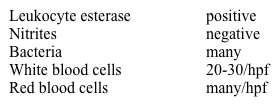 Midstream urine culture grows gram-positive cocci in chains with growth >100,000 colony-forming units/mL. The organism responsible for this patient's condition is most likely to demonstrate which of the following?
 (Multiple Choice)
4.8/5 (78)
(78) A 35-year-old man who received a kidney transplant one year ago comes to the emergency department with pleuritic chest pain and cough. He is found to have a low-grade fever. Chest x-ray reveals an infiltrate in the lower lobe of the right lung. The patient is started on broad-spectrum antibiotics, including vancomycin, ceftriaxone, and azithromycin. Despite these measures, his condition worsens over the next several days. Bronchoscopy with bronchoalveolar lavage is performed. Mucicarmine staining of his bronchoalveolar fluid reveals the following on light microscopy: 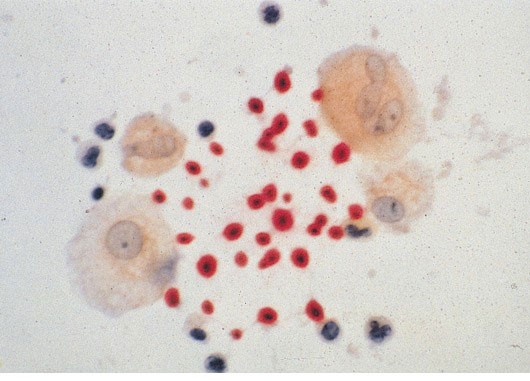 Which of the following is the most likely cause of this patient's condition?
 (Multiple Choice)
4.9/5 (83)
(83) A 57-year-old man comes to the office due to 2 months of progressive cough and weight loss. He has a history of diabetes mellitus type 2 and chronic kidney disease. He does not smoke cigarettes. The patient traveled to Denmark 4 months ago for a 2-week vacation. He has 2 cats and a bird. He works in the maintenance department of a large hotel and services the hot tub and swimming pools. Temperature is 38 C (100.4 F), blood pressure is 140/100 mm Hg, pulse is 88/min, and respirations are 16/min. The patient is 190 cm (6 foot 3 inches) tall. BMI is 22 kg/m2. Examination shows cervical lymphadenopathy. Chest imaging is shown in the exhibit. 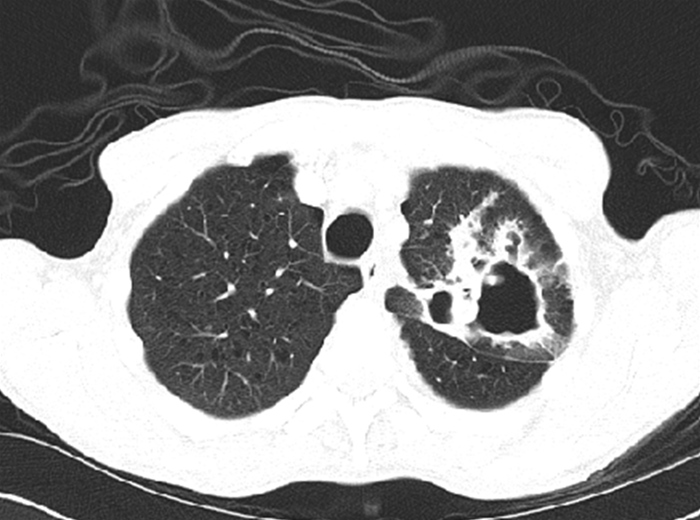 Hemoglobin A1c is 8.5% and serum creatinine is 3.8 mg/dL. Which of the following risk factors most likely contributed to this patient's current condition?
 (Multiple Choice)
4.9/5 (70)
(70) A 27-year-old man is brought to the hospital after having a generalized tonic-clonic seizure an hour ago. The patient has no chronic medical conditions and takes no medication. He emigrated from Nicaragua to the United States 5 years ago. Vital signs are within normal limits. Complete neurologic examination reveals no abnormalities. A CT scan of the head is shown in the image below. 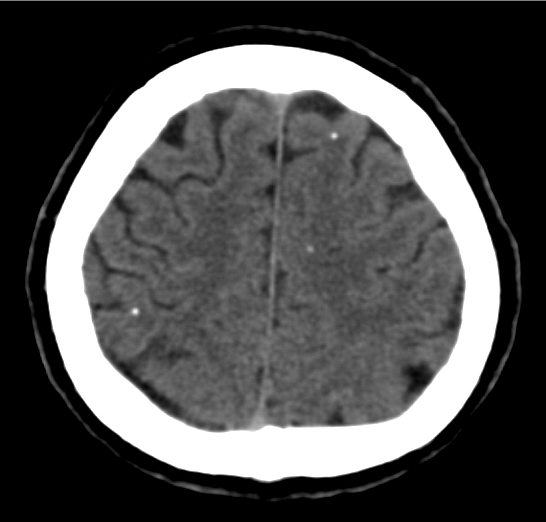 Complete blood count and cerebrospinal fluid evaluation are within normal limits. Which of the following is the most likely diagnosis?
 (Multiple Choice)
4.9/5 (73)
(73) A 34-year-old woman comes to the physician complaining of fever, dysuria, and flank pain. Her temperature is 37.8 C (100 F), blood pressure is 122/78 mm Hg, and pulse is 84/min. Physical examination elicits suprapubic and costovertebral angle tenderness. Urine dipstick analysis reveals positive leukocyte esterase and nitrite. A subsequent urine culture grows colonies of motile Gram-negative rods demonstrating a green metallic sheen on eosin methylene blue (EMB) agar and hemolysis on blood agar. Which of the following is the most important bacterial factor responsible for this patient's condition?
(Multiple Choice)
4.8/5 (72)
(72) A 20-year-old woman comes to the urgent care center due to pain with intercourse and dysuria for the last 3 days. She also has had low-grade fevers and a mild headache. The patient is otherwise healthy and takes oral contraceptives only. She has no history of urinary tract or sexually transmitted infections. The patient is sexually active and recently began a relationship with a new partner. Temperature is 37.2 C (99 F). The abdomen is soft and nontender. Pelvic examination shows multiple, painful, shallow ulcers with an erythematous base on the left labium. No vaginal discharge is present. Bimanual examination reveals no cervical motion tenderness. There is bilateral tender inguinal lymphadenopathy. Which of the following is the best diagnostic test for this patient's condition?
(Multiple Choice)
4.8/5 (67)
(67) 
Filters
- Essay(0)
- Multiple Choice(0)
- Short Answer(0)
- True False(0)
- Matching(0)