



 Chat with AI
Exam 9: Microbiology

Exam 1: Anatomy291 Questions
Exam 2: Behavioral science240 Questions
Exam 3: Biochemistry156 Questions
Exam 4: Biostatistics117 Questions
Exam 5: Embryology52 Questions
Exam 6: Genetics103 Questions
Exam 7: Histology24 Questions
Exam 8: Immunology129 Questions
Exam 9: Microbiology336 Questions
Exam 10: Pathology816 Questions
Exam 11: Pathophysiology464 Questions
Exam 12: Pharmacology538 Questions
Exam 13: Physiology272 Questions
Select questions type


A 48-year-old man comes to the physician with a 6-month history of cough and fatigue. He also has experienced malaise and weight loss. He does not recall any sick contacts. The patient is a carpenter. He smokes 1 pack of cigarettes daily. Temperature is 37.1 C (98.8 F). Examination shows left lower lobe crackles. HIV testing is negative. Chest x-ray reveals a pulmonary infiltrate in the lower lobe of the left lung. Results from sputum potassium hydroxide preparation are shown below. 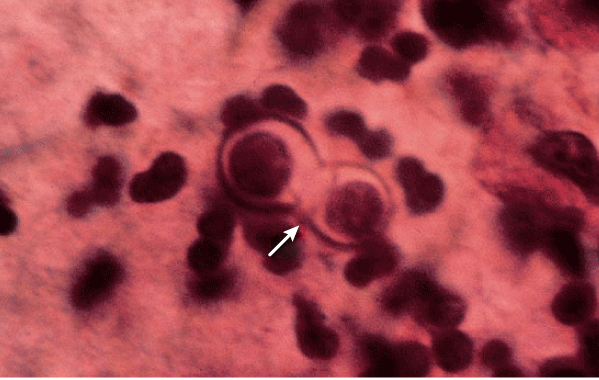 Which of the following is the most likely cause of this patient's condition?
 (Multiple Choice)
4.8/5  (85)
(85) An 83-year-old woman is brought to the emergency department from a nursing home with fever and altered mental status. The patient has a history of hypertension, dementia, and fecal incontinence. Her temperature is 38.3 C (100.9 F), blood pressure is 100/68 mm Hg, and pulse is 114/min. She is lethargic and unable to answer questions. Her abdomen is soft, with suprapubic tenderness. Lungs are clear bilaterally. There is no cardiac murmur or skin rash. Laboratory results are as follows: 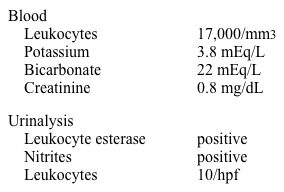 A chest x-ray reveals normal-appearing lungs. Blood and urine cultures are performed, and empiric antibiotics are initiated. Urine cultures grow gram-negative rods that are lactose-fermenting and indole-positive. Which of the following is the most likely organism causing this patient's infection?
 (Multiple Choice)
4.8/5 (79)
(79) A 46-year-old homeless man comes to the emergency department with fever and chest pain that worsens with swallowing. The patient has been hospitalized several times recently with Pneumocystis jirovecii pneumonia. He has a history of intravenous drug use. His temperature is 37.8 C (100 F). Oropharyngeal examination is remarkable only for poor dentition. Esophagogastroduodenoscopy is performed and reveals esophageal hyperemia and linear ulcerations. Which of the following is the most likely cause of this patient's condition?
(Multiple Choice)
4.8/5 (78)
(78) A 29-year-old woman is brought to the emergency department with new-onset generalized tonic-clonic seizures. She has a history of HIV and has not been taking her medications consistently. According to her family, she has been sleepy and weak for the past 2 weeks. She has not had much of an appetite and has recently spent most of her time in bed. MRI of the head demonstrates 2 ring-enhancing focal lesions with surrounding edema in the right frontal lobe. Which of the following would be effective against the pathogen most likely responsible for this patient's symptoms?
(Multiple Choice)
4.8/5 (87)
(87) A 36-year-old man is admitted to the hospital with severe left leg pain after suffering a minor laceration to the leg 2 days earlier. Temperature is 39.5 C (103.1 F) and blood pressure is 85/45 mm Hg. On physical examination, the left leg is swollen and firm with erythema of the overlying skin. There is a small wound draining blood-tinged exudate on the left calf. The patient is taken to the operating room immediately, and a large area of necrotic tissue is excised. Gram stain of the necrotic tissue shows gram-positive cocci, and culture of the bacteria performed on a blood agar plate grows small colonies with a wide zone of surrounding hemolysis. Coagulase and catalase tests are negative, and pyrrolidonyl arylamidase (PYR) test is positive. Which of the following pathogens is most likely responsible for this patient's condition?
(Multiple Choice)
4.8/5 (72)
(72) A 24-year-old woman comes to the office due to copious green vaginal discharge and burning with urination for 3 days. The patient had a yeast infection a year ago, which was treated with over-the-counter medication. She has recently become sexually active with a new partner and occasionally uses condoms. Physical examination shows a yellow-green, frothy vaginal discharge and diffuse vaginal erythema but no lesions. The uterus is anteverted with no cervical motion tenderness. Which of the following is the best test to confirm the diagnosis in this patient?
(Multiple Choice)
4.9/5 (80)
(80) A 2-month-old girl is brought to the office due to restricted movements of her upper and lower extremities with swelling of the wrist and knee joints for a week. She was born at 38 weeks gestation via an uncomplicated vaginal delivery and had an unremarkable neonatal course with no history of birth trauma or excessive bleeding. The mother had inconsistent prenatal care. The patient is exclusively breastfed. Examination shows swelling with no warmth or erythema of the bilateral wrist and knee joints. Spontaneous limb movements are decreased; the patient cries on passive movement of the joints. Mild pallor, generalized lymphadenopathy, and hepatosplenomegaly are present. X-rays of the wrist and knee joints reveal metaphyseal erosions with periosteal reaction. Which of the following is the most likely cause of this patient's illness?
(Multiple Choice)
4.7/5 (78)
(78) The public health department of a developing country performs an epidemiologic study to assess the nationwide incidence of upper respiratory infections among children. The data show a high rate of childhood bacterial pharyngitis. Current practice guidelines indicate that a rapid test should be performed in children to identify the presence of bacterial antigens. If this test is negative, a throat culture, the gold standard for definitive diagnosis, is then performed. To offset cost and avoid losing patients to follow-up, the department is considering recommending the empiric use of penicillin for the treatment of suspected bacterial pharyngitis. Which of the following would be expected to decrease after long-term implementation of this guideline?
(Multiple Choice)
4.9/5 (75)
(75) After 10 days of empiric therapy, the patient's clinical situation has not improved significantly and the appearance of the brain lesions on MRI is unchanged. Results for Toxoplasma serology and polymerase chain reaction (PCR) testing are negative. Cerebrospinal fluid PCR analysis for Epstein-Barr virus is positive. Tissue biopsy from the frontal lobe lesions would likely predominantly show an abnormal population of which of the following cells?
(Multiple Choice)
4.9/5 (75)
(75) A 9-year-old girl is brought to the emergency department following a 3-minute generalized seizure. She has had a fever with a worsening headache for 3 days. The girl has no medical problems and is not taking any medications. She lives with her parents and pet cat and has traveled to Canada and England. On physical examination, she is disoriented and has difficulty staying awake. Her speech is difficult to understand due to inappropriate word choice. She is admitted to the intensive care unit for further workup. The patient becomes unresponsive the following day and dies overnight. Autopsy reveals bilateral, hemorrhagic necrosis of the inferior and medial temporal lobes. This patient's condition was most likely caused by infection with which of the following?
(Multiple Choice)
4.8/5 (82)
(82) A 46-year-old man is brought to the emergency department 30 minutes after being found intoxicated in a park. The patient reports a 10-day history of fevers, night sweats, weight loss, and productive cough with foul-smelling sputum. He drinks 1 or 2 pints of vodka daily and has been hospitalized multiple times for intoxication. Temperature is 38.9 C (102 F), blood pressure is 110/65 mm Hg, pulse is 102/min, and respirations are 22/min. Lung auscultation reveals coarse crackles over the right lower lobe. Heart sounds are normal with no murmurs. Laboratory results show an elevated leukocyte count. Chest x-ray reveals a cavitary lesion with an air-fluid level in the superior segment of the right lower lobe of the lung. Which of the following is the most likely cause of this patient's lung findings?
(Multiple Choice)
4.8/5 (82)
(82) A 62-year-old man comes to the emergency department due to sudden-onset of high fever, shaking chills, shortness of breath, and productive cough. The patient has smoked a pack of cigarettes daily for 40 years. Examination shows dullness to percussion over the left side of the chest. Chest x-ray reveals consolidation in the left upper lobe. Gram stain of the sputum shows numerous polymorphonuclear leukocytes and gram-positive cocci in pairs. When cultured on a blood agar plate under aerobic conditions, the bacterial colonies are surrounded by a zone of incomplete hemolysis. The organism responsible for this patient's condition is most likely to exhibit which of the following virulence features?
(Multiple Choice)
4.8/5 (68)
(68) A 5-year-old child is brought to the emergency department due to difficulty breathing and a low-grade fever. The patient's family recently moved to the United States from rural Nepal. Temperature is 38.1 C (100.6 F). Physical examination shows a grayish pharyngeal exudate, enlarged cervical lymph nodes, and partial soft palate paralysis. A sample of the pharyngeal exudate is obtained by oropharyngeal swab. Bacteria isolated from the exudate demonstrate exotoxin production in the laboratory. Which of the following best describes the mechanism of action of the exotoxin?
(Multiple Choice)
4.8/5 (91)
(91) A group of researchers is investigating the causative agents responsible for infections in immunocompromised individuals. Patients with solid-organ malignancy who have received conventional chemotherapy are enrolled in the study. Detailed microbiologic data are obtained on any patient who develops fever during chemotherapy-induced neutropenia. Which of the following types of pathogens are most likely to be obtained in the majority of these patients?
(Multiple Choice)
4.9/5 (79)
(79) A 21-year-old previously healthy man comes to the office due to fever, malaise, myalgia, and nonproductive cough. His symptoms began 2 weeks after returning from exploring caves in Missouri. The patient does not use tobacco, alcohol, or illicit drugs. Temperature is 38.3 C (100.9 F), blood pressure is 120/70 mm Hg, pulse is 96/min, and respirations are 16/min. Physical examination reveals lung crackles. Chest x-ray shows patchy parenchymal infiltrates with enlarged mediastinal and hilar lymph nodes. Which of the following is most likely to be present in this patient's pulmonary lesions?
(Multiple Choice)
4.9/5 (63)
(63) A 20-year-old woman comes to the office due to increasing vaginal discharge and vulvar pruritus. The patient has had vaginal discharge for the past 4 days. She is sexually active with multiple partners and uses oral contraceptive pills. Vital signs are normal. Pelvic examination is performed, and wet mount microscopy of a vaginal swab is shown in the exhibit. 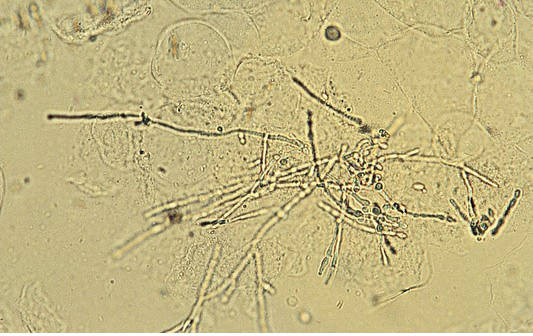 Which of the following is the most appropriate pharmacotherapy for this patient?
 (Multiple Choice)
5.0/5 (89)
(89) A 64-year-old man comes to the office due to several days of low-grade fever and productive cough. He has smoked a pack of cigarettes daily for 30 years and has been hospitalized several times for respiratory infections. Temperature is 37.2 C (99 F), blood pressure is 130/70 mm Hg, pulse is 82/min, and respirations are 14/min. Pulse oximetry shows 98% on ambient air. Lung auscultation reveals rhonchi that clear with coughing. Sputum cultures in specialized media grow round-to-oval, budding yeast, which form germ tubes when incubated at 37 C in serum. Which of the following best explains the presence of the organism in this patient's sputum sample?
(Multiple Choice)
4.8/5 (70)
(70) A 35-year-old woman comes to the emergency department due to an itchy rash that appeared earlier this morning. She recently returned from a family vacation at a resort in Cancun. Two days ago, the patient's husband developed similar symptoms. The patient has no significant past medical history and takes no medications. She has no known allergies. Her temperature is 37.6 C (99.7 F). On examination, there is a diffuse, pruritic, papulopustular rash that is most noticeable on the trunk and extremities. Microbiologic analysis of a pustular fluid sample demonstrates oxidase-positive gram-negative rods that produce pigment on culture medium. Which of the following is the most likely source of this patient's infection?
(Multiple Choice)
4.7/5 (82)
(82) A 24-year-old woman comes to the office due to lower abdominal pain and malodorous vaginal discharge. The patient has had increasing vaginal discharge for the past 3 weeks and increasing lower abdominal pain for the last few days. She has no chronic medical conditions or medication allergies. The patient is sexually active and uses a copper-containing intrauterine device for contraception. Temperature is 38.3 C (100.9 F), blood pressure is 110/70 mm Hg, and pulse is 78/min. The lower abdomen is tender to palpation with no rebound or guarding. On pelvic examination, the strings of the intrauterine device are seen, and cervical motion tenderness and mucopurulent cervical discharge are present. Culture of the discharge shows thin, elongated, gram-positive bacilli in an acute-angle branching pattern. Which of the following is the most appropriate pharmacotherapy for this patient?
(Multiple Choice)
4.9/5 (95)
(95) A 54-year-old man comes to the emergency department due to fever, chills, and malaise over the past day. His other medical problems include recently diagnosed Hodgkin disease. Temperature is 39.4 C (103 F), blood pressure is 102/61 mm Hg, and pulse is 114/min. The patient appears ill. Blood cultures grow motile gram-positive rods that produce a very narrow zone of beta hemolysis on blood agar. The bacteria are also found to grow well at refrigerated temperature. Which of the following processes is most important for eliminating these bacteria from the body?
(Multiple Choice)
4.7/5 (85)
(85) 
Filters
- Essay(0)
- Multiple Choice(0)
- Short Answer(0)
- True False(0)
- Matching(0)